Alone in the City
I feel more alone in the city
than I do alone in the wilderness.
I feel more alone in the city
than I do alone in the wilderness.
How does one describe rain falling upon the desert? Sometimes drop by drop as counted upon the sheet metal that lines the rooftop. Sometimes as an afternoon shower that reduces the heat for just a few hours. Often the storms are seen in the distance, on the far side of a ridge or across a wide valley. The waterfall beneath a distant cloud is painted as dark brush strokes across a backlit, fire lit sky orange and gray. And sometimes, just a few times each year the rain is described not by how it falls but by how it fills the mountain stream beds. Otherwise dry tributaries give rise to cascades over mineral stained lips and parched hanging gardens into fields of polished boulders, crafted over millions of years.
The first water is quickly absorbed by decaying litter and underlying sand. But as the hidden boundaries between ancient geological features are saturated, the water rises up, filling the space between grains of sand then cobbles, submerged tree trunks, and river banks. This is when the water falling down transforms into a race across the land; when we no longer count the rain drops but instead take heed of the shaking earth, at first from thunder and then the tumbling of stones and uprooted trees whose trunks are too large for human arms to embrace.
It is in these desert interactions that earth-bound creatures touch the sky, when heaven, as if needing to relieve itself of a heavy burden tears does open wide. We look not for angels nor the shadow of a bearded man, rather we applaud the branches of blinding lightning and celebrate the ability of a storm to cut to the core of our animal being.
In Cascabel the rain is a reason for celebration. The many varieties of succulents fill to nearly bursting their green skin. Garden vegetables and fruit trees no longer hesitate to yield. Seeds dormant just below the surface break through the crust, rising from seedling to six feet tall in less than two weeks, each day noting increase in height and stem diameter. Neighbors phone friends and send email messages with timing and directional movement of the storm. “Here it comes!”, “Get ready!”, and “We got over an inch already!” followed by “Made it to town” or “The road is out!”
The rain is welcomed even when it makes travel difficult for it reminds us of our incredibly small importance in a much larger world. When all that we have built, when all we have carefully organized and maintained can be undone in a matter of hours or in a single flash flood, the storm reminds us to respect and embrace the ambiguity of a world in which we are not in control, and to celebrate that which we are given, even if just a few times each year.
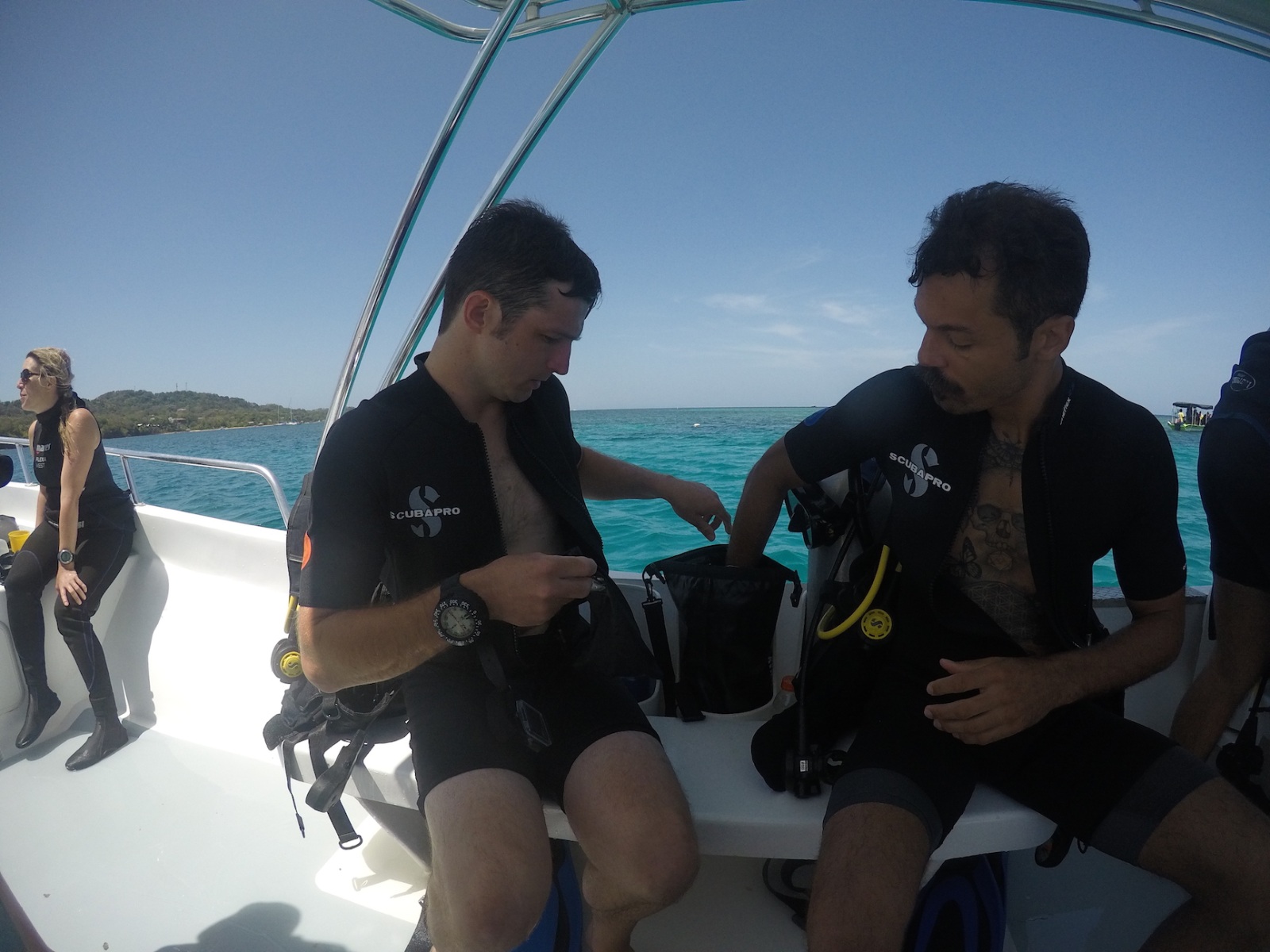
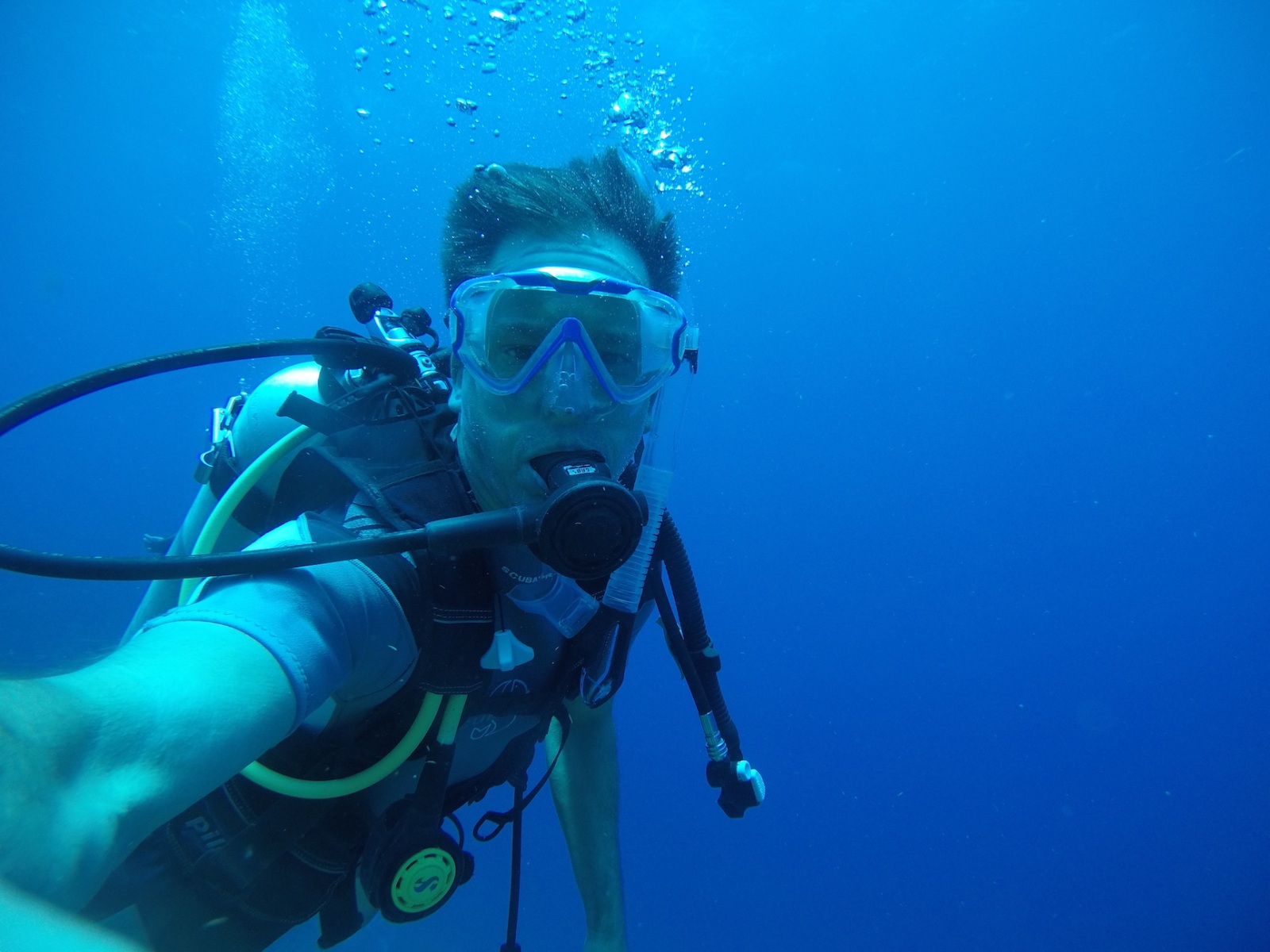
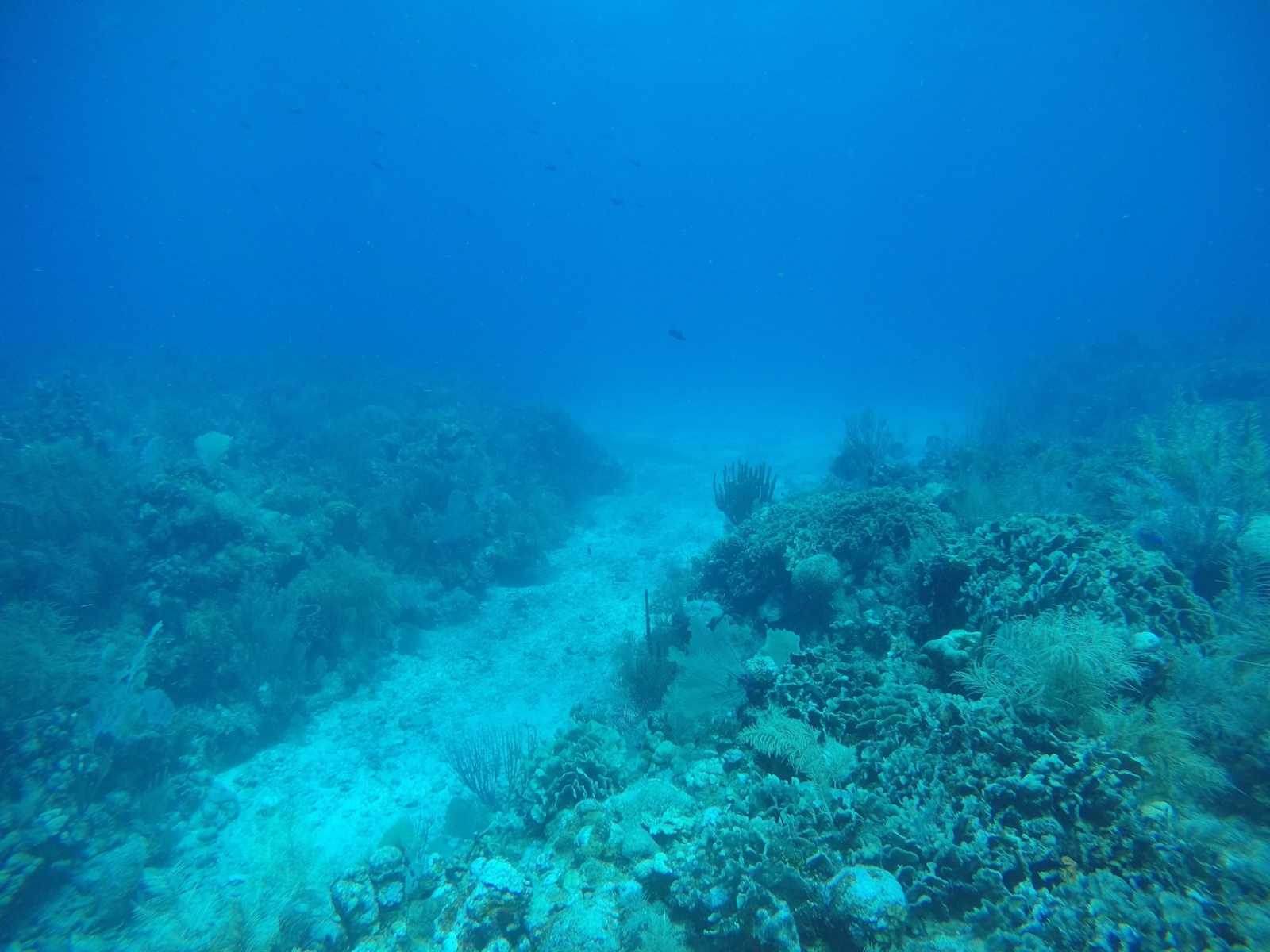
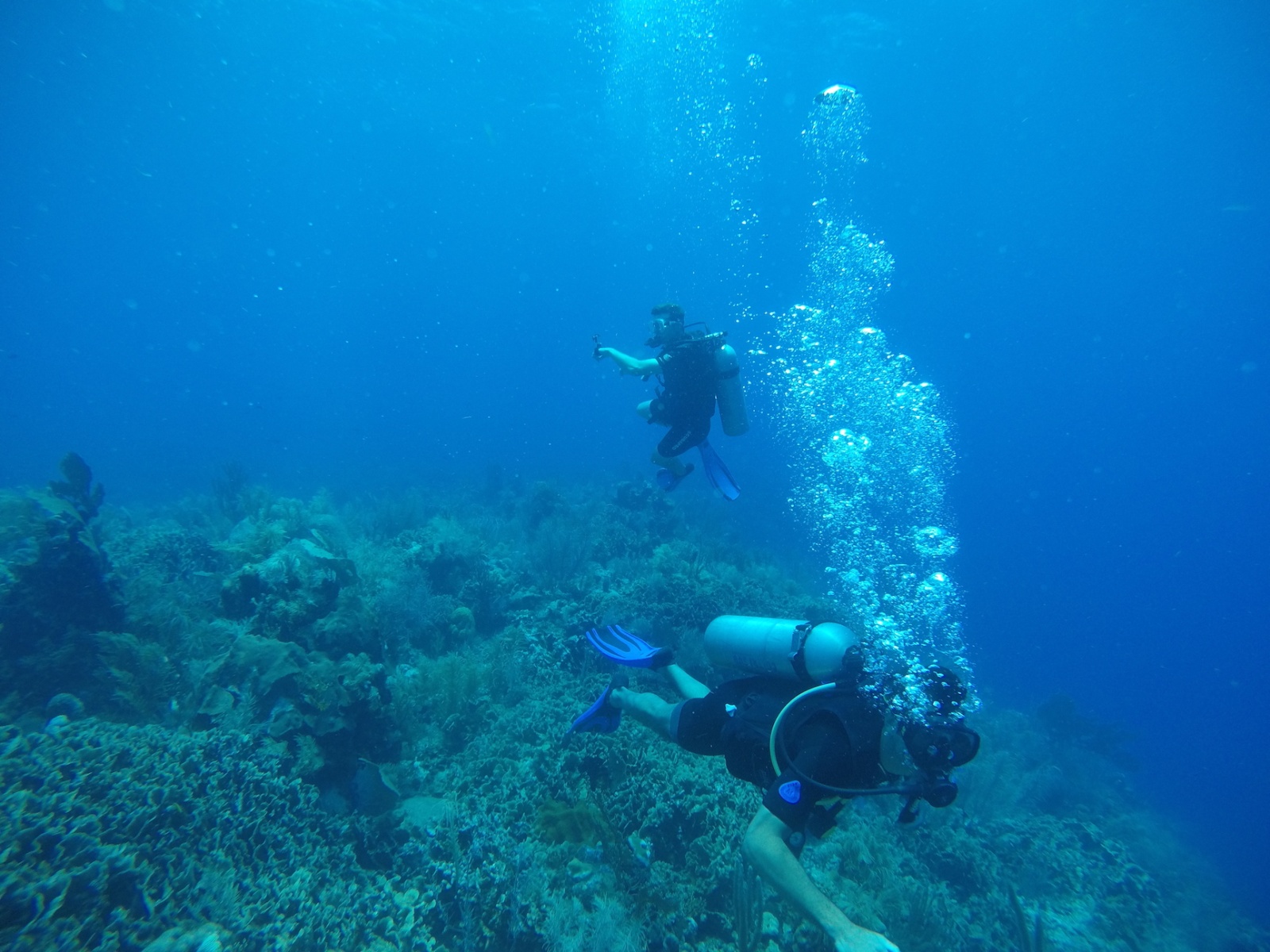
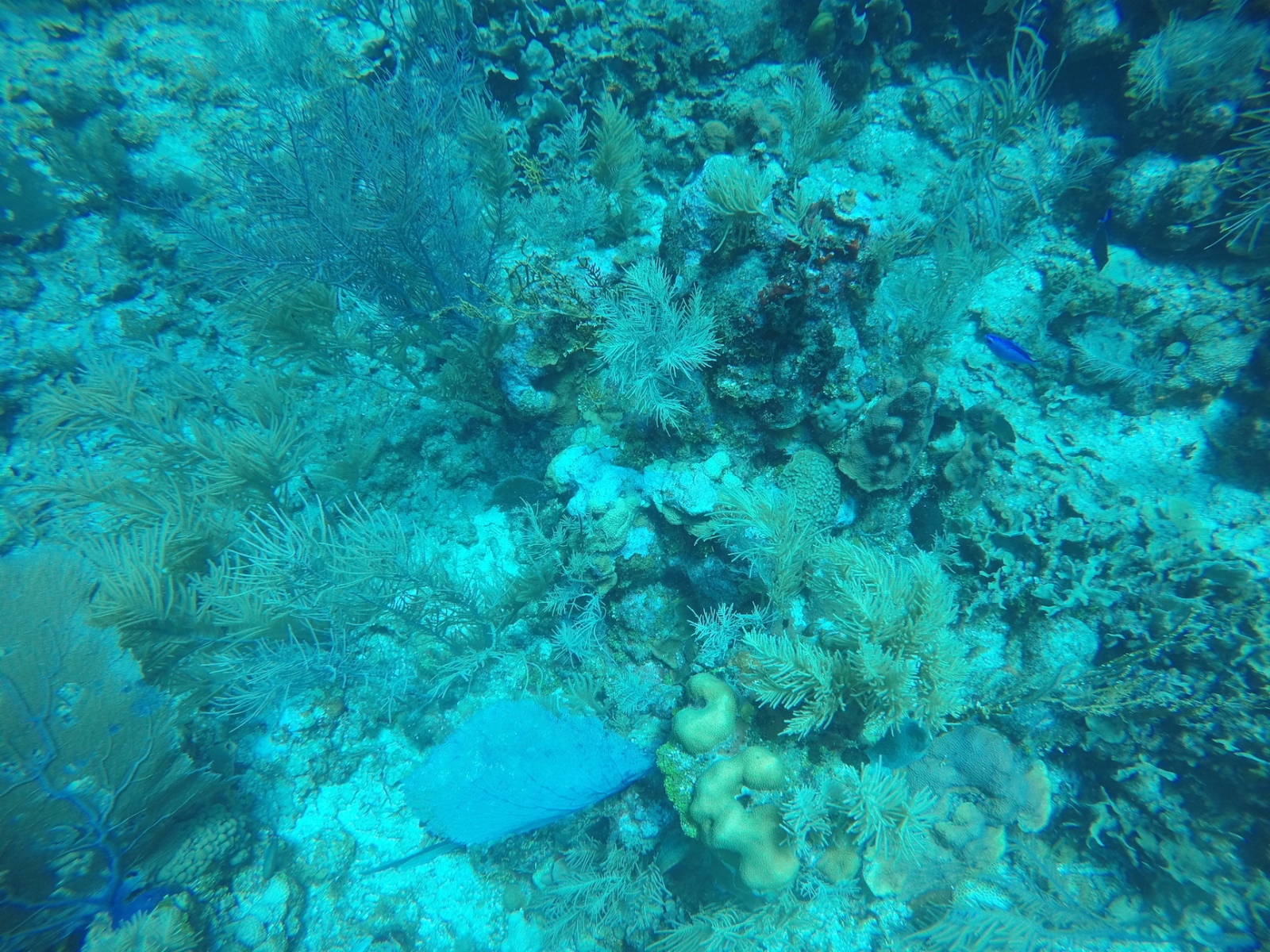
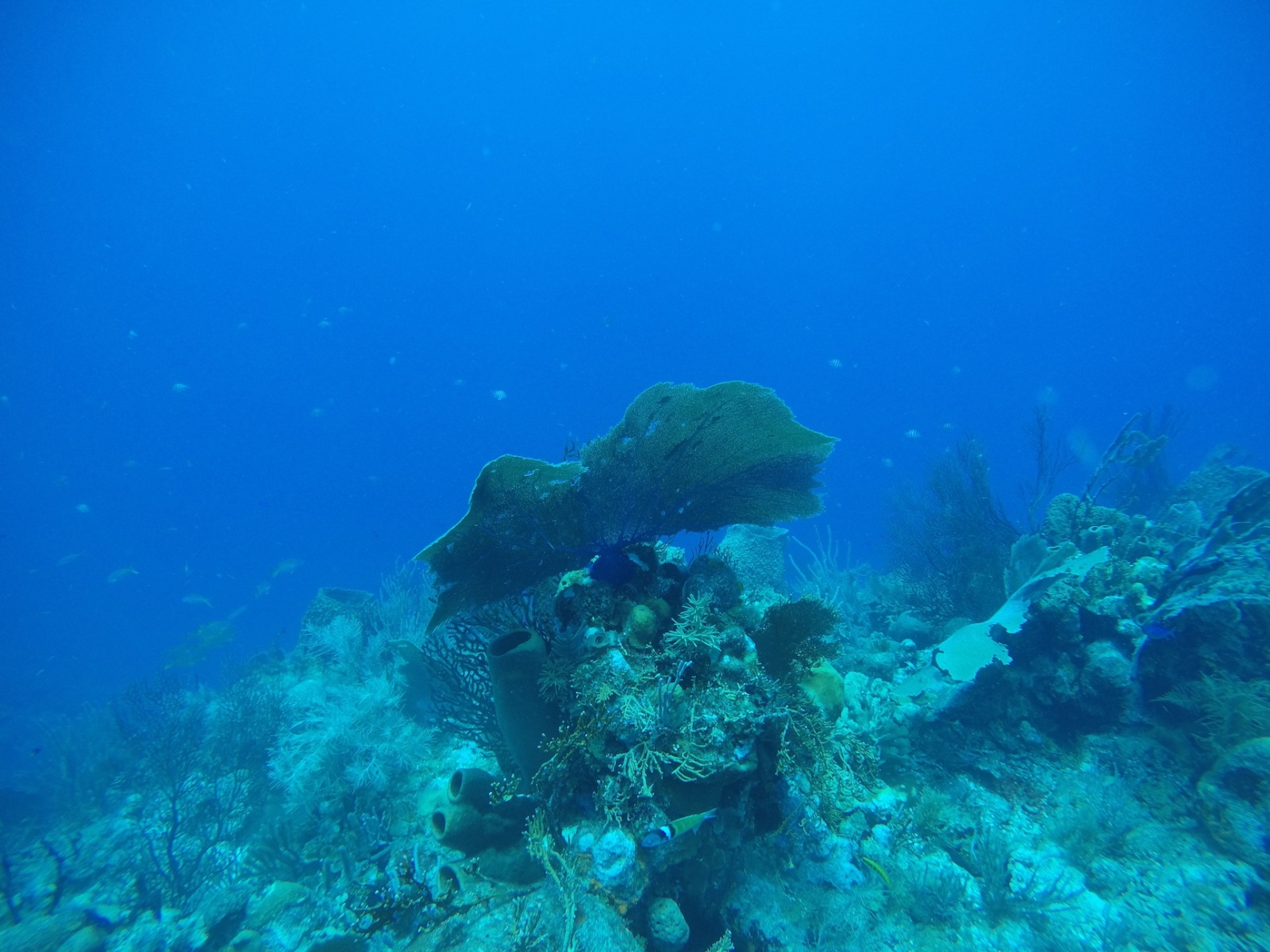
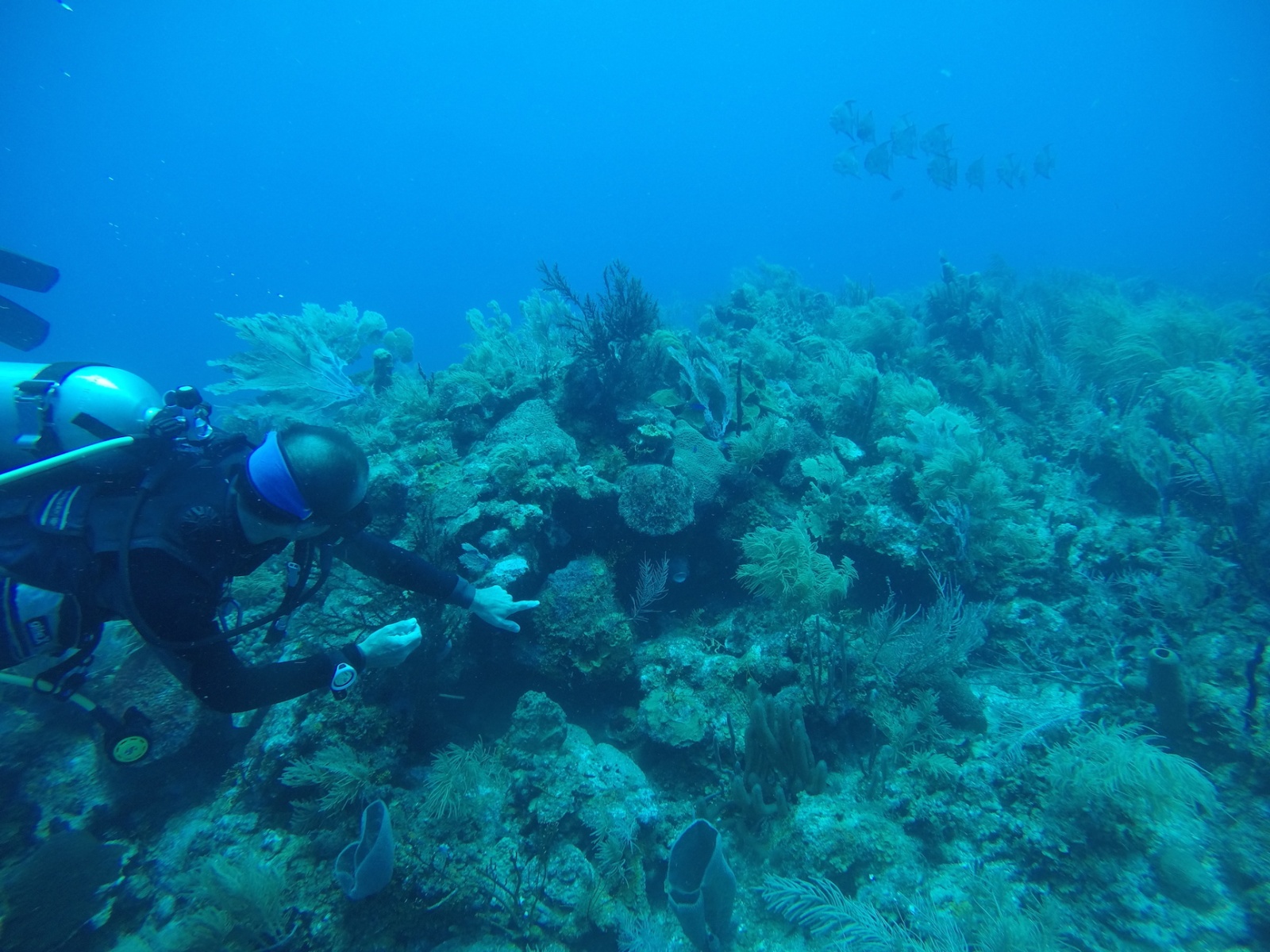
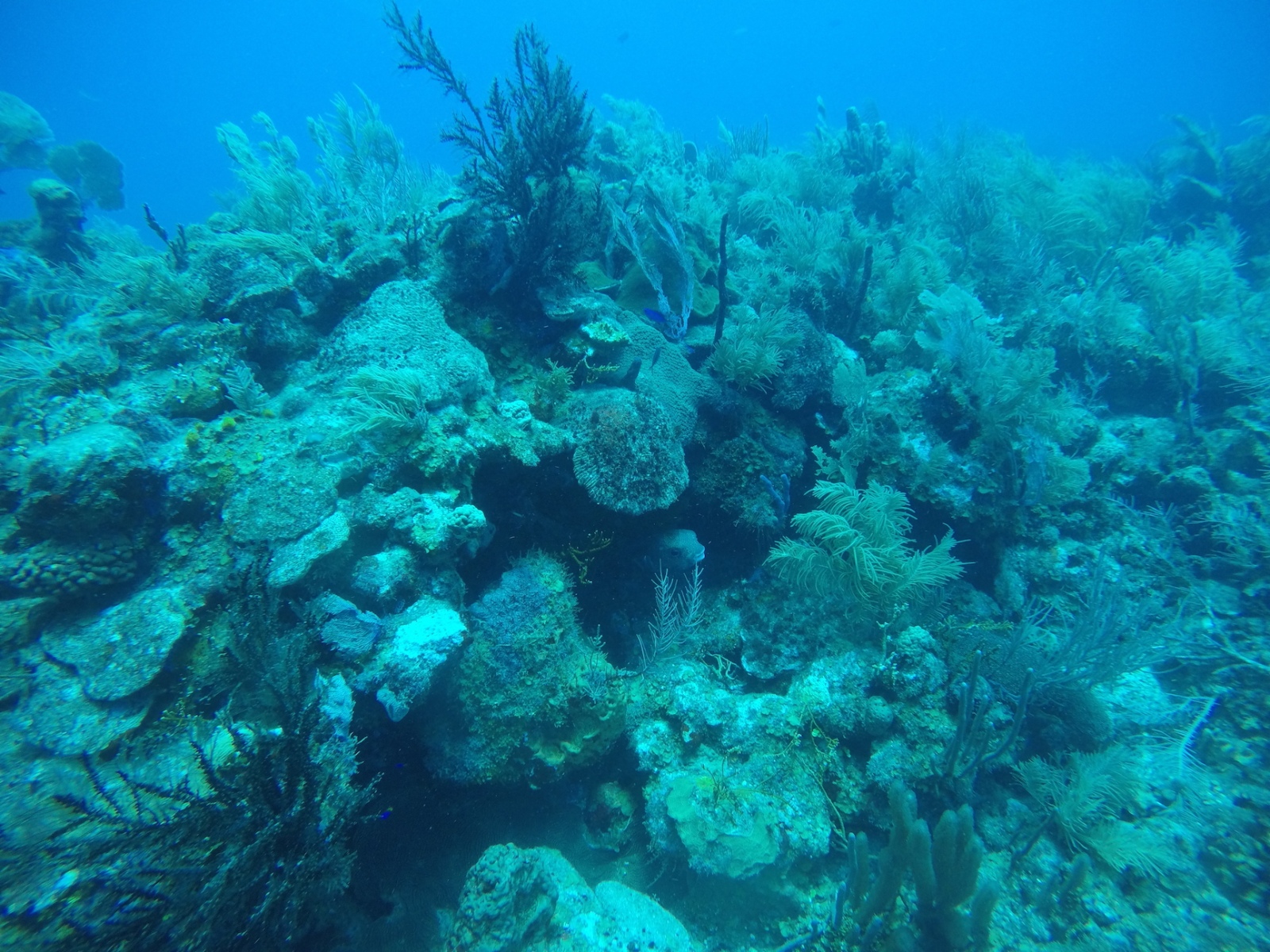
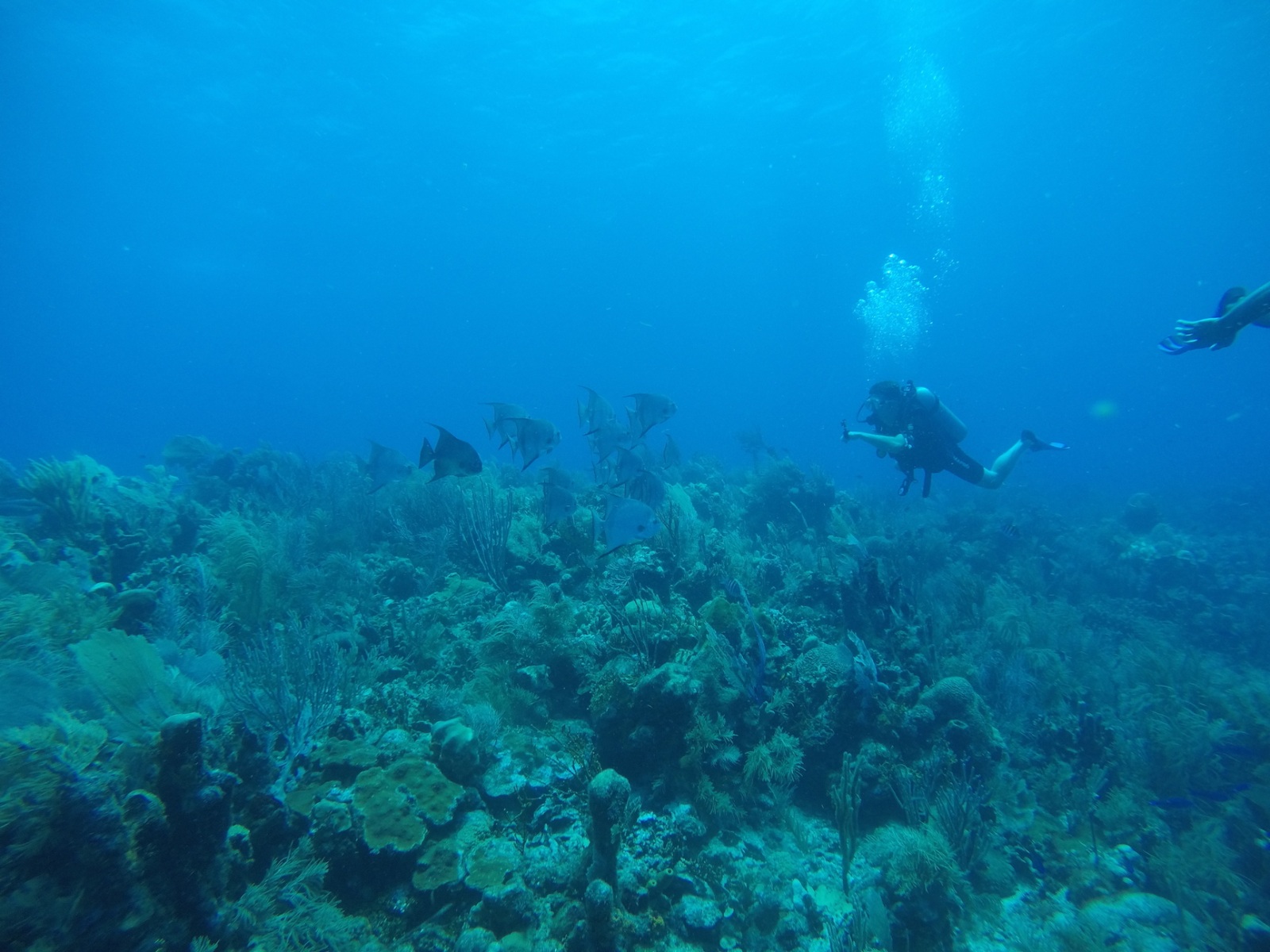
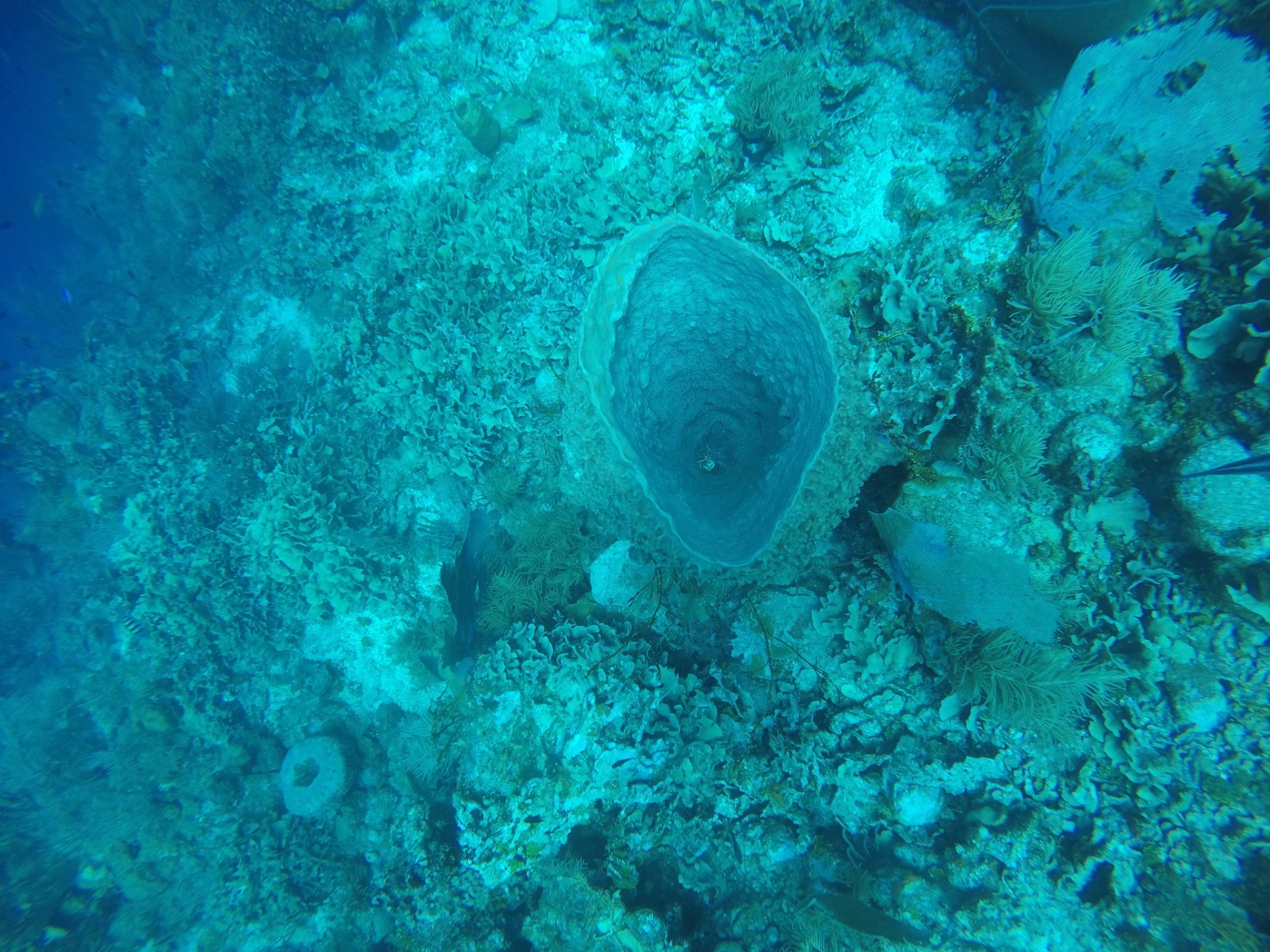
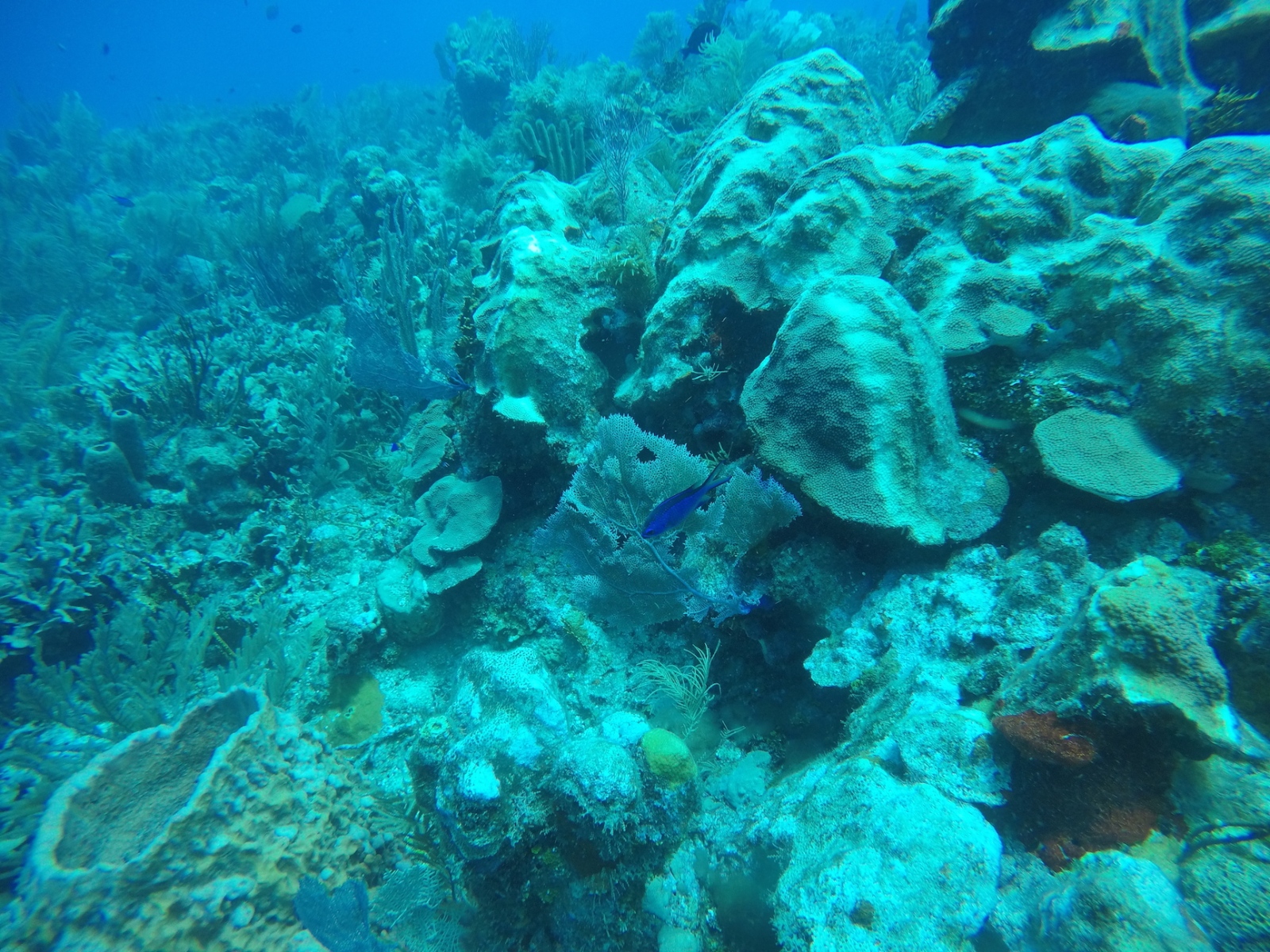
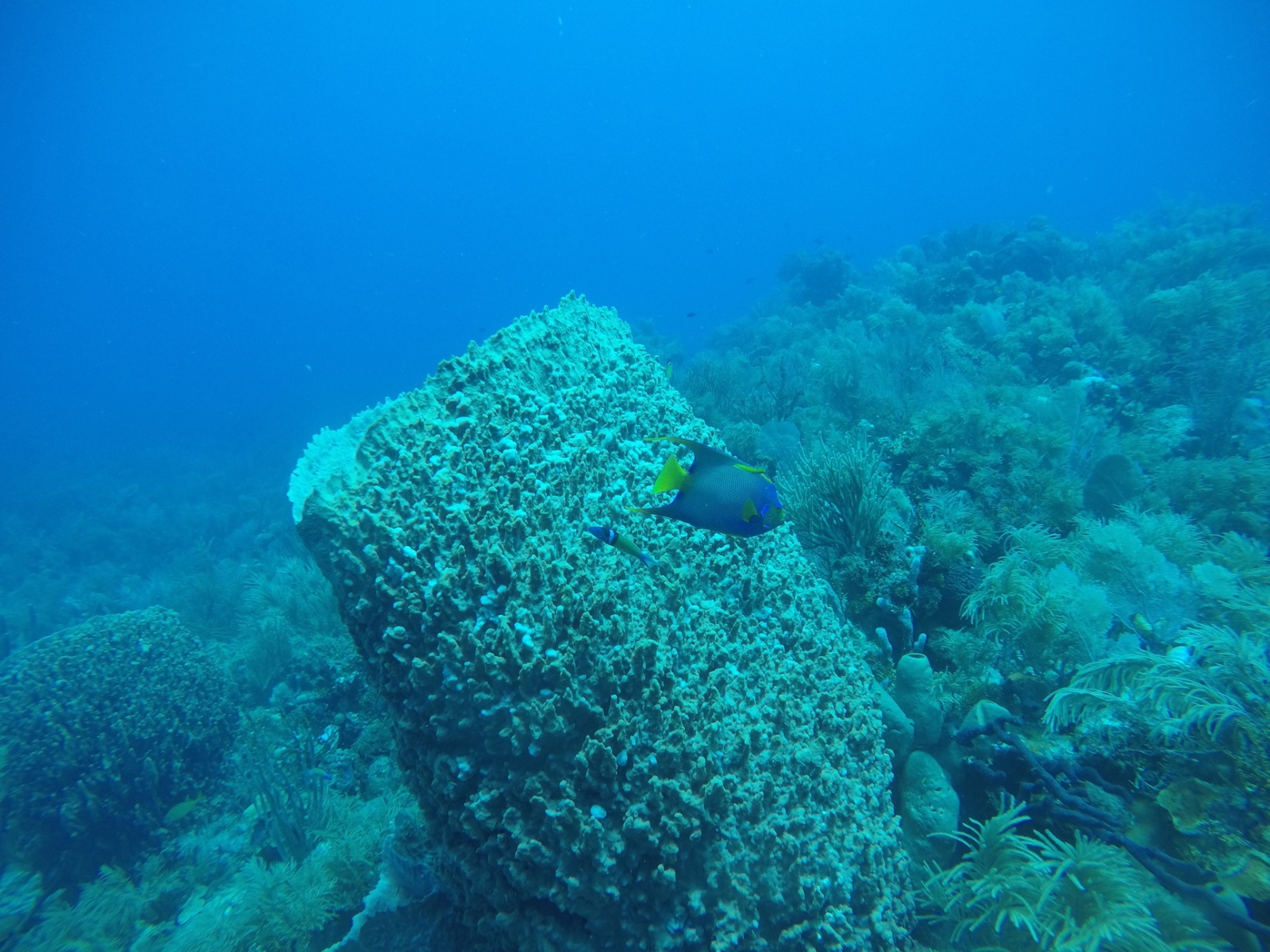
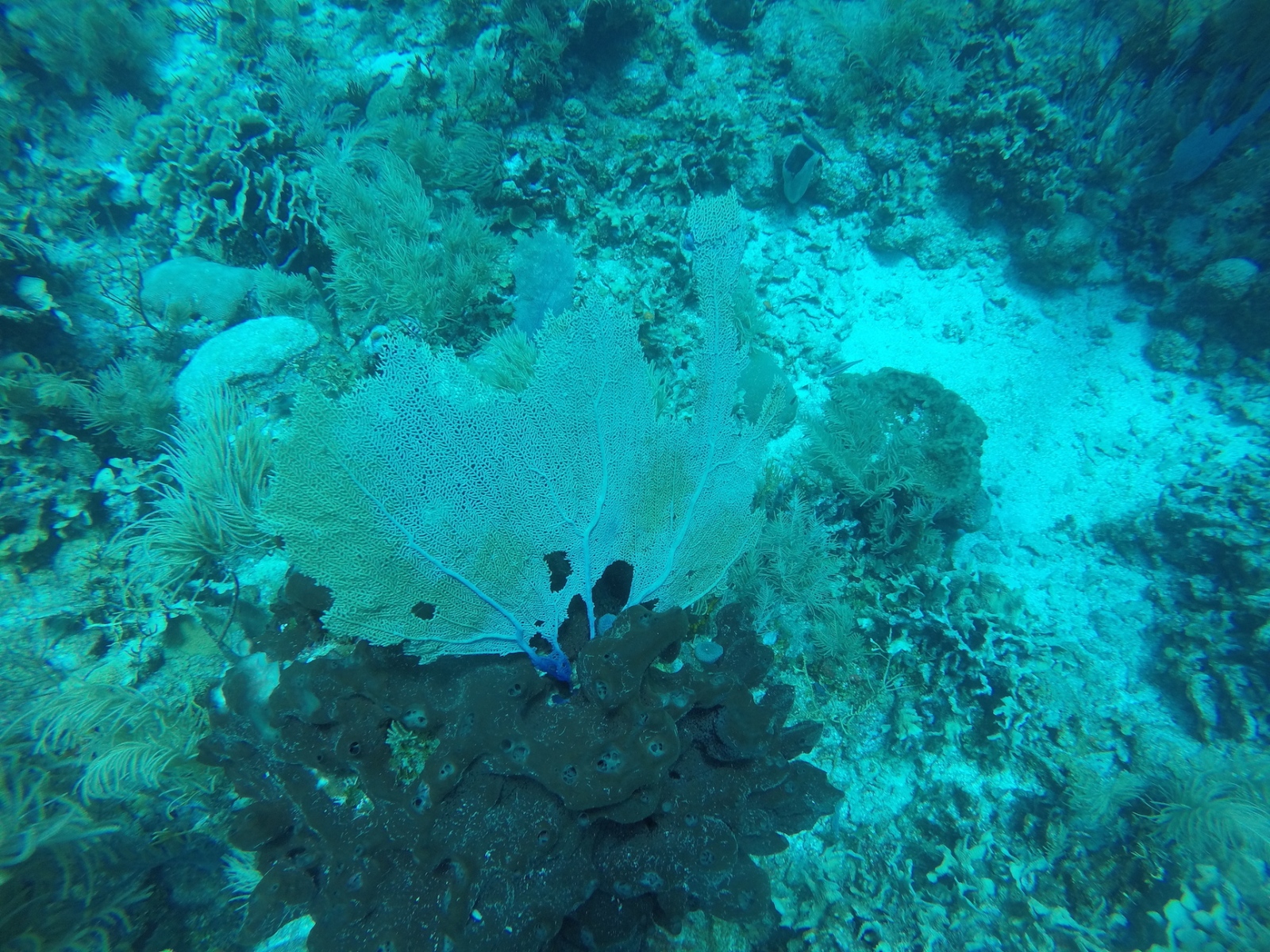
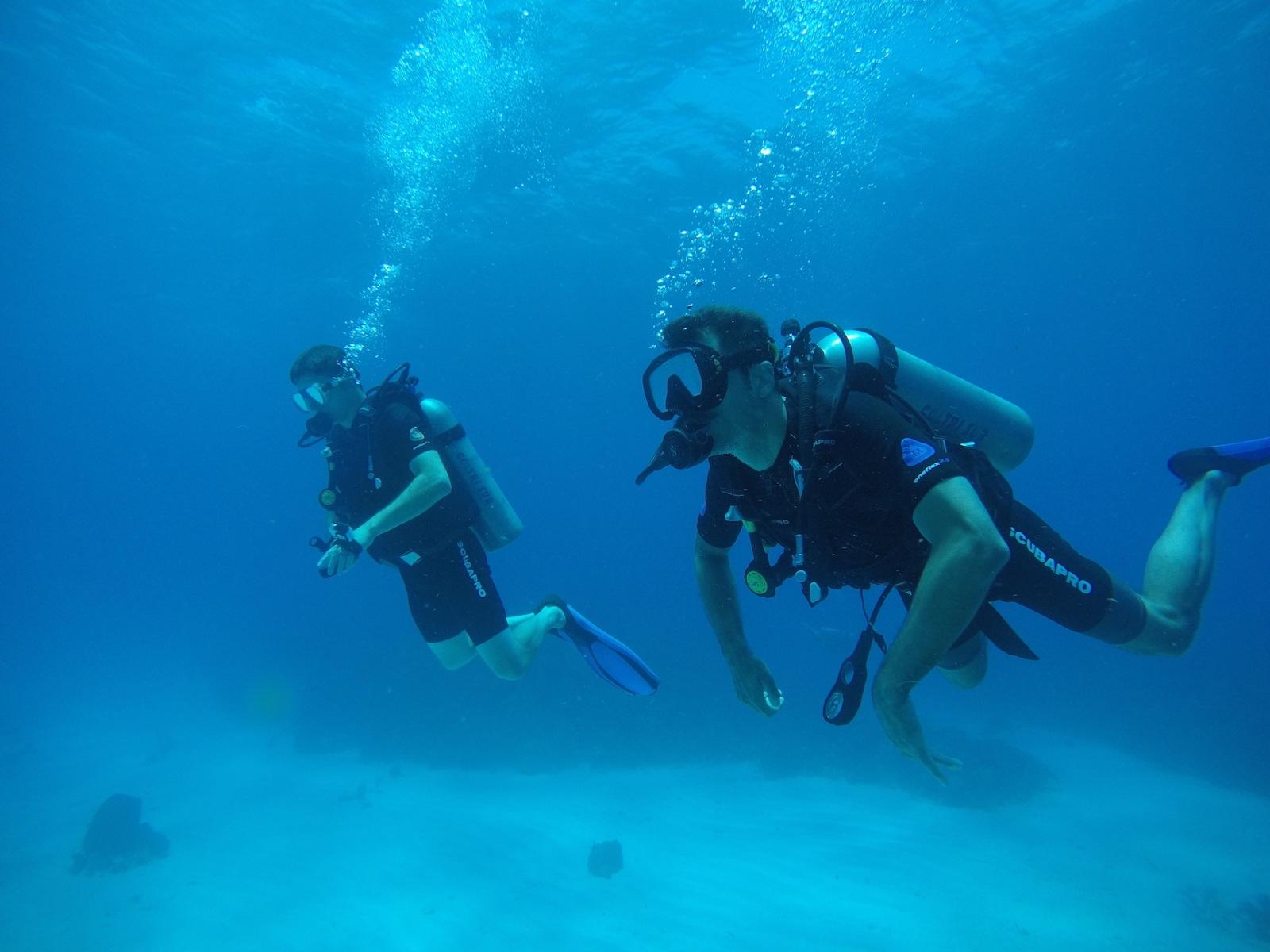
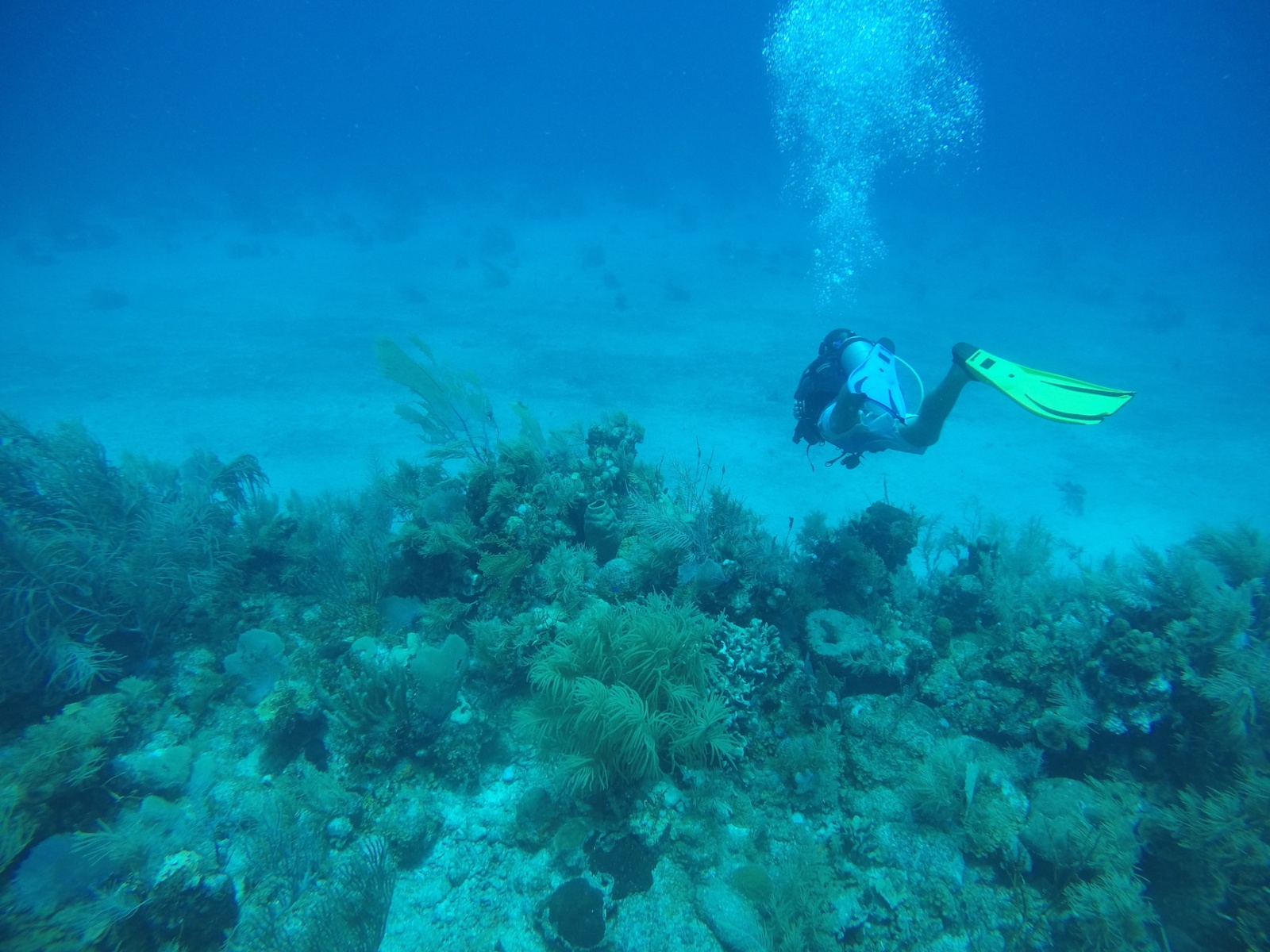
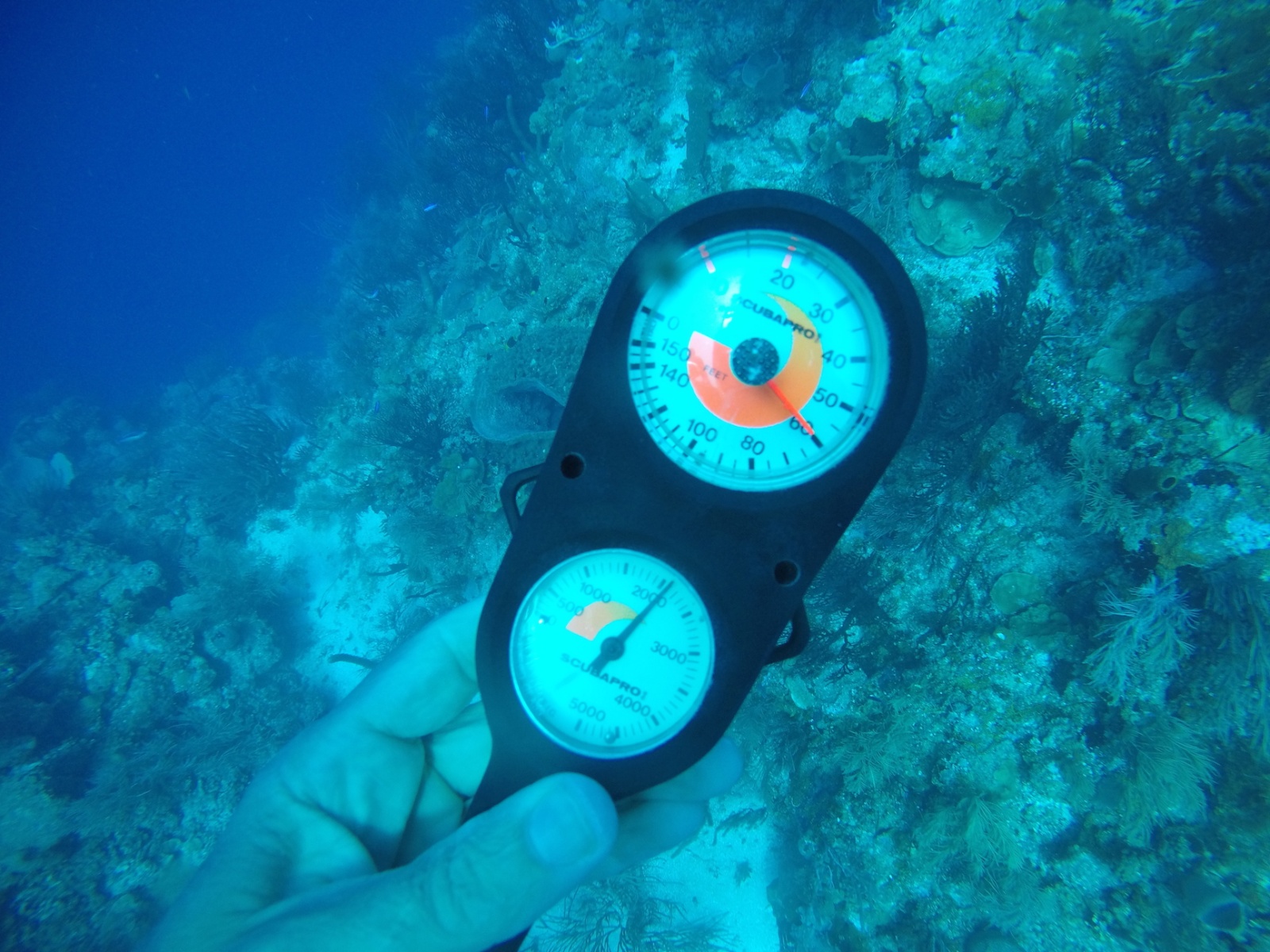
For the past two weeks I have enjoyed the rich experience of exploring the undersea world of the coral reef of Roatan, Honduras. For my entire adult life I have wanted to gain my SCUBA certification. While I have snorkeled in Hawaii, Thailand, mainland U.S. and Mexico, I am proud to state that I am now PADI certified for open water diving.
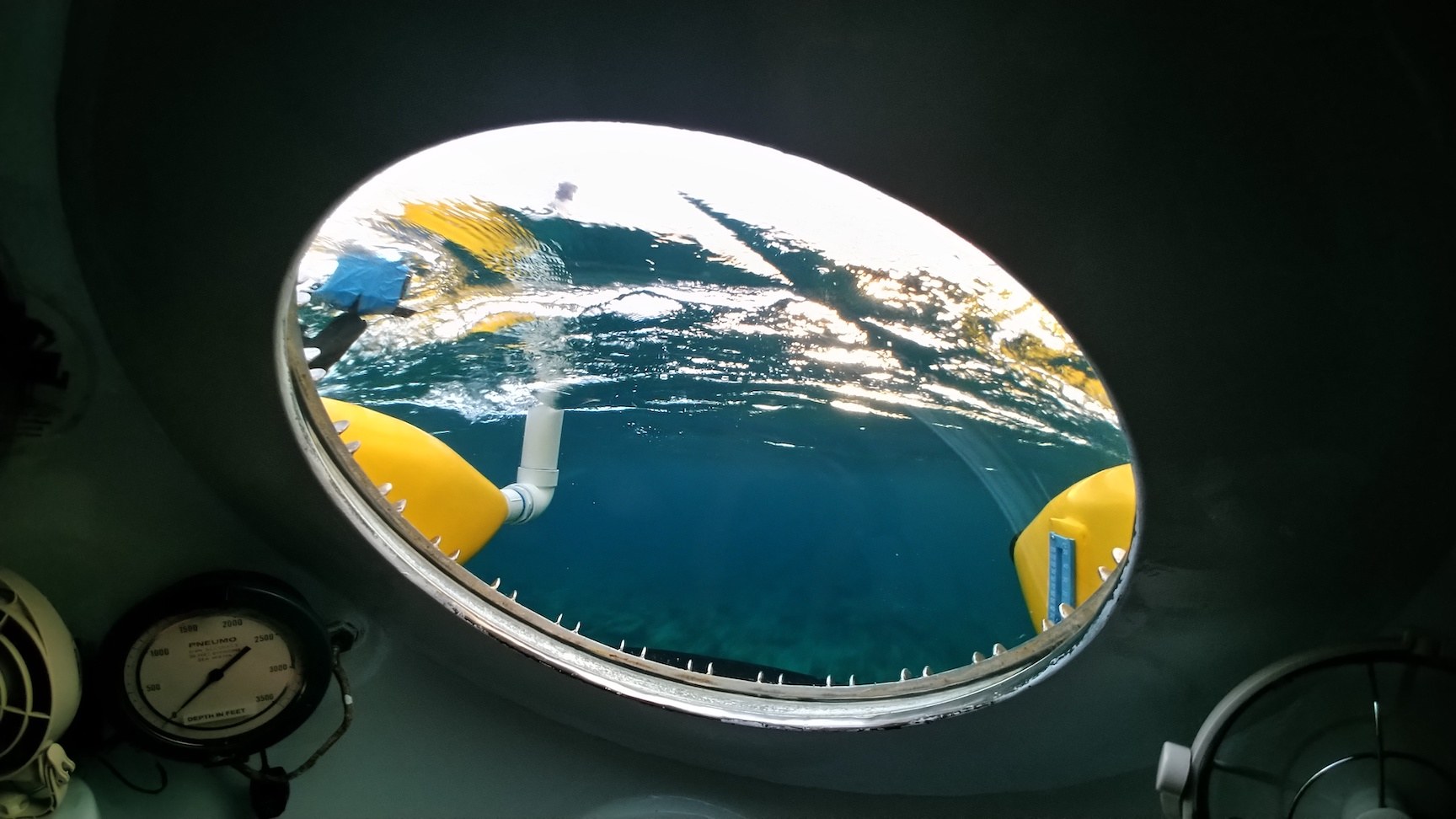
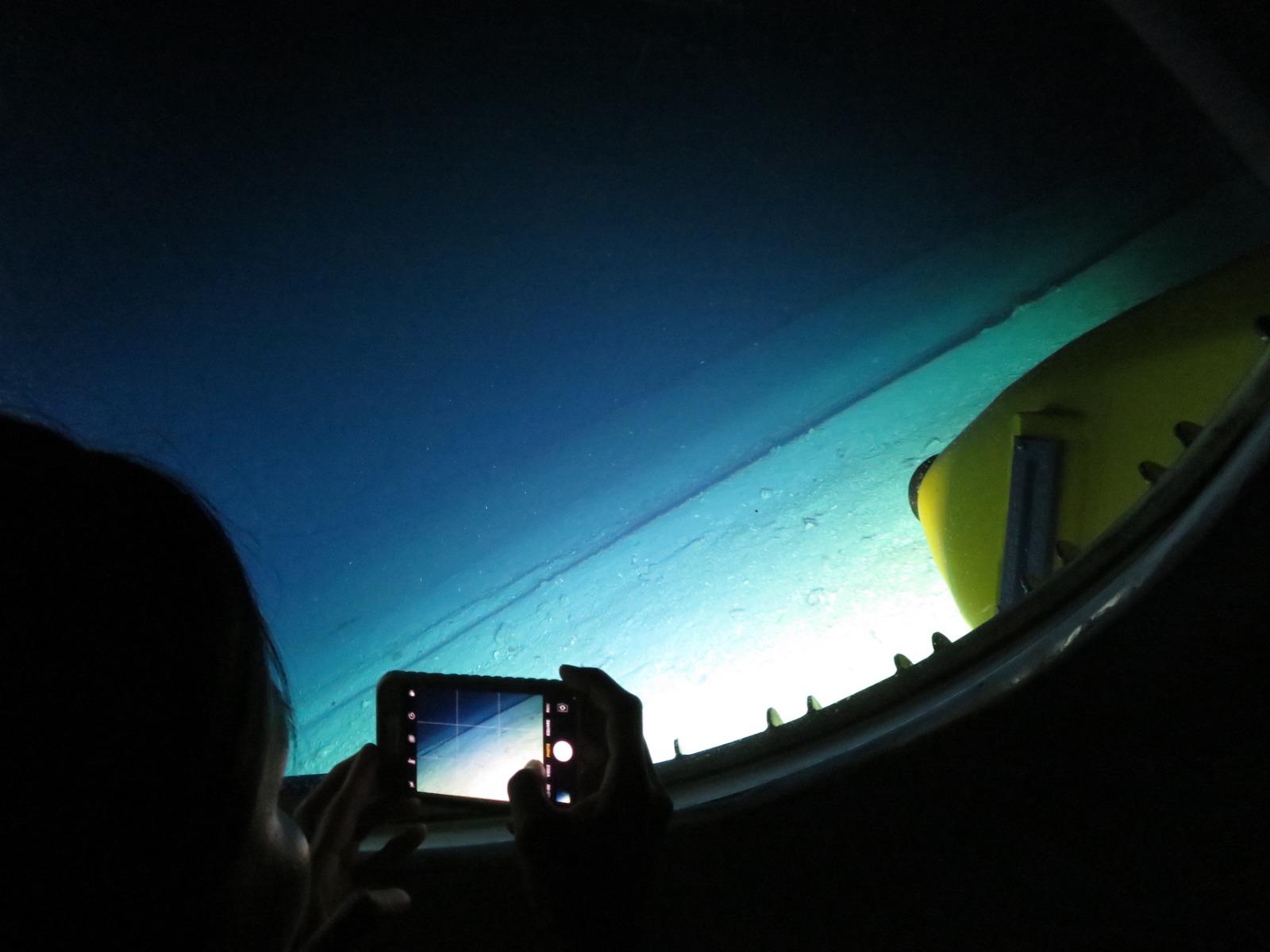
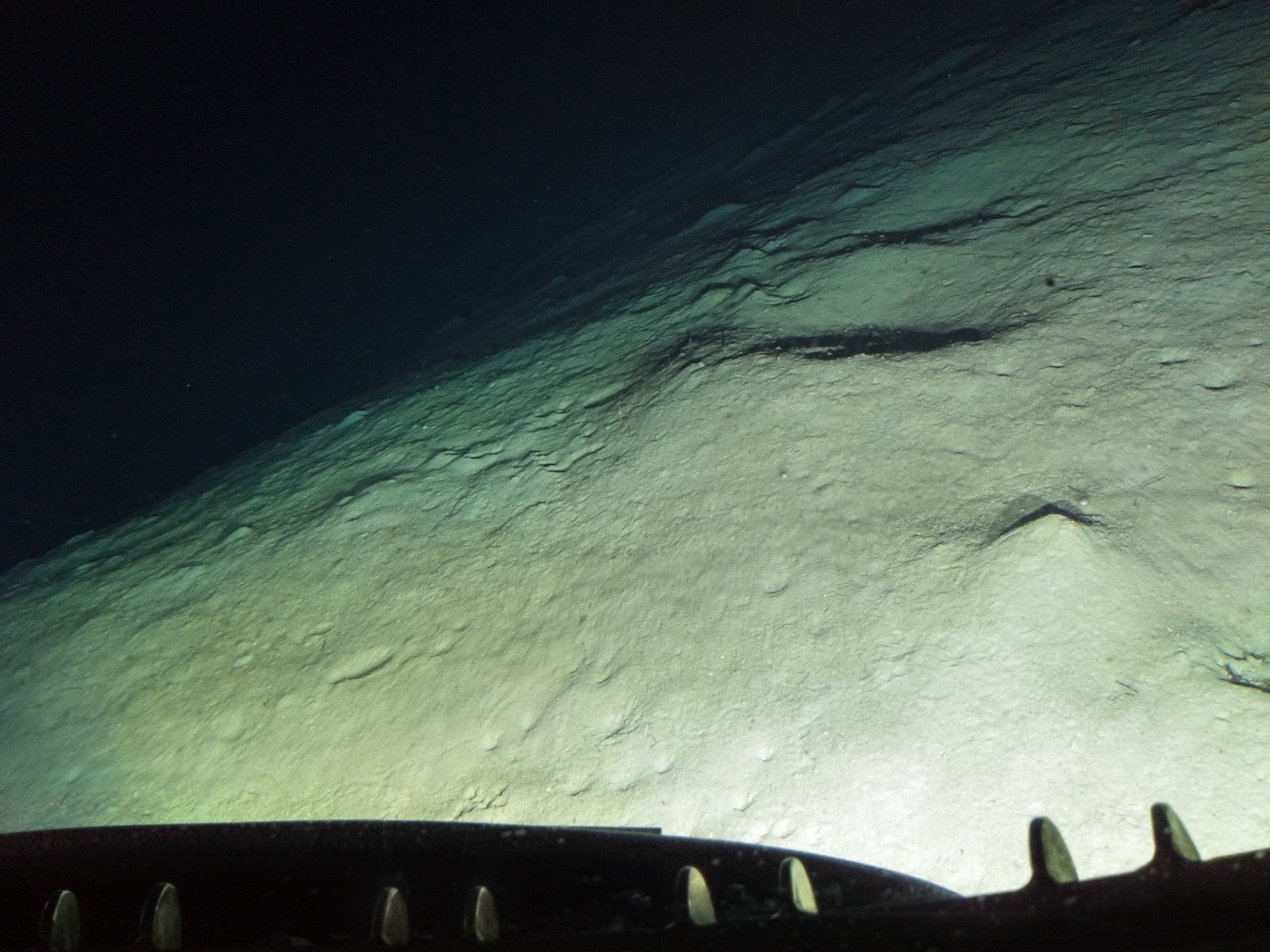
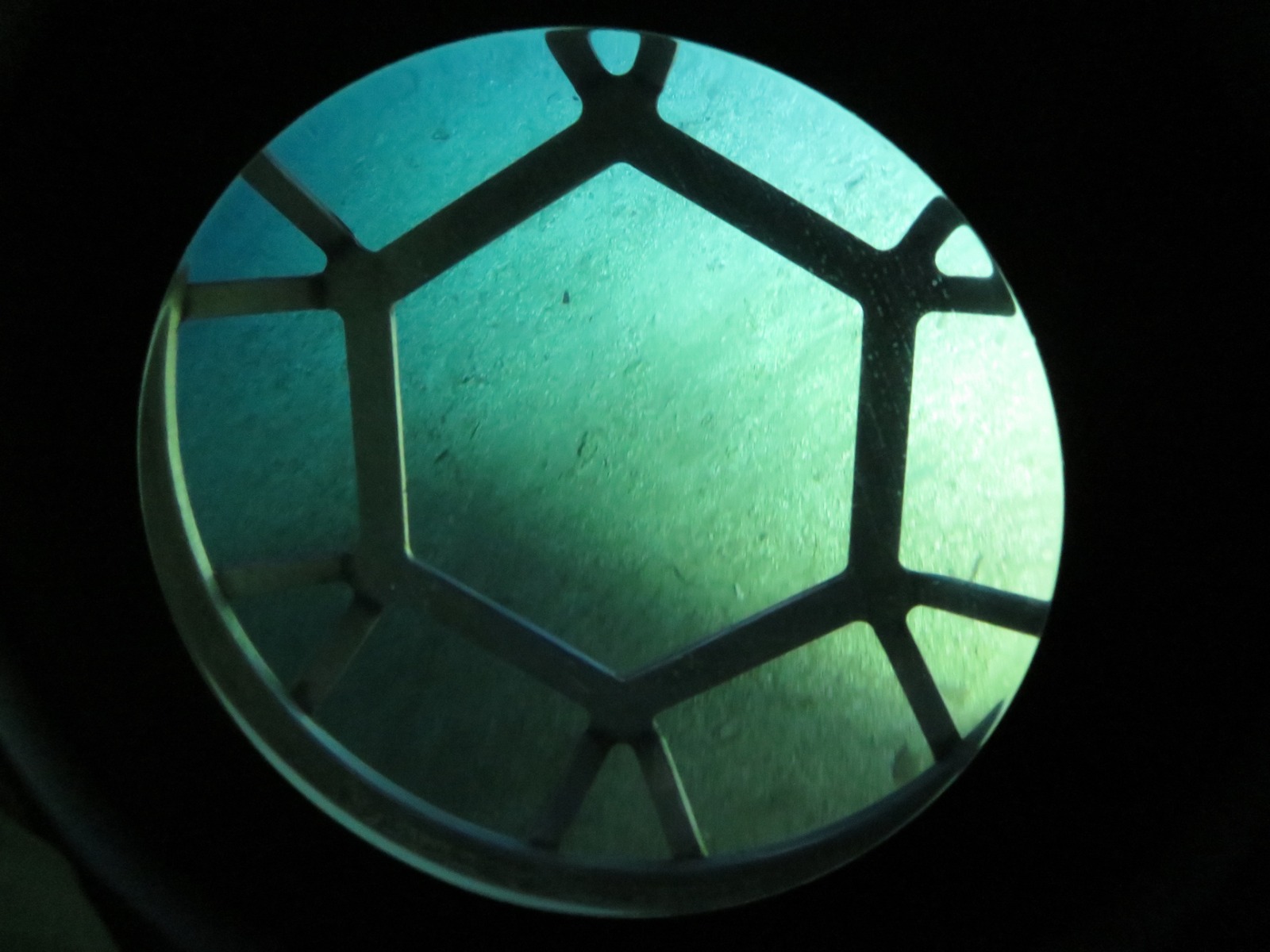
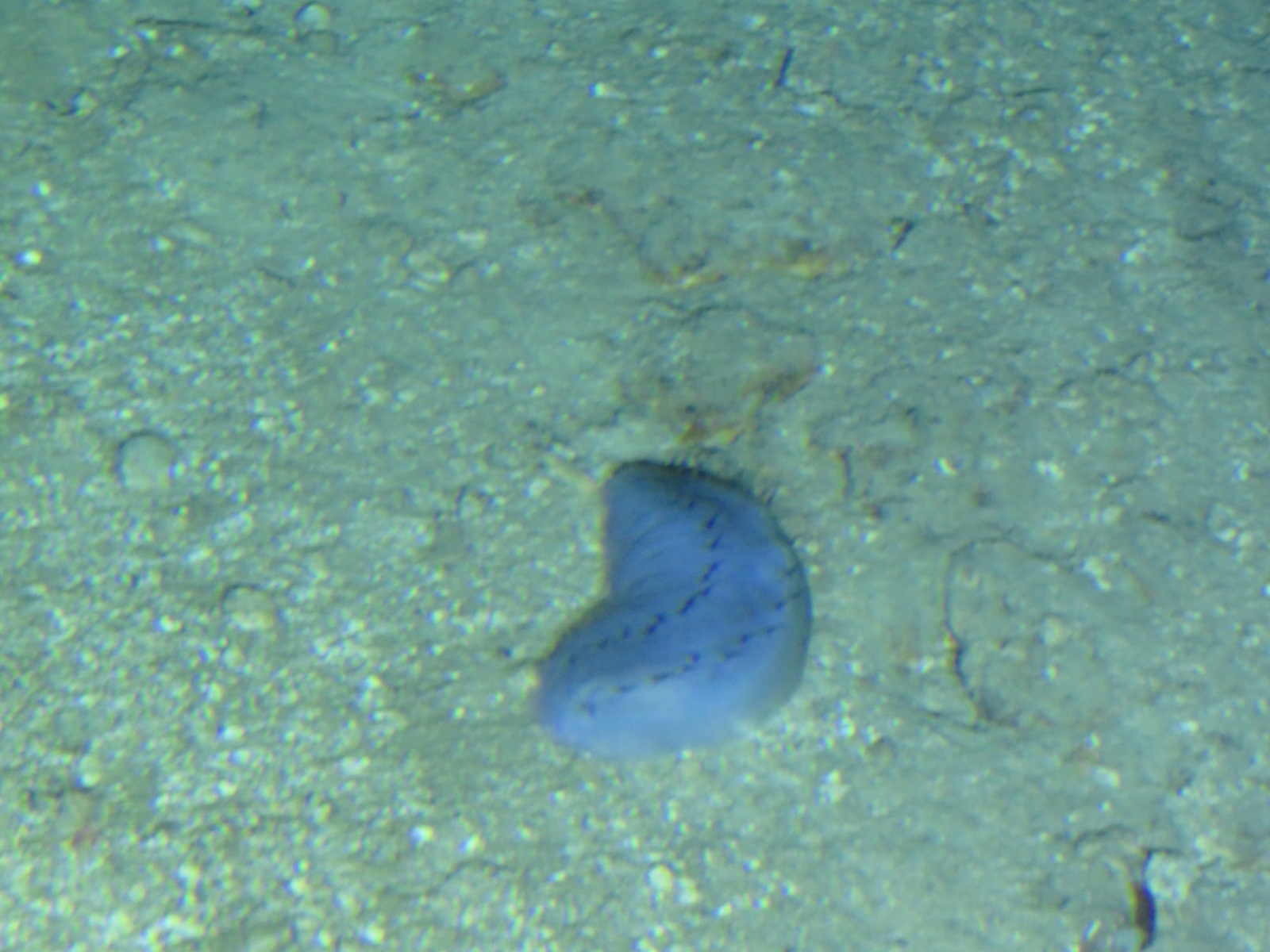
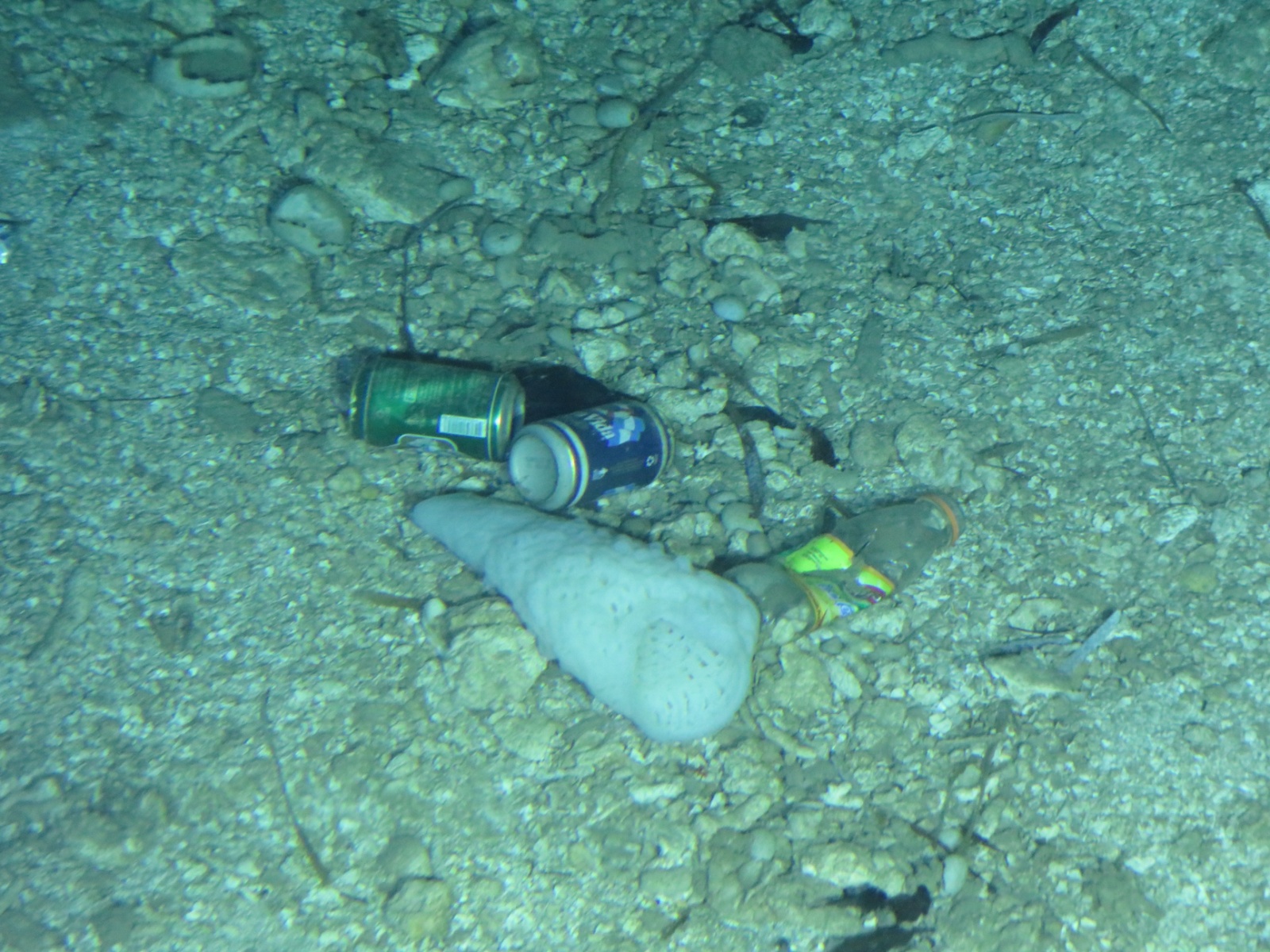
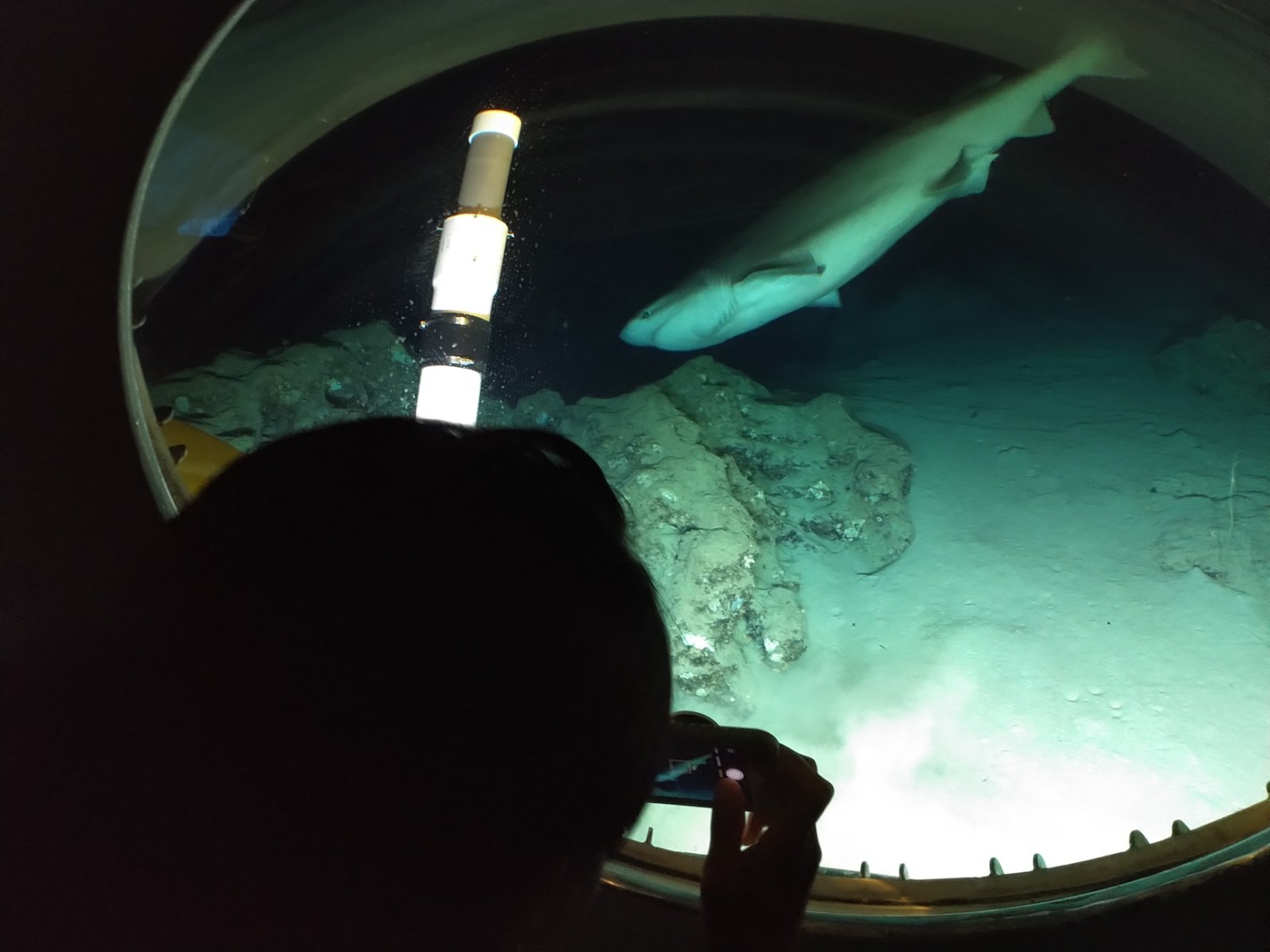
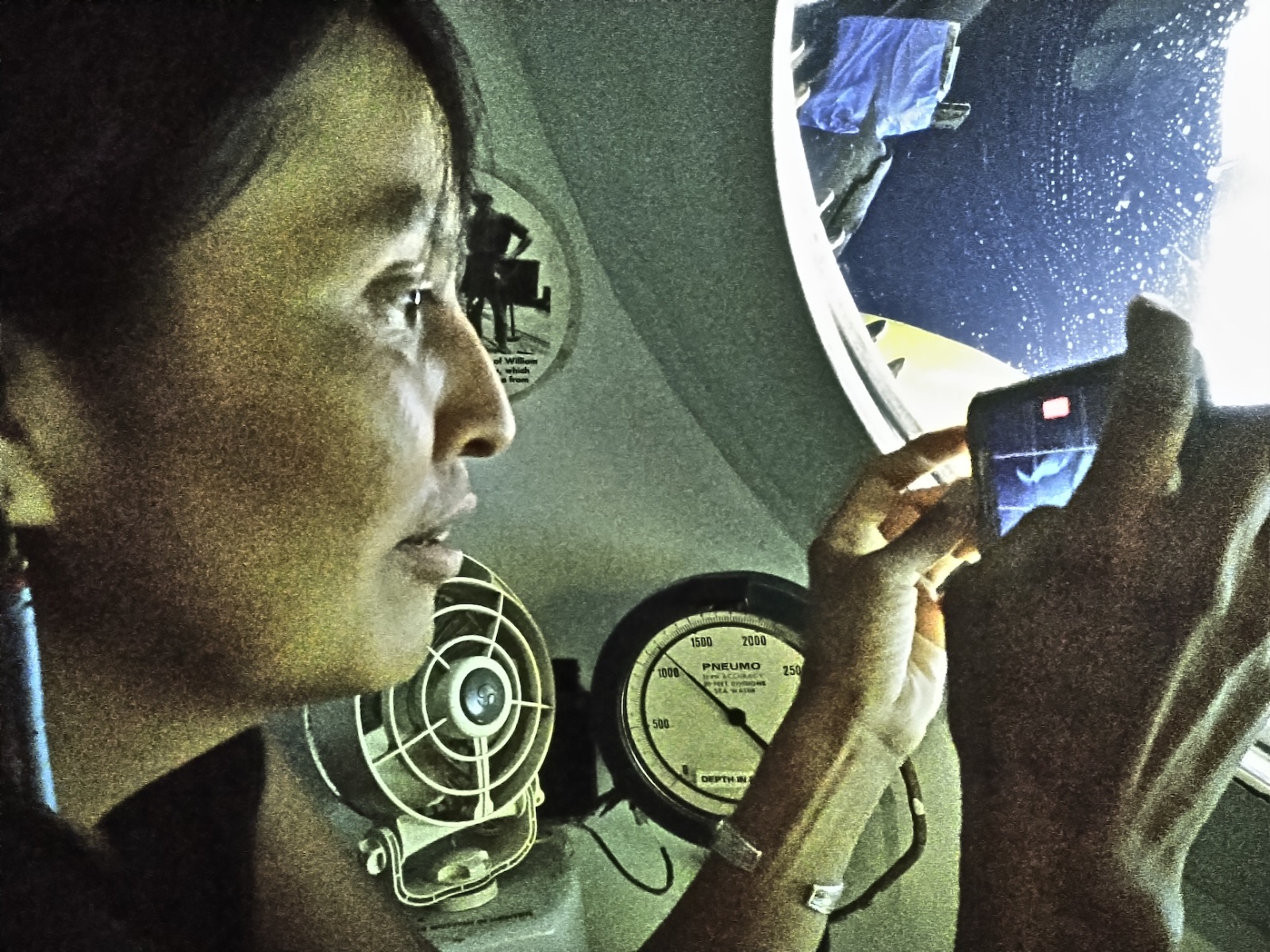
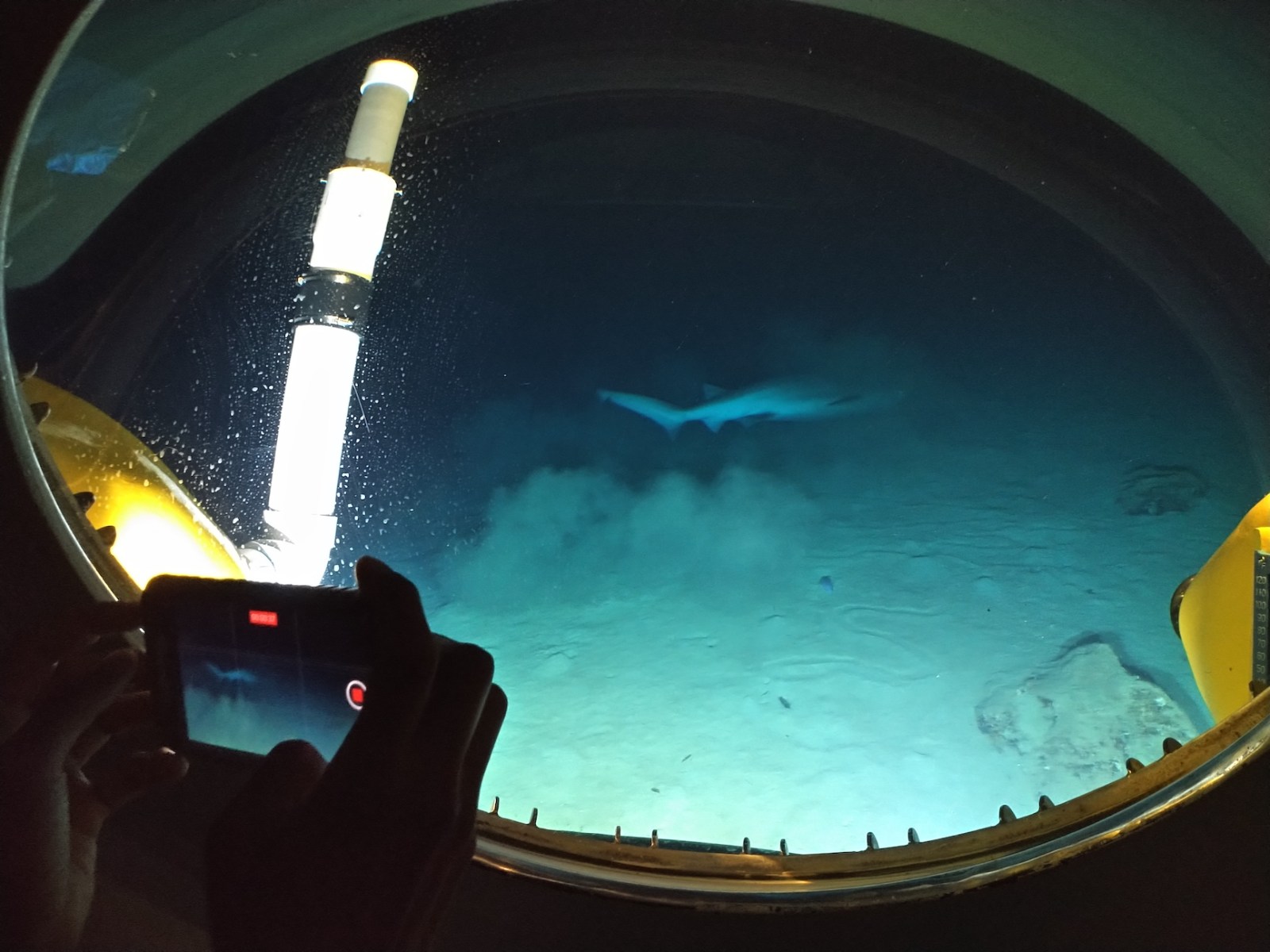
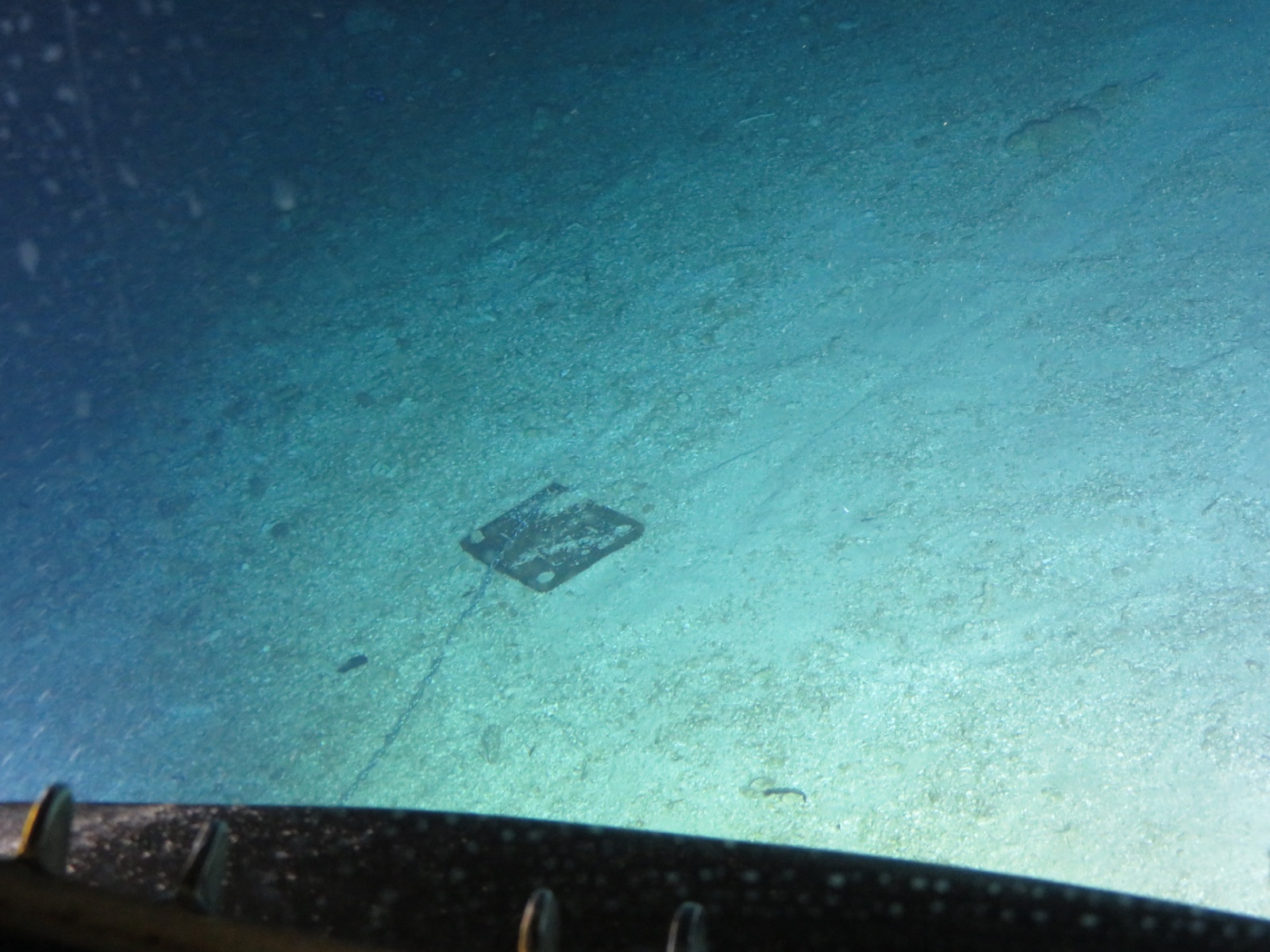
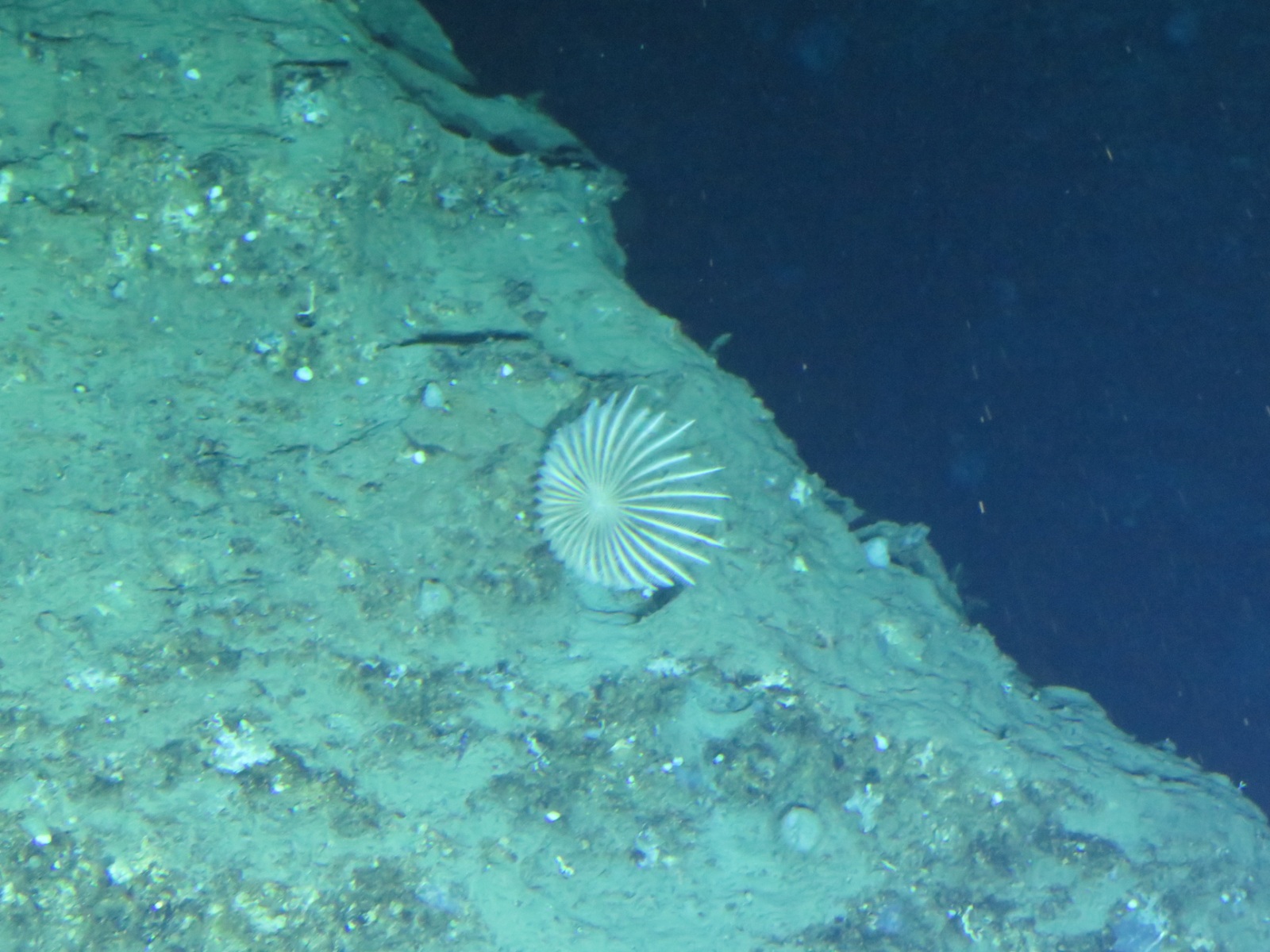
As part of an Explorers Club expedition organized by my associate Trent Tresch, Colleen and I were given opportunity to explore the undersea world at 1500 feet below sea level, in a home made submarine. It was an incredible, truly other-world experience that neither of us will ever forget.
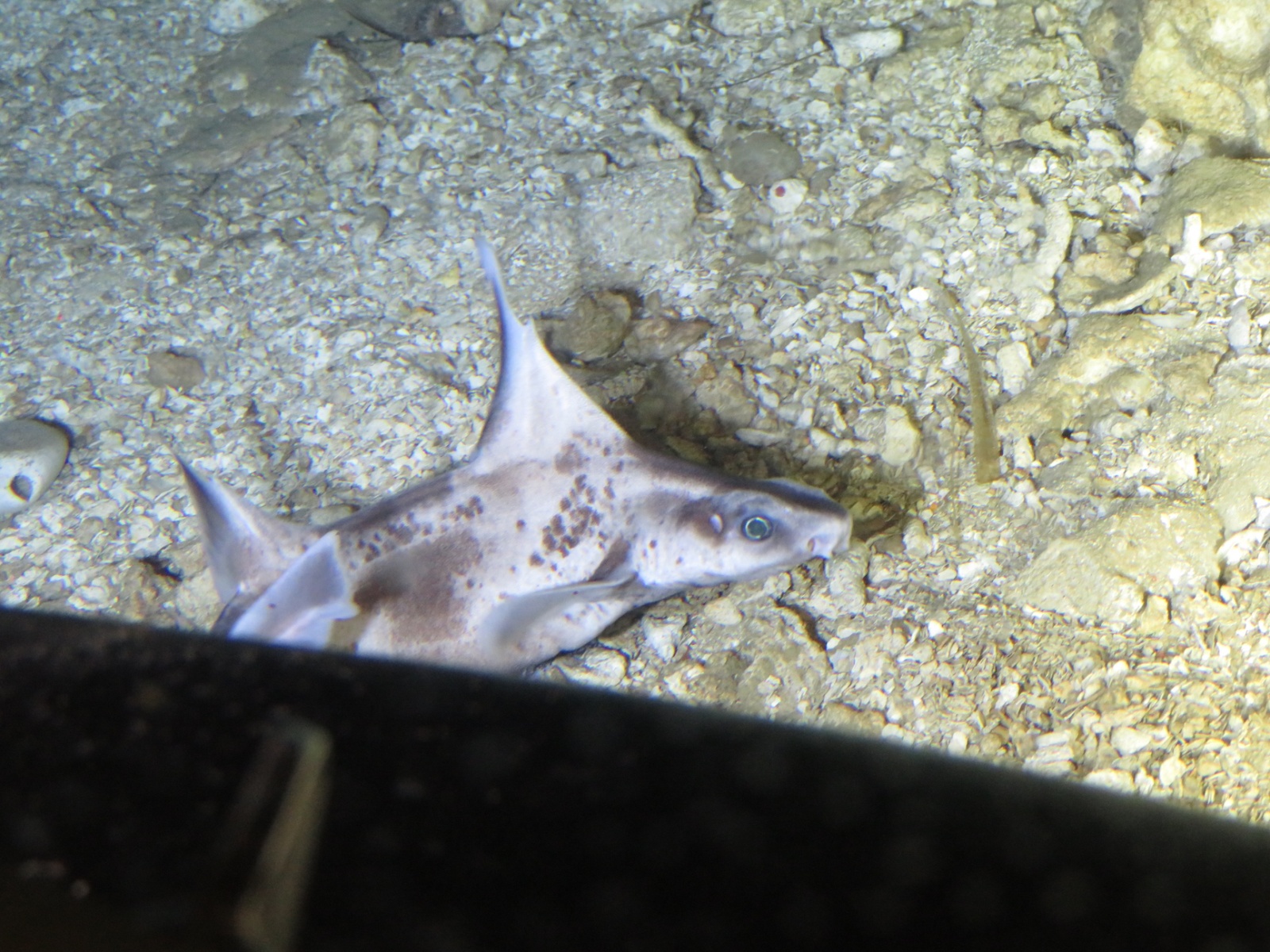
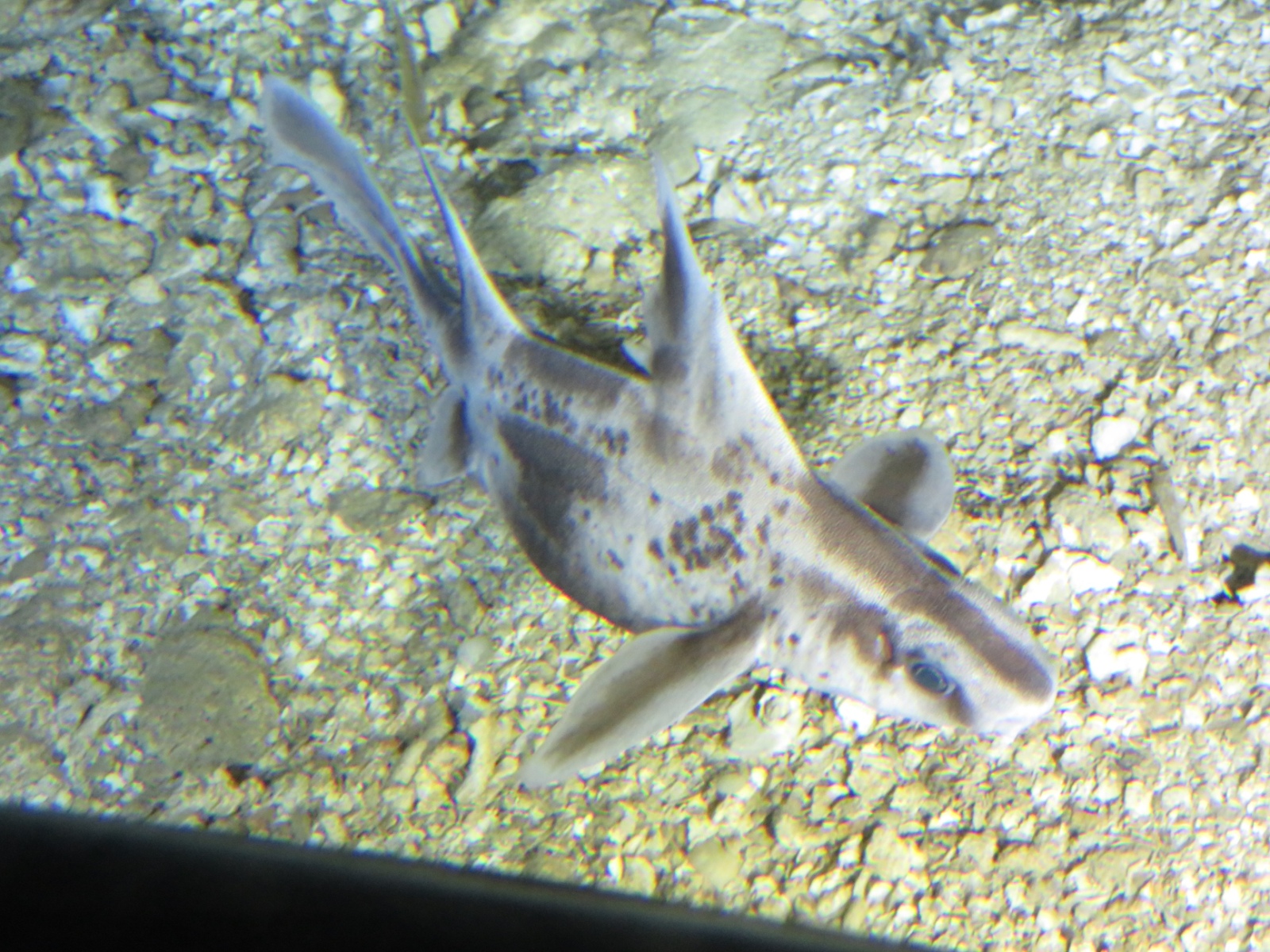
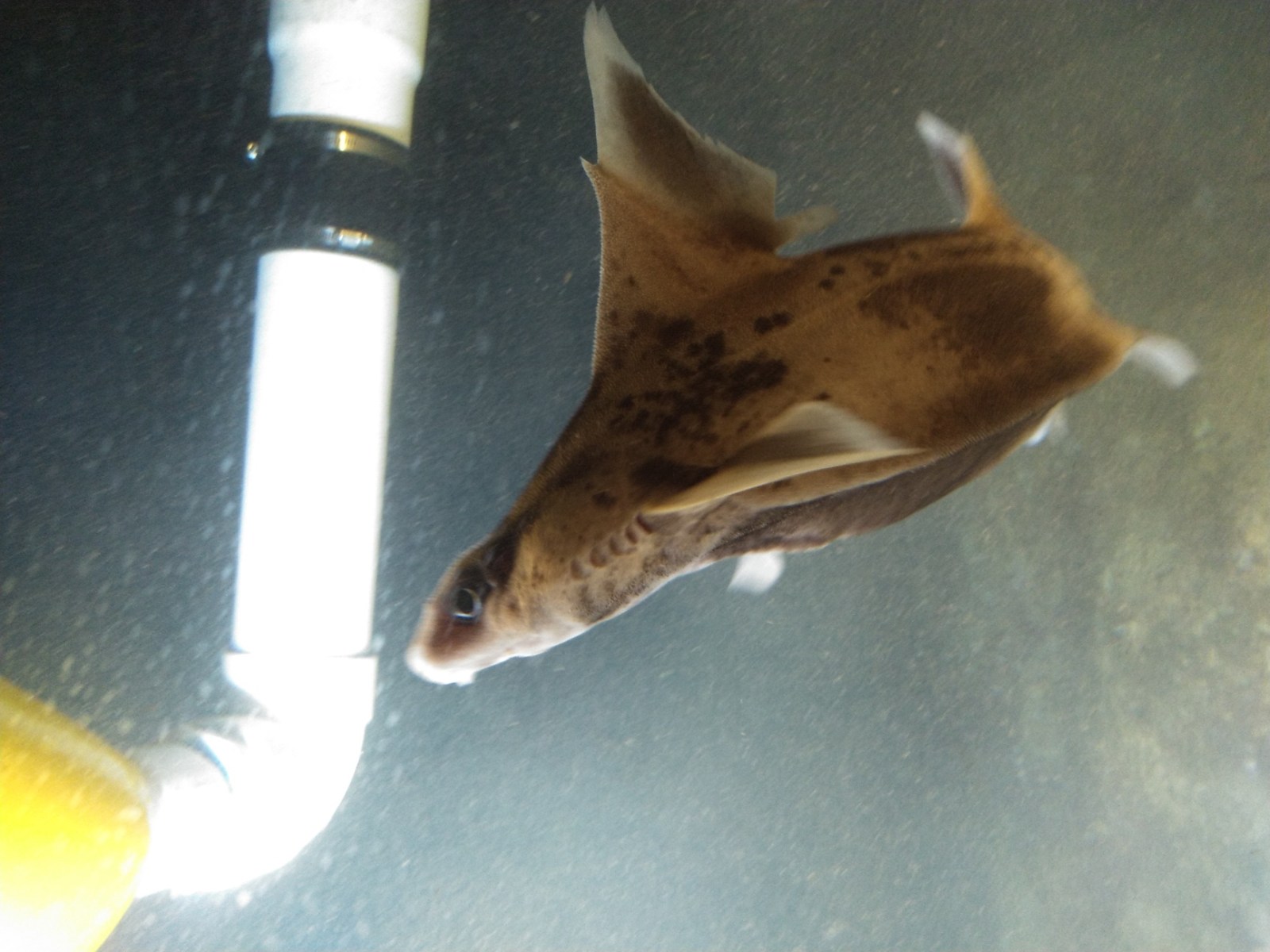
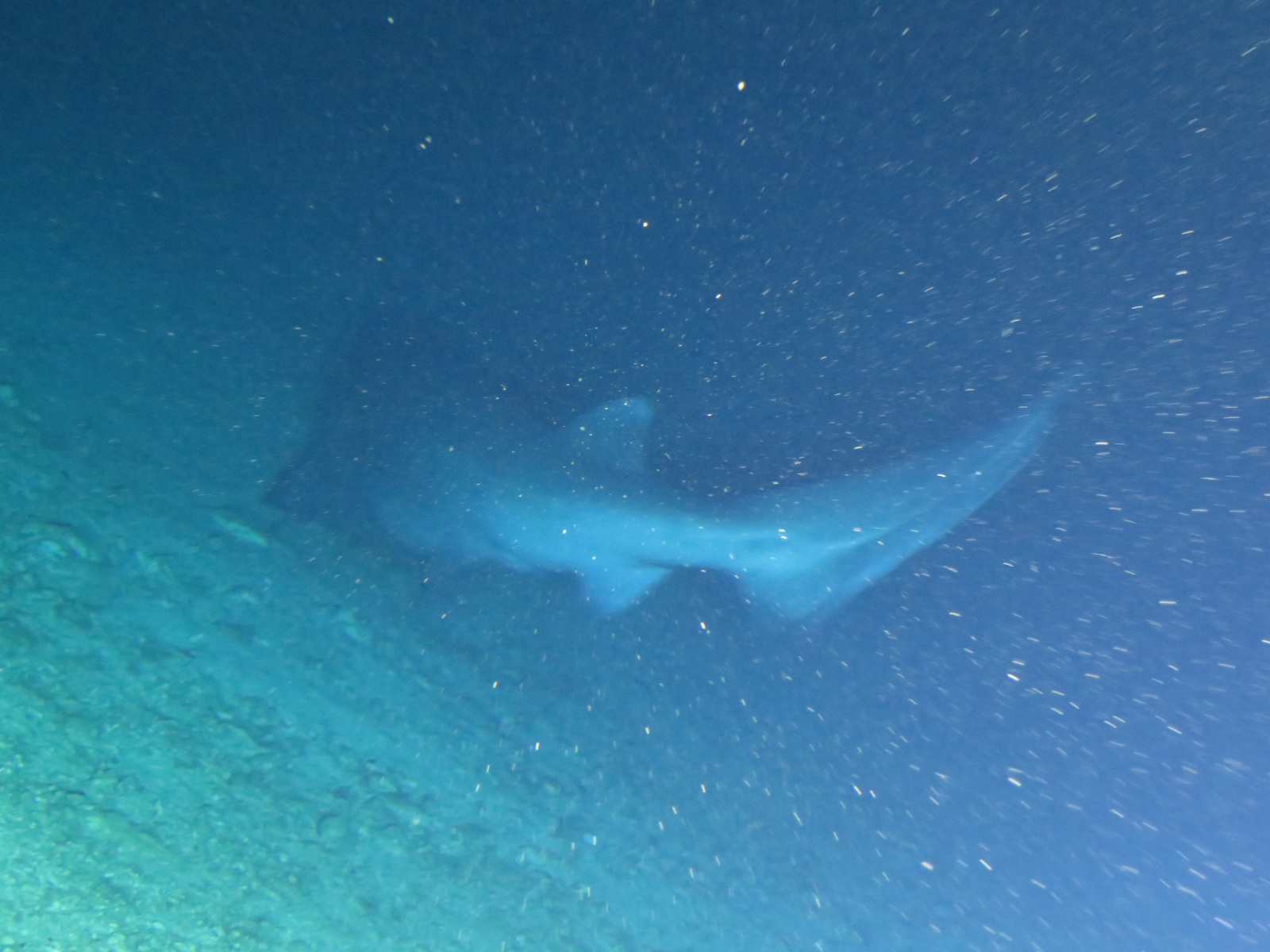
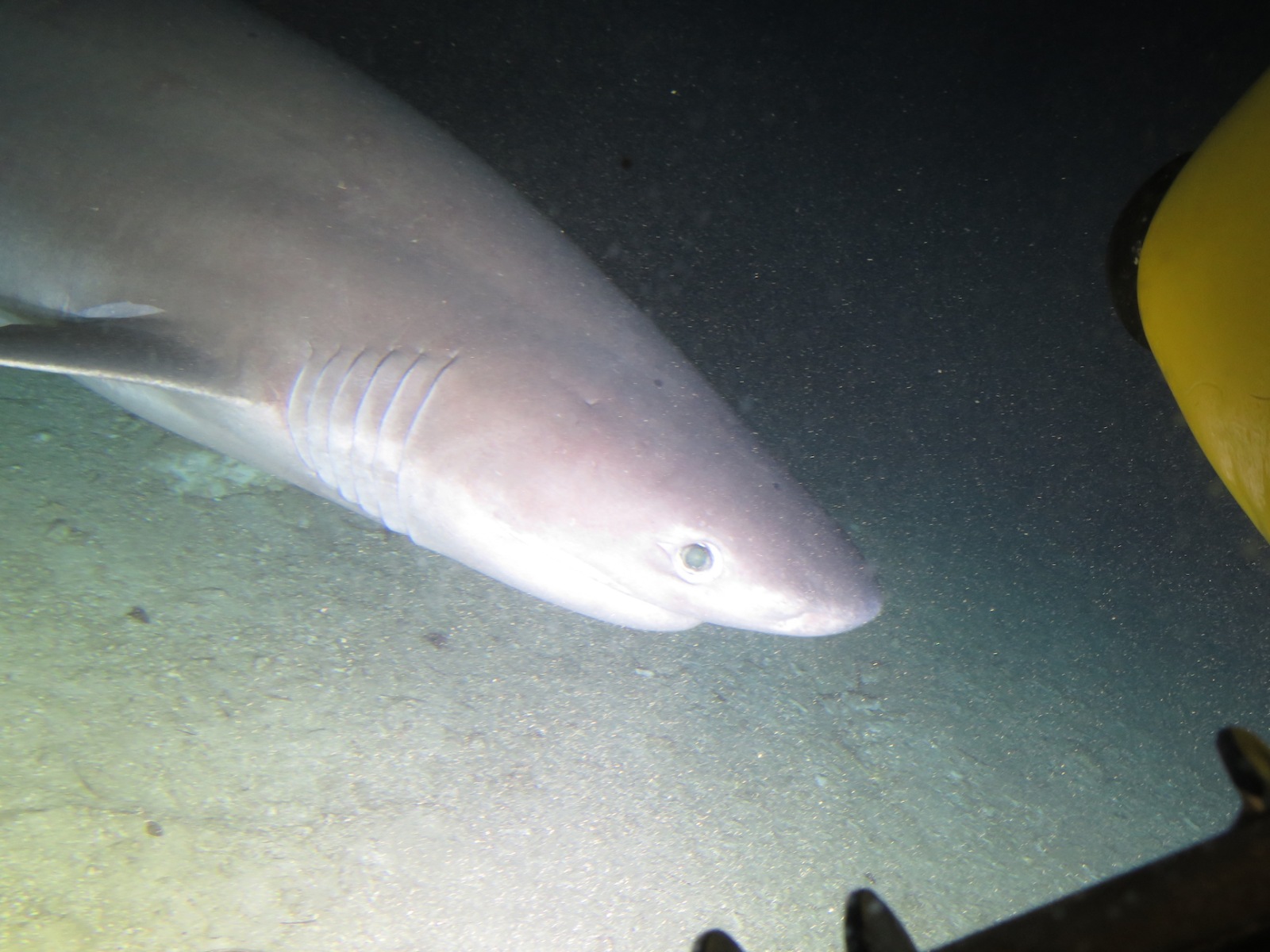
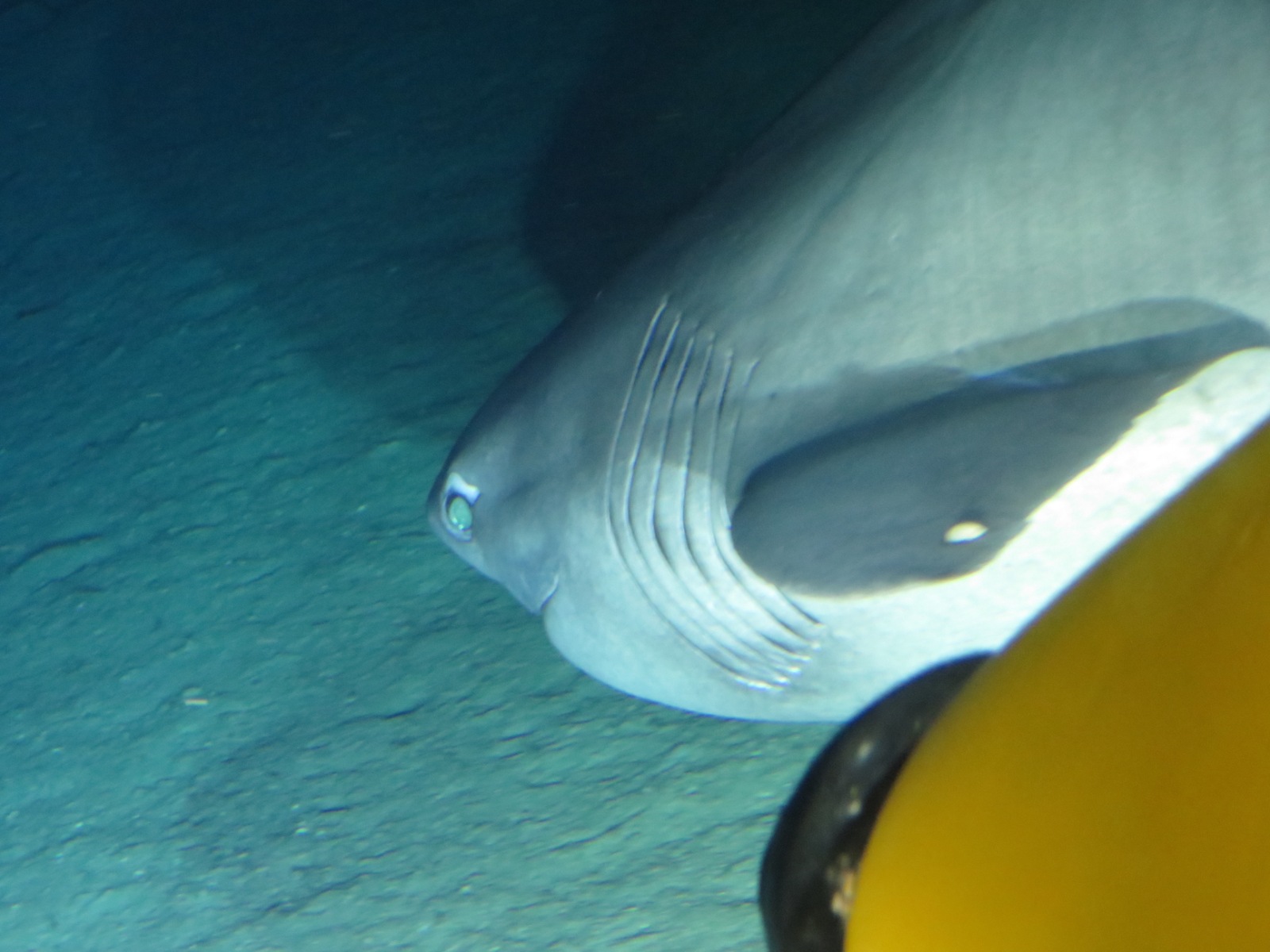
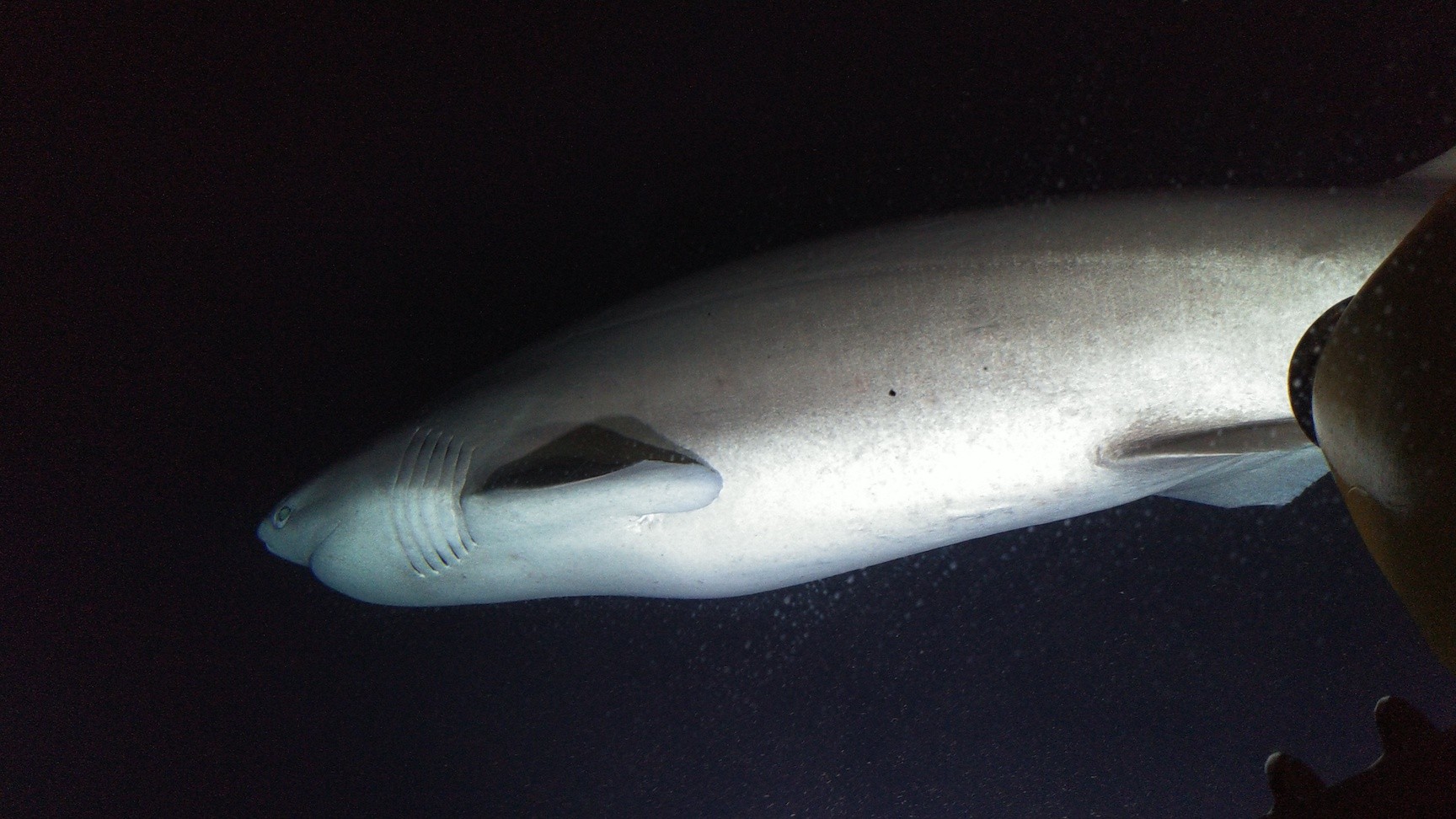
Principal to the expedition was the sampling of water, at various depths, to look for microplastics, and to tag six gill sharks, a very poorly understood, 300 million year old creature that lives its entire life in incredibly deep bodies of water.
We were successful in both regards, unfortunately discovering microplastics (as expected), and other members of this dynamic team were able to tag two sharks, the transmitters tracking their movements for a few months, and one year respectively. The final beacon will release itself as programmed, float to the surface, and then transmit all captured data via satellite to be studied.

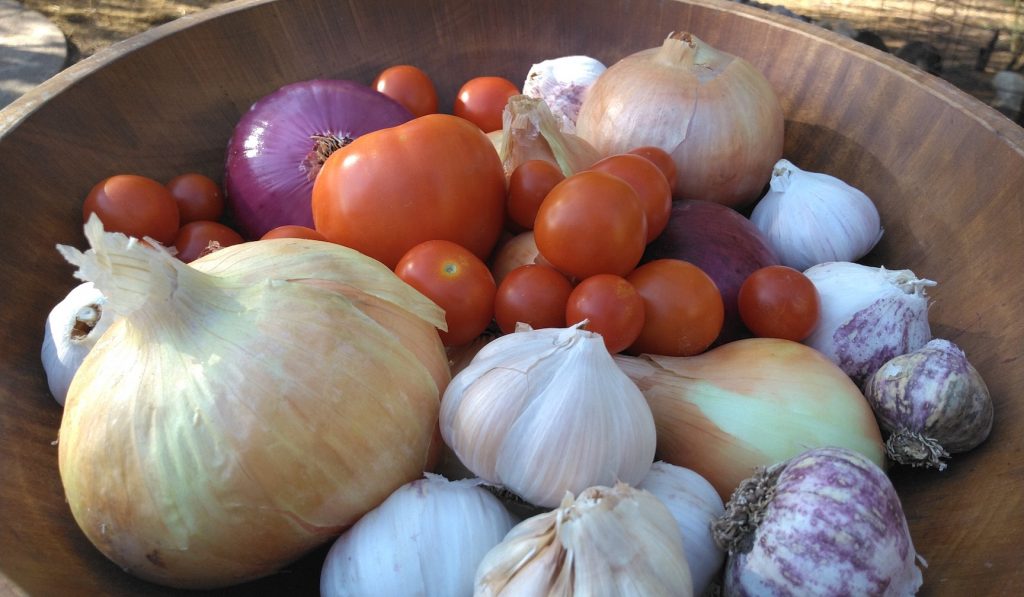
The Cascabel Community Garden never ceases to amaze me with its prolific production of fresh produce, even as the summer temperatures set new high records. Our local community members apply their experience, skills, and labor year-round, with roughly three growing seasons and associated harvests. Today, following my morning run, I stopped by the garden to select onions, garlic, tomatoes, and the last pickings of leafy greens. The tallest of the tomatoes were started in my house in January, way ahead of the official season. When I moved to the Biosphere 2 to work on SAM the weekly watering was not ample to keep them from wilting on my window sill. Transported to the community garden greenhouse, they were well cared for and now stand over six feet tall, with juicy, sweet tomatoes on every vine.
If I could never again eat a store-bought tomato, I’d be a very satisfied person.
Astrophysicist Dr. Paul Sutter interviews SAM Director Kai Staats from within the Biosphere 2!
“This week on Space Radio I had the opportunity to catch up with my good friend Kai Staats. Kai joined us from the grounds of the University of Arizona’s Biosphere 2 as we talked about his newest project, Space Analog for the Moon and Mars. Among other topics, we discussed the removal of perchlorates from the Martian soil and how Methane could potentially be used.” — Dr. Sutter
The more we barricade ourselves from others, the more others want to get in.
The more we hide our bodies, the more the unclothed body is appealing.
The more we tell our children “No!” the more we rob them of their childhood, their creativity, their passion for learning terminated before it is ever given form.

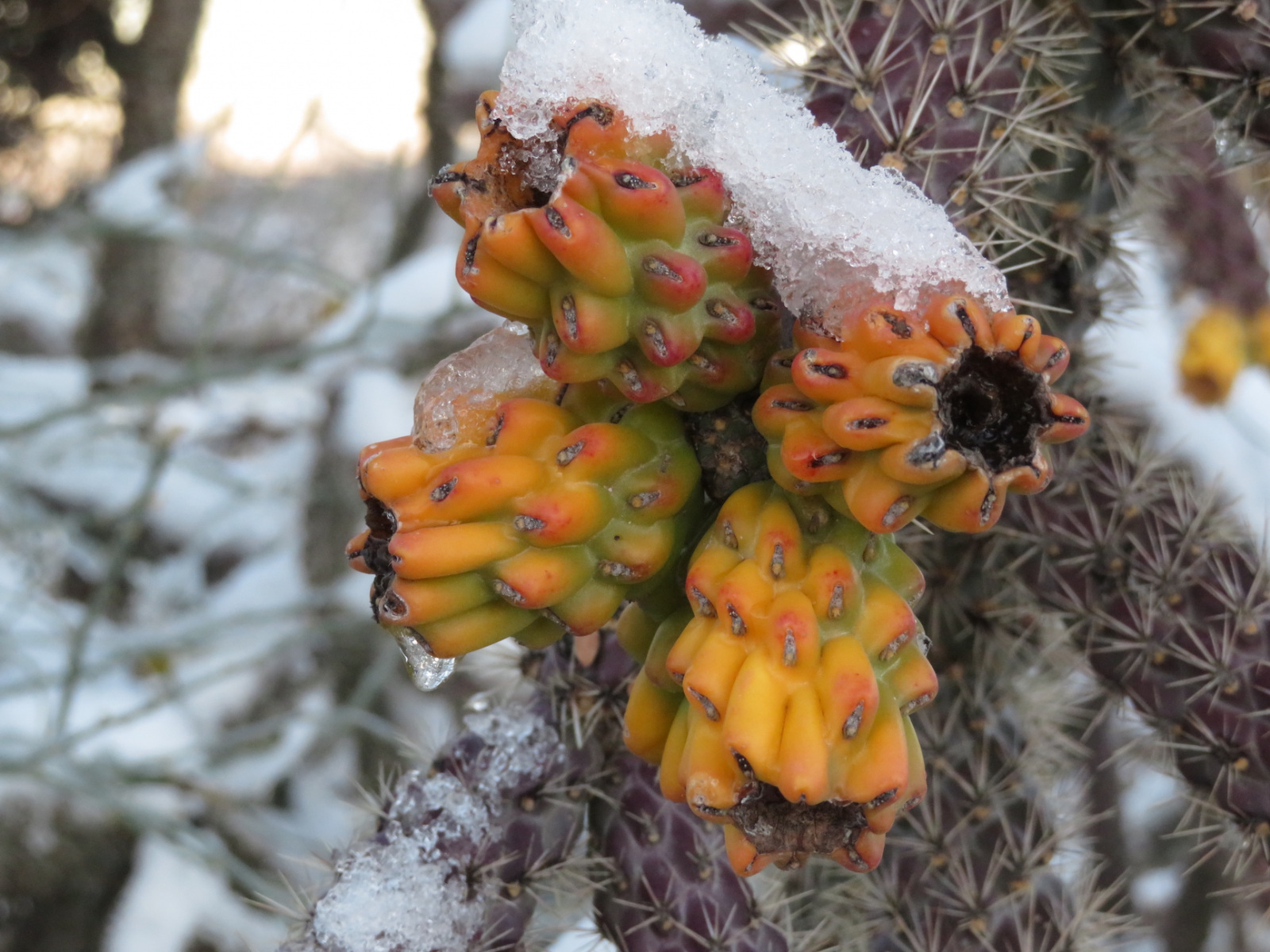
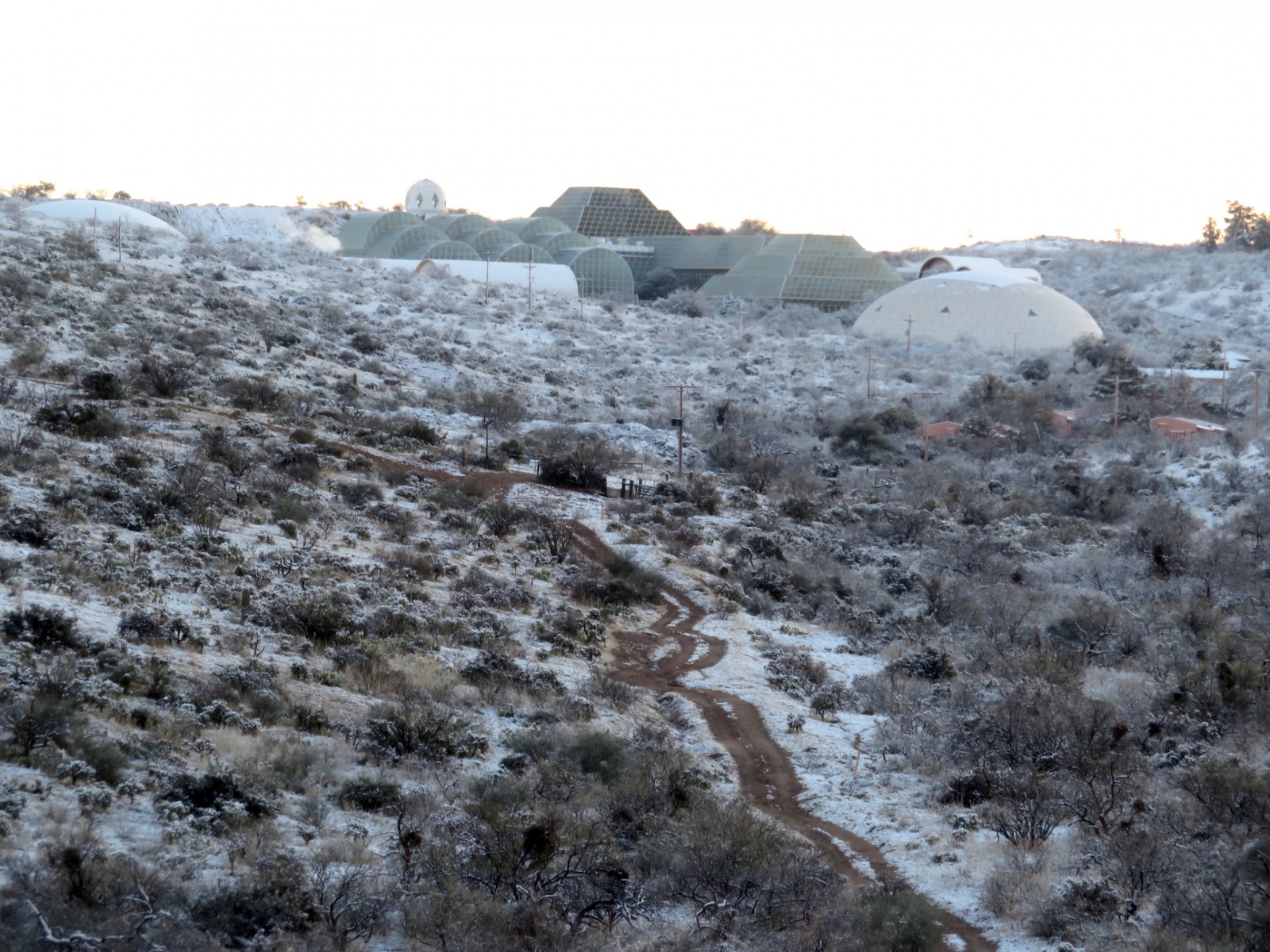
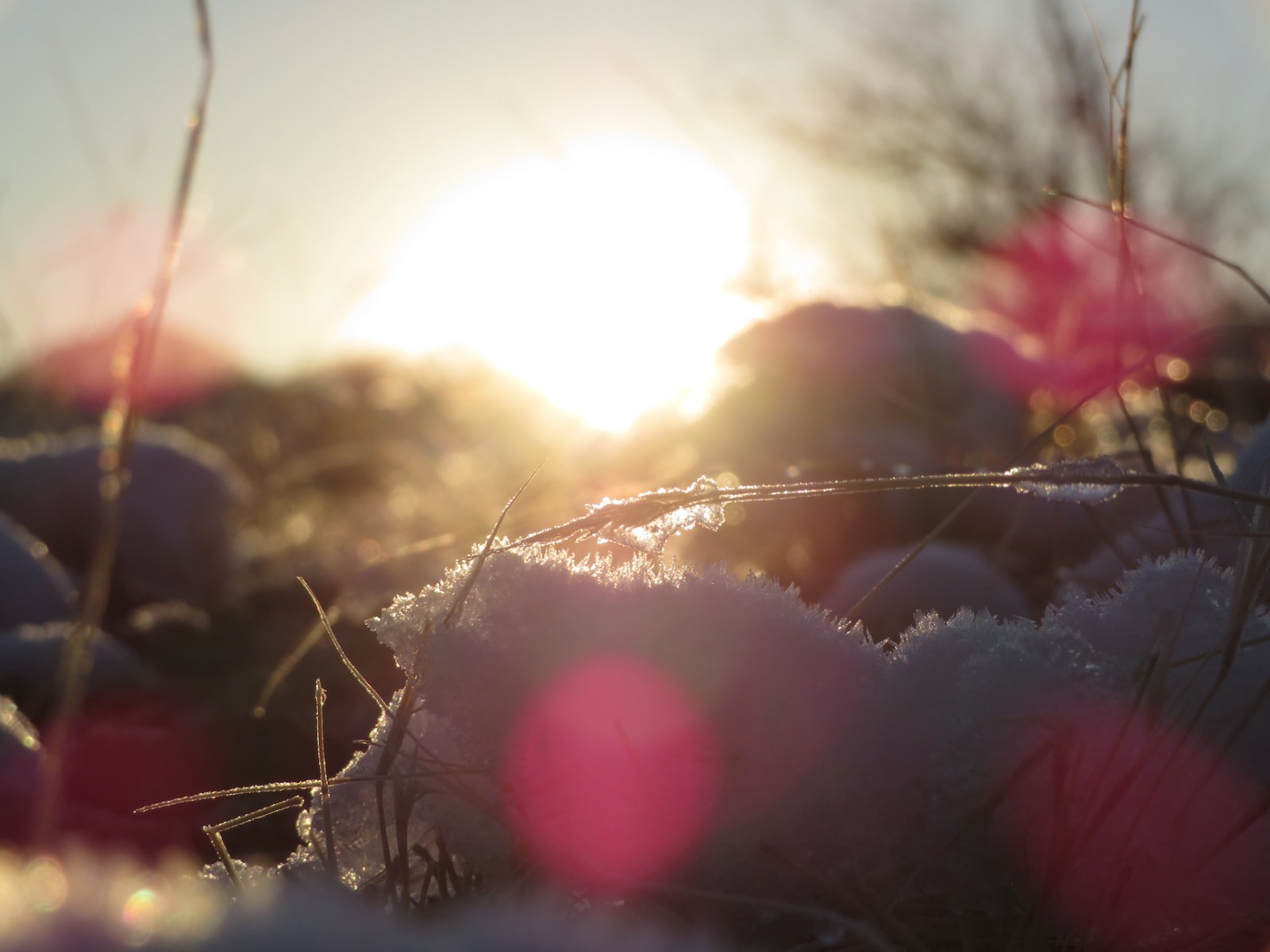
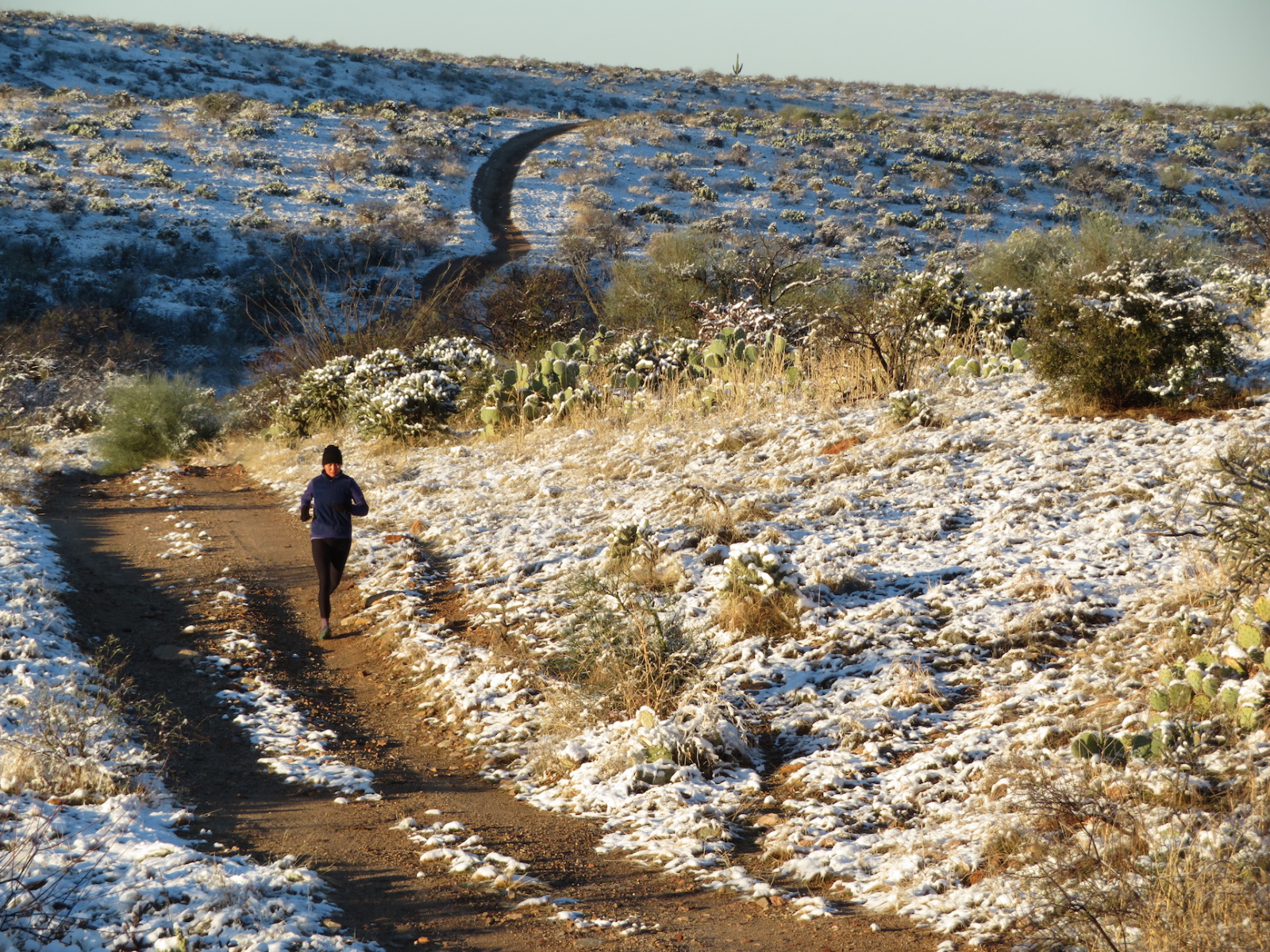
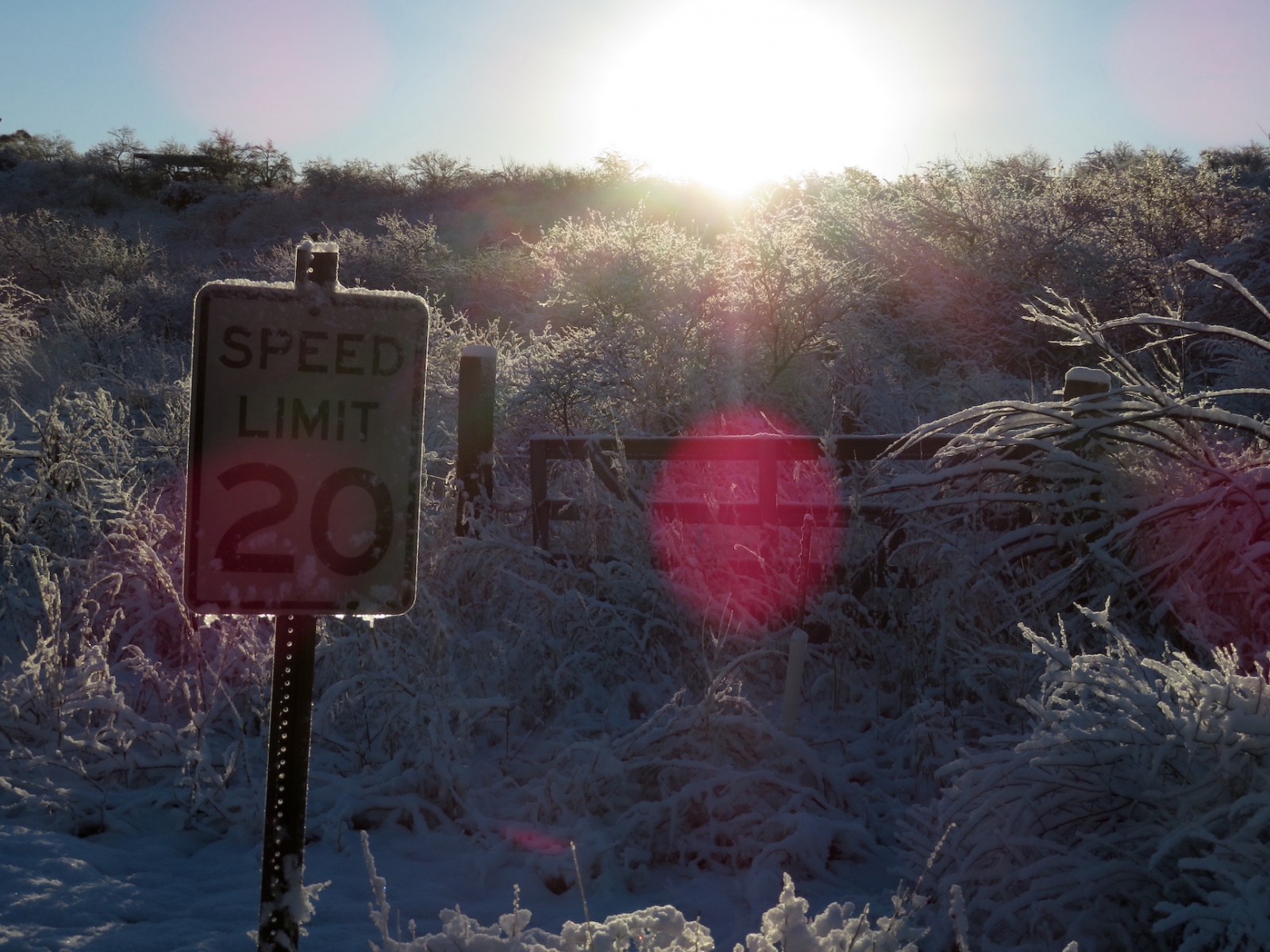
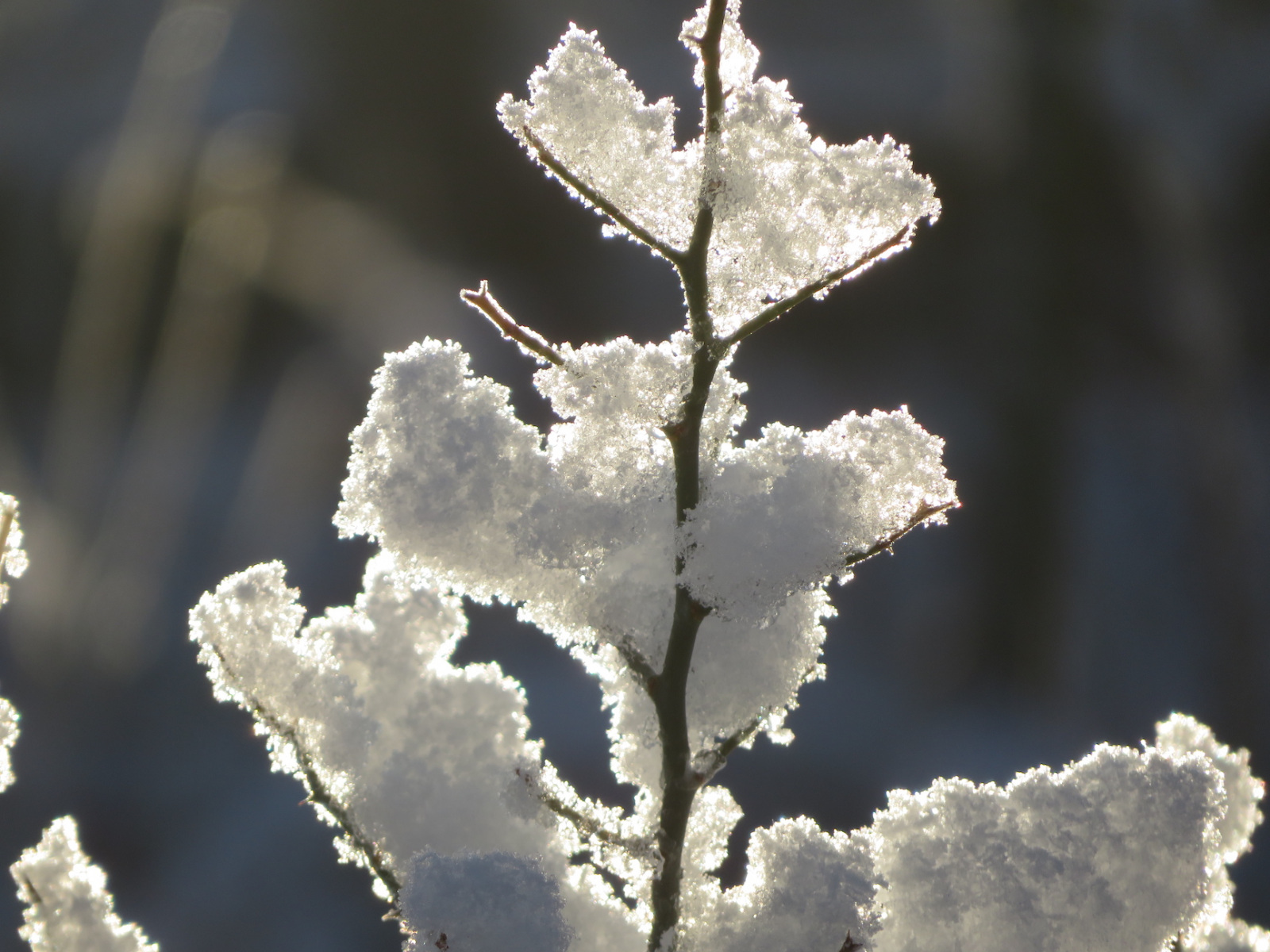
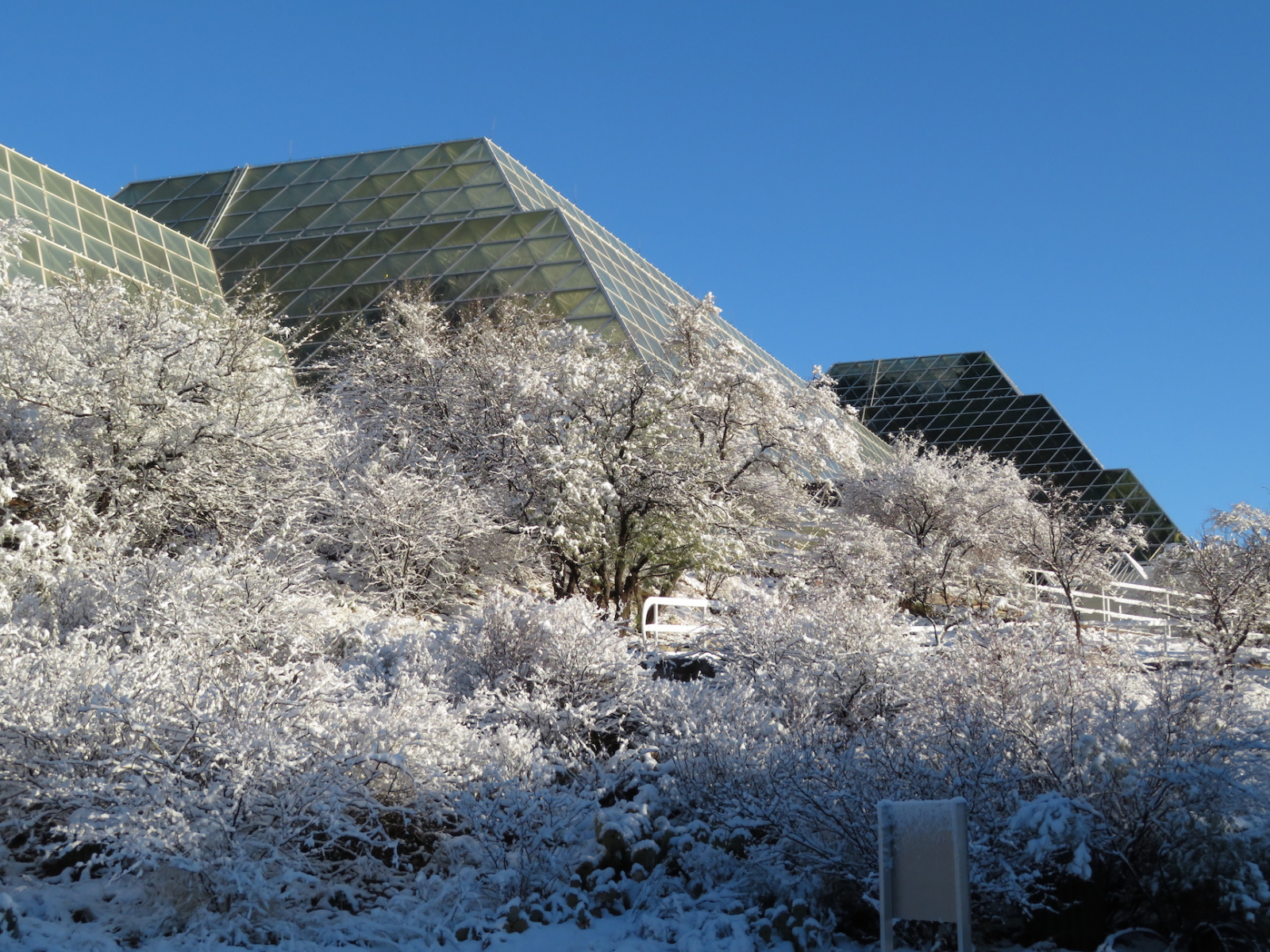
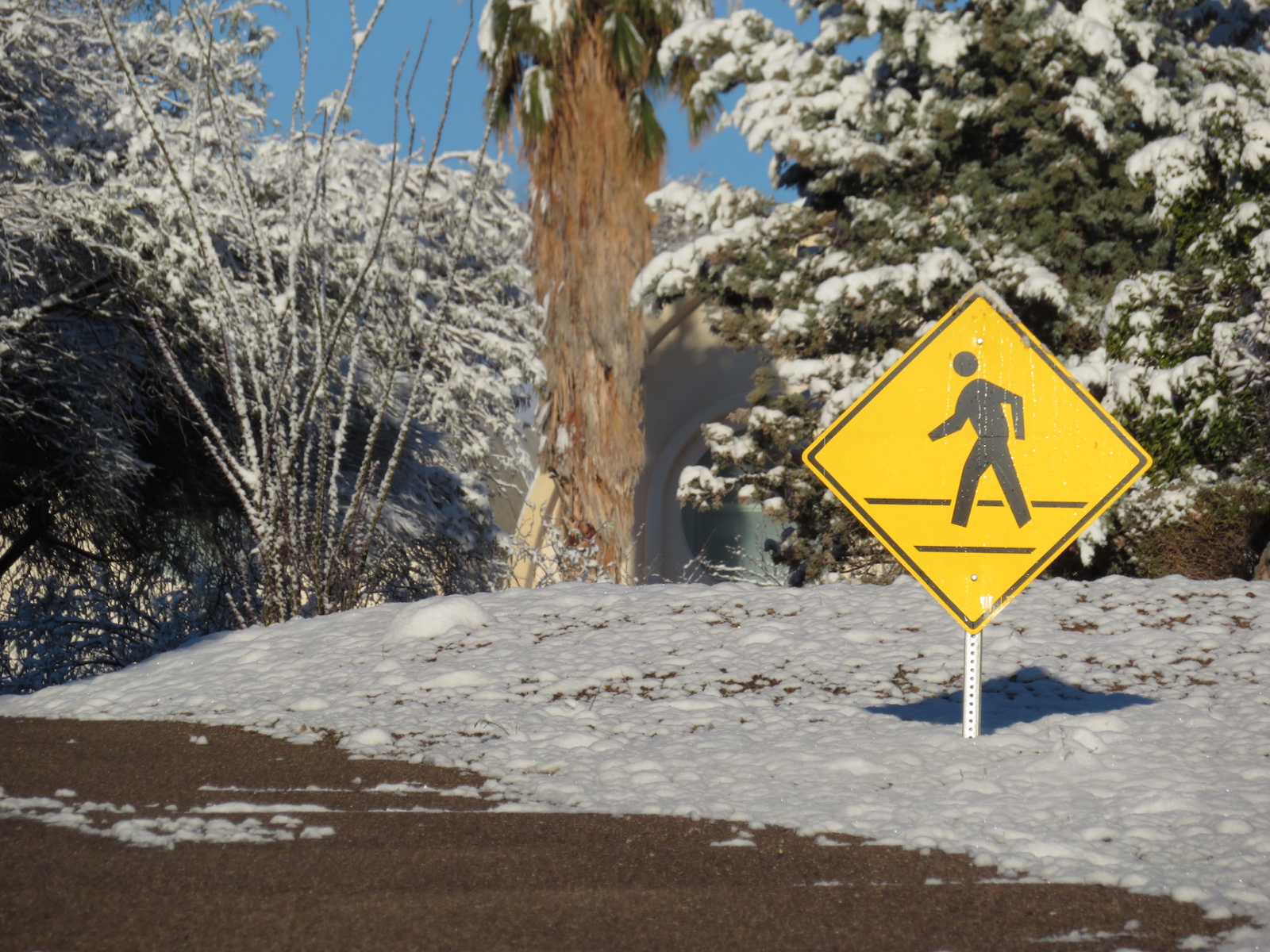
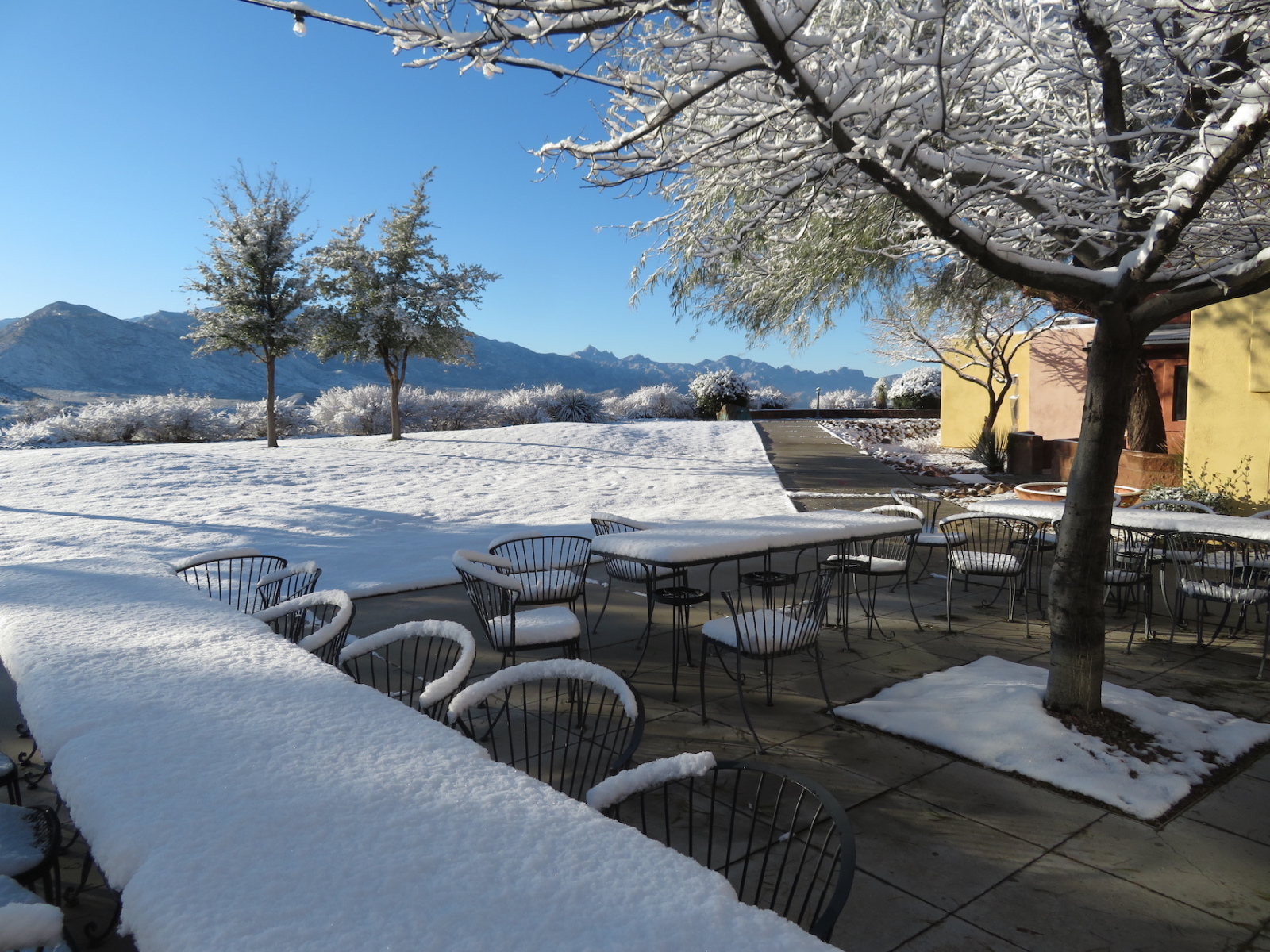
There is something magical about snow in the desert. It’s unexpected, often rare. Last night we went to sleep to the sound of rain on the steel roof. Sometimes soft, like sleet. Sometimes hard as the water hardened to hail. This morning the sound was clearly unique, that of a dusting across the windows and corrugated metal sheets, the sound that only snow can make.
We set out by foot, to the end of my land, down into the San Pedro basin, and up the far west side. The goal was to overlook the entire valley from that higher vantage point, but the snow didn’t let up and the visibility remained low. We walked back down into the San Pedro, past the three ranches on the far side, and then south up Page Canyon. Three miles in the flakes grew larger, wet, and sticky. Every few minutes we were shaking off the build-up on our hats, gloves, jackets and eyebrows.
I’ll never outgrow the desire to romp in the snow as puppies do in their first winter. The smell, the sound, the crisp taste of the air. And today, that rare desert phenomenon came to Cascabel. Thank you Colleen for sharing the magic with me.

After two and a half years in research and development, networking and team building, chasing dollars and fund raising, this is the day we can officially say, “SAM IS BEING BUILT!”
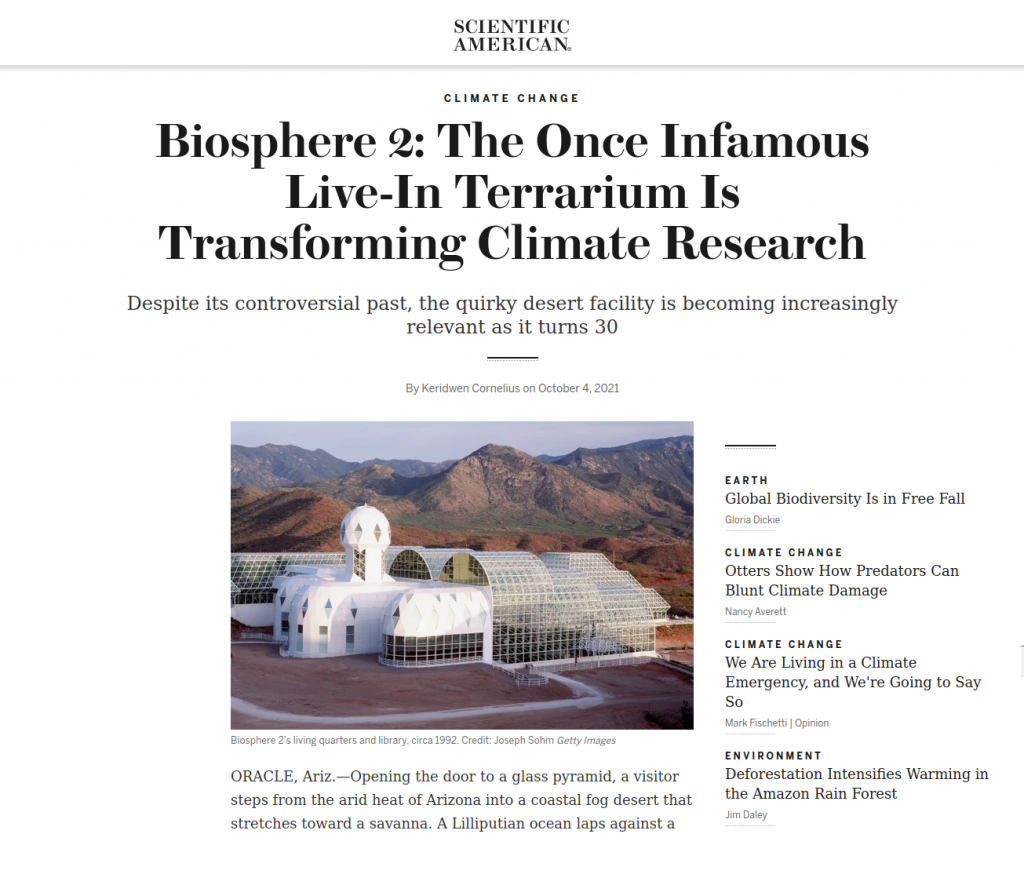
SAM is a hi-fidelity, hermetically sealed analog and research center composed of a crew quarters, airlock and hub, and greenhouse with temperature, humidity, and carbon dioxide level controls. When complete, SAM will include a half-acre Mars yard for pressure suit, tool use, and rover tests. Located at the world renowned Biosphere 2 outside of Oracle, Arizona SAM is built around the original Test Module, a 480 cubic meter sealed greenhouse with automated, gravity-fed pressure regulation system designed and built by Taber MacCallum, William Dempster, and fellow Biospherians in 1987.
This week I have moved from my residence in Cascabel, Arizona to the Biosphere 2 where I fully anticipate long, back-to-back days of physical labor and further development of this exciting program. It is likely that my own blog entries will be few and far between for the coming year, but I will be posting regular updates about our progress at samb2.space/blog/.
I hope to see you there!

A year ago today my neighbor and good friend David and I completed installation of a wood burning stove in my Arizona wilderness home. My electric bill dropped by more than 50% overnight, and my deep satisfaction with a fully renewable energy source remains unquantified by percentage or monetary value.
With 17 acres of mesquite forest, a maul, and a weekly workout, the main floor of my house is heated with the radiant heat of a single stove. As expressed in The axe and the fire, the manual preparation of wood for heating a home is gratifying in ways difficult to describe. Yes, it’s hard work. Yes, it takes time. And it is intentional, meditative, and a good workout that makes one truly appreciate warmth felt.
You cannot be offended if what is said about you is not true. Nor can you be feel insulted if you are confident in what you believe. Only those who are unwilling to accept the truth or uphold their beliefs without foundation will claim to be offended and react to insult.