Postcard from Mars – a SIMOC update: February 5, 2018
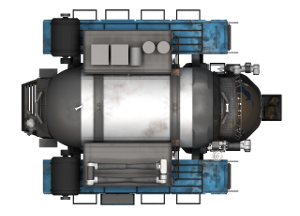 Just two weeks ago our work on SIMOC resumed. The holiday break was longer than anticipated (by me). I feel we lost some momentum from the pace we set last fall, but we are regaining now, shooting for a working prototype by the Interplanetary Initiative meeting March 5.
The team made a decision last week to abandon Unity as our game play engine, instead building a Javascript web interface. While we will have less total functionality, we are now more closely aligned with the current goals of this first version of our game play interface. And we will far more easily achieve the desired cross-platform support through a web interface. This decision cost us a week-long sprint of agile programming. Not a tremendous amount of time, but a loss that could have been avoided had I. A lesson learned, but no long-term damage done.
 With the start of the new year we welcomed Bryan Versteeg, world renowned space artist onto the team. He is now leading the design of the game play interface and playing “pieces”, the icons that represent the growing, off-world community.
 If you were not born in the ’70s, if you do not feel books and movies as deeply as you do real life, if you were not instilled with a sense of magic and hope by the original Star Wars trilogy, then you will not understand when I say, When a hero dies, a part of each of those who believed dies too.
 If a film is engaging, we should be moved to ask How are we affected? What do we take away? How do we see ourselves in the story unfolding, and how is our own view of the world changed? Perhaps the story received is a simple comedy, designed to give us a moment of joy, or one that haunts us for hours, weeks, even years. The depth of connection to the characters can bring us back again and again to the same story and to its sequels. A new universe is given form, and in that time and space, the story becomes our own.