Kai Staats: writing

Leather and Meat

Kai: What do you think of this? Leather and Meat without Killing Animals

Ron: It’s not nice to fool Mother Nature. I’m consistently puzzled by the human conceit that we know better than God, than nature, than a system that’s been functioning for hundred of millions of years. Eat and be eaten. Put another way: live, reproduce and recycle. It’s vibrant, biodegradable, organic, endlessly renewable. Yeah, it evolves, but self-perpetuates. Yesterday’s t-rex gives way to today’s skunk. But life goes on. Why this desire to compartmentalize, to set ourselves apart from the system? Life in a petri dish. No thanks.

Kai:
This particular person is simply trying to find a solution to the too-large population of humans, providing clothing and meat without robbing the planet of all its remaining resources. Pop-reduction is #1, of course, but in the mean time …

Ron:
Yeah, I get that. Unfortunately, it postpones the inevitable and merely leads to more of the same. We’ve been trying to increase the food source to “solve” the overpopulation problem since the advent of agriculture. It doesn’t work, hasn’t worked, never will work because there are no constraints on pop. growth once you take away the natural constraints, which aren’t pretty. When food becomes more abundant, more children survive to breeding age. When food becomes too scarce, people starve and pop. is reduced, painfully. When people weaken from insufficient food, predation/disease increases.

Again, an ugly way, but nature’s way. Humans could circumvent this through intelligent, conscious choice to limit pop. growth. Alas, the only ones who do this are the enlightened, educated few who are then overwhelmed by the unenlightened, ignorant masses, further exacerbating the problem.

Most ancient civilizations crashed due to over-use of essential resources. I see nothing to suggest that will change in near future. And this may be as natural a cycle as overpopulating deer, locusts, rabbits or any other species subject to chronic pop. increases and crashes. Ugly, painful suffering, but part of the natural condition? Bigger than our ability to overcome?

By |2017-11-24T23:06:30-04:00September 28th, 2013|Critical Thinker, Humans & Technology|Comments Off on Leather and Meat

Equilibrium in Isolation

Isolation. We often equate this word with the dreaded mark of a highly communicable disease, a quarantine to protect those unaffected. Isolation is too often taken to be a kind of a social dysfunction, a shriveling of the virtual connective tissue which allows one person to reach out to the other.

I have lived since the 4th of June in relative isolation, on a remote ranch, some forty five minutes from the nearest town in the Rocky Mountains of Colorado. The cabin was shared between the ranch hand, the owner, and myself off and on again through July. Since August, it has been mostly just me, alone.

In this space and time I am rediscovering isolation as a celebration of something far greater than how I interact with others, far more joyful than how I do or do not tell a joke at the right time, listen with full intent, or lead a conversation.

With nothing more than my thoughts and my surroundings, I have found simplicity, equality, and importance in all that I do such that waking with the sun rise, reading a chapter in a book, baking bread, chasing a coyote along an elk trail in the woods, and writing are of equal importance. No one task trumps the other. I move effortlessly from one to the next, without anxiety or concern for what is right or wrong, better or worse.

In isolation I have let go of any sense of good. In isolation I have found appreciation for every thing I do. Nothing is without reason. Nor is any one thing terribly important. Every hour of every day, each step I take simply unfolds.

In this state of equilibrium there is a kind of flow that carries me from morning ’till night, the isolation itself turning inside out when I realize I never was, nor am I now truly alone for all I need and desire is right here, inside me, all along.

By |2017-04-10T11:17:36-04:00September 24th, 2013|At Home in the Rockies, The Written|0 Comments

There be zombies

Vitus: Vitus the Mad’s psycho-philosophical observation of the week: there are a plethora of zombie movies and tv series out now and more on the way. This genre may be popular because it is a sublimated expression of our fear that the thin veneer of civilization is about to be ripped off and reveal that humanity is a writhing mass of cruel idiots bent on consuming itself in apocaclyptic violence. Either that or it is more simply social programming by the ultra rich who are planning a depopulation crisis. I don’t watch scary movies much anymore.

Kai: I agree. The movies that came out of Japan following WWII about Godzilla, giant monsters from the deep, and heroes such as Inframan were a way of addressing the pain and fear of atomic weapons, and their impact on the Japanese culture at that time.

Daniel Dennett argues that most people don’t have a mind, let alone a soul and as such, are walking conglomerates of living tissue with only momentary true self-awareness, or for many, none at all.

Does not the majority of modern life mimic Zombie behaviour? Morning ’till night, routine without pause. A perpetual, frenzied effort to get things done that truly have no meaning. All of this compounded by a deep cultural pain through shootings in schools, movie theaters, and churches, wondering where and when it will strike next.

Yet, we continue to watch more and more violence on TV as violence increases in the real world. Perhaps we are the Zombies already, thriving on the living, undead without knowing.

By |2017-11-24T23:14:27-04:00September 23rd, 2013|The Written|Comments Off on There be zombies

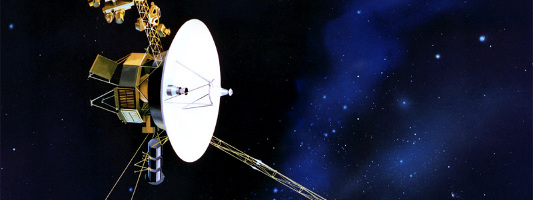
Voyager – 12 Billion Miles from Home

Voyager Spacecraft

Yesterday NASA’s Voyager 1 spacecraft became the first human-made object to venture into interstellar space. The 36-year-old probe is roughly 12 billion miles (19 billion kilometers) from our Sun.

In watching the live feed from NASA JPL in Pasadena, California, I loved the fact that the people speaking are the same that were involved in the project at its start. This not only shows the coherence of the JPL team, but that with time, men and women can remain involved and important to such incredible missions. Their heritage, as much as the spacecraft itself, is imperative to the future of exploration of our solar system and the greater universe.

  • Voyager 1 has traveled 11,600,000,000 miles.
  • Each of its daily transmissions require 17 hours to reach Earth. At the source, the signal is 22 Watts of energy, but at reception by the Deep Space Network, it is just 1/10th of a billion-billionth of a Watt.
  • The Very Large Array (VLA) in Socorro, New Mexico was able to image Voyager 1 even at the incredible distance of 11.5 billion miles.
  • Voyager 1 uses an on-board radio-isotope thermoelectric generator whose total power output decays at the rate of 4 Watts per year. There is ample on-board power to operate the “Fields of Particles” detector to 2020. Then, via remote control, project managers will disable one instrument at a time in order to give Voyager the capacity to continue to transmit messages for a final 10 years.
  • Voyager 1 is heading to a star called AC+793988. It will arrive in 13,000 years, swing by this star, and then continue to orbit the center of our galaxy.
  • As a messenger for our species, both Voyager I and II contain a golden record designed by Carl Sagan and his team. This time capsule contains images and sounds of Earth, a sample of scientific data, and a map. If ever discovered by an intelligent life form this record provides a sample of who we were at the time of launch and how to find our planet should they decide to come by for a visit. What’s more, Carl Sagan and his wife Anne Druyan were engaged to be married during the course of a phone call about the music to be included. Anne’s brainwaves were sampled to capture the essence of falling in love, with hope that an intelligent species may someday decode the thought patterns. The full story is available from NPR’s RadioLab.
By |2017-04-10T11:17:37-04:00September 13th, 2013|Looking up!|0 Comments

The Sustainable Solutions Paradigm

Beauty in Balance
Sustainable living begins with self-awareness and takes form in the resulting actions.

The awareness starts, for me, by reintegrating the natural and human worlds. Since ancient times humans have worked to isolate themselves from the animal world, from the “natural” world. In an effort to control our surroundings, to rise as the dominant species, we have justified our manipulation of the world in so many forms. Sometimes this is overt and deliberate, but mostly it is subtle, underpinnings in our shared vocabulary and cultural norms developed over time.

In the U.S., we need to undo a great deal of what the Industrial Revolution set in motion, then amplified by the technological revolution following WWII.

We have a misconception of living outside the natural world. I hear it often said “I want to get back to nature” or “we need to spend more time in the natural world” or even “out in nature” as though it is over there somewhere, on the other side of that ridge or that line of trees—but not here, where we stand, breathe, and live.

Even worse are the phrases “Save the environment!” or “Save the planet!” as both perpetuate the mistaken belief that “the environment” is an isolated thing, something we are not a part of but need at some level. We have relegated the rebalancing of our place in our ecosystem to that of saving a certain species of dolphin from extinction.

This planet will get along just fine with or without any given species. It will find a new balance in time. The issue is truly about whether or not we desire to live in relative balance or constant struggle with the resources available to us, and whether we find beauty in a world untouched by human hands, or one entirely under our domain. As so few of these untouched places yet exist, our domain is for a growing population, all they will know in their lifetime.

Spaceship Earth
Contrary to the beliefs of Buckminster Fuller and many of his contemporaries of the 1950s who had survived two world wars and saw this planet as plentiful, the Moon within reach, our resources are in fact quite limited and mining the Moon remains the work of science fiction. The more people we support, the less resources we have available for each of us.

Sustainability is truly about resource allocation and bioregeneration, in the end.

We are in all that we do, with every breath of our bodies and every acceleration of our automobiles, with every release of toxins at both a cellular level and from our industrial plants, involved in a constant interaction with our shared environment.

Before this begins to sound too mystical, I am speaking at a very real macro and micro level. I am speaking of the movement of molecules from one medium to another, and how our actions affect the many ecosystems we do embrace as our home.

The key is this—there is no right or wrong in our actions. There is only sustainable and unsustainable, meaning, to continue as we are, now, or to transition to a new paradigm of decreased, per capita resource consumption.

Unlike any other species on the planet, our opposable thumbs have enabled us to manage every level of our functional interaction with the world from which we take and to which we give.

I just want my milk
Let’s look at one product, one which we have harvested for more than ten thousand years–milk.

In small scale production, the cow consumes the grass which grows in the immediate field. The farmer walks from the farm house to the barn which houses the cow. The cow is manually milked. The milk is returned to the farm house, consumed, or perhaps processed into various milk products by way of heating, spinning, and filtering. The resources consumed are minimal, mostly local (outside of what is required to heat the farm house, which is a common denominator in this equation), and sustainable given the immediate rainfall, sunlight for the hay to grow.

When we purchase a carton of milk via industrial farming, we take advantage of a complex chain of events which includes the use of non-renewable resources: we pump oil from deep underground reserves, process the petroleum distillates to not only power the tractor which harvests the hay, corn, and soy which feed the cattle, but also the manufacturing of the tractor itself, the construction of the building in which the dairy cows are contained, and transportation of the milk to the plant which separates, sterilizes, and packages that which we eventually drink.

Each ounce of milk is made available to us by way of pesticides, herbicides, and hormones which enable a higher yield of milk product per acre than was possible just one human generation ago. All of this is possible due to the release of carbon based energy which will not in the lifespan of our species again be replenished.

Each plastic jug is made from the same petro-chemicals as are the herbicides, pesticides, and fuel used to harvest, store, and transport the grain. The alternative cardboard container is made from trees whose wood pulp is processed using massive amounts of water, digestive and bleaching agents, hydraulic presses, and glue to hold it altogether again. The ink is either petro-chemical based, or in food grade products, likely made from a soy product which is again a product harvested by the same means as that which feeds the cattle.

This is a light treatment of the subject, for truly, a single gallon of milk is the result of tens of thousand of individuals who made each component of the process possible. It is only with the economies of scale that such an endeavor can result in milk delivered to your grocer for less than $3.00. The real cost is almost incalculable, on a global scale.

Do I suggest elimination of technology and mass production in favour of manual labour and small, independent farms? No, but at least recognizing the total cycle and the real consumption of resources brings us back to the question of sustainability.

How long can we persist at this rate? How much of an impact does this multi-faceted, mass production system have on our fully integrated world where there are no barriers between our species, our actions and the environment?

If we accept that there is no bubble, no glass dome, no boundaries of any form which keep us from that which we think of as being over there, then sustainability is not just about recycling your glass bottles, choosing biodegradable containers, or mulching yard clippings, but yes, it can start there.

Sustainability is in some respects a waking, walking, breathing awareness in which we do not take anything for granted. With each product we buy, we make the conscious choice to examine the ingredients, to examine the packaging, and to choose the contender which was delivered to us with the least overhead—quite literally, the path of least resistance.

In the case of milk, we may choose home delivery of fresh, local milk in a glass container. Not only do we cut the real cost of packaging to a minimum by reusing (which is always better than recycling), but we once again build a relationship with the product and the humans who provide it.

This is but one story, but one example for which I could provide thousands for each product we purchase, use, and then discard. The overwhelming nature of this is clear demonstration just how far removed we have become in two, maybe three generations. Many people choose to hold their hands over their ears, shake their heads, and exclaim “It is too much to think about. I don’t want to know how it all works! I just want my milk!”

Disconnection
Therein lies the source of the problem. When we were hunter-gatherers every person shared the knowledge and experience to survive, as an individual or in a collective, shared tribe. As we transitioned to agrarian we became masters of resource allocation, specialization, and our populations expanded. Only in the past fifty years did we again transition to a technological foundation and in so doing, became fully removed, as individuals, from most of what we consume. There is such an elaborate, complex story behind nearly every product we buy that we cannot possibly understand nor appreciate what makes delivery of that product possible.

How many people in the U.S. have ever pulled a fresh carrot from the ground? Sewn their own clothing, or chopped the head off a chicken, pulled its feathers, and prepared it for a meal or storage?

Everynowandagain we are surprised to learn that twelve year old girls in China are assembling our cell phones, or that our fast food is comprised of more synthetic compounds than real flesh and bone. It is these harsh reality checks that help to rebalance the equation, to remind us that economies of scale do not always lend themselves to sustainability for they are not in isolation.

This is precisely how we can point somewhere over there and say, “That is nature” when in fact we are standing in nature at all times. To be sustainable, we must make individual choices which reduce our total consumption. This will in effect, over time, modify our collective consumption and our cultural norms.

If we do not proactively make these choices, “nature” will take us down that path without our consent, not as punishment but as part of the inevitable feedback loop in which we do exist.

My own choices, my own actions
I have been traveling across North America and overseas for the past two years. I seldom eat at restaurants. Whenever possible I purchase from someone as close to the source as possible. I am vegetarian for more than twenty five years and while I am by no means against eating meat, there are simply too many people on the planet to make meat centerpiece to each meal. I carry with me my own fork, knife, spoon, and cup and refuse, whenever possible, to eat from disposable dishes. I never accept bottled water. Even in Kenya, I purchased a water filter for my adopted children in order that they might reduce their impact (and it will save nearly $100 USD in the first year).

I know this invokes the image of dreadlocks and baggy, unwashed clothes, but I am a working, well groomed professional. I am, quite literally living as my grandparents did just two generations before me. They carried their own dishes to picnics and family reunions, and at the end of the day, brought them home again. We have become complacent, a throw-away society disconnected from our own actions.

Sustainability can be as simple as asking yourself, “How would my grandparents have done it?” The answer is usually a sustainable one.

On a personal level, sustainable action just feels right. To not live at least attempting sustainability is to perpetuate the false belief that we are, as individuals and as a species, somehow insulated from the total world. I don’t want to live like that. It is not healthy for me, for those with whom I interact, nor those whom I will never meet.

My advice, if it is received, is to not draw lines of black and white. Find instead shades of gray. Make small decisions, incremental steps toward living with improved awareness. Practice, but do not preach. Share what you have learned when someone asks, but do not push it on them. Be an example, and people will want to follow. And that is how the total system can change, one person, one consumer at a time.

In the Void of Education – Part 4

This topic starts with In the Void of Education, Part 1 and follows Part 3.

My adopted son Bernard Masai, whom I met in 2007 when working at an orphanage in Nakuru, is now in his second year at Mount Kenya University where he is studying Community Health. His class is regularly involved in field work, hands-on assessment and intervention in the real-world issues of communicable disease and personal hygiene. He has shared a few of these stories with me, his more recent as follows:

Do people have facts and experiences on some encounters? And if they have, do they forget to practice or assume them? Those who assume, are they ready to learn and change for their own good? Do the knowledgeable ones teach less knowledgeable ones?

Kai I would like to share with you one of my first encounters while I was on field work for my university. [I]t has been a long and very encouraging one. I know very well that my profession grants me a sound, full mind to educate the public on various diseases.

Kai, you know that HIV/AIDS has no cure, [but I met] two women who are HIV/AIDS reactive (positive) [who] have been using Arithroviral drugs for two years now.

Last month here in Nakuru there [was] a big Crusade where thousands of Christians [from] all over the world did attend. The theme of the crusade was “God curing people having AIDS.” [P]eople using the ARV drugs abandoned them, claiming they will all [be] healed.

Kai I am not opposing Faith, but I cautioned the few and I taught them on how viruses works on our immune system. I proceeded teaching them on how the ARVs operate in people having HIV/AIDS disease … those using it should not abandon them as some were intending.

Some saw [the] sense in what I was saying [but] the rest ignored me. They were almost viewing me as a big demon. [I am] sorry to say, but two weeks down the line those who abandoned the drugs were bedridden and one died. [M]y view is if these people would have [accepted] the facts of science, [they] would not have died.

Some people are not willing to learn … but I would in my life stand a chance of educating those who are willing. It is not the matter of being against their Faith but this is reality. Having a wider knowledge on research is very [valuable]. I am not yet a professor but I am trying to access knowledge [from] all sources to avoid telling people short stories that will [cause] them to die.

It is my joy when people read and gets [these] facts. This will really change some people’s way of thinking.

By |2017-11-24T22:35:59-04:00September 13th, 2013|Critical Thinker, Humans & Technology, Out of Africa|0 Comments

A Tribute to Cedie

Cedie Staats, Great Dane - 2004-2013

Our family dog, Cedie, died today. For some people, a dog is just a dog. For others, a dog is part of the family. For those who have shared a life with a Great Dane, it is no understatement to say, given their incredible size and demeanor, they are very much human.

But as with all dogs, they are locked into a stage that is, perhaps, akin to a two or three year old, never fully independent, seeing the world through the eyes of a child, forever eager to please. Perhaps that is why we have for thousands of years incorporated canines into our human lives, long ago enticing them to join the hunt and the campfire.

More than any animal on the planet, we have bred dogs to meet so many of our needs—to work along side us in police cars and fire engines, to guide those bound to wheelchairs, to locate lost children and discover hidden dangers. Every day is new for a dog, every day appreciated as though it were the first and the last.

In Cedie’s case, her life was many times extended for she was born without the enzymes required to digest her food. Each and every bowl served this past eight and a half years required the addition of enzymes in order that she could benefit from the sustenance she consumed.

We arrived to the veterinarian, just two blocks from my parent’s house, at 7 AM. The neighbor Darren, my father, mother, brother and I carried her, each holding a fold of the blanket on which she lay. One hundred and forty pounds moved with relative ease from SUV to the floor of the clinic.

The vet needed only a few minutes to recognize the extent of the situation, to let us know that surgery would not likely lead to a positive outcome. Cedie’s twisted stomach had likely also damaged her spleen. It was best to put her down.

It’s that moment, that brief instant in which you realize this companion will no longer be present in your life. It is then that you realize the routine of your day will no longer be built around the needs of this creature for which you have been caring for nearly a decade. It is the loss of the routine, the being needed as much as receiving which will be missed.

I stood in the doorway to the lab where Cedie lay on the floor. My mother was stroking her neck and belly, my father her front left leg. My brother was holding one of her front paws, dew claw to toe nail equal in size to that of his own hand.

The vet had introduced a needle and tube through which a pink fluid (a strange colour for something that brings an end to life). Cedie’s breathing slowed, her eyes no longer made contact with each of us. Her tongue no longer worked to moisten her mouth nor deliver cooling to her insides. Eventually, she … just … stopped.

At some undetermined point in time Cedie’s blood no longer circulated, her bone marrow no longer produced new blood cells, and her nervous system stopped transmitting signals that enabled awareness of temperature, movement of air, aromas and smells which for a dog create a complex map of the world.

At some point, the living, breathing, digesting, interacting body remains a wonderfully complex but no longer animated assembly of organs, cells, and molecules. For eight years, the atoms in Cedie’s body were held captive in the form of a canine. Today, they were released again, free to become something altogether different.

At what moment does one no longer harbour self-awareness? At what point does consciousness cease? We may never know. But when Cedie’s body is returned to the soil, new life will rise from her ashes, the same molecules again given form and function in the cycle of life on this planet Earth.

Cedie Staats, Great Dane - 2004-2013

We thank the momentary form that was Cedie, for the laughter, the frustration, the routine, and the exchange of warmth. Mammal to mammal, pack animal to pack animal, we thank her for leading us around the block countless thousands of times. Through walking Cedie, my father became an integral member, even a leader of this local, historic community. Because of her many children overcame their fear of dogs.

Because of you Cedie, we experienced what it means to give and give and give without expectation of anything in return. That, more than any of the animal features we do share, eyes, nose, ears, and tongue made you a part of our human family.

Next time around, we’ll enjoy you in the flowers and herbs which rise in the spring, their aroma relinquished to the desert air. Again, you will arouse our noses, but this time (we do request) in a more pleasing manner. You’ll still be here, with us, in a wholly new form, recycled over and over, again and again.

By |2017-04-10T11:17:37-04:00August 28th, 2013|From the Road|0 Comments

What I Learned from the Road III

My work in storytelling and documentary film this past year, in Palestine, Tanzania, and South Africa has shown me the incredible capacity for humans to do amazing things and at the same time, to conduct the most horrendous acts—based upon the stories we carry in our individual and collective histories.

We use stories as guides through our lives. Stories we tell ourselves, stories we tell others, stories we are and are not aware of which guide our success, our failures, our beliefs about who we are and how we are similar or terribly different from the “others”.

When we change the stories we tell ourselves, we change how we perceive history and shape the stories to come.

Other essays in What I learned from the Road

By |2025-08-10T11:45:35-04:00August 10th, 2013|From the Road|0 Comments

In the Void of Education – Part 3

This topic begins with Part 1 and follows Part 2.

Mixed Vocabularies
At lunch on the second day of my Wilderness First Responder training I sat across the table from a class mate, a young man (I will call him Matt) who was sharing some of the challenges his brother faces in the Texas school system. In particular, he finds it very frustrating, as a history teacher, to teach both the Christian creation story and evolution / cosmology as competing theories for how the Earth, solar system, and universe were formed.

He is always walking a fine line in the respect that he wants to teach his students to be critical thinkers in the shadow of an administrative and parenting body which fear straying from a Christian foundation. He is a history teacher, not a theologian, as Matt made clear.

Matt took another bite of his lunch time carrot, shook his head, and asked how this kind of rationale could possibly continue in this modern world.

The woman to my right (I will call her Shelly) immediately offered, “The kids need to know both theories!”

I knew better, but could not help jumping in, “Are you also suggesting they teach the Navajo, Sioux, and Mayan creation stories? What about the creation stories of the ancient Greeks and Egyptians? I am all for that, as a broad cultural education is always a good foundation. But it seems our schools do not allow for this much focus on the mythos of the human species.”

She responded, “No. I am talking about the Biblical story and evolution. If you are going to teach evolution, you need to also teach what the Bible teaches us.”

“Science and creation stories are not competing–they are not even in the same category.”

“Sure they are. Both are based on history.”

Matt was chewing the last of his carrot, “Sure. History is stories and facts about people and places and events. Some of them are supported by records outside of the Bible.”

Nodding, I quickly added, “The Bible offers an account of people who likely did walk the Earth. But to say the Bible, or any creation story gives an accurate account of how the Earth was formed, or how life has evolved, is misleading, taking away from–.”

Shelly cut me off, “They are just theories!”

I hesitated, and decide a prop would be more effective than words. I picked up a book and then let it drop to the floor without saying anything. I looked at Shelly, then reached down, grabbed the book, and lifted it to the height of the table. I dropped it again. Reached down, grabbed the book, lifted and dropped it again. I did this four or five times more.

“Nine point eight meters per second per second. Every single time. Unless the hand of God interposes a miracle, or the total mass-density of the Earth spontaneously changes, this book will always fall to the floor at the exact same rate over the exact same period of time.” I paused. “And yet, gravity is just a theory.”

“What’s your point?” Shelly asked?

“All of science is based on theories. But in our English language, ‘theory’ has a negative connotation when in fact theory is an integral part of the scientific method and foundation to all we know about the universe around us. If a scientist is able to disprove what we know about gravity, and show with repeated accuracy that his or her revised theory is more accurate, then it will be adopted in place of the former. That’s science. Far more wrongs than rights. Even when a model is supported by repeat experiments across the scientific community, it can always be overturned by newer, more accurate models.”

“Do you believe in evolution?”

“No. Absolutely not. I don’t believe in any scientific theory. There is nothing to believe in, which was my original point. Science is not religion.”

Shelly responded, “But you have faith in the theories?”

“Not blind faith, no. I respect the process by which theories are reviewed and analyzed by the community of biologists, chemists, and physicists. But what is most important, I know that I can reach out to the community, either via the publications or directly to the individuals who have conducted the research, and ask for exacting explanation—”

“But the Bible provides explanation!”

I continued, “—explanation which can be reproduced by anyone who has access to the tools or a working knowledge of the math which provides foundation for the models.”

At this point I grew uncomfortable for the energy in around this table was escalating quickly. I looked at Shelly, back at my book, and said, “I’m sorry. I should not have jumped in. I really need to study. We simply cannot take this conversation to any meaningful place with the limited time remaining in our break.”

“Why?! Why doesn’t anyone want to talk about this?”

Matt looked at his hands, shaking his head.

I took another breath. “We need a common vocabulary, a shared understanding before we can even begin to have this conversation. That assumes we have a similar education. I don’t mean to be rude nor arrogant, but that is the truth.”

Shelly was visibly unsettled, as is often the case when personal beliefs are challenged. She pushed, “So, what, you think we came from monkeys?!”

Ugh. I hate it when people say that. It is not only completely wrong, but instantly demonstrates a total lack of education on the subject of evolution.

Shaking my head “No. Certainly not. We did not come from monkeys.” She was momentarily satisfied. I continued, “We are the product of divergent evolution from a common ancestor which is now extinct. Chimpanzees and Bonobos are both our cousins, each equally related to us and to our shared, deceased relatives.

“So where are they? What proof do we have?”

“Dead. Like dinosaurs, they died out as all species eventually do. Like we will some day in the not so distant future, on the cosmological scale. As for evidence, the body of knowledge and data is growing every year. More fossils, more tools, improved understanding of the climate at various times. In fact, we now believe our shared ancestors were more human than ape-like.”

“But there are so many gaps! So many missing pieces!”

“That is old data. In fact, since the human genome was sequenced along with tens of thousands of plant and animal species, we now see far fewer gaps in the evolutionary tree. Contrary to the data we had as little as twenty years ago, it appears evolution moves at a relatively slow pace, with momentary quantum leaps in which a great deal of progress is made.”

Shelly was cooling down a bit. So was I. We were entering a nearly normal conversation and I was sharing things she had clearly not heard before. She asked, “So, … so what does it mean, that we evolved from something?”

I grabbed a piece of paper and pen and drew a few figures to support my next statements. “Have you heard the statement that we share a certain percentage of our genetic code with other animals, like chimps or … even a grapefruit?”

She smiled, “A grapefruit?”

“Yes. Something like twenty five percent of our code is shared with a grapefruit.”

She nodded, “I heard that before.”

“It’s like a software library with various routines. They can be assembled in various orders to produce completely different applications. But underneath, a lot of it is the same.”

I paused.

“What’s crazy is that something like ninety eight percent of our code is disabled, literally turned off. It’s the stuff that we no longer need and so it simply doesn’t get activated any longer.”

“What do you mean? How do we know?”

“By capturing the messenger RNA, which only copies active genetic code for specific protein production, we can differentiate the total DNA code base from that used for a specific, functional expression. No need for the cells to copy all the code, right? –only the parts needed to make a liver or muscle or bone.”

[I have since read-up on the topic of “junk DNA” and learned that while 98% of the human genome is noncoding, there appears to be some biochemical function to much of it, perhaps as a regulatory agent, even if not to directly build functional cells. More at wikipedia.org/ and nature.com]

At this point, another of our classmates had sat down to the table. She was listening intently, absorbed in what was obviously an intense conversation.

I leaned forward and smiled, “Did you know that some humans are born with a tail?” She looked at me, Matt, and then Shelly, nodding.

Shelly responded, “What?!”

The new girl smiled and raised her hand slightly, “Um, I was one of those. I was born with a tail. They had to cut it off.”

I could not believe my luck, for it is quite rare depending on if it is just soft tissue or includes vertebrae. Since this conversation, I learned that all mammals have a tail in the early stage of embryonic development, measuring roughly one sixth the total embryo length. It is absorbed in normal development, in humans. The record, however, is for a human tail with five extra vertebrae at birth.

Shelly look perplexed, but intrigued, “I had never heard of that. So what does that mean?”

“That we have code which is old stuff, capable of generating tissue, digits, organs we no longer use or need. We carry with us our heritage, in our cells. It’s all there. And that is how we have more recently, more accurately compared ourselves to other animals, to learn what we share and what differs.”

I paused, took a bite of my bagel and sliced apple which I had nearly forgotten to eat.

“Look. There is so much more to this, so much we know about the world around us, and it is all out there, if you take the time to read and search. Or you can choose to believe that the dinosaur bones were placed in the earth by the devil, to confuse us, to trick us into believing in something other than the biblical creation story. If this were true, then every embryo tail is a trick too.”

Shelly wanted more. She dove back in, “But, but that doesn’t explain the origin of life, or how—how the universe formed.”

“No, it doesn’t.”

“So how do you explain that? Where did the universe come from?”

“That is an entirely different topic.”

“No it’s not! That is evolution!”

I was a bit caught off-guard, surprised by her lack of understanding on the matter, “No. I promise you. It is not.”

“The planets, the stars, –the big bang is all about evolution!”

I took a deep breath, “Shelly. With all due respect. You are wrong. The theory of evolution is entirely about random mutations, survivability in a given environment, and subsequent reproduction of those living things most suited to the given conditions.”

Matt confirmed my statement.

Shelly was clearly upset, having her understanding undermined.

“But, but what do you call it then? I mean, that is what we were taught, that evolution was the history of everything.”

“I am sorry if that is what your school taught you. But the formation of the universe is studied through astronomy and cosmology, even geology applied to extraterrestrial bodies. Completely different sciences than molecular biology.”

She started to argue again. I cut her off, frustrated, “Just look it up. I promise. Look it up when you get home.”

The class activities resumed shortly thereafter. I was exhausted, emotionally drained. It is so challenging to have these kinds of conversations because they are heavily charged by belief systems, fear of having religious faith challenged, undermined.

The Definition of Science Lost
The point of this story is not to disprove god, or God, or Goddess at any level. Each person must make the choice as to their faith in something that cannot be proven.

The point is that our school system is failing to provide a proper foundation in the sciences, to even provide a proper understanding of what science is. We hear far, far more about how science and religion do battle in church, in the schools, even in the halls of Congress (which is terribly ironic given the reason this country was supposedly founded in the first place).

Science is not a religion. It is not something to believe in. It is a method, “a method for systematic observation, measurement, and experiment, and the formulation, testing, and modification of hypotheses.” (Oxford Dictionary).

We are a species which has for countless thousands of generations looked to the world around us and the skies over head and asked, “Why does this happen? How does that work?”

When multiple people come together to study a particular phenomenon, they must agree to a basic set of rules for how to investigate and report their findings, else they cannot share a common vocabulary and therefore, will not be able to test, validate, disprove, or share their findings.

The simple measurement of how fast a book falls to the ground can be modeled in simple algebra by any sixth grader who has a good stop watch, a measuring tape, and a few objects that don’t break when repeatedly dropped multiple times (as you will want to prove that a tight ball of foil, a rock, and a book all drop at the same increasing velocity, independent of the apparent weight on Earth).

An extension of the same principals, with far more complex observation and math allows us to determine if in fact there are planets orbiting distant stars, and through the diffraction of light, an accurate measurement of the gases in their atmospheres.

That is science. No one will worship the results nor should anyone who has faith in a greater power argue with the results unless he or she is willing to directly observer or reproduce the tests of their own volition. It is not the intent of science to take away God, even if many scientists have chosen this path of their own accord. It is the intent of science to understand how things work.

Without science we would not have cures for disease, synthetic fabrics, combustion engines, cell phones, computers or TVs. To disclaim science, to not teach science in the schools is to send us back to a time when we believed epileptic seizures were invoked by demons. Sadly, this continues today. I know a woman whose brother died because her parents believed they could pray for his cure. When I contracted malaria in Kenya in 2009, as I sat shivering, unable to even open my fingers to dial a phone, I was told I had failed to pray hard enough, that it was my fault. The woman who told me this was holding a cell phone in her hand. If only she could understand the painful irony in what she shared.

Separation of Church and Proper Education
If you believe in a greater power, then I offer that God did not give us brains only to ask us to turn them off. What’s more, the inner workings of the biological and cosmological universe is far too miraculous to be ignored, to not be explored by a species as intelligent as humans.

If you believe, then rejoice in its complex beauty. If you do not, then rejoice in its complex beauty just the same. But for God’s sake, do not hinder a proper education. It is suffering enough as it is in the U.S. A foundation for critical thinking is the most valuable thing we can give the next generation, over and over again.

For those of you who have read this and find yourselves uncomfortable, perhaps in the camp of a literal translation or on the fence, concerned you may be eternally doomed for dismissing the Bible as an historical account, I encourage you to read one of the most respected theologians of our time, David Lose.

Why, then, should anyone be dismayed that all the archeological, historical and, most importantly, genomic evidence ever collected points to the implausibility that two persons named Adam and Eve once lived in a paradisiacal garden and gave birth to all humanity? Because the recent hubbub about Adam and Eve—and the increasing number of Evangelical Christian scholars who don’t read their story literally—isn’t actually about our supposed ancestral grandparents. Rather, it’s about authority, insecurity and the fear of chaos.

More on “Adam, Eve & the Bible” at the Huffington post.

This topic is continued in Part 4.=

A world not small enough

Today I received emails from two dozen locations in the U.S., Germany, and South Africa too. I sent a story to my adopted children in Kenya, a business update to colleagues in Wisconsin and Tanzania, and communications of various forms to a colleague in Canada, my professor in South Africa, and friends in Hawaii, Chile, and Palestine. This afternoon I spoke with my grandmother in Iowa and my brother in Phoenix; this evening a good friend in Peru. Tonight, I was surprised to discover a voice recording of a song from a friend in Estonia, waiting for me on Skype messaging.

This is my world. These are my friends, my family and colleagues. This is normal for me. And as such, I sometimes take it all for granted, the world is right here, at my finger tips, on this computer.

Yet, I remain alone, for this small, small world is not truly small enough, after all.

Go to Top