New Years in the Grand Canyon, 2026

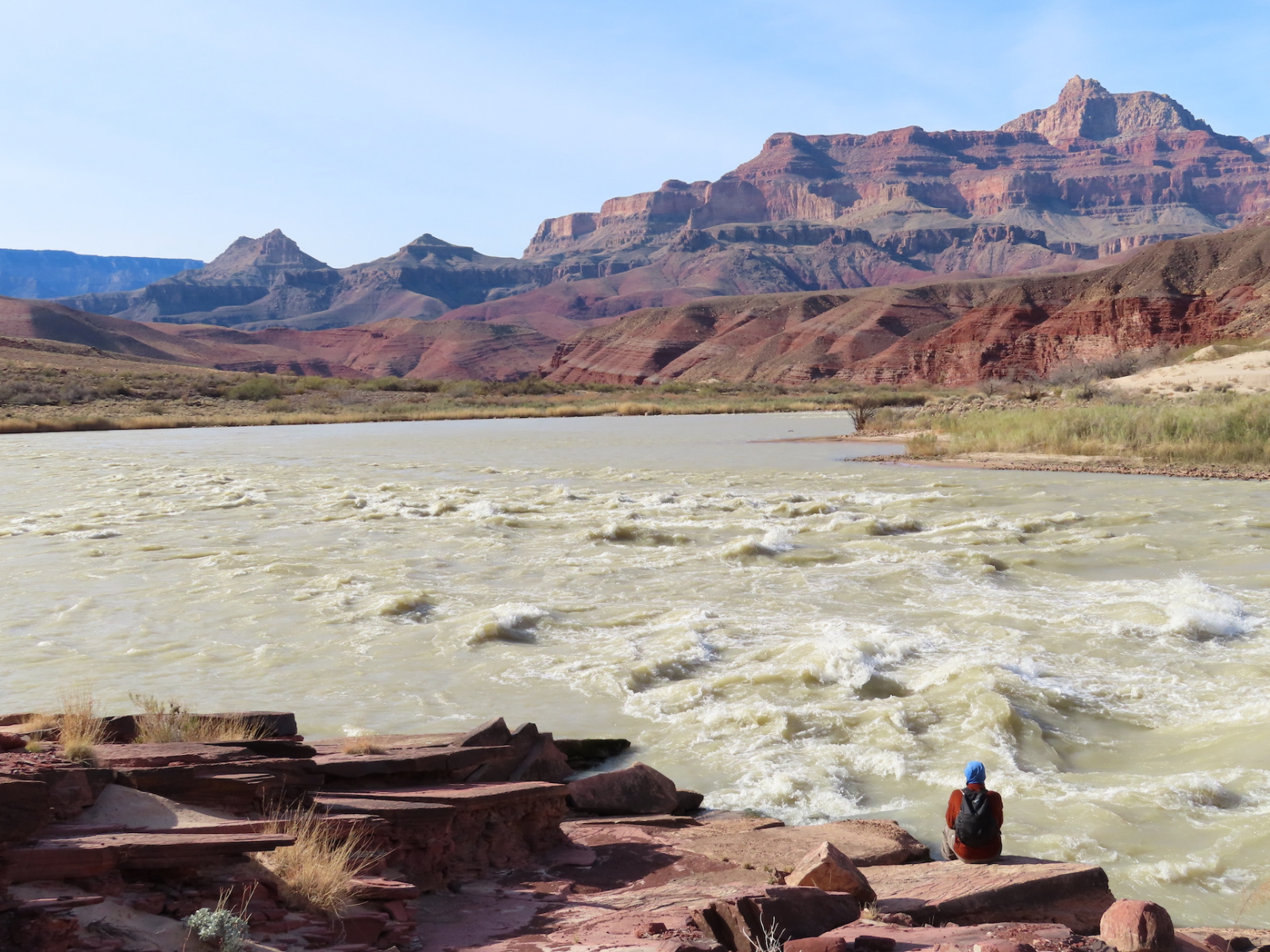
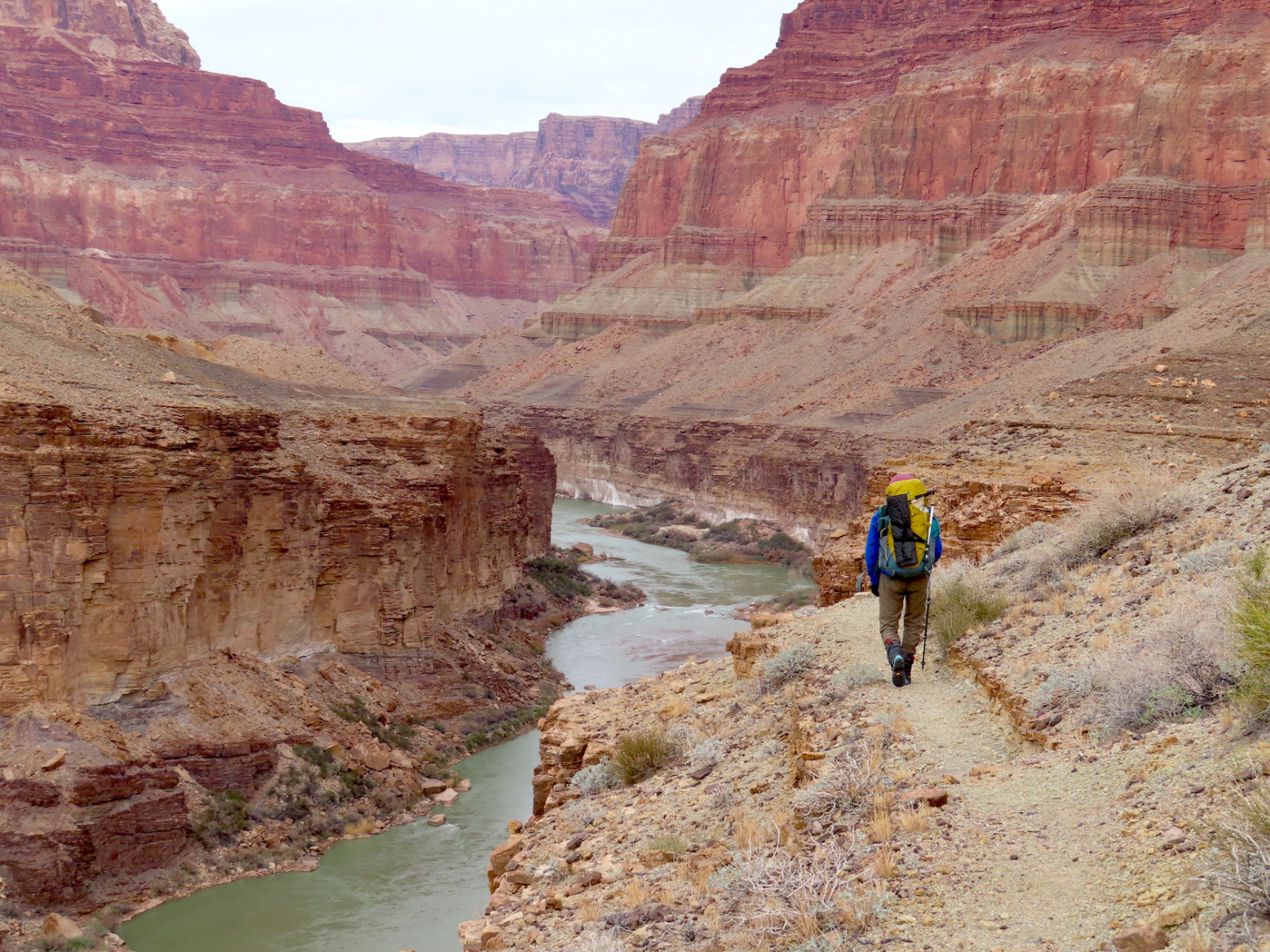
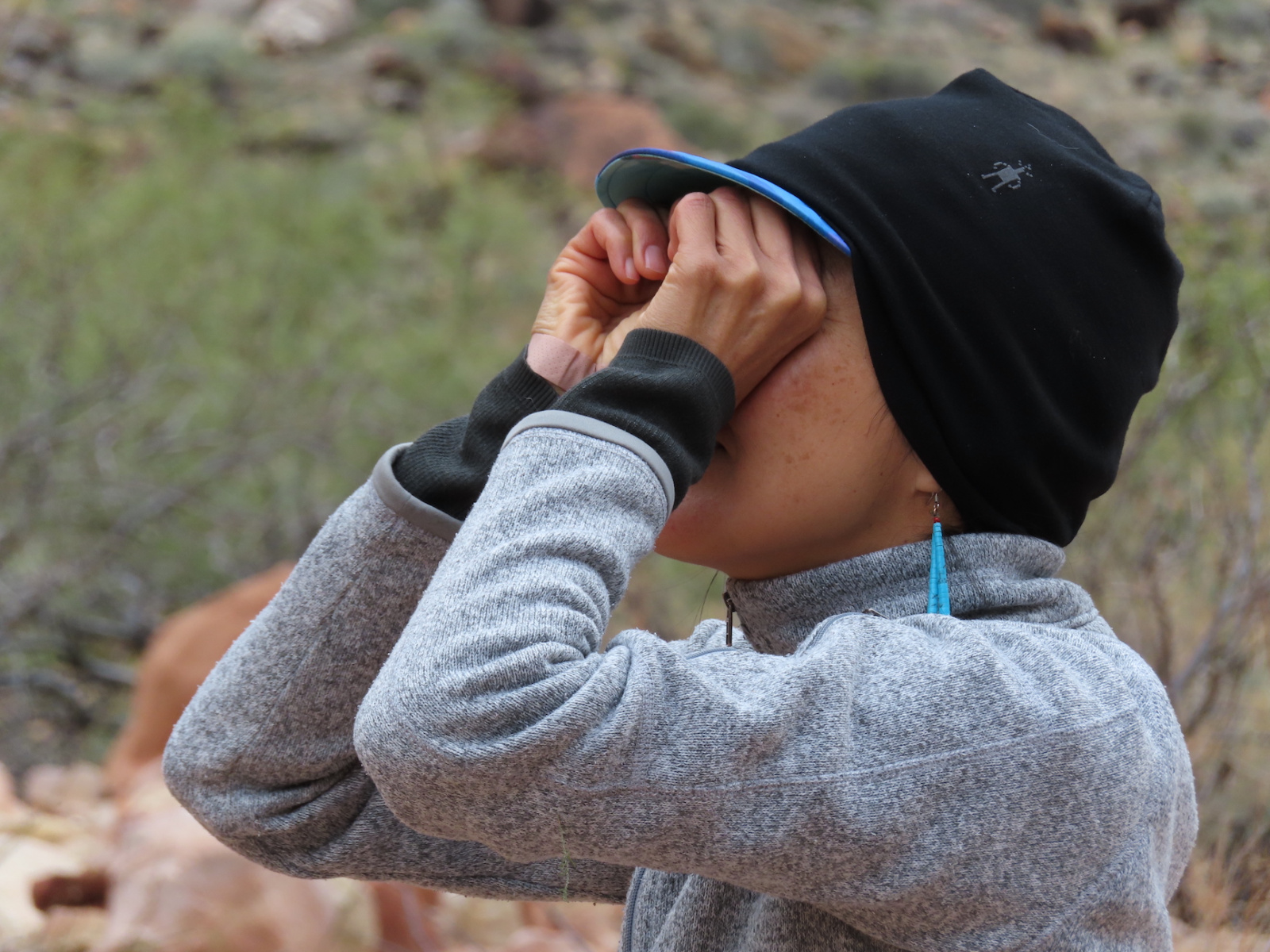
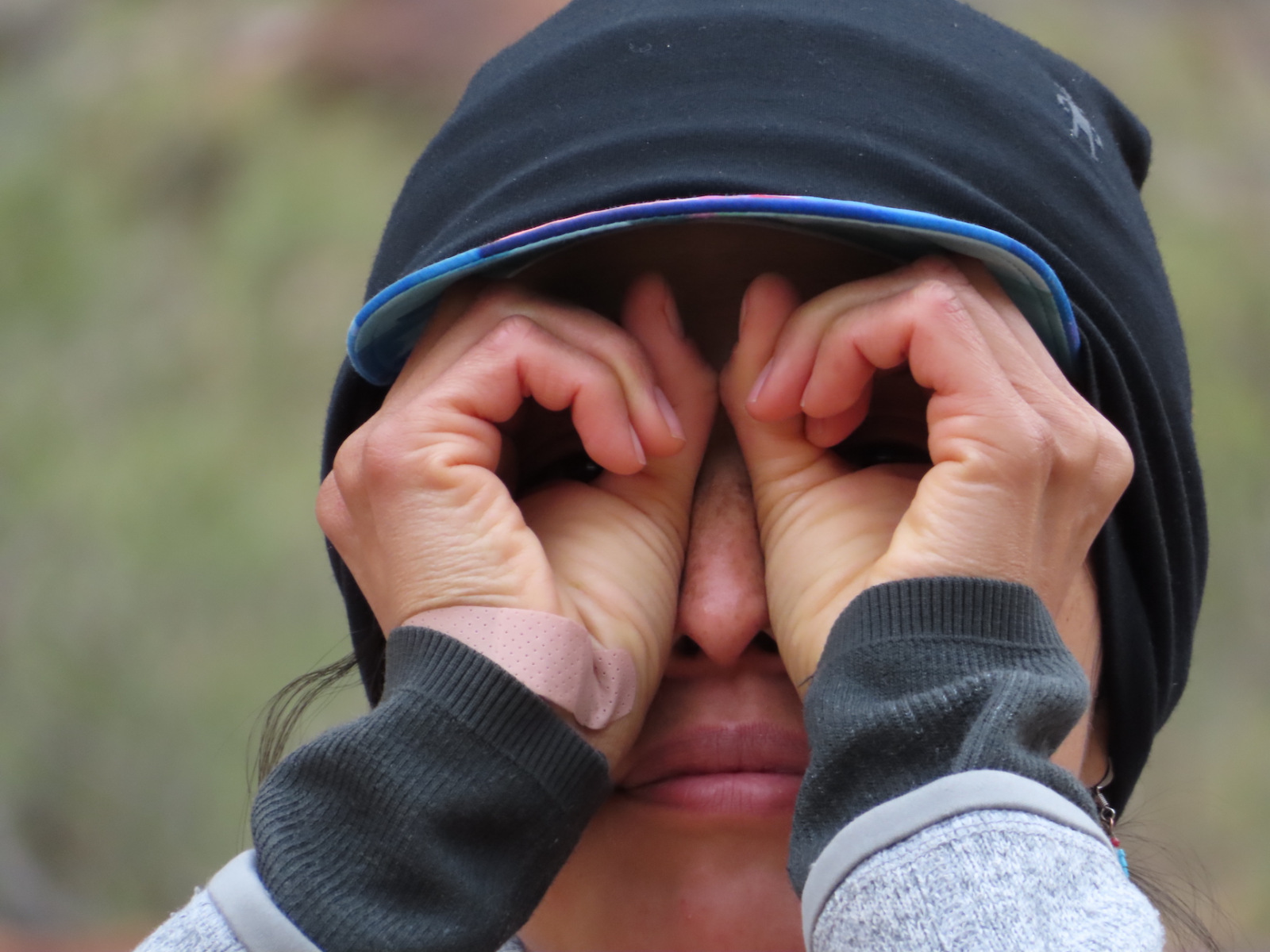
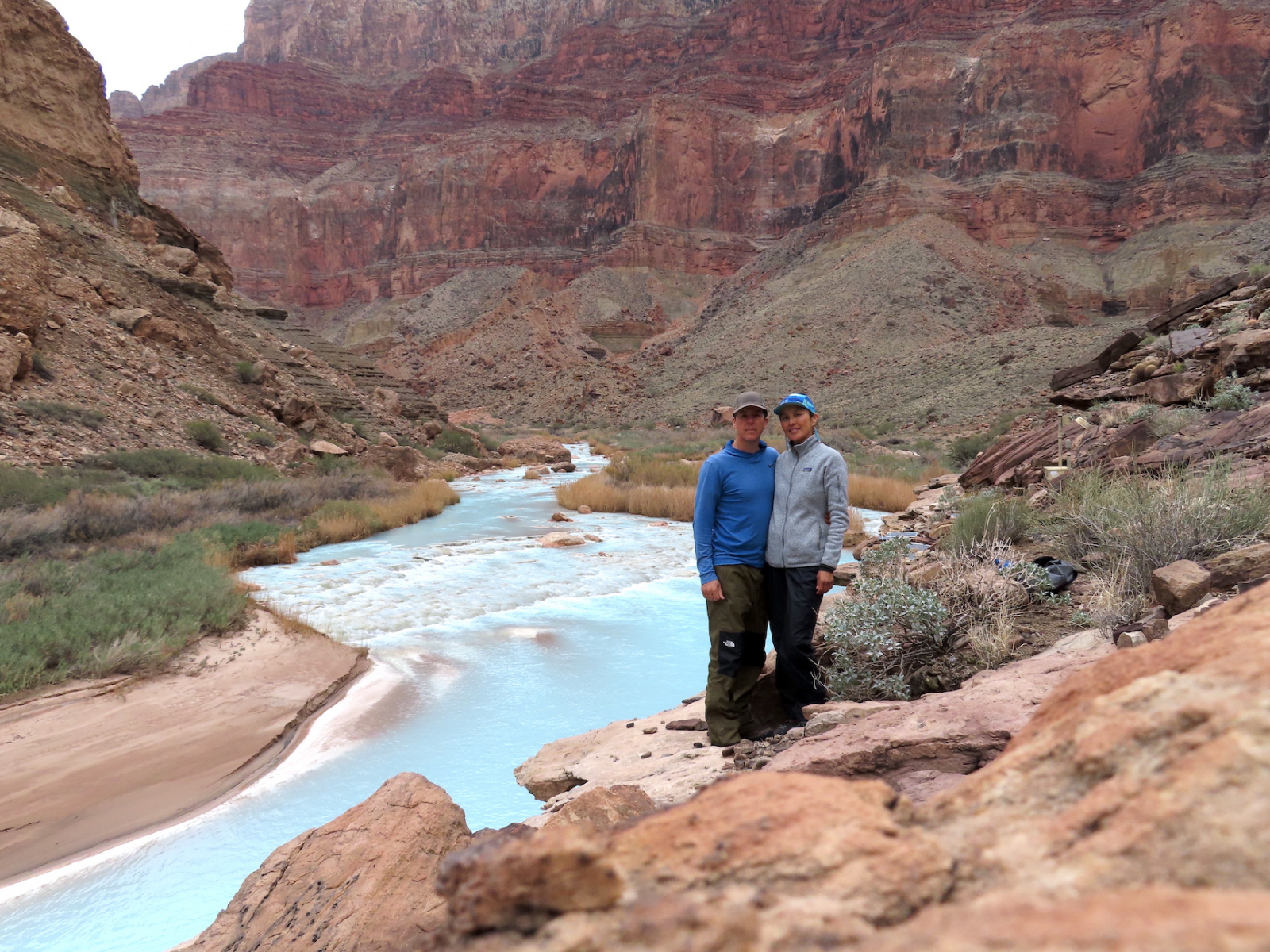
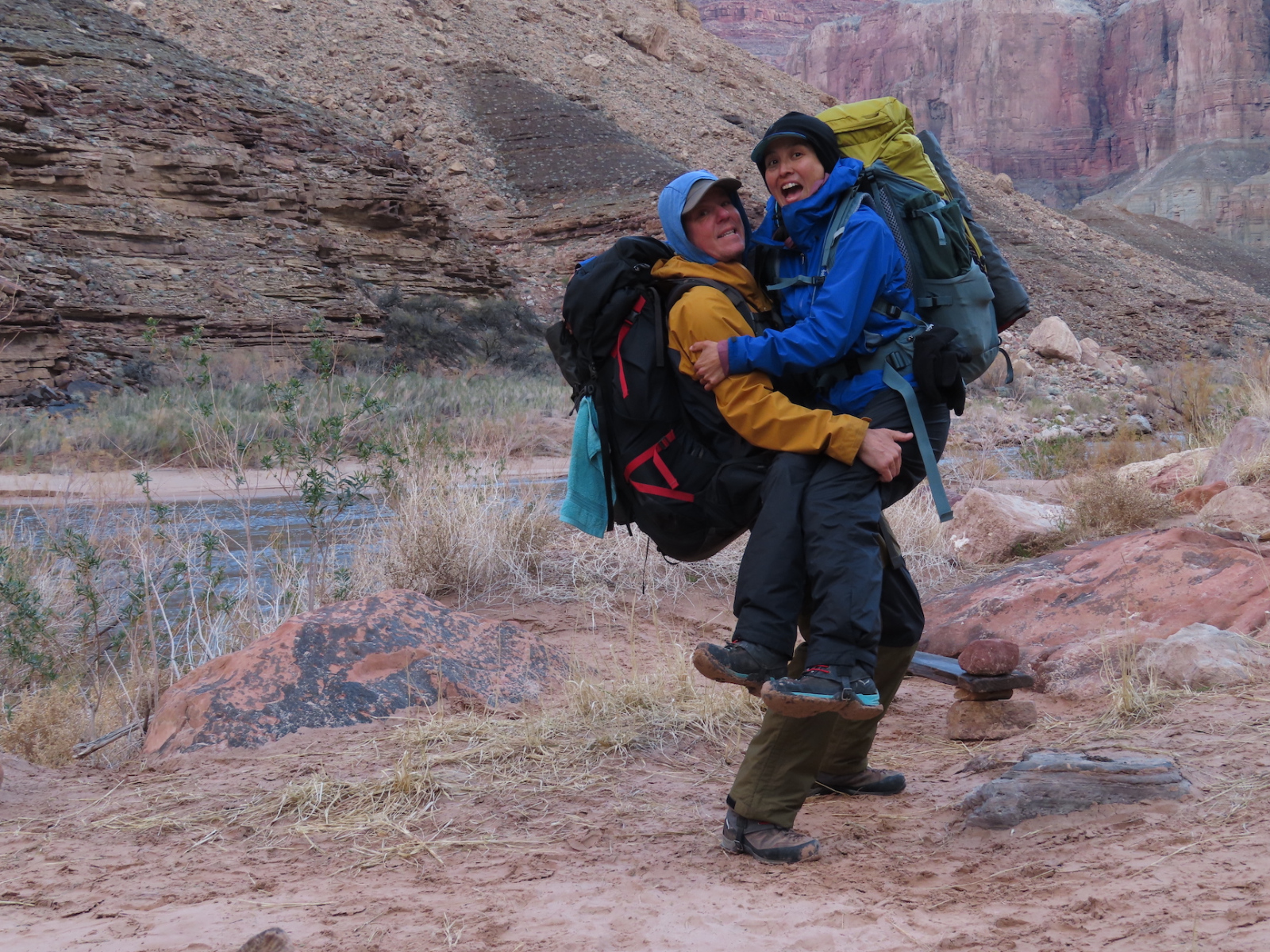
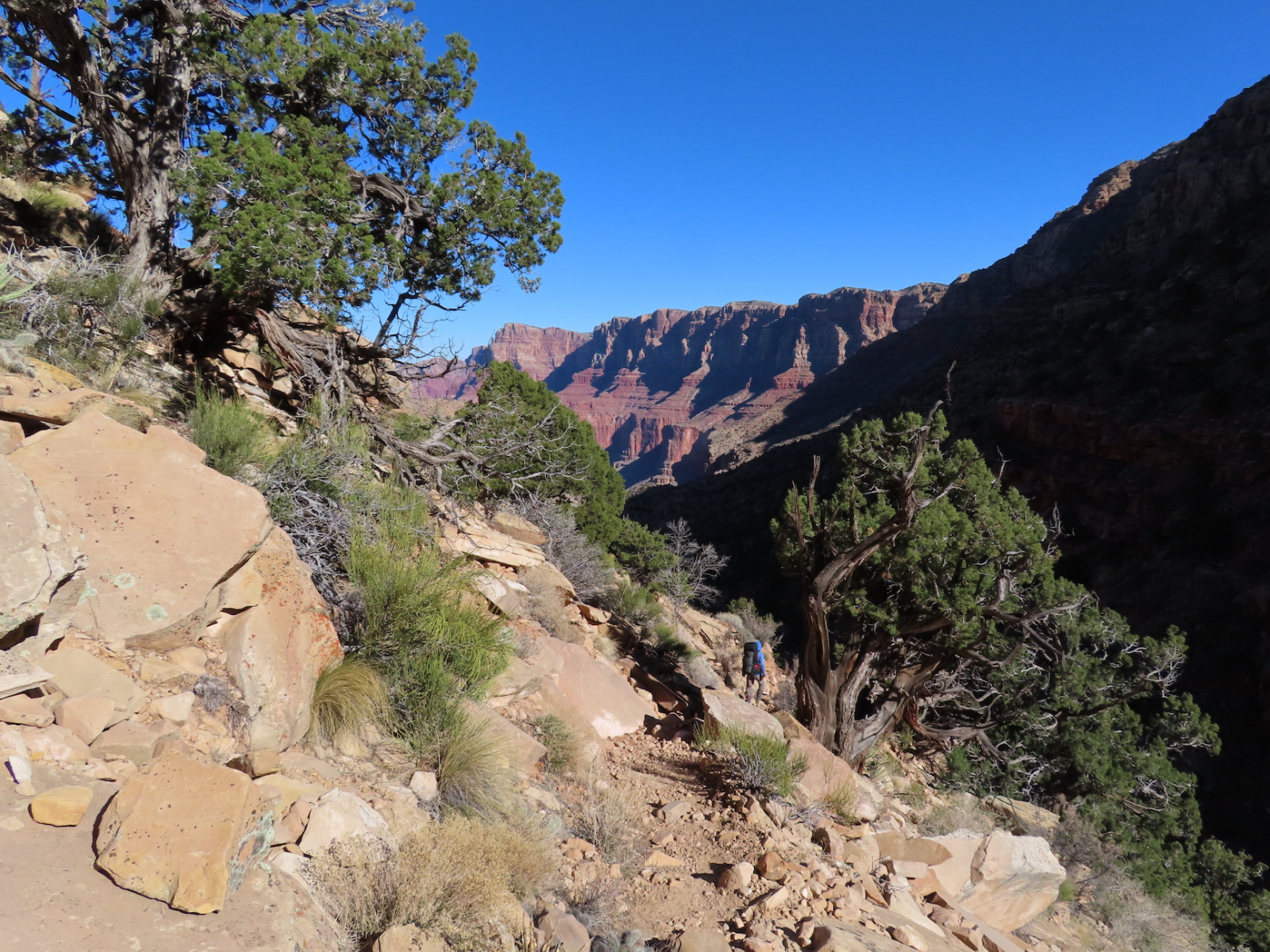
Colleen on the Beamer Trail, Grand Canyon Natioal Park, 2026

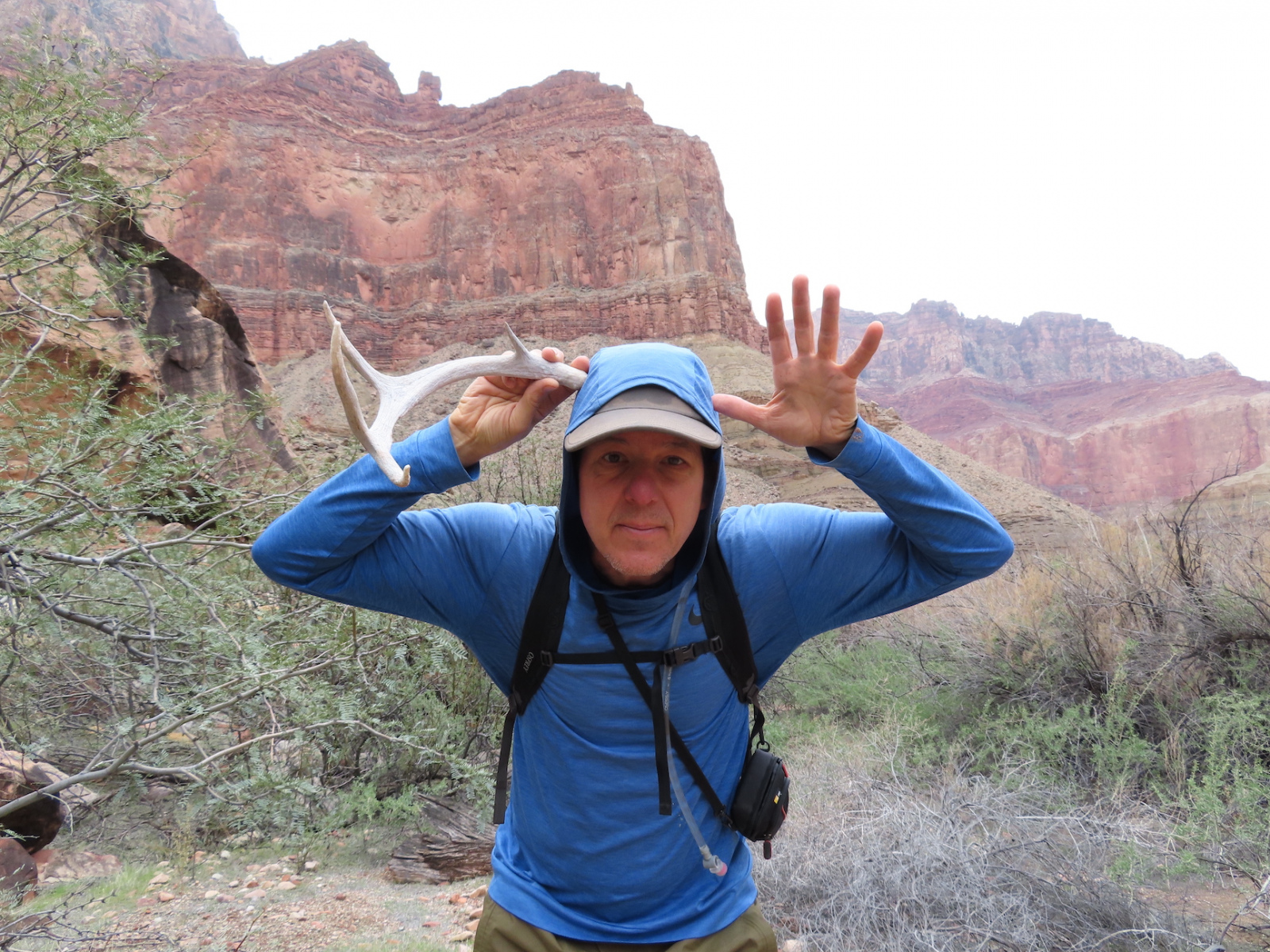
Colleen and I engage in an outdoor adventure each New Year, backpacking in Hawaii or the Superstition Wilderness, or rock climbing in Joshua Tree National Park. This year we chose to return to the Grand Canyon. Three years ago we ventured down the incredibly challenging Nankoweap trail, from the North Rim of the Grand Canyon to the Colorado river, 32 miles and some 13,000 feet total elevation change, six days and five nights. We had hoped to do this again, but due to the massive fires that destroyed the north rim lodge and tens of thousands of acres of forest, the trail remains shut down. In a conversation with a back country ranger we learned about the eastern reaches of the South Rim of the Park, and an opportunity to explore something new.

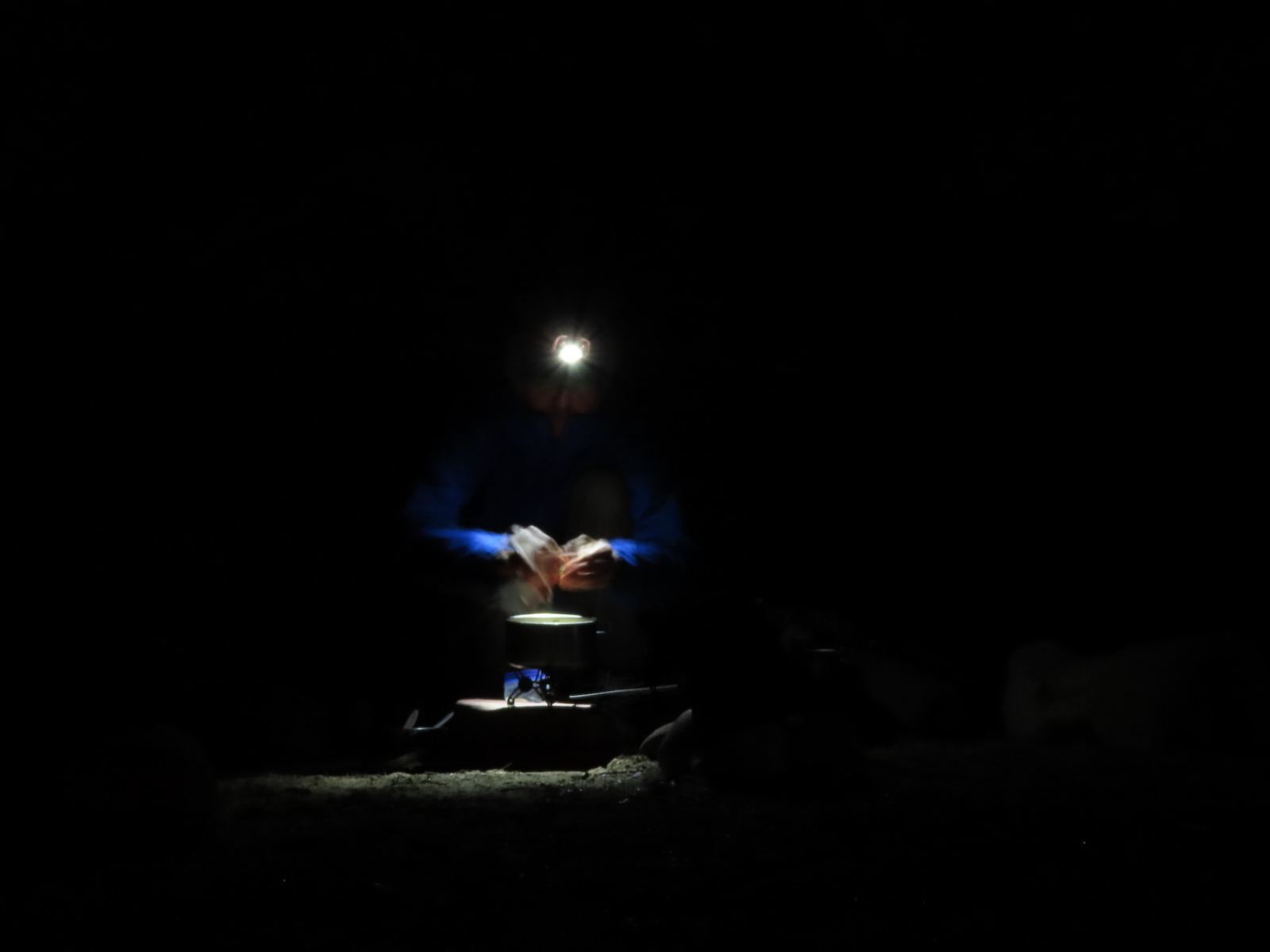
On December 30 we left our car at roughly 11:15 am and ventured nine miles down the Tanner trail, from rim to river. We arrived to the campsite an hour before sunset at 4:30 pm. We camped at Tanner Rapids for two nights, enjoying a chance for our legs to recover and to celebrate the New Year with the bold sound of the Colorado taking us to sleep, then greeting us each morning. That first night we enjoyed conversation with four Flagstaff teenagers who venture to the Grand Canyon on a regular basis, over weekends and school breaks. Clearly, they are experienced and comfortable in this environment, thinking nothing of a 20-40 mile venture over a long weekend. One of the four, Cruz, is an intelligent, inquisitive, fully engaging young man who expressed interest in our expedition tent, asking myriad questions about our gear, the places we had explored, and about our work and aspirations. It was a truly fun conversation, and remarkable in that he actually asked questions—a nearly lost function in the youth of his digital generation. Thank you.

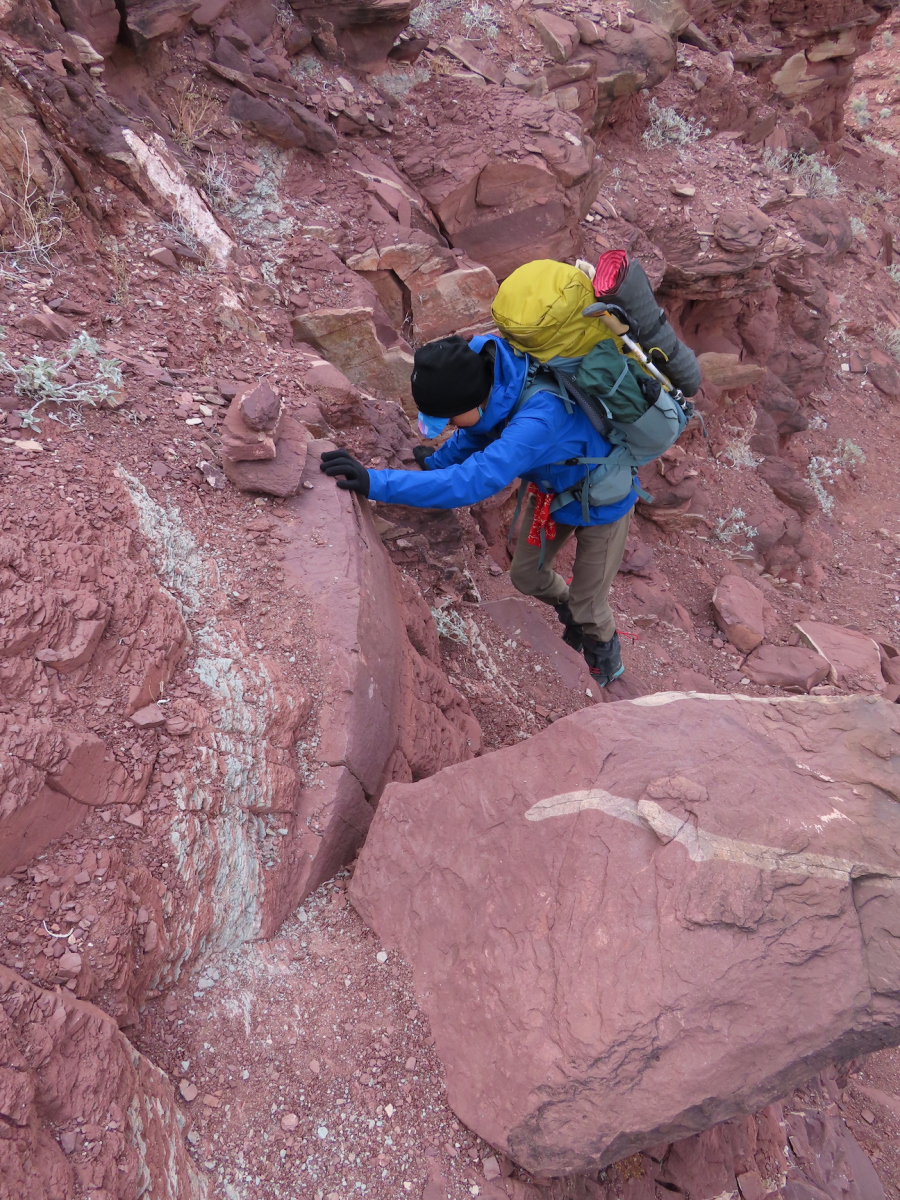
On the third day we repacked our gear and hiked east on the Beamer trail to the Little Colorado River (LCR), stopping a half mile shy on the boundary of the Navajo Nation. This was by no means an easy walk. We traversed 26 (yes, we counted) side drainages over roughly five miles, in and out of ravines both shallow and deep, some requiring some effort to navigate the boulders and pour-overs with cairns (trail markers) difficult to locate.

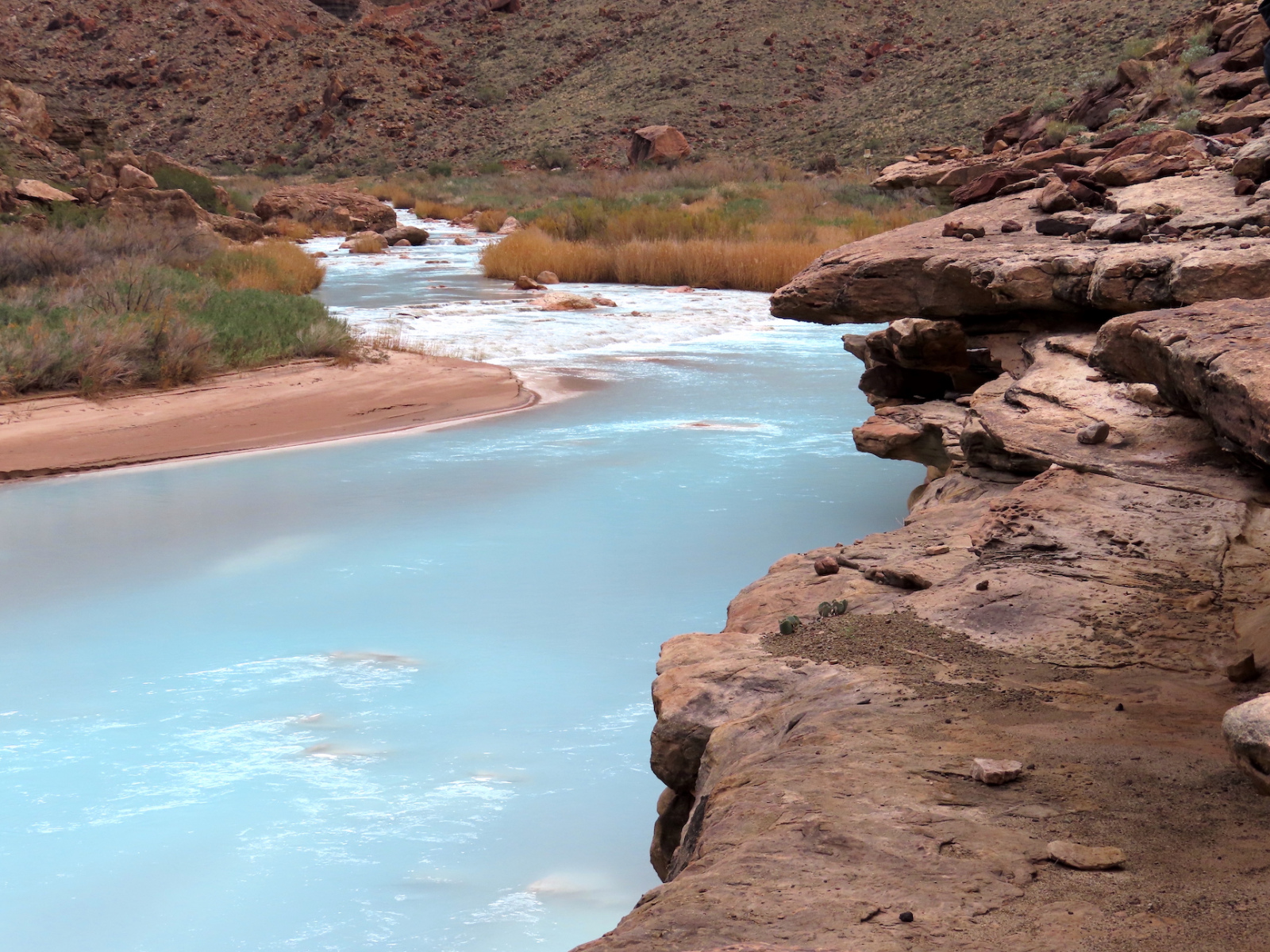
We arrived late afternoon and camped on a sandy knoll, a relatively small outcropping with just three or four spots for a tent. After setting up our tent on the sand, with ropes tied to rocks and driftwood to brace for the predicted storm, we jogged back up to the trail and to the LCR overlook. Deep into dusk, with limited light remaining, the turquoise blue water gave us the sensation of having found our way to magical wonderland, and we eagerly awaited the morning.

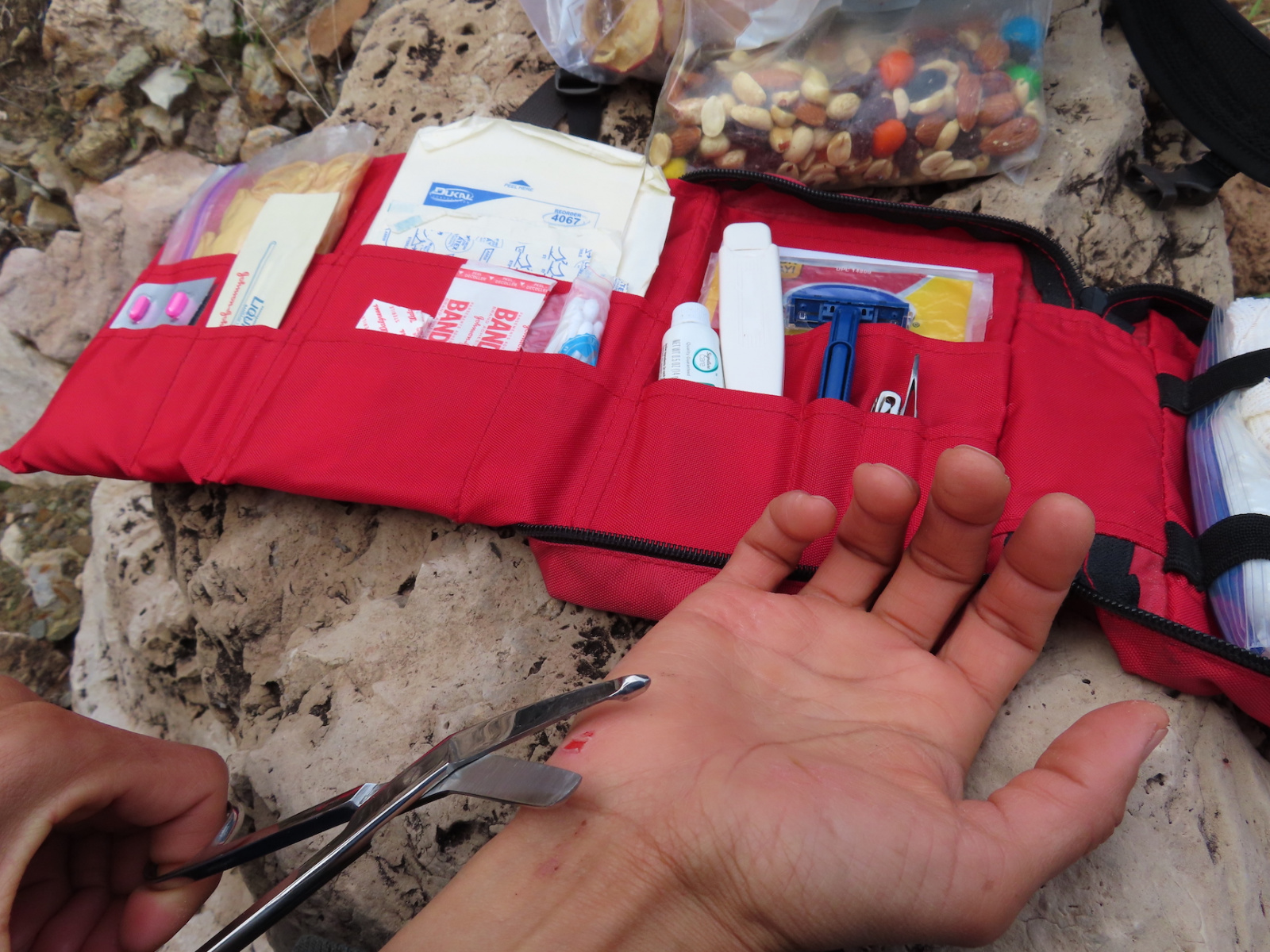
We packed a day bag with food, water, first aid, and rain shells and returned to the LCR, exploring the right bank (hiking up the river) for roughly a mile. We enjoyed a scramble along precarious sandstone ledges, some a thin blade that looked as though it might crack under our weight. But others before us has placed stone stairs and cairns, giving us the confidence to follow.

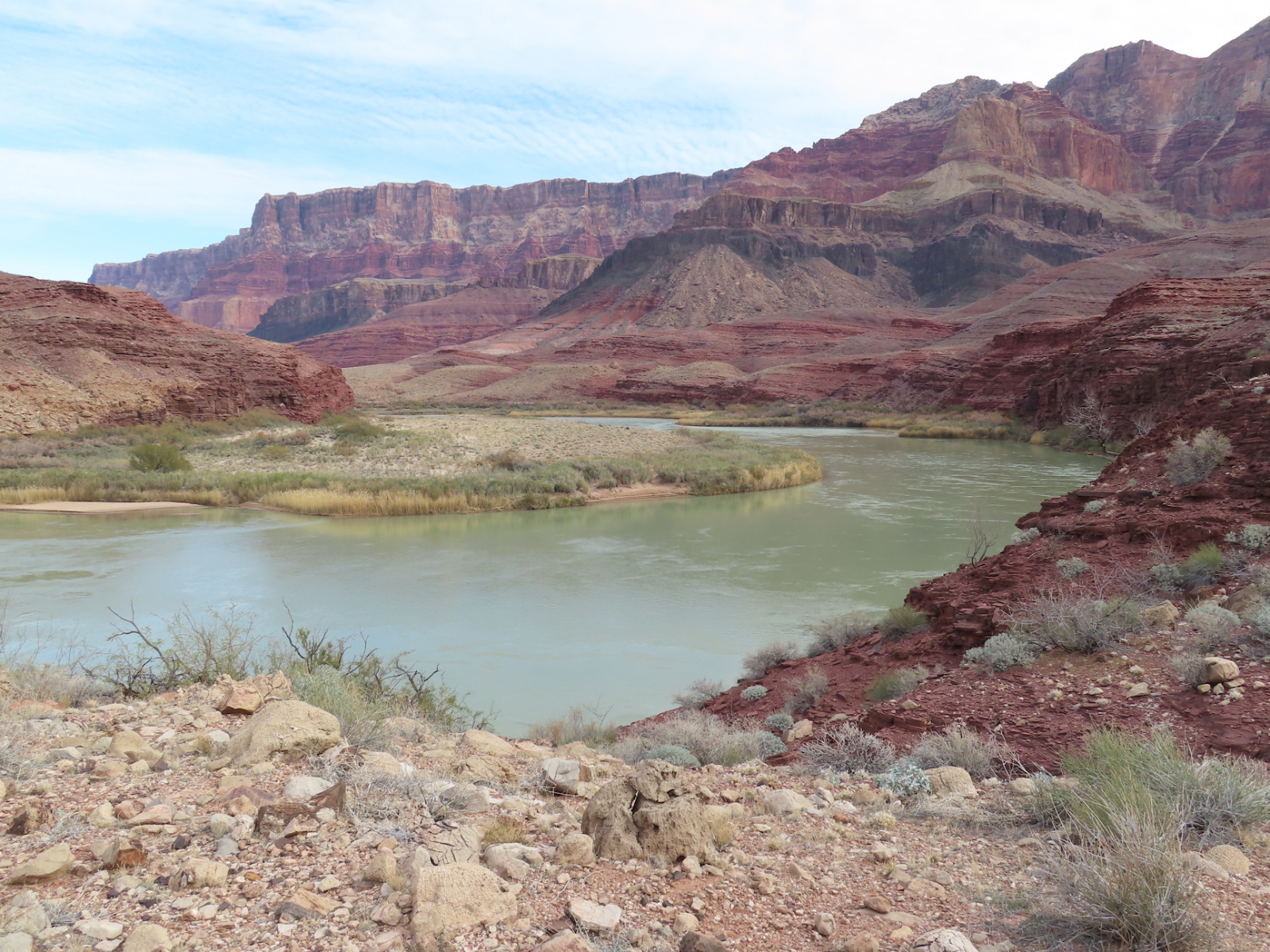
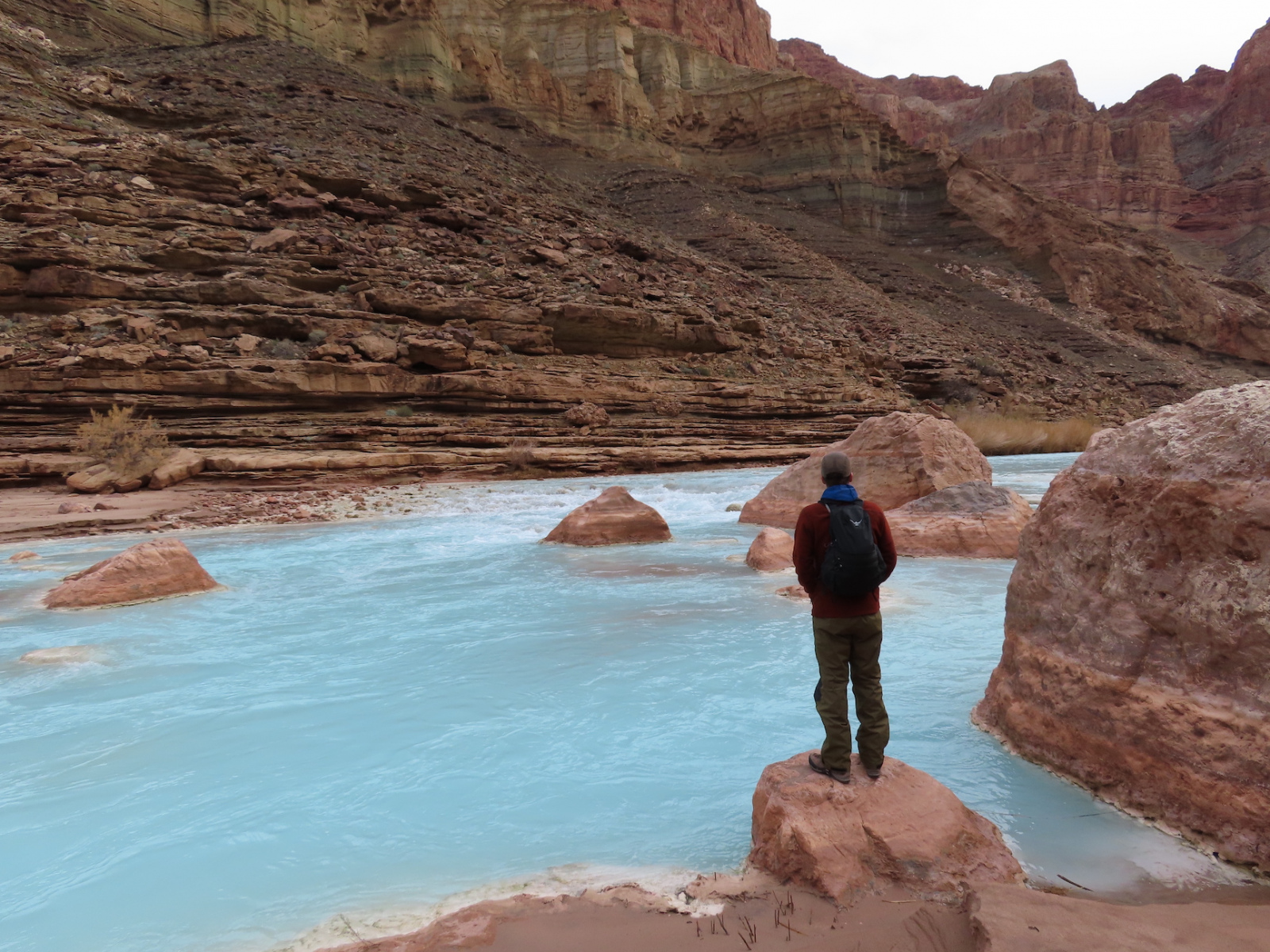
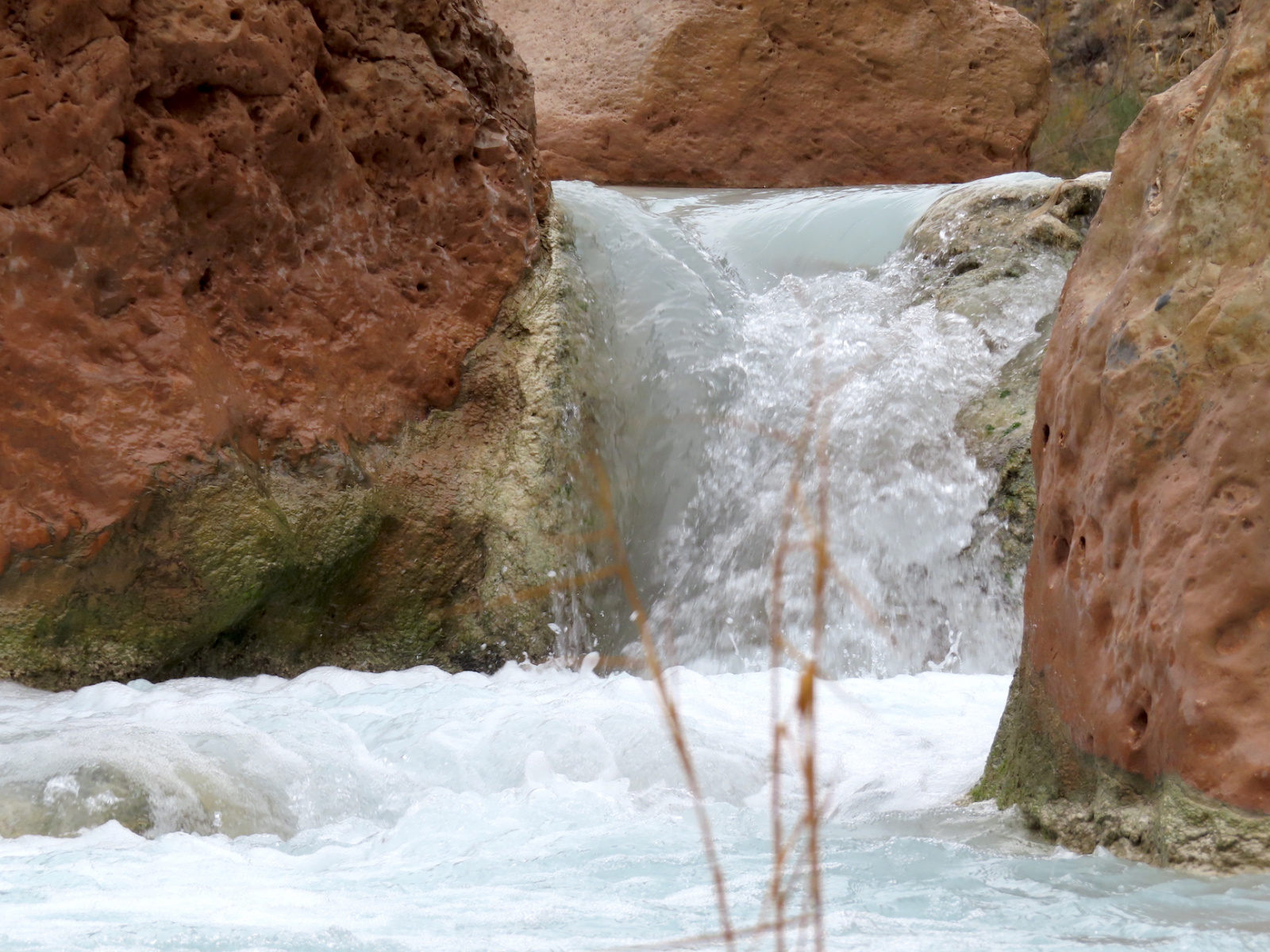
The blue water was captivating, with a subtle smell of sulfur and a sense of warmth, perhaps associated with the associated odor of hot springs more than the actual temperature. The color contrasts, from blue to white to red and green was surreal. I knew I could not fully retain the images I was seeing, nor did our camera due justice to the artist’s pallet before us. Nonetheless, we took it all in, speaking excitedly about a return with pack rafts and chance to paddle the lower section of the LCR to the confluence, then down the Colorado for eight miles.
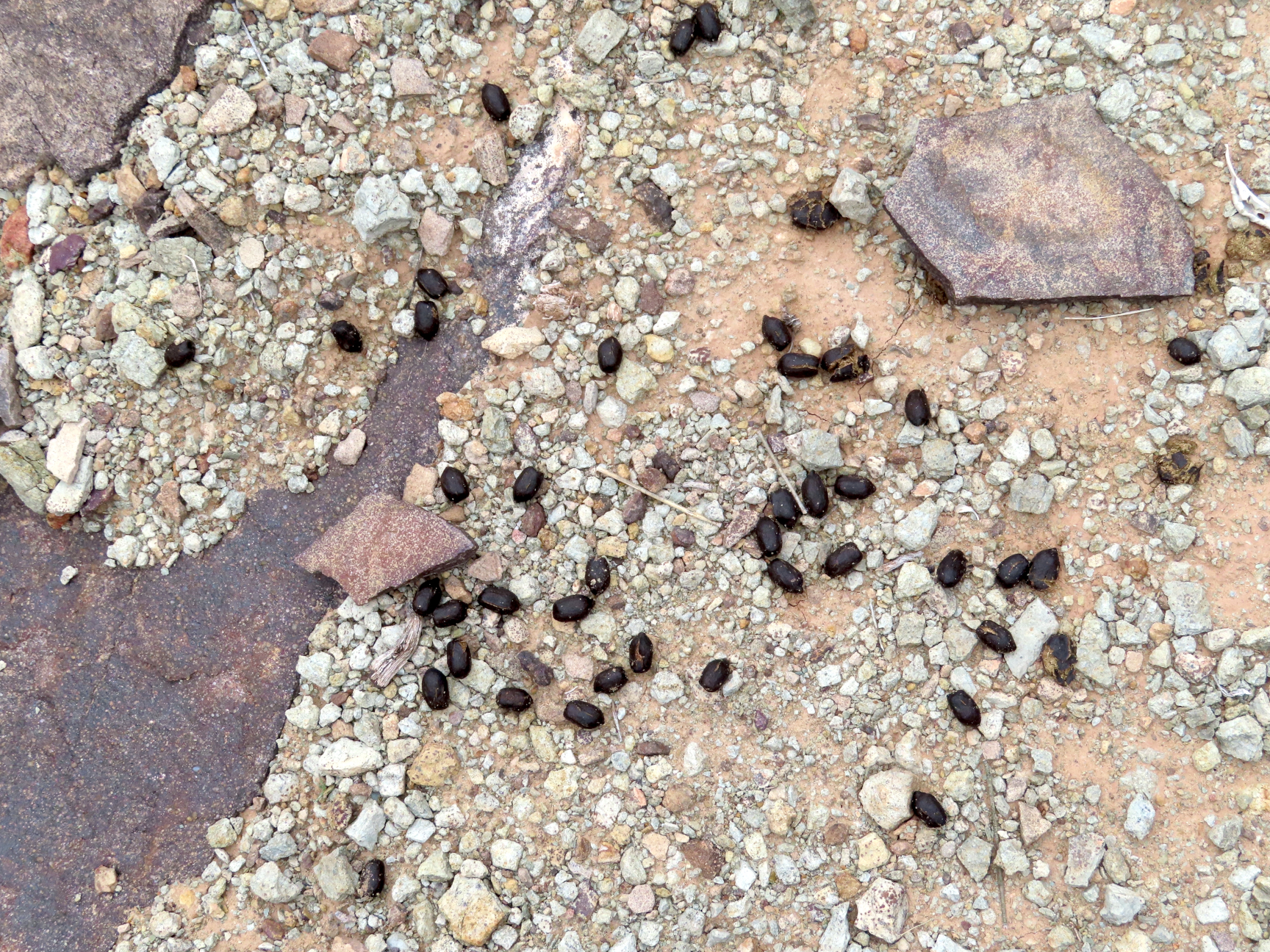
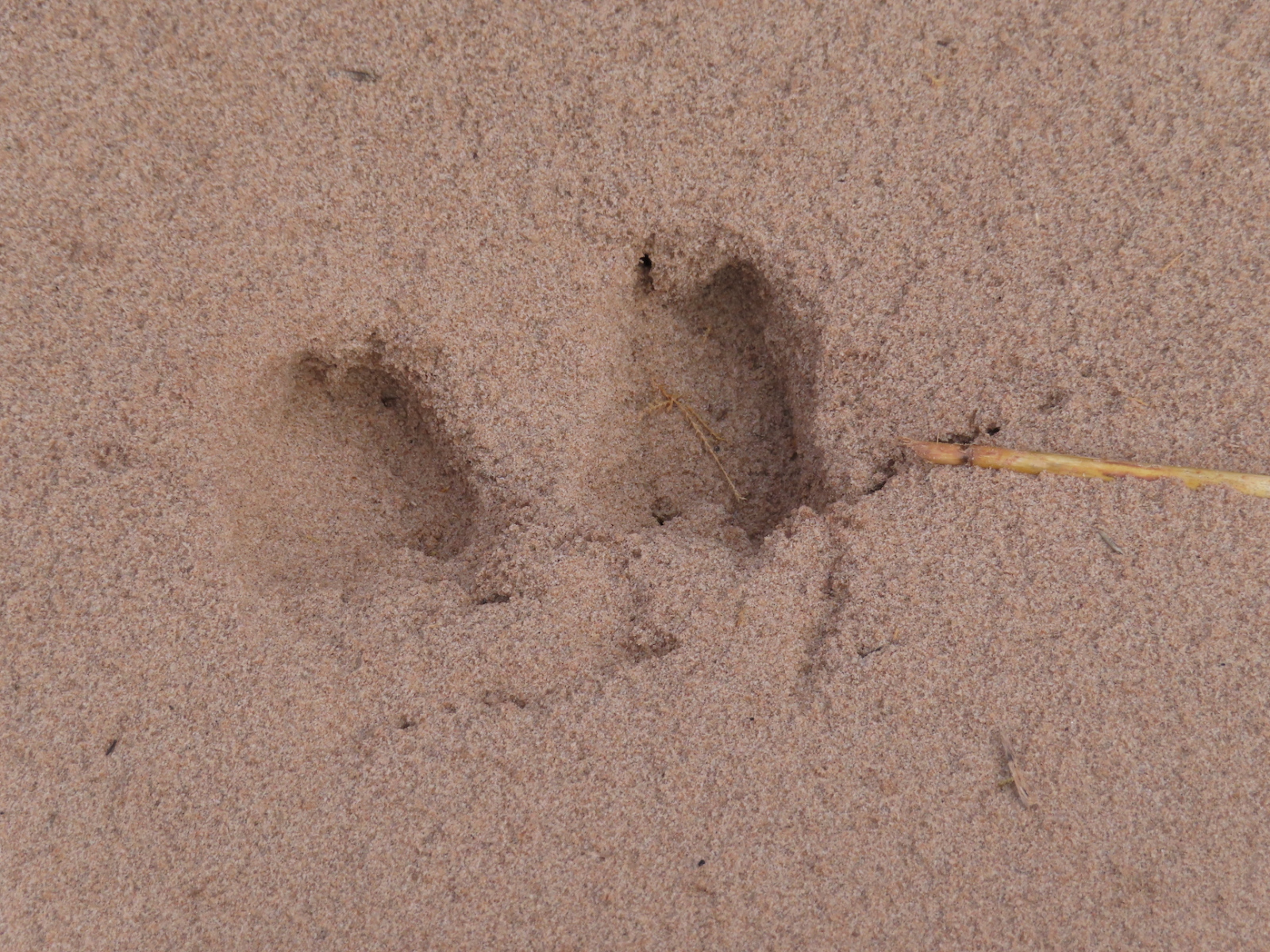
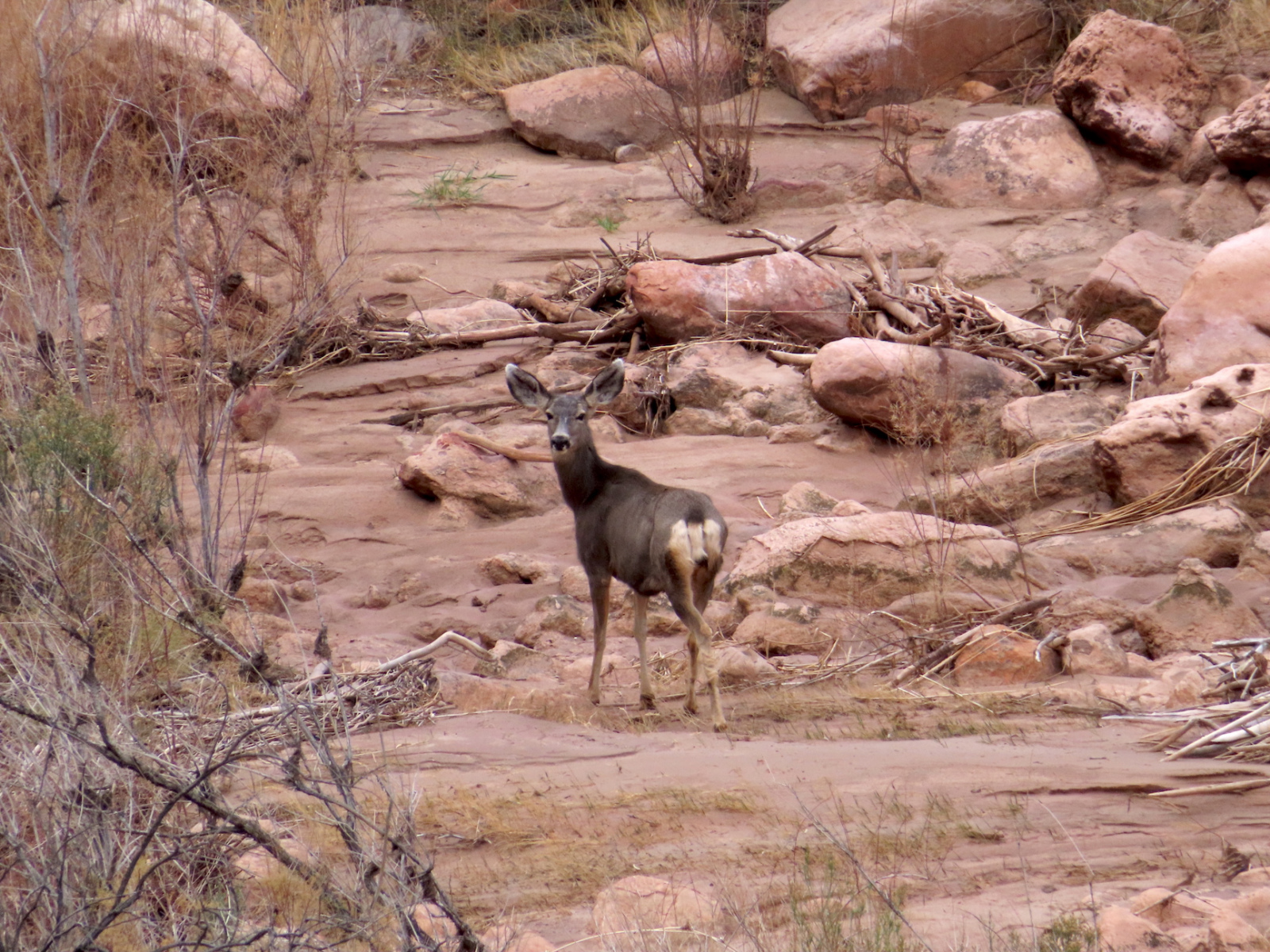
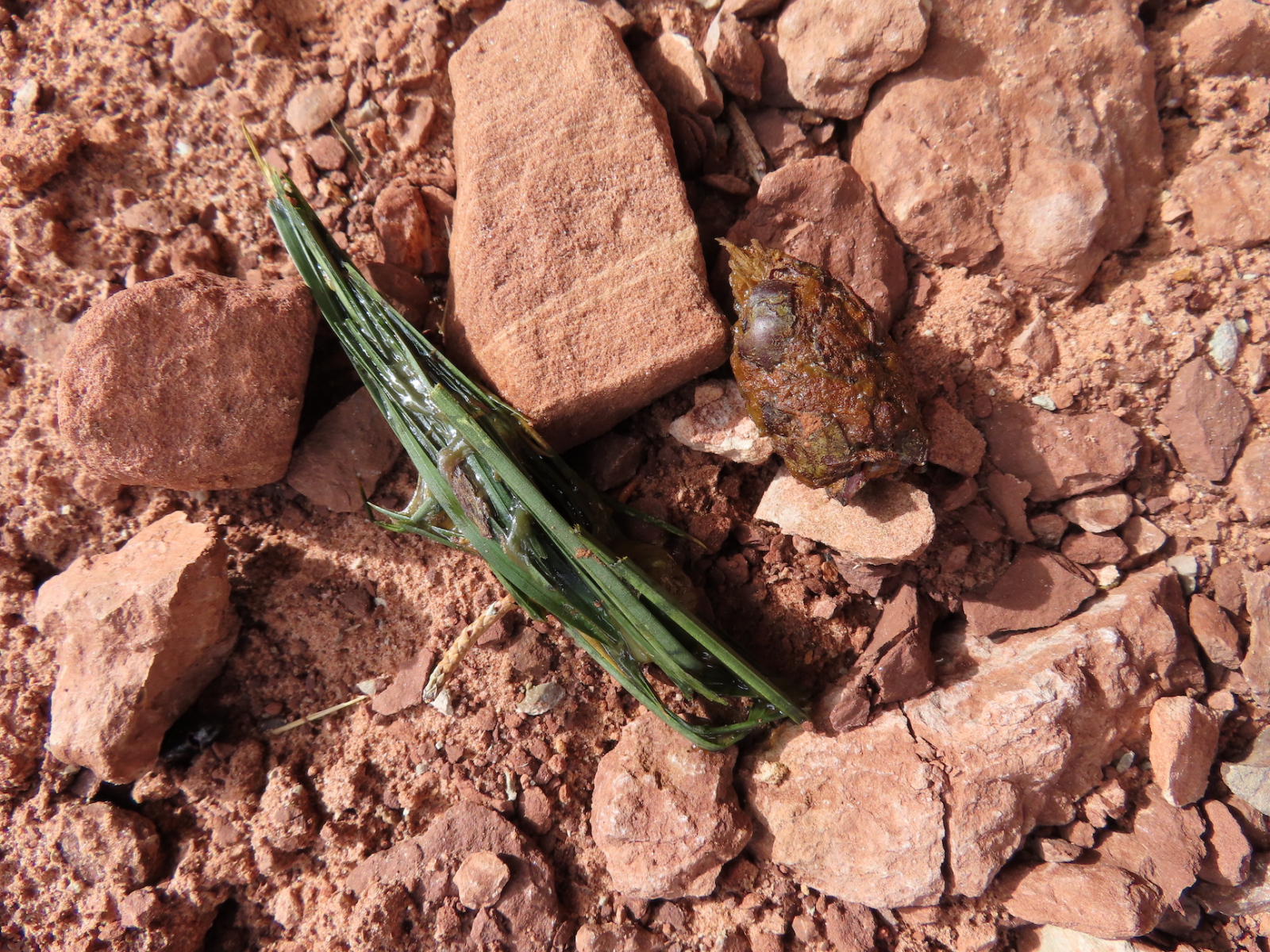
deer droppings on the Tanner trail, Grand Canyon National Park The trail was littered with animal droppings from deer or sheep, we didn’t know. But just as we returned to the confluence a mule deer, healthy and strong, bounded before us, looking back over her shoulder before disappearing into the brush. A river trip pulled up and explored the opposite shoulder of the LCR, just one hundred meters or so before returning to their boat. We later exchanged New Year greetings as they rowed past our campsite, down stream. We had wanted to ask for a beer, a common exchange on the river, but noted they were avoiding the strong eddy that sat between their boats and us, just off the beach where we stood and waved.

We shared the campsite with four individuals from Nantucket the first night, then had it to ourselves the second. I took a bath in the Colorado River, which was truly exhilarating. The rain came, not heavily, but enough to turn the LCR from blue to brown, and increase the Colorado’s flow by the next morning. The water was a good two feet higher on the beach, again touching the drift wood where it had deposited it some time before.

The hike back to Tanner Beach felt good for the first four or five miles, but became harder as the sun moved from overhead to the west, forcing us to remove layers. Hiking in a T-shirt in December isn’t right, it’s just not right, and we were still sweating. We discussed how we frequently run nine miles (or more) out the back door in Cascabel, through river beds filled with sand and cobbles, but the same distance with 35-40 pound packs is a different journey altogether.

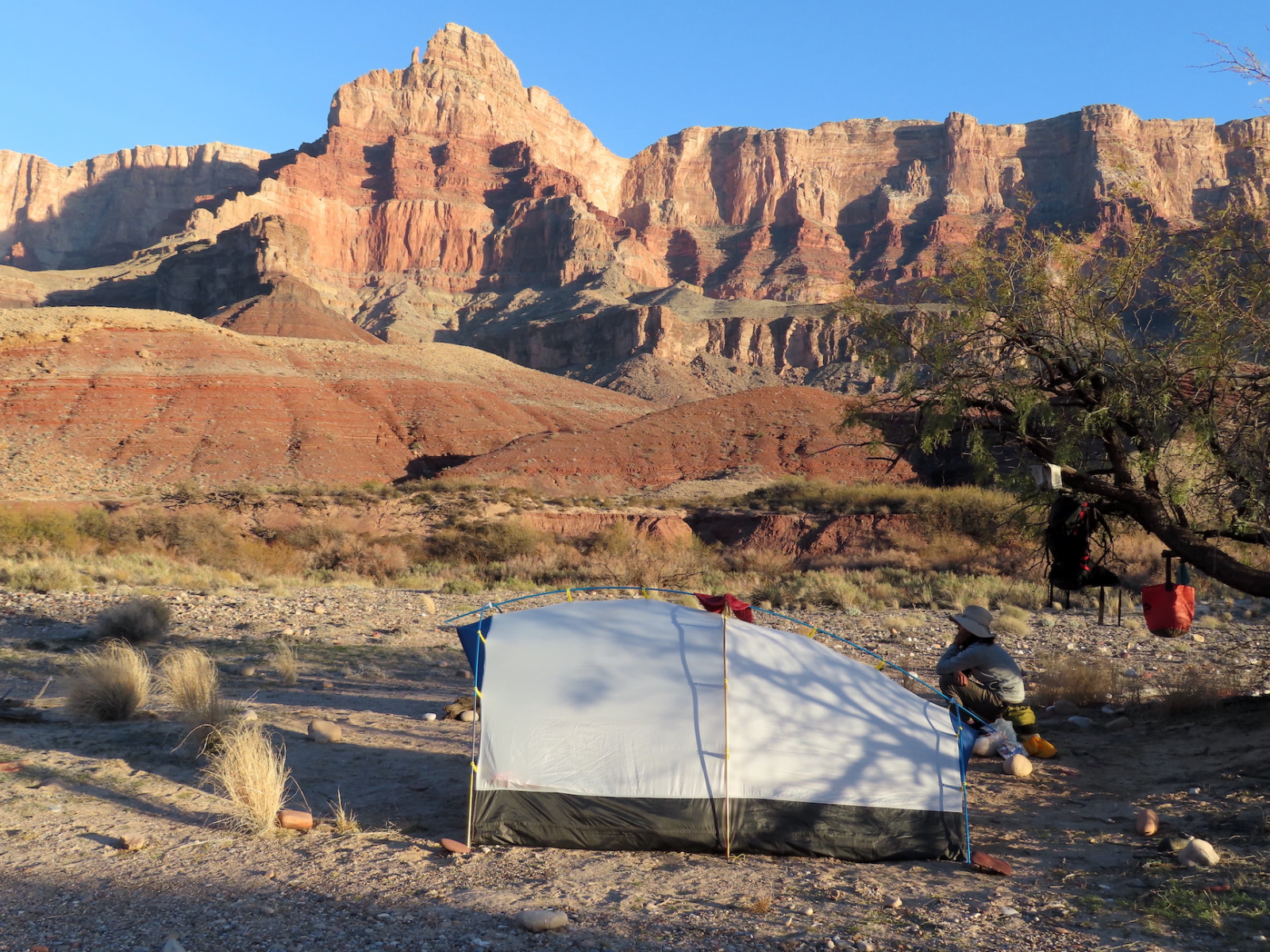
We briefly met the Nantucket crew again, then continued to the far western edge of the Tanner peninsula where the Colorado turned south for just a few hundred meters, then west again through a small rapid. The beach sand was fine, soft, and warm between our toes even as the wind was chill and the water cold. We set our tent beneath the branches of a mesquite (or cat claw, I am not certain) and fixed our last dinner on the trail. We always bring at least one extra hot meal, but had consumed it two days prior as a reward for our hard work, and to put extra calories into our bodies, a much needed boost after burning more than we consumed for the first five days.
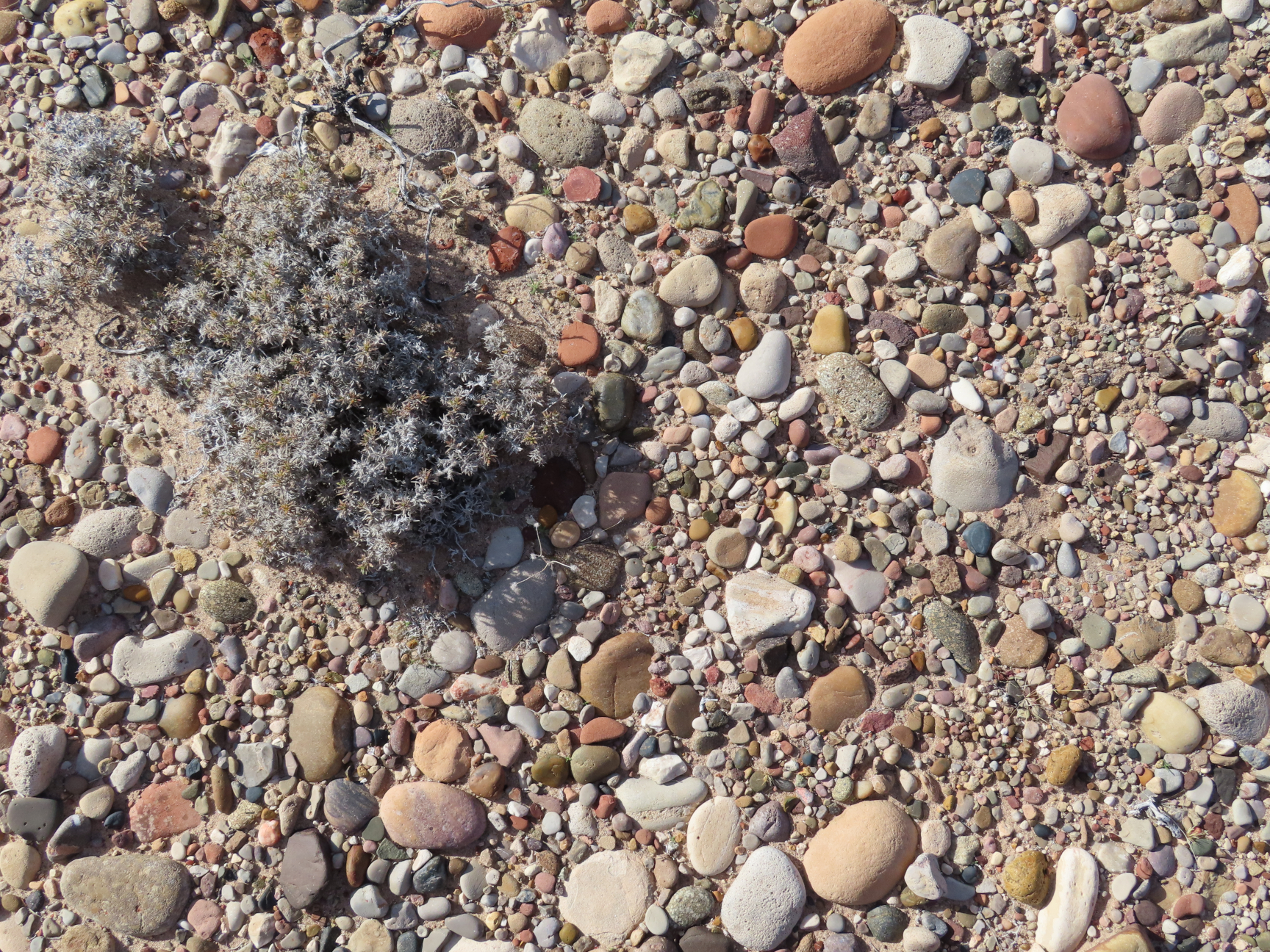
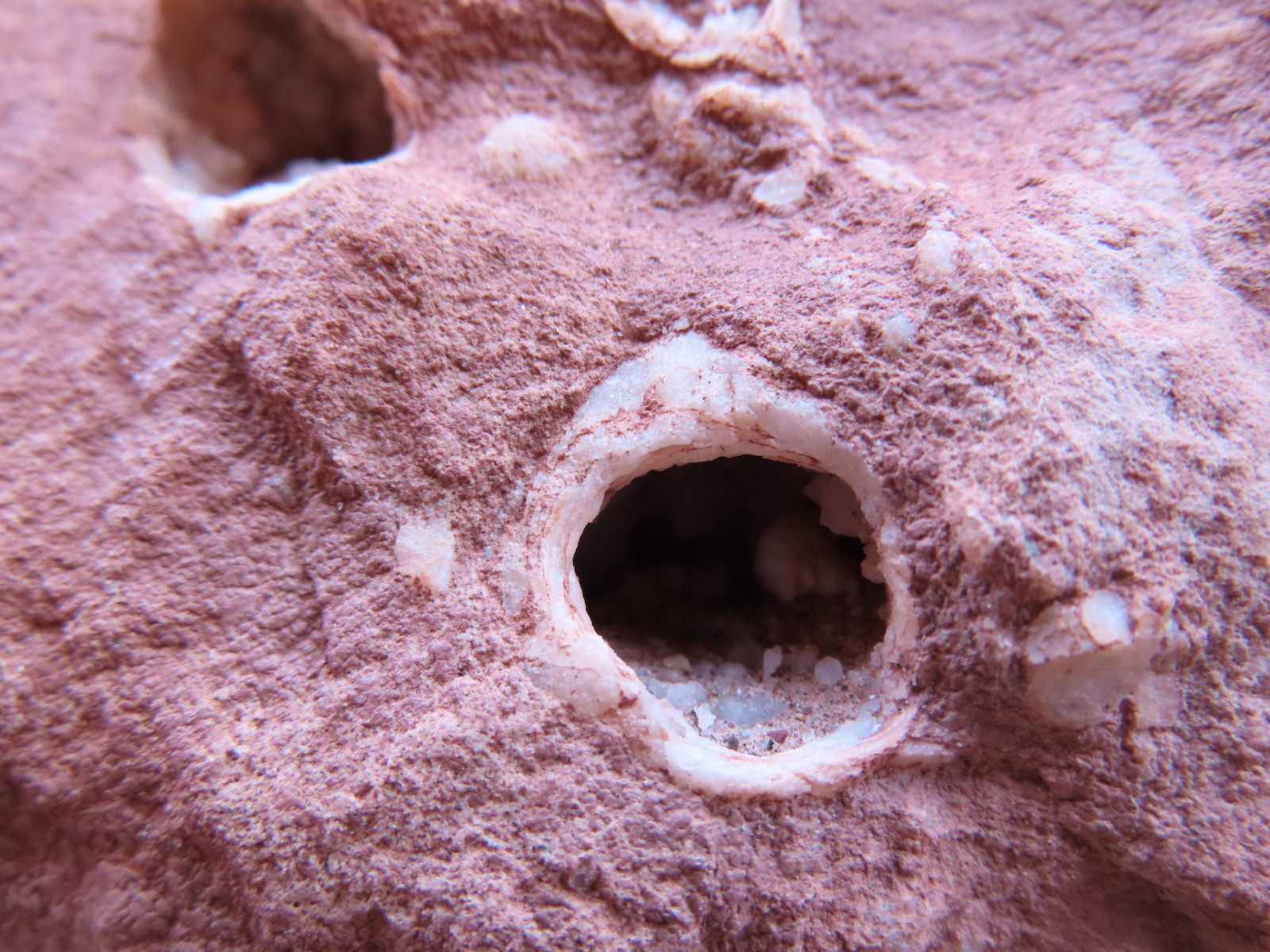
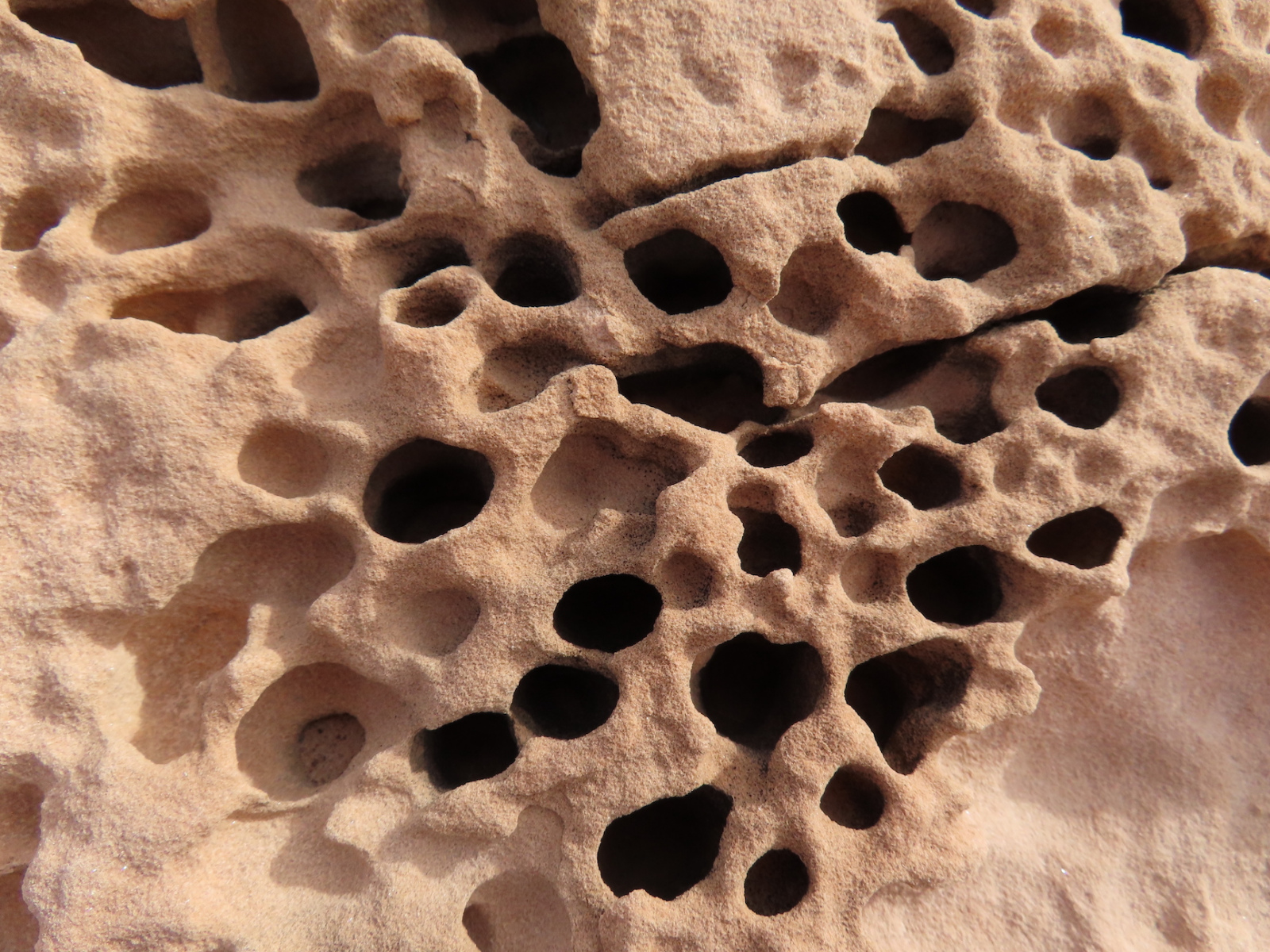
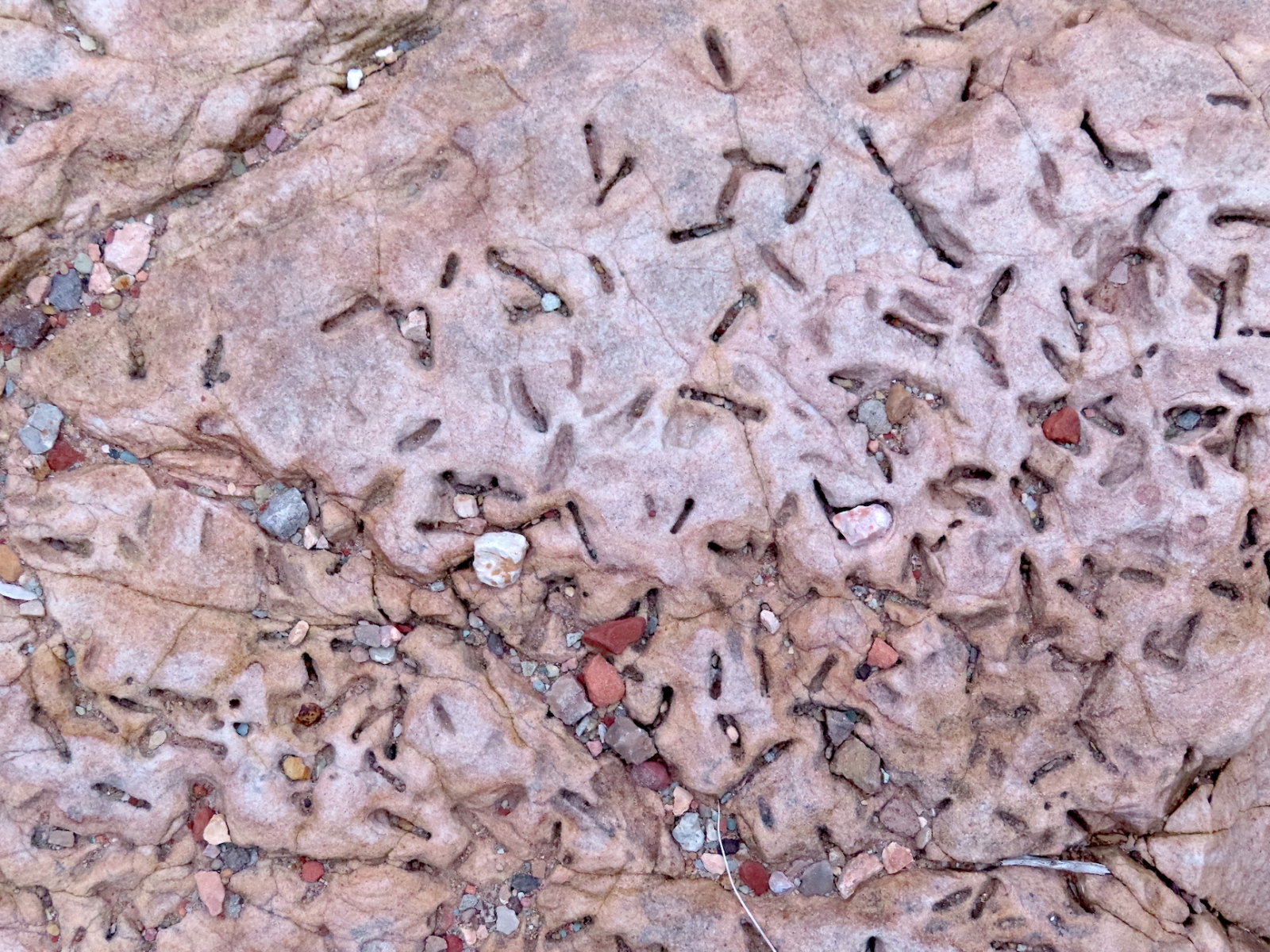
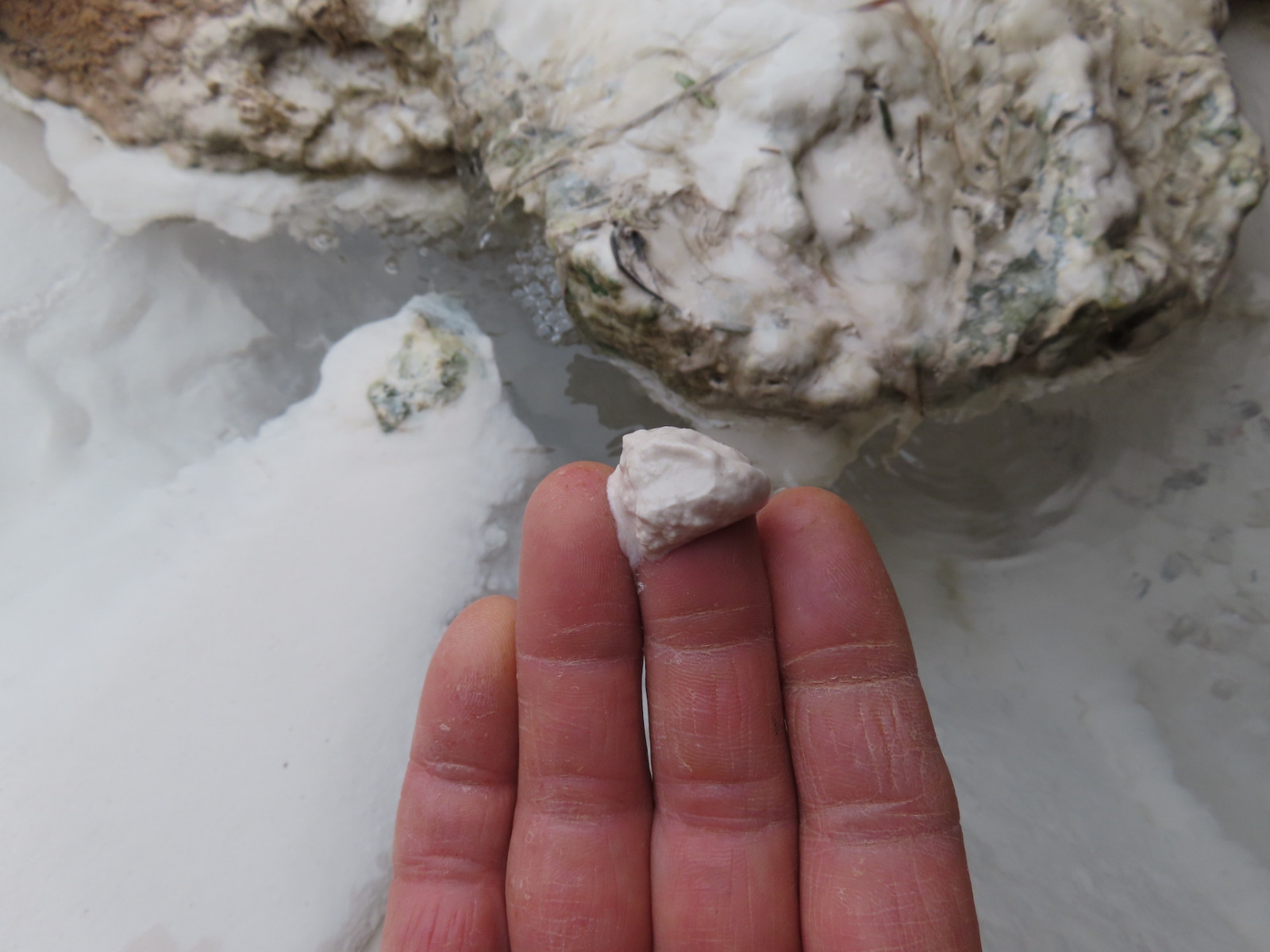
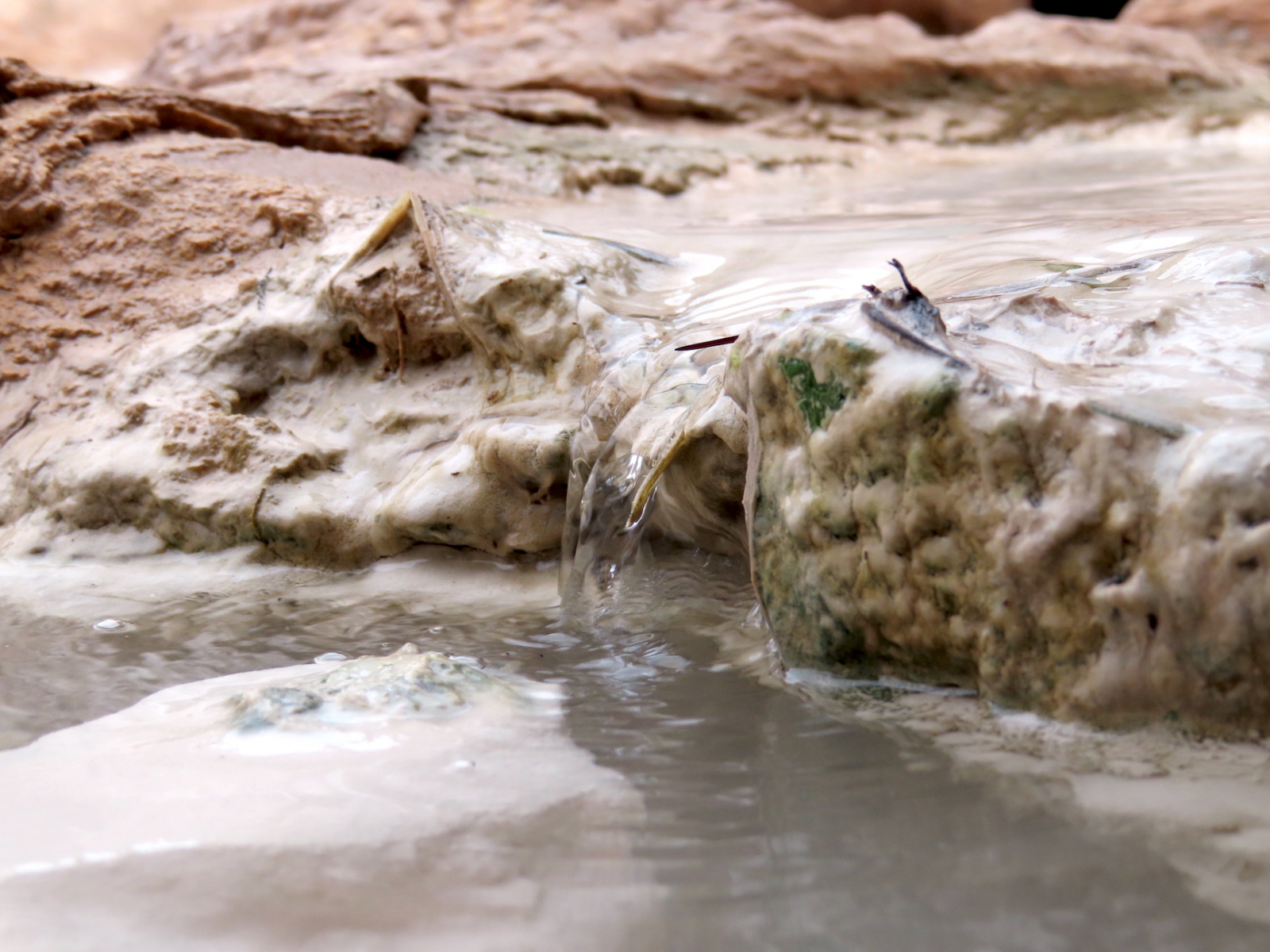
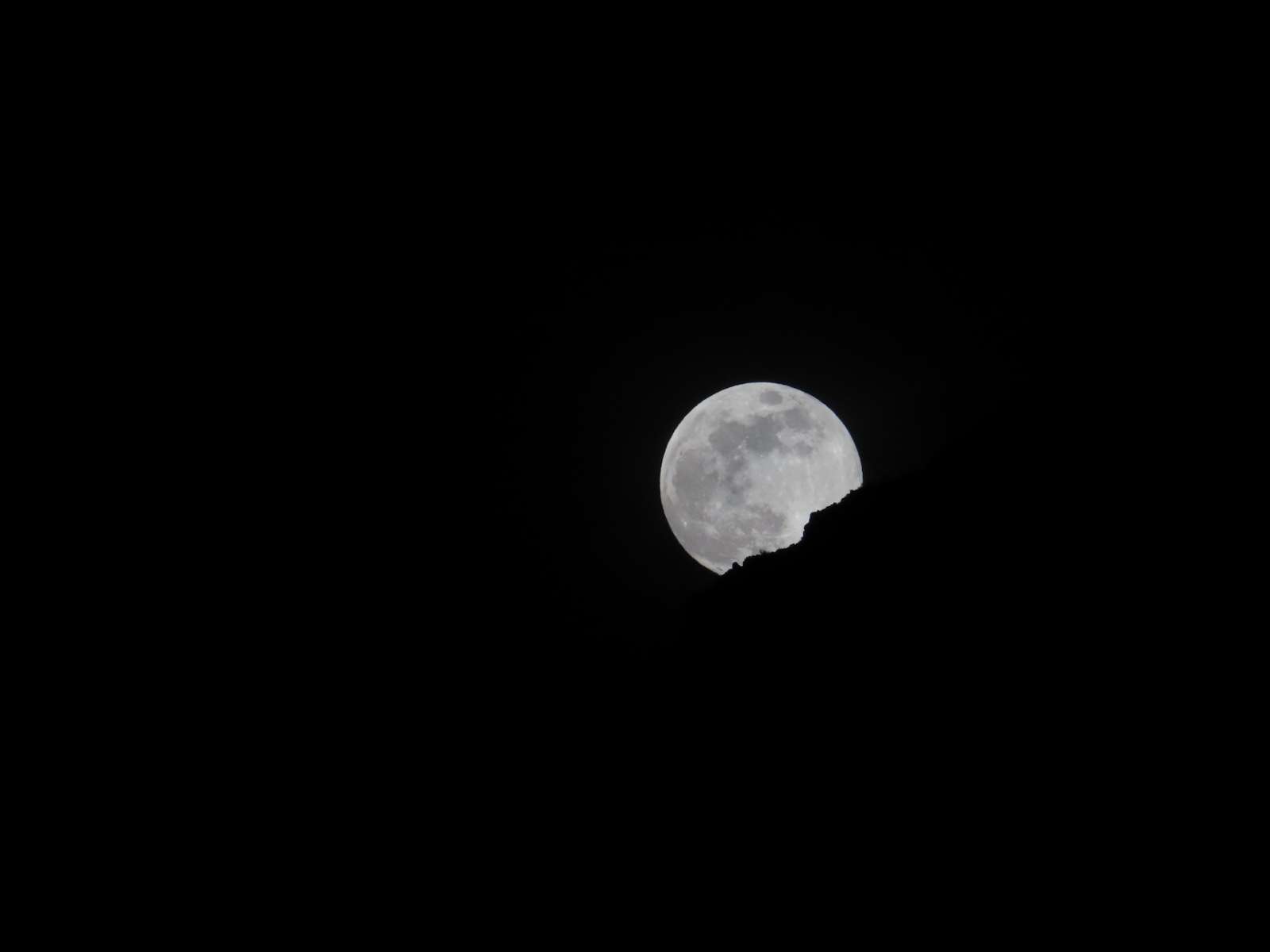
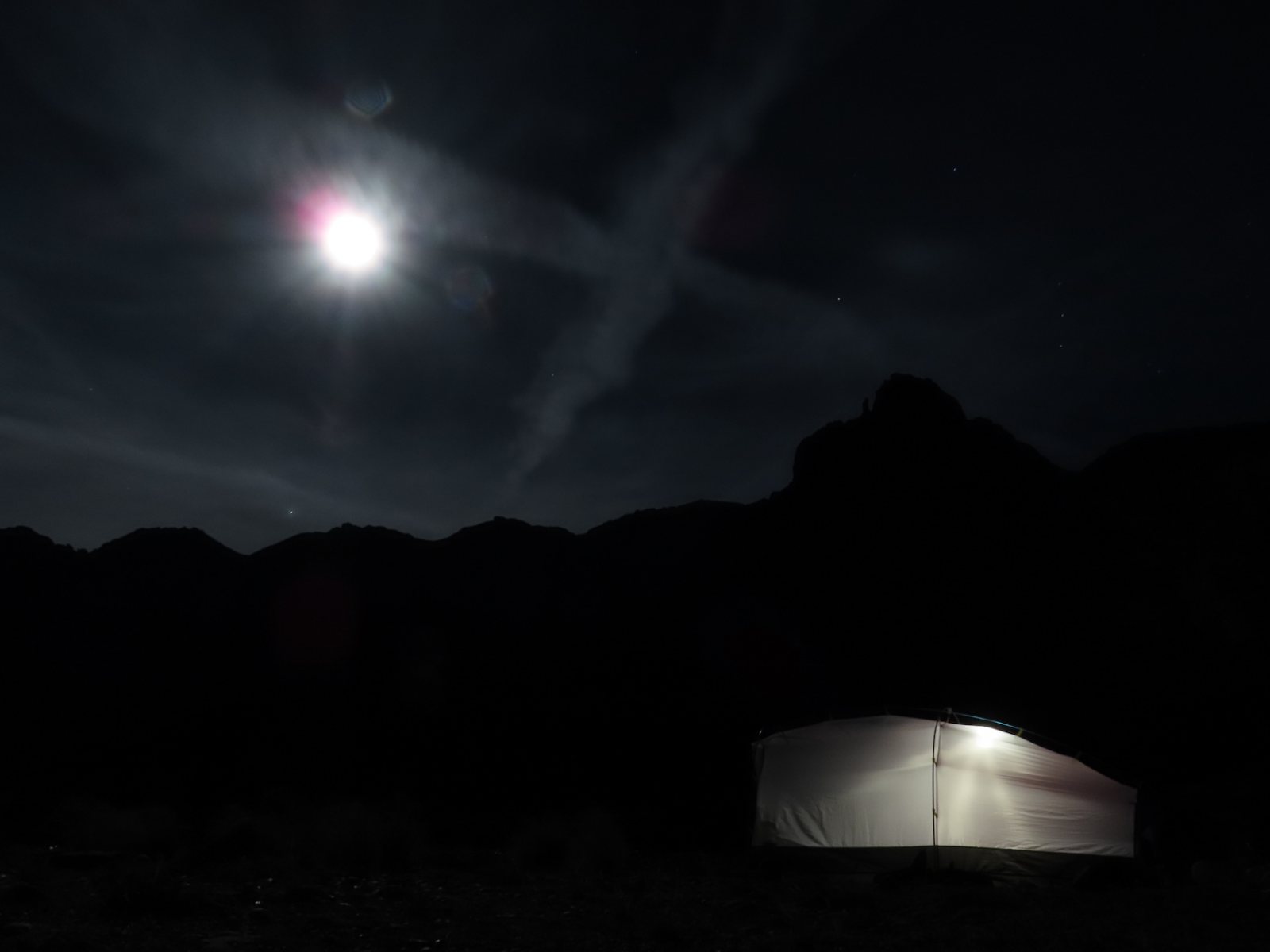
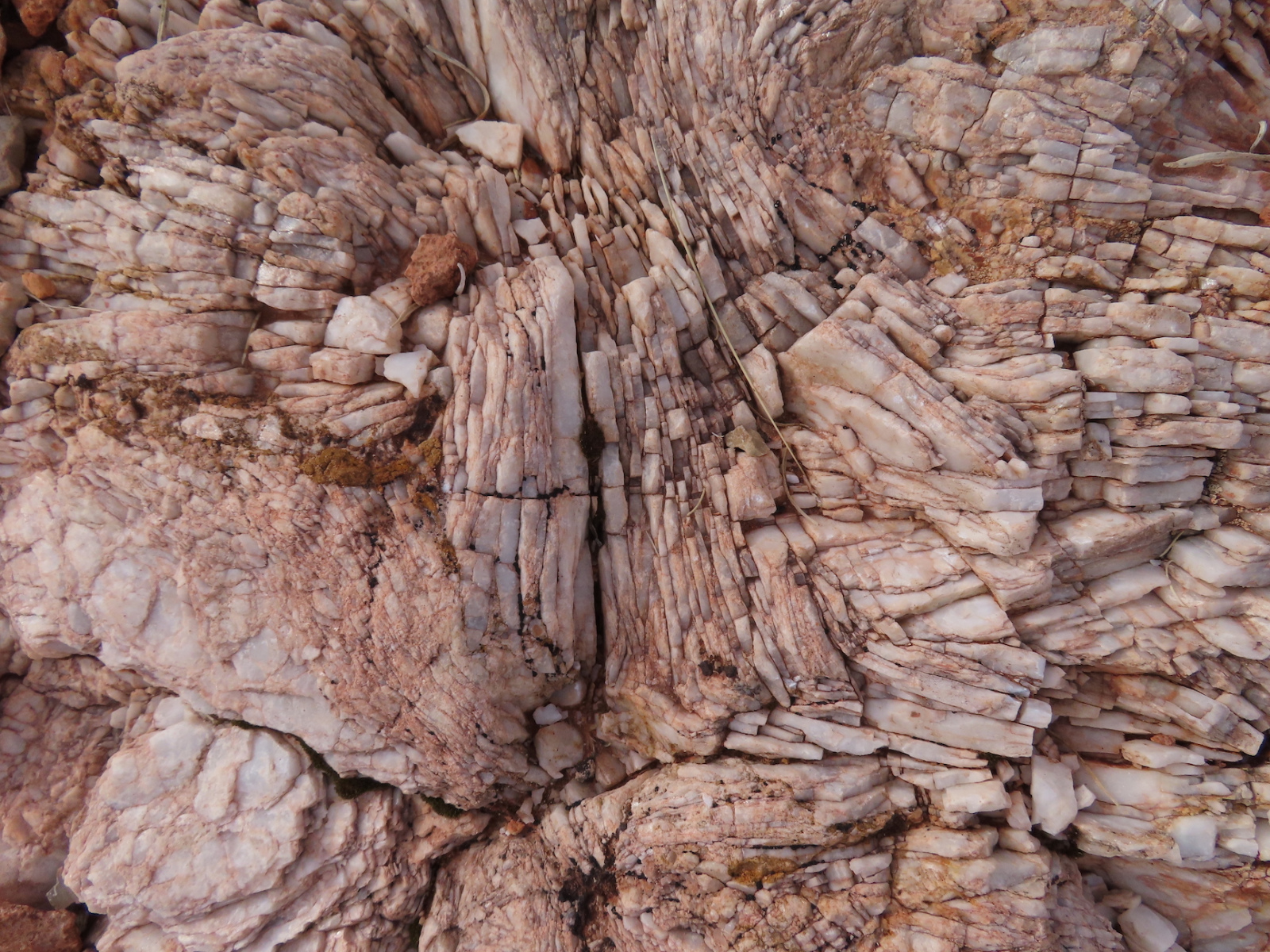
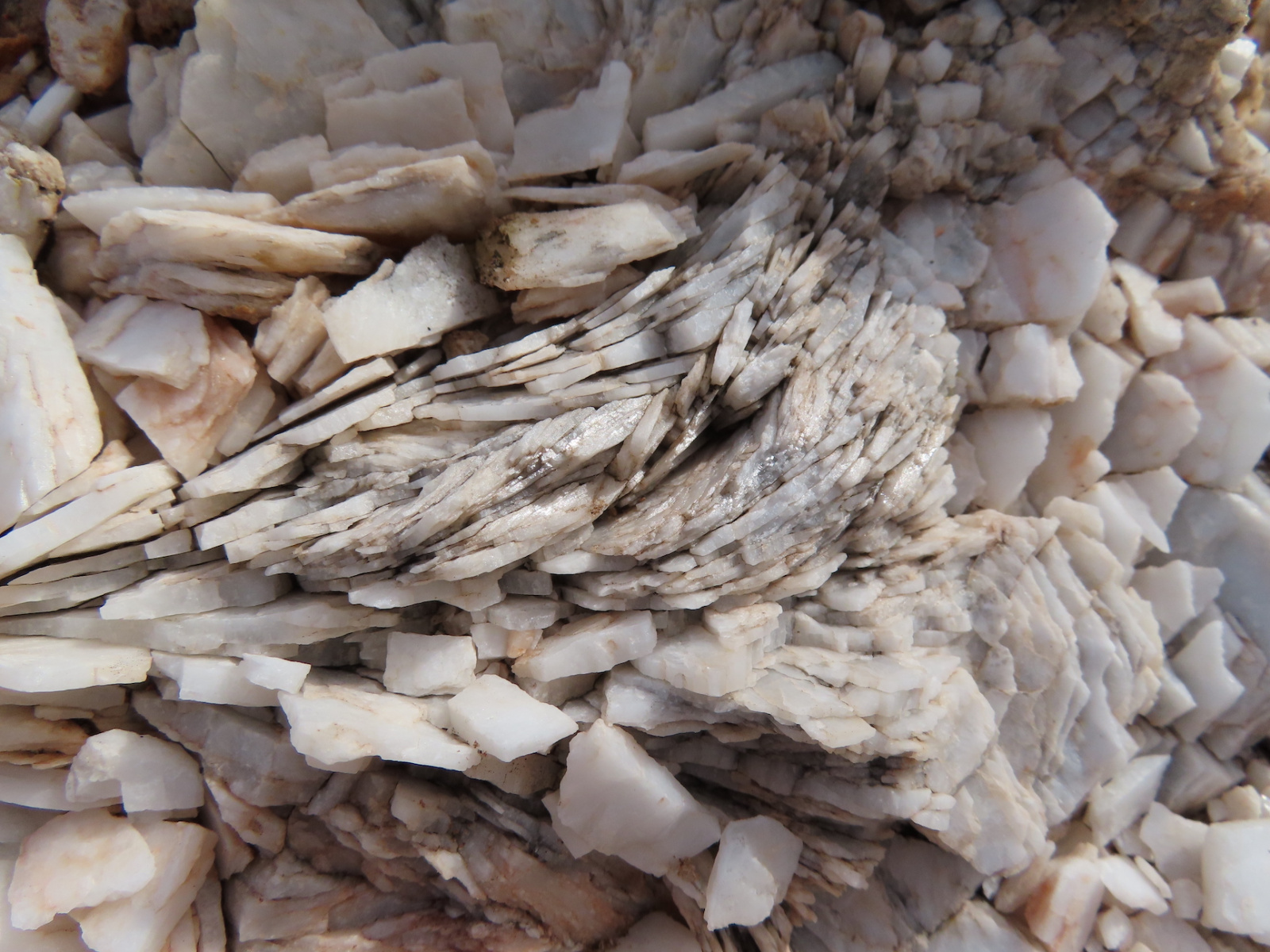
Cemented stones at Tanner beach I stayed outside the tent for an extra hour and a half, photographing the Moon as it rose over the cliffs, Jupiter and two of its moons (although this particular Canon Powershot is not ideal for night exposures), and even a rocket launch with the tell-tale flairs from its rocket engines. The rock bed on which we camped was like nothing I had ever seen. At first glance, it was just a gravel bar. But upon closer inspection I noted that every single stone was partially cemented to the sand beneath. This appeared to be a conglomerate in the making, a stable, solidifying mantel despite the lack of overlying pressure, heat, and time. There was a chemical and physical process occurring that created the illusion of every stone being hand-placed, as though some master mason had a vision for a palace floor, each a puzzle piece sitting exactly where intended. I need to learn more, to understand how this occurs and how long it will last. I walked carefully, flat foot to flat foot without the normal rocking from heel to toe so as to not disturb the bed behind me as I explored.

The next day we rose early, ate a hot breakfast, and packed as the sun rose. Oatmeal with dried bananas and the last mangoes slices before we headed back up to the South Rim. Nothing about this nine miles and nearly 5000 feet elevation gain was easy. One foot in front of the other, a steady climb to the top, we took numerous breaks. I usually enjoy these efforts, a chance to focus my mind on designs, stories, and future plans but that day, for reasons I don’t understand, I was plagued by a relentless streaming of music in my head, and conversations without resolve. I could change the channel, but not the volume. It was, for me, more exhausting than the physical effort and without end until we reached the car. The parking lot was full, the sun warm on our arms, neck, and faces but the air cold. The car started, which is always good, and we drove to Cameron to stay the night in the lodge.

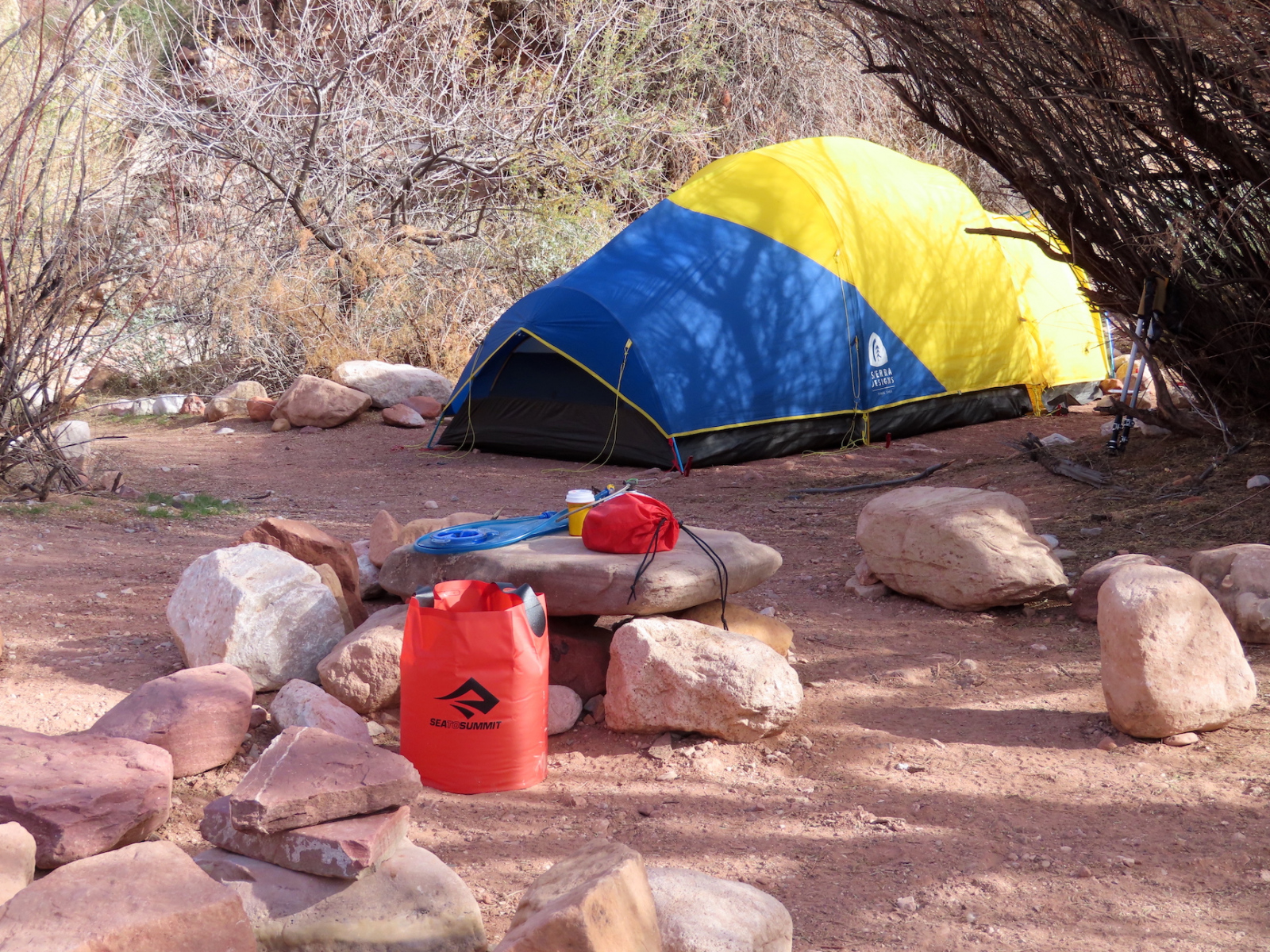
Yes, we could have carried lighter packs—we could have left the two books, Sierra Designs expedition tent, deck of cards, first aid kit, and extra batteries for our headlamps behind; we could have brought two 32F sleeping bags instead of a 0F and 32F which we frequently combine for a shared, warm cocoon. But the last time we were in the Grand Canyon it was far, far colder, too warm, in fact, which is good reason to worry, for us all. Physical challenge is the mental challenge, both welcomed by anyone who ventures into the belly of the Earth for more than a casual stroll.

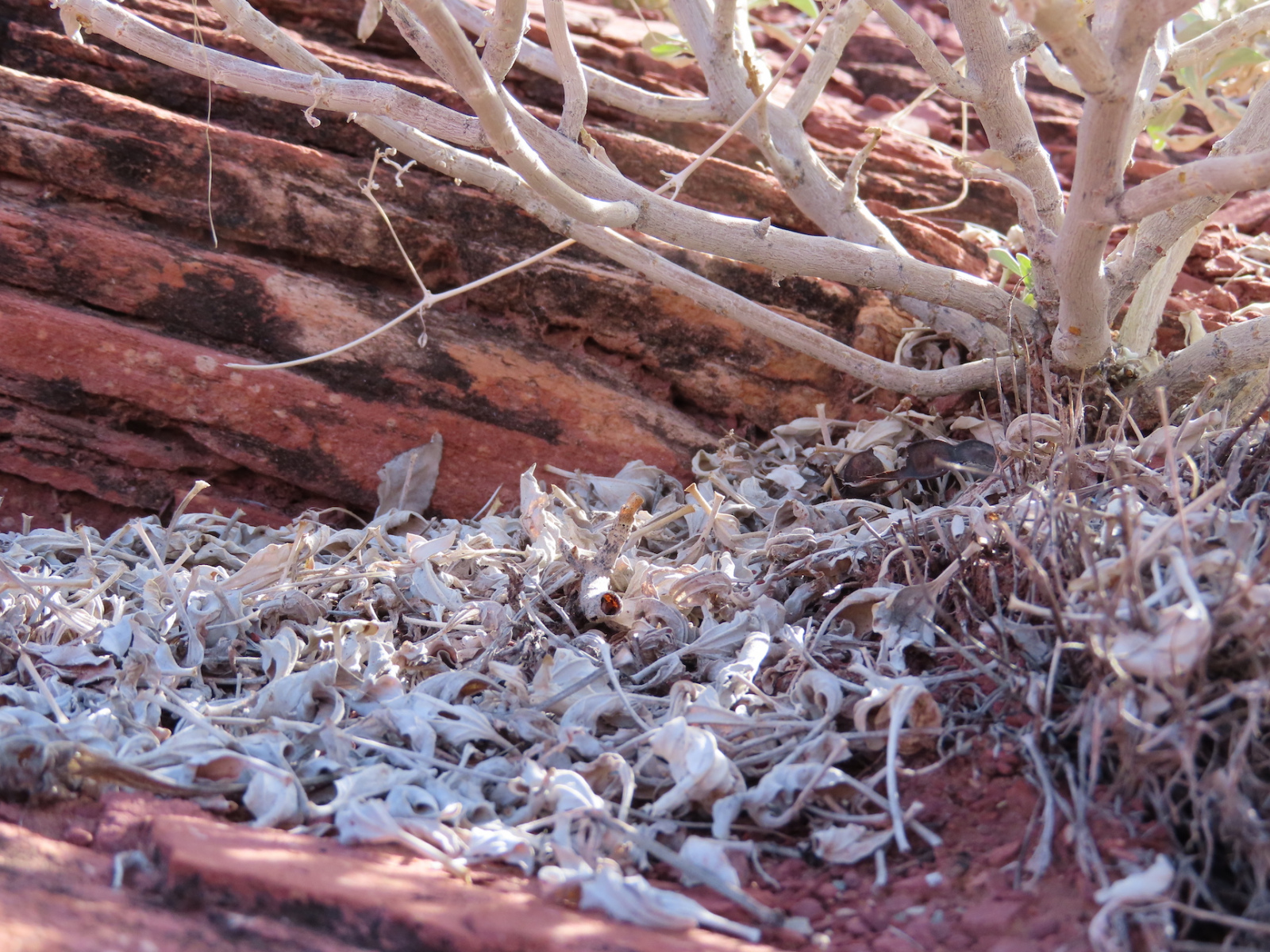
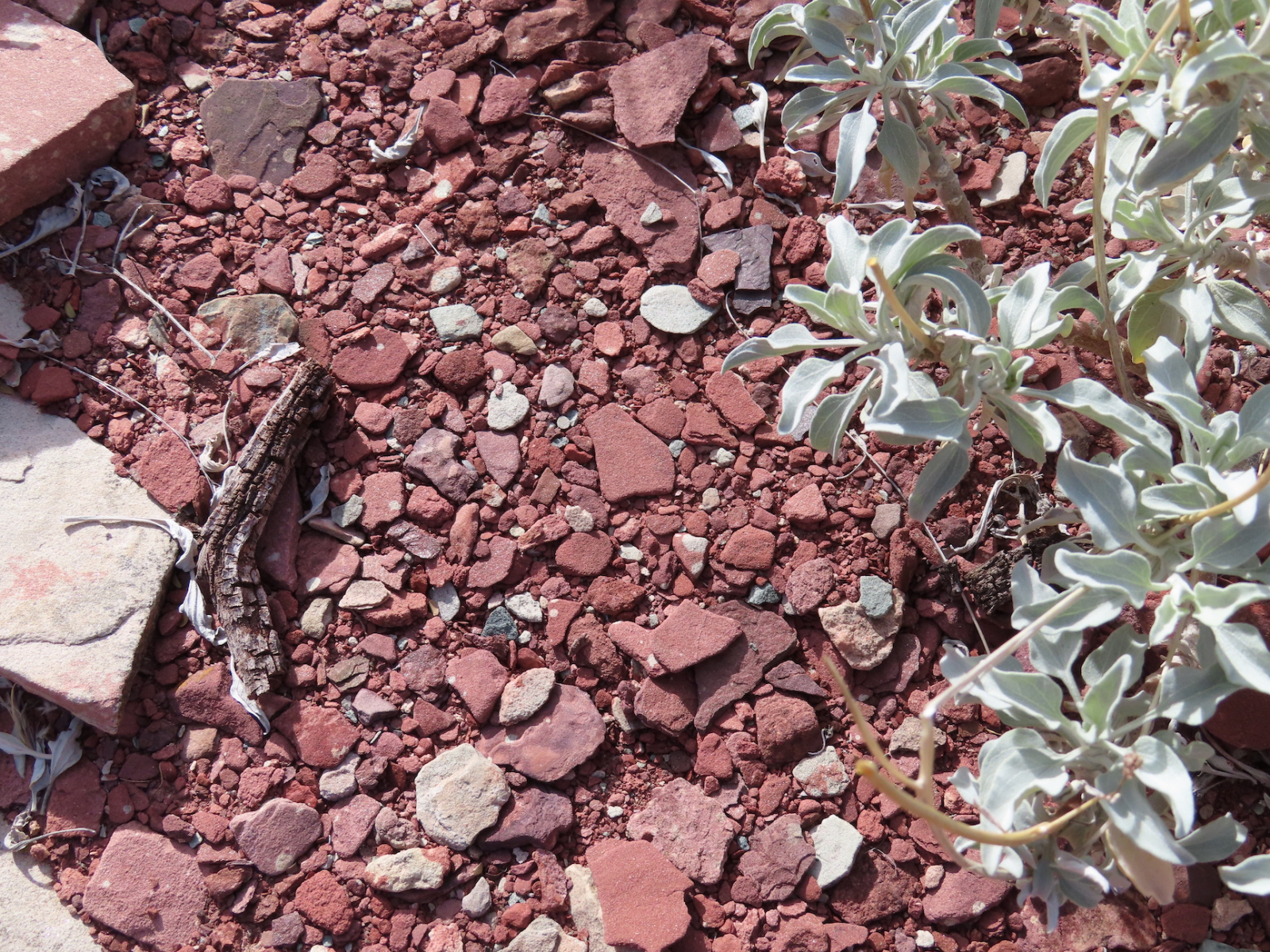
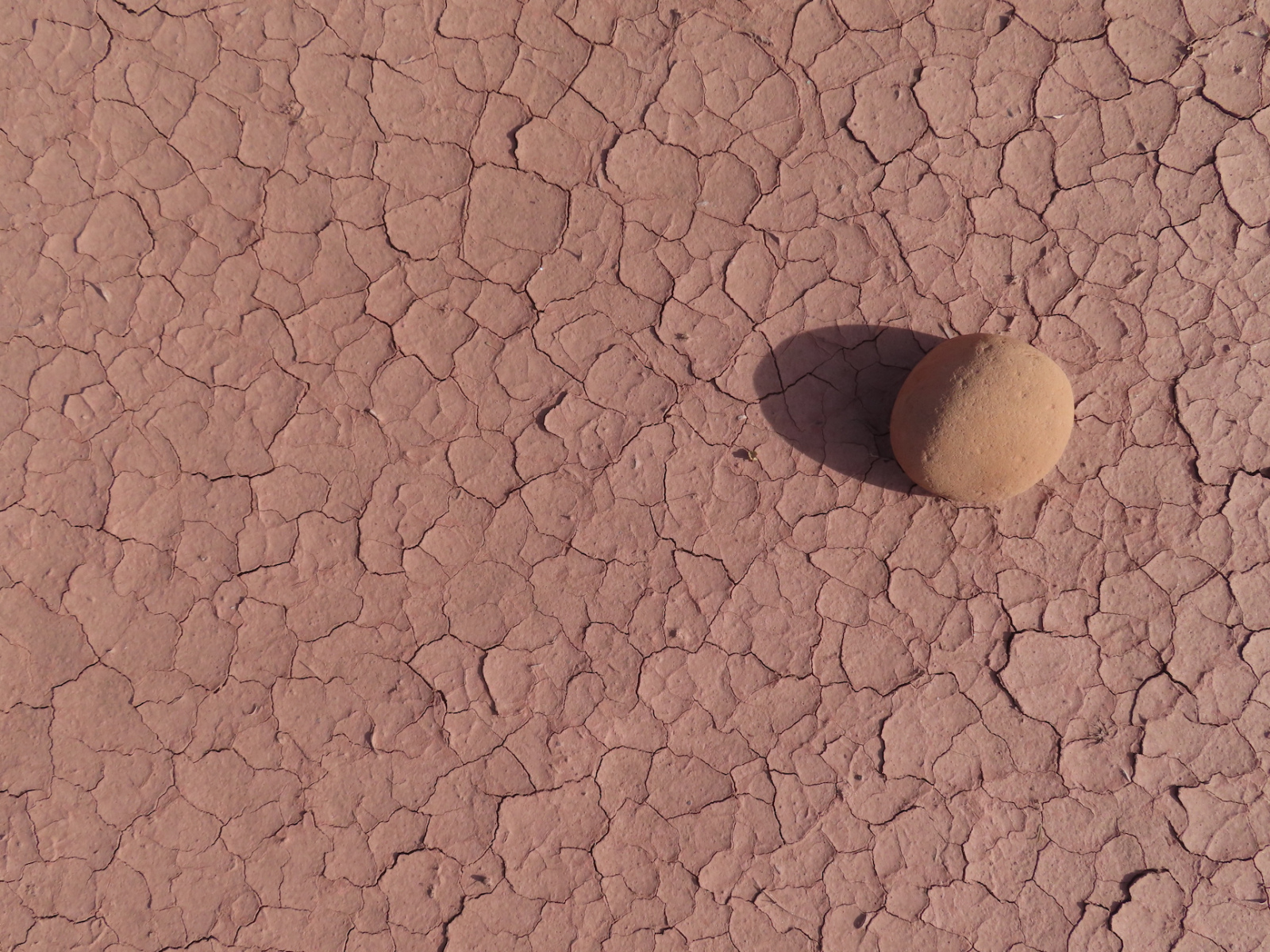
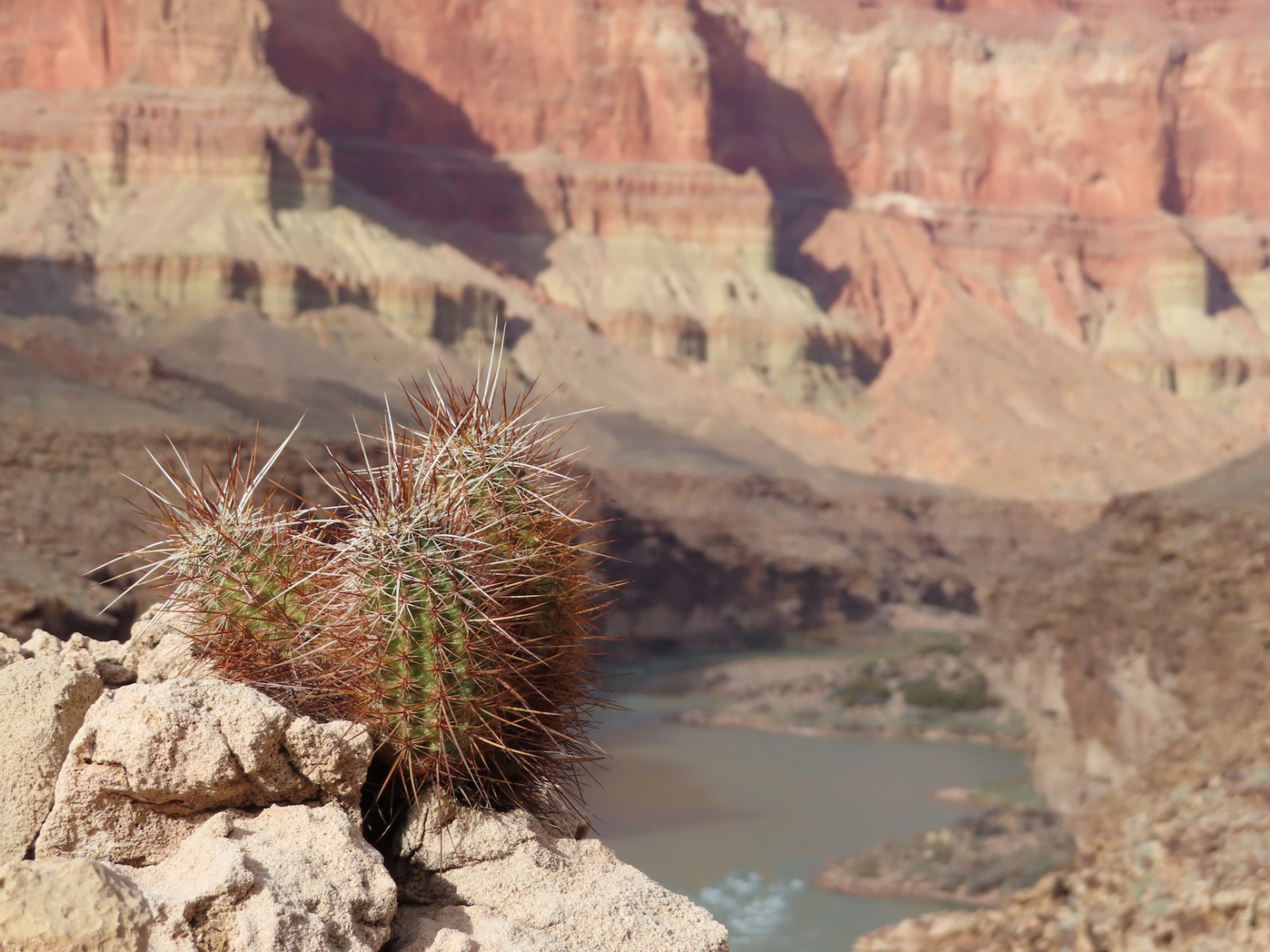
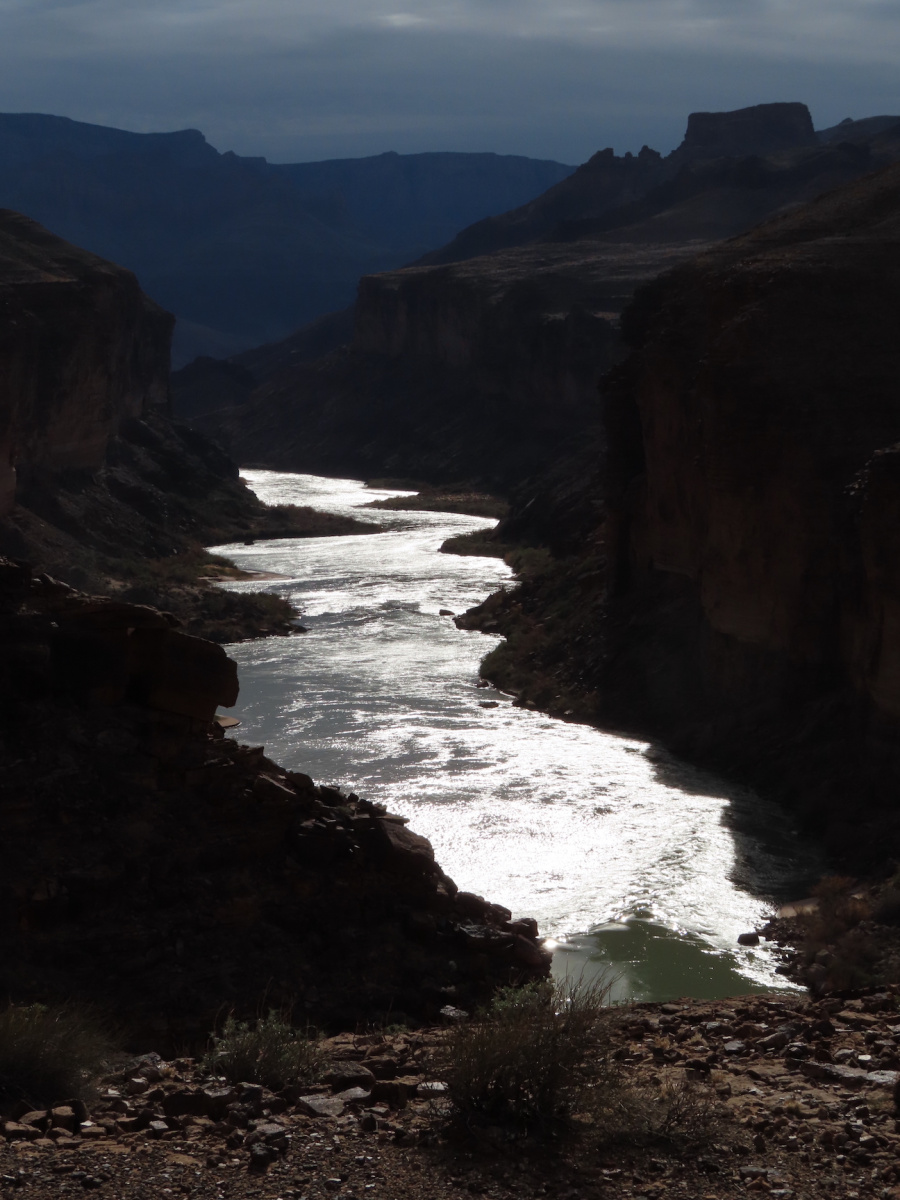
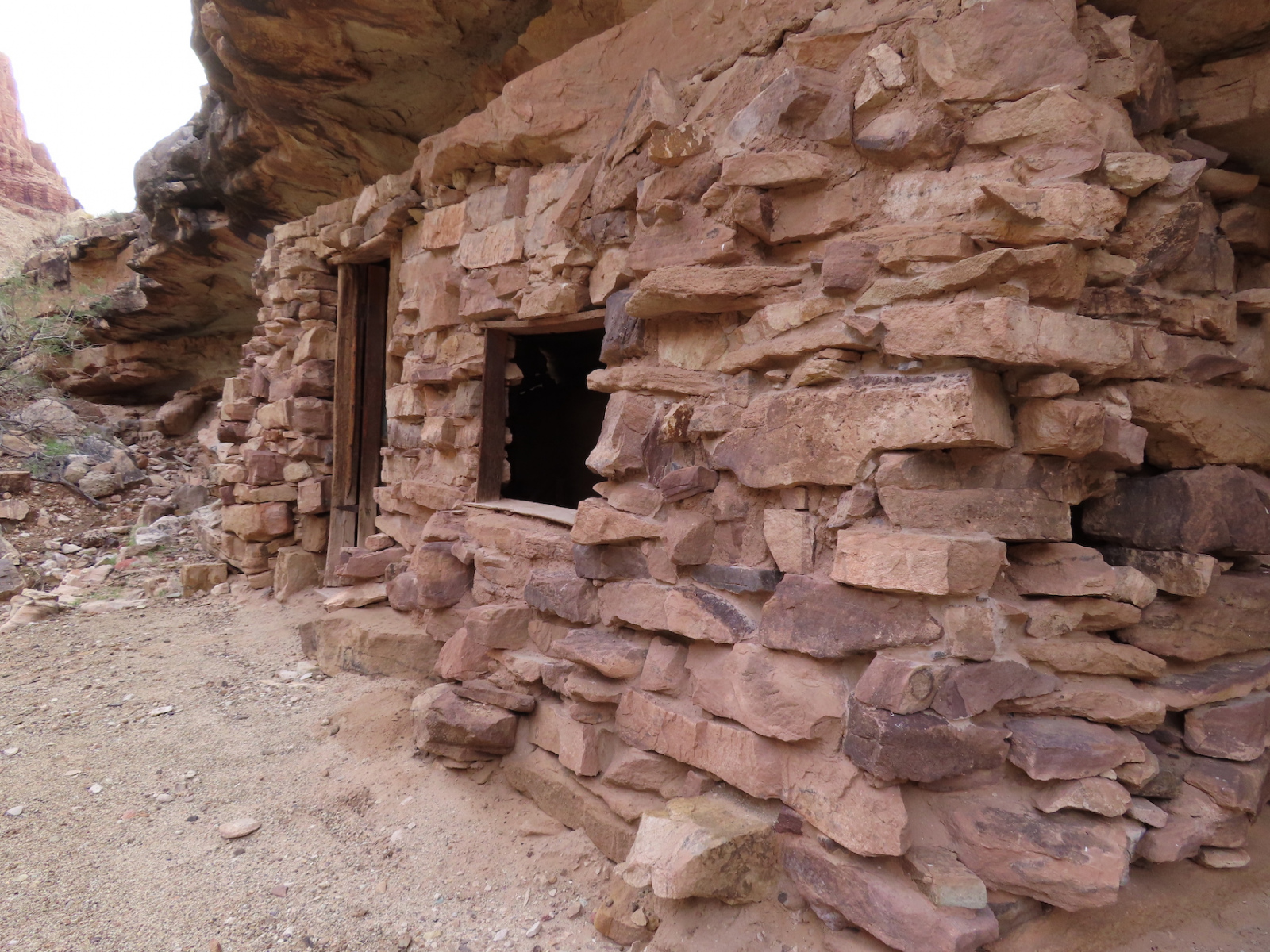
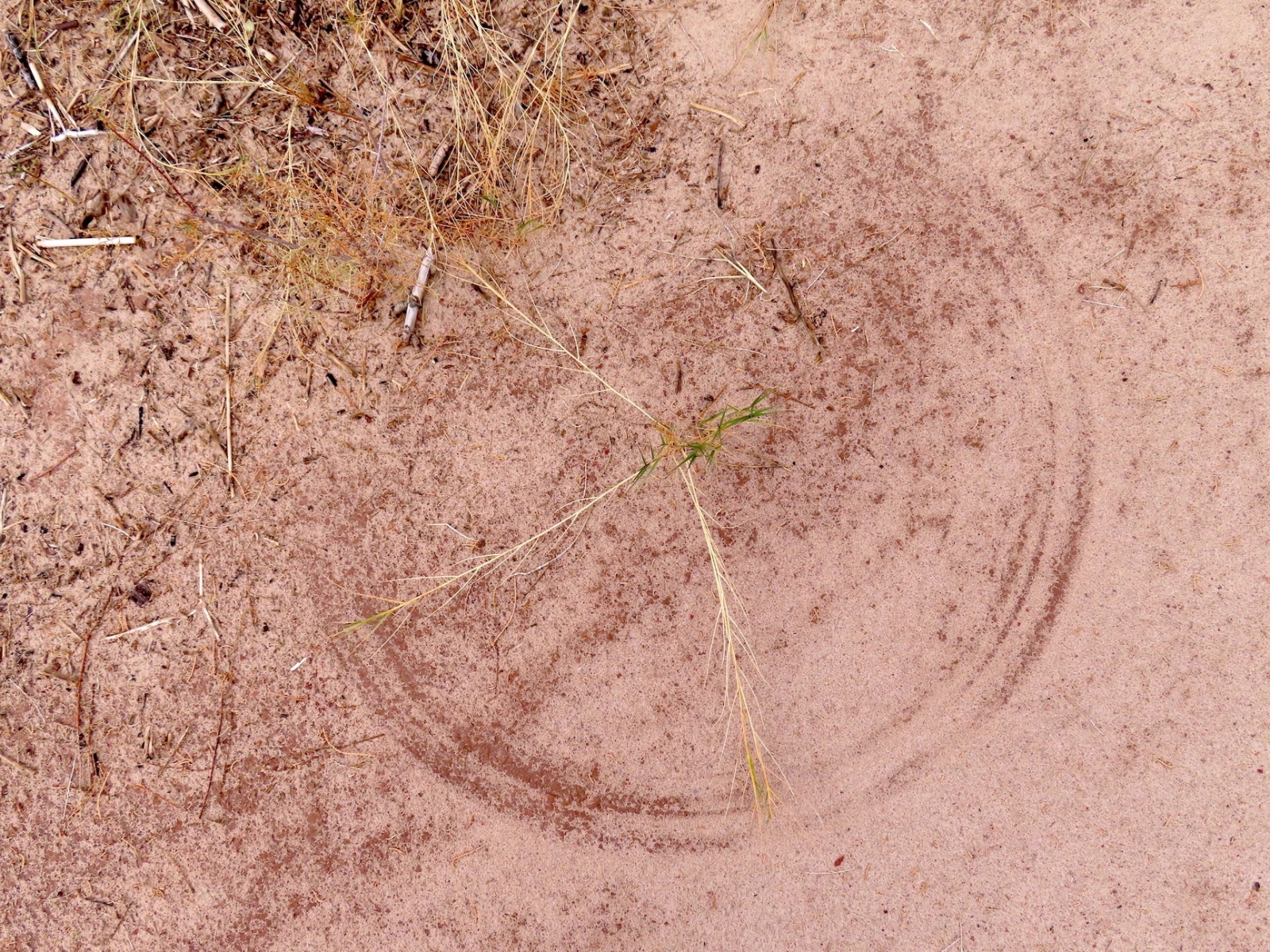
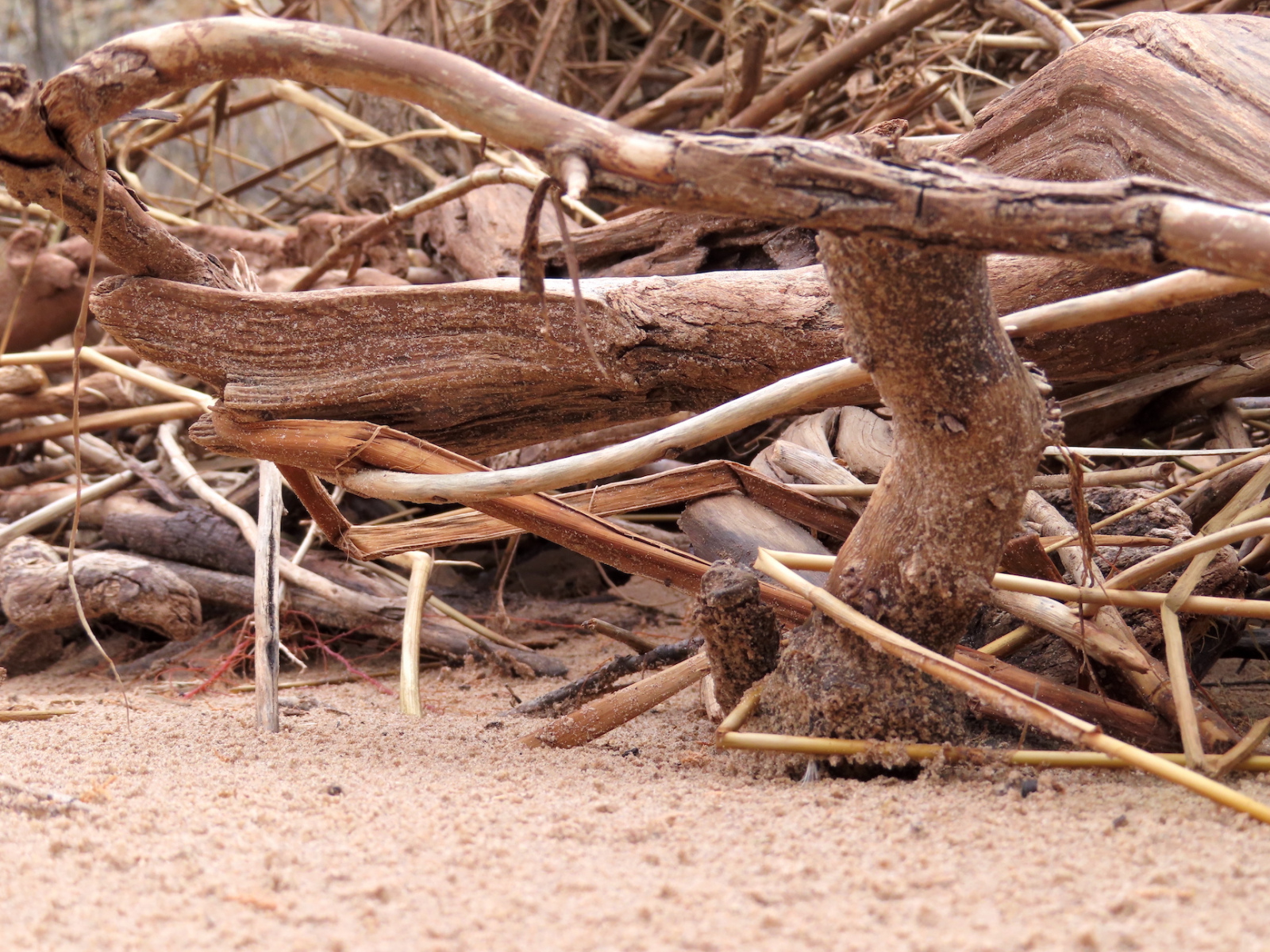
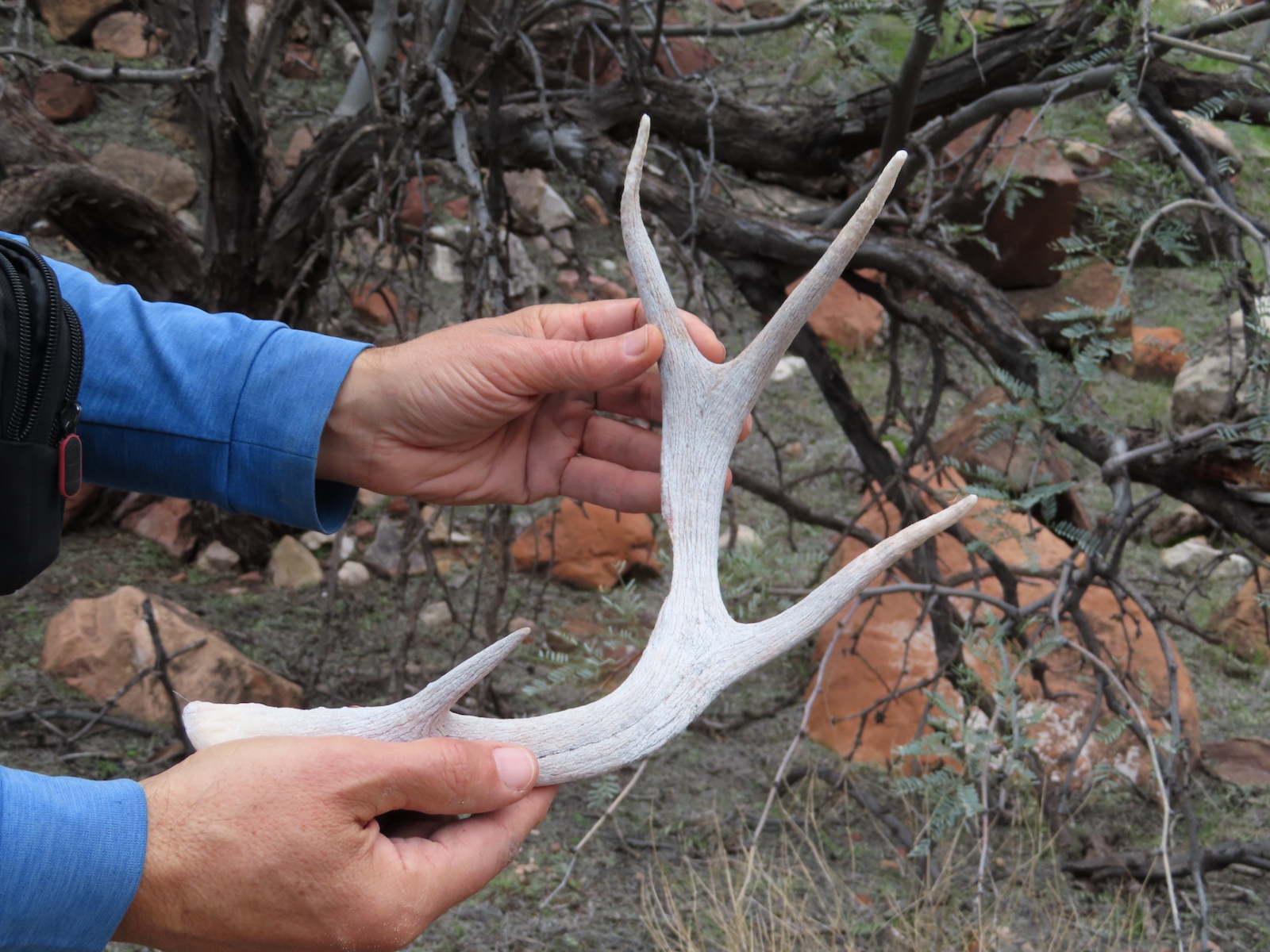
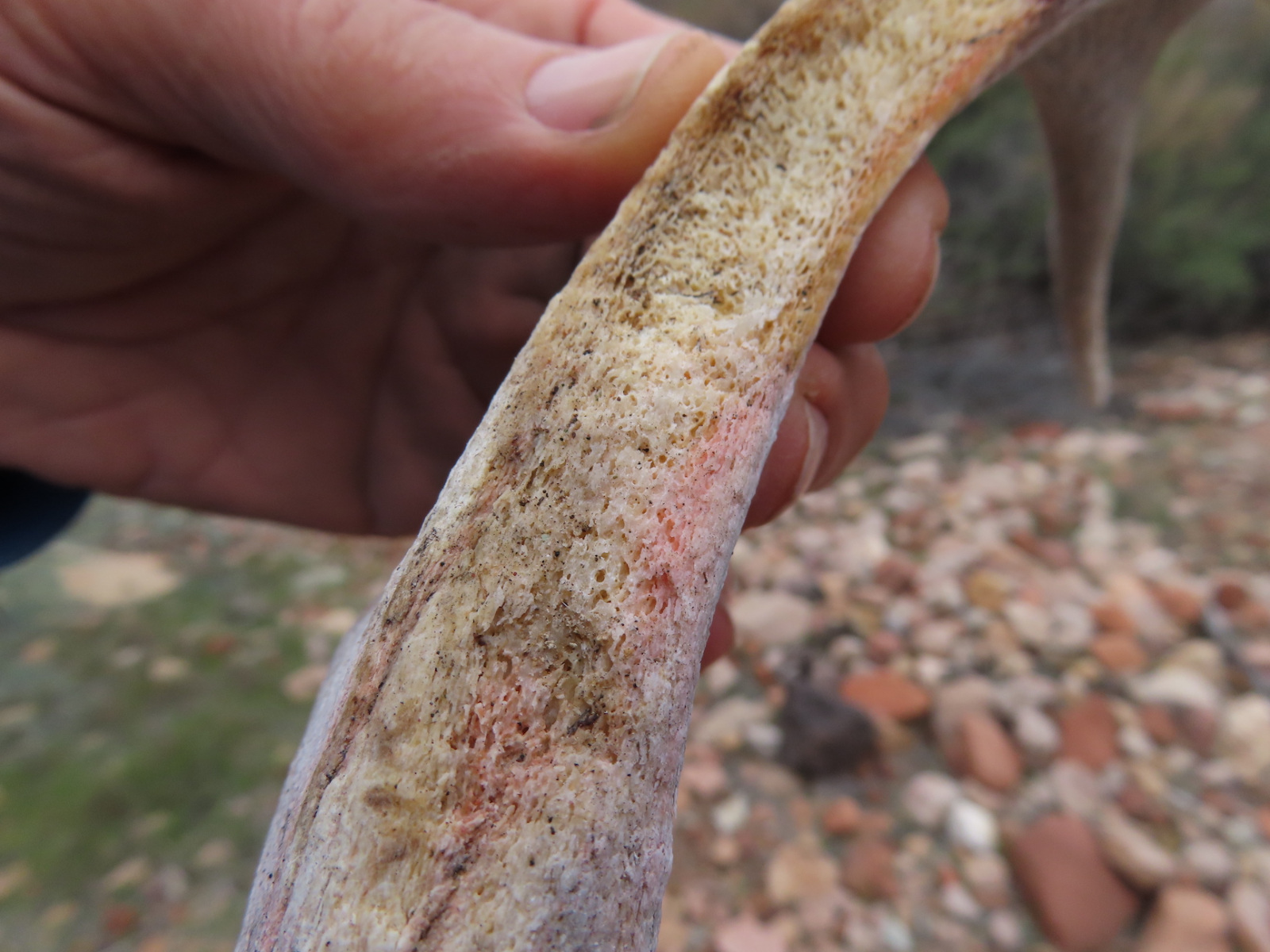
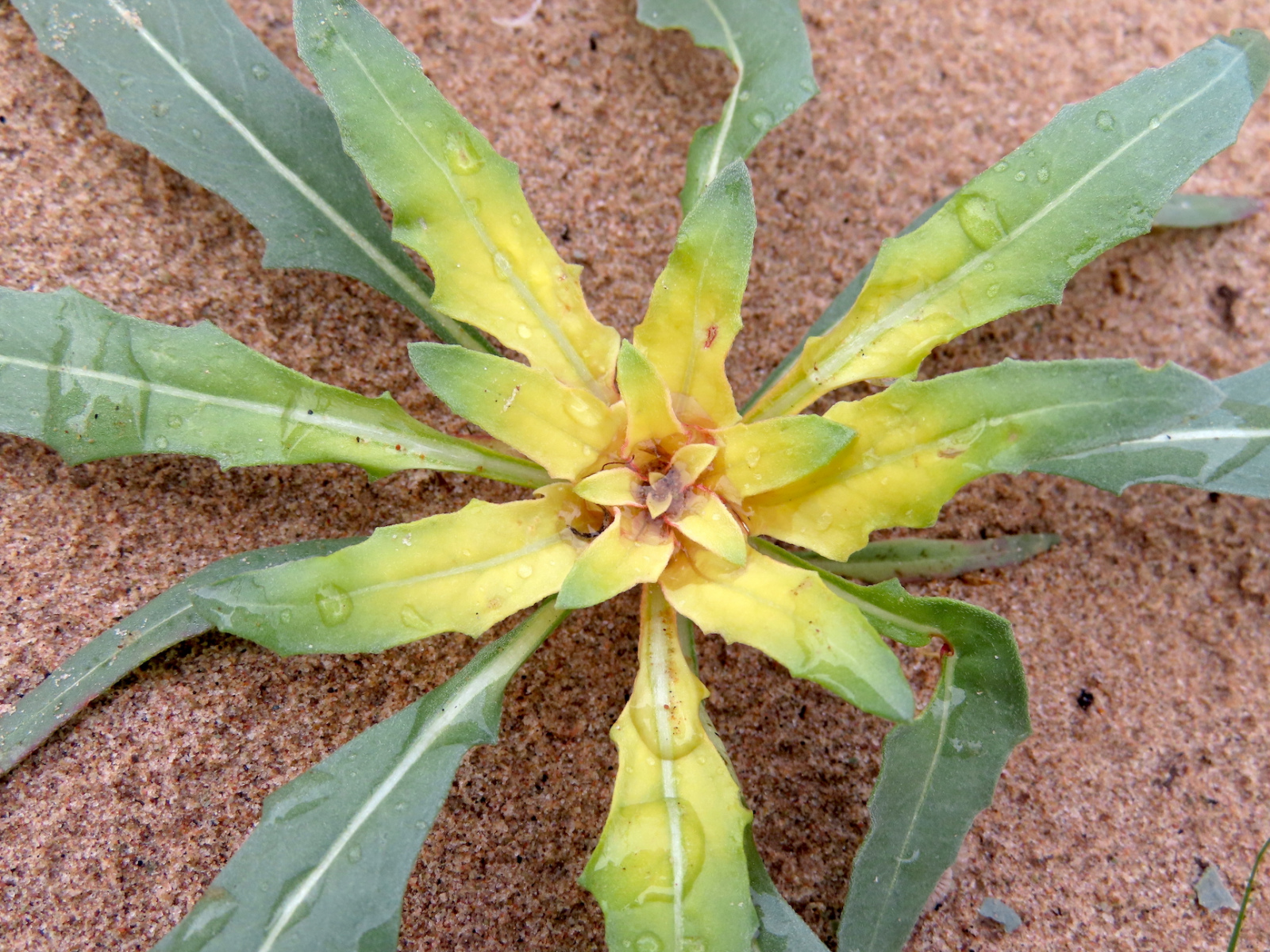
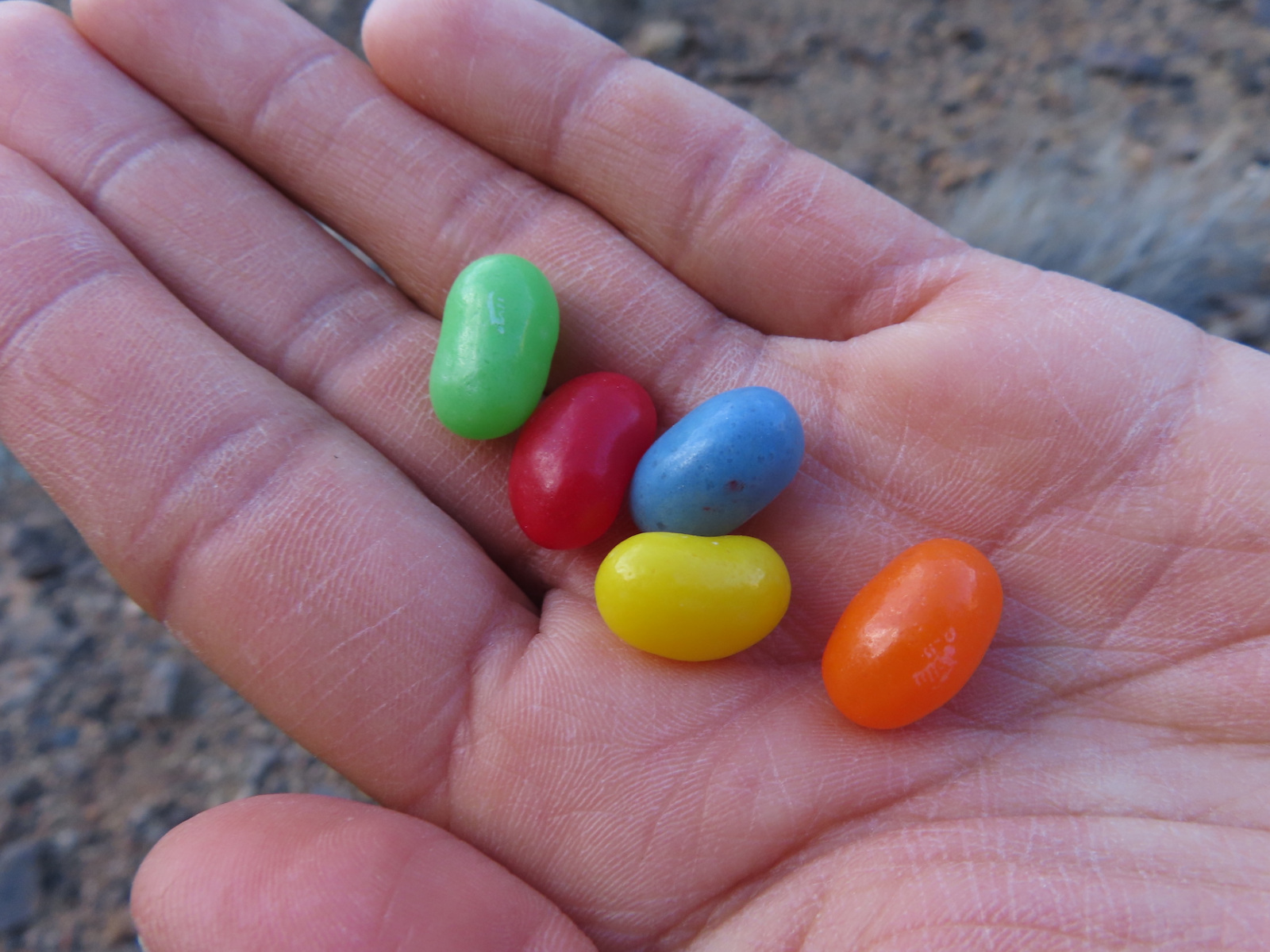
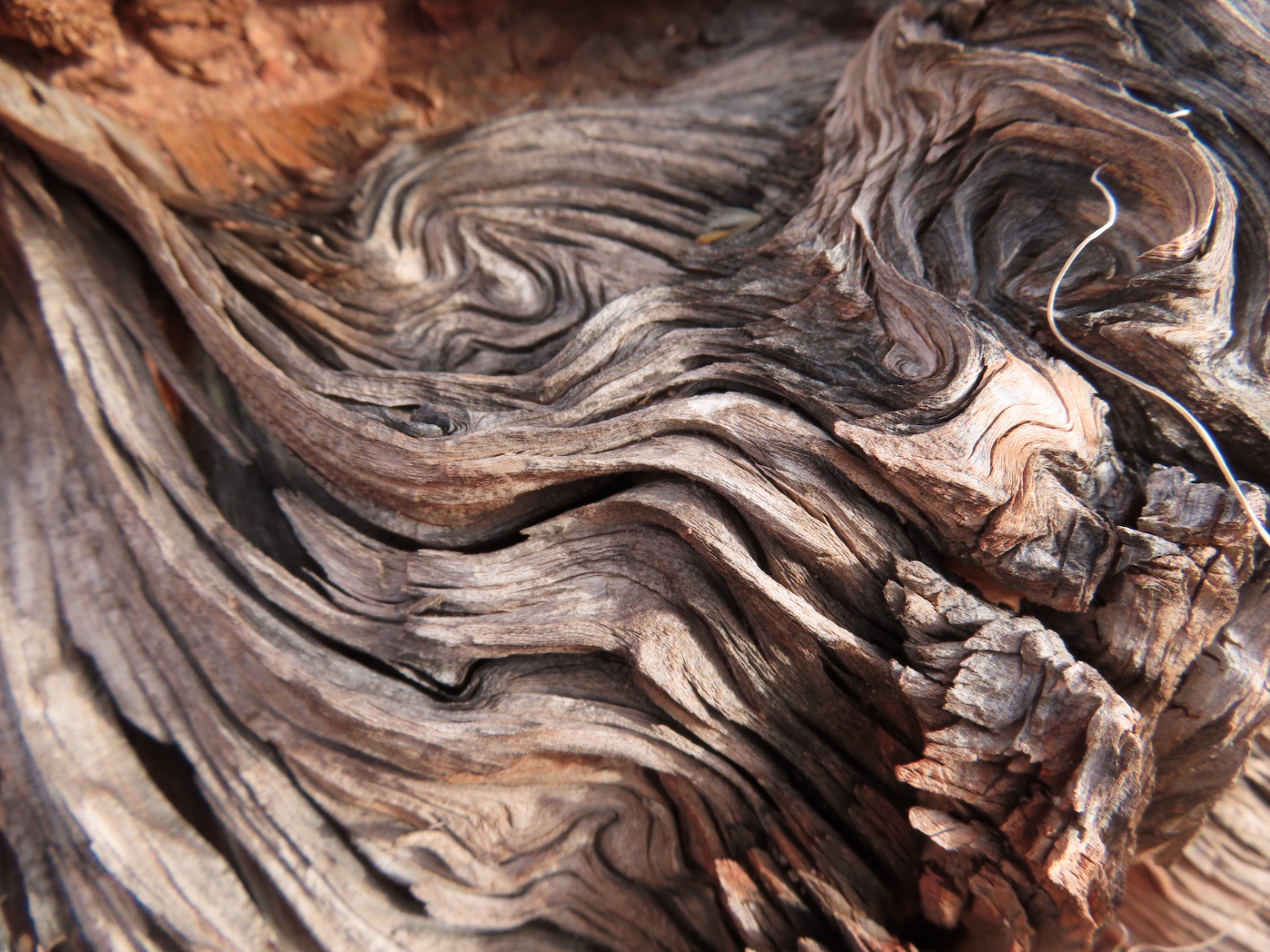
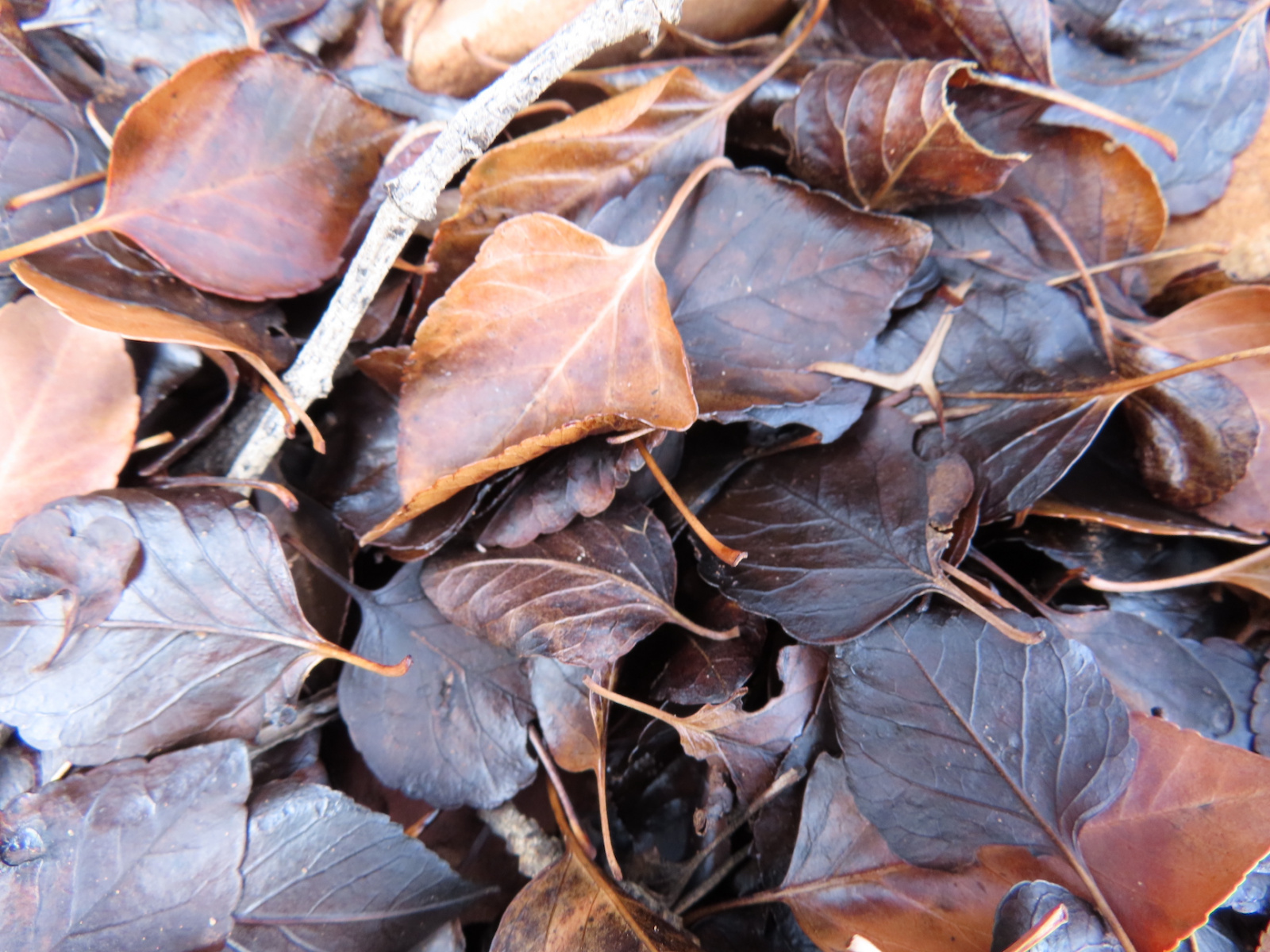
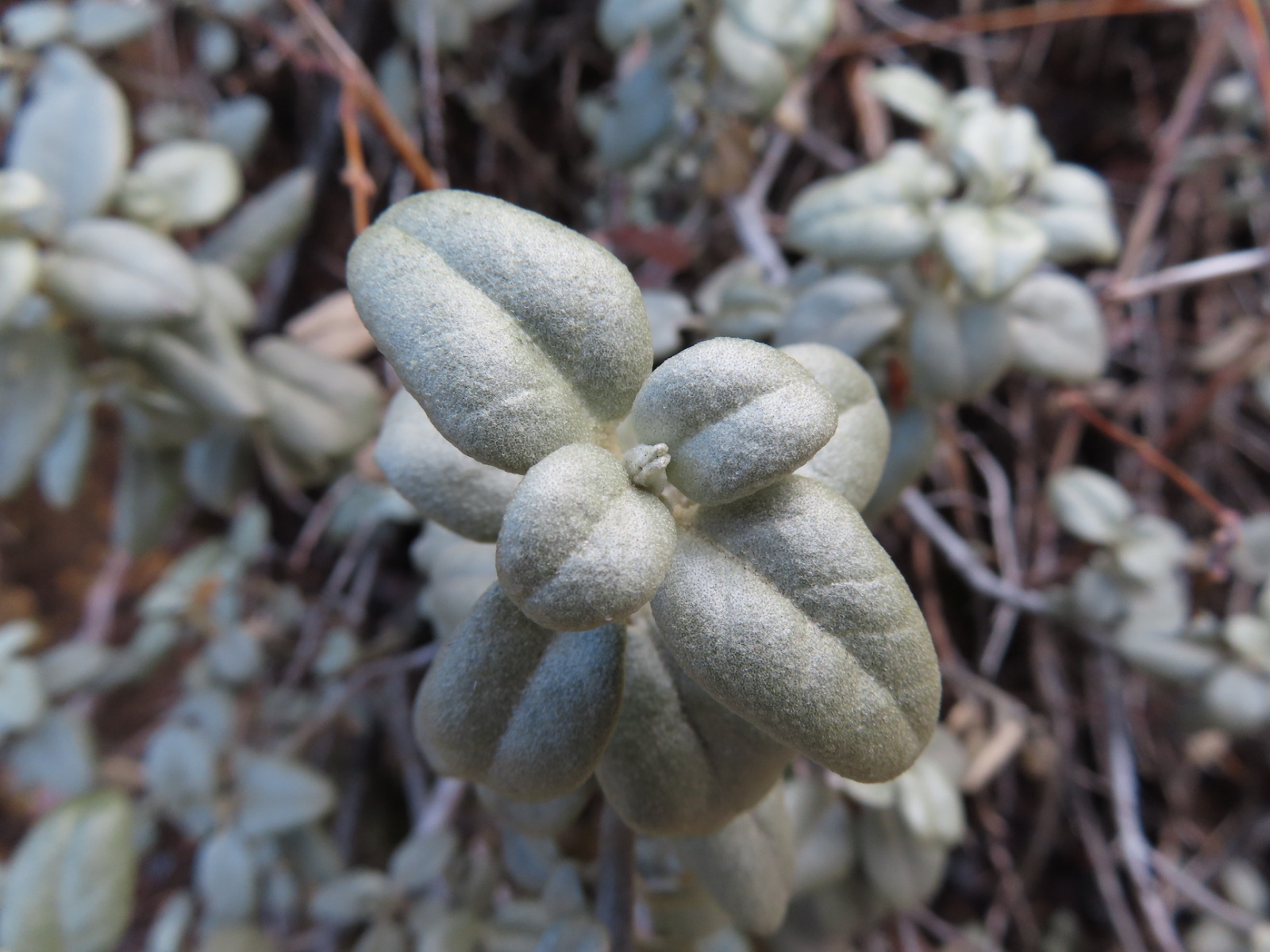
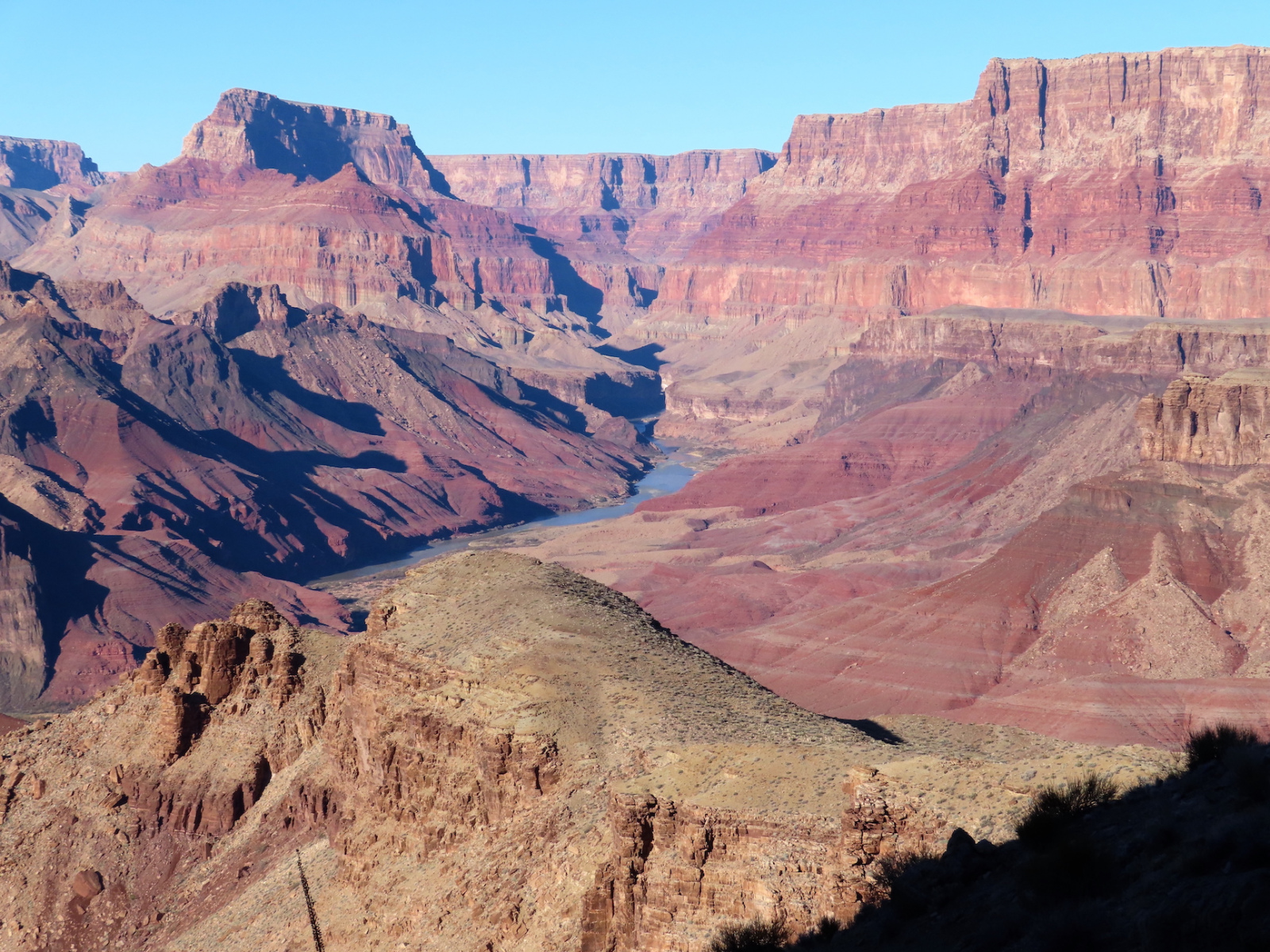
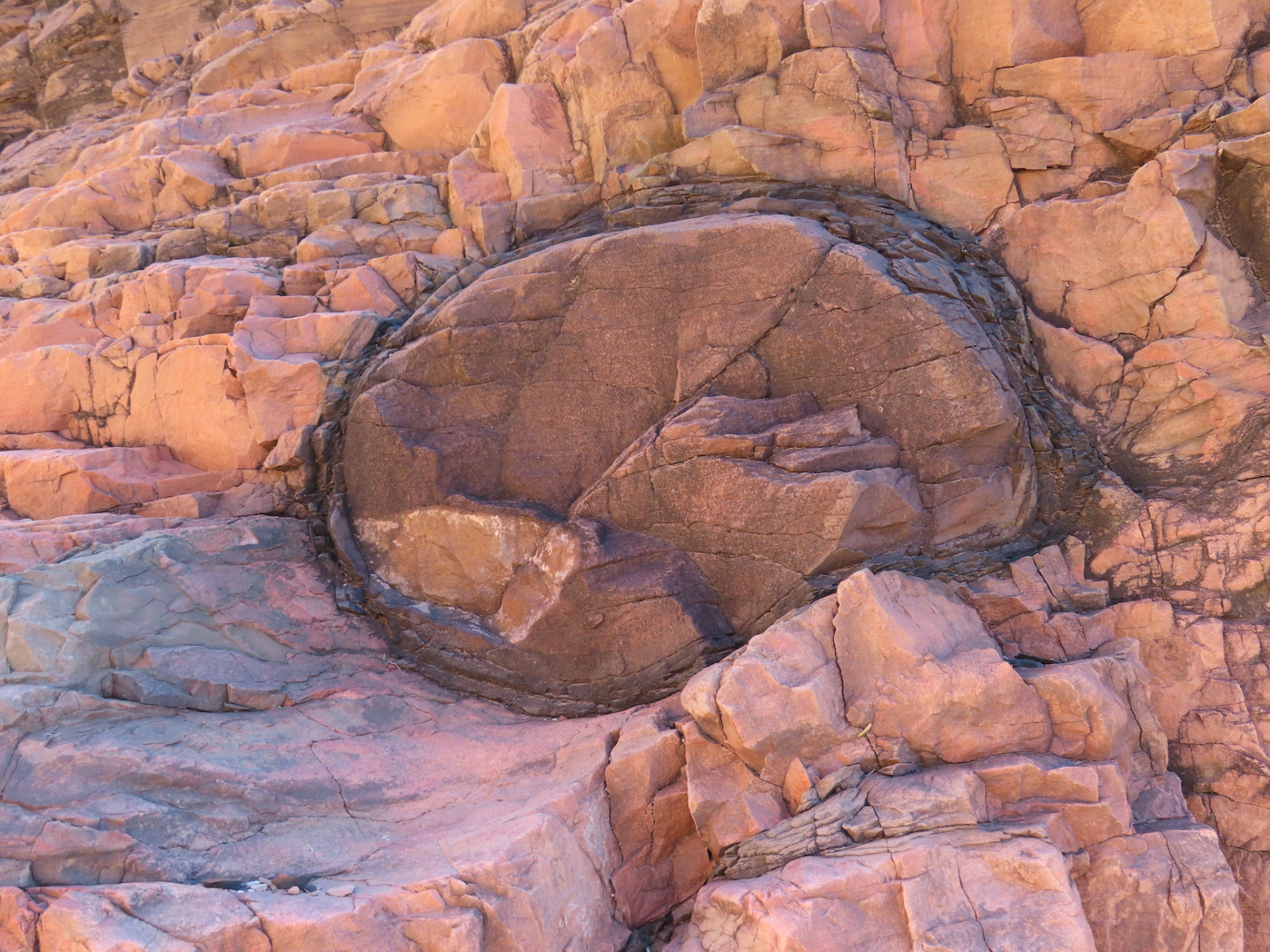
The Grand Canyon never fails to engage, challenge, and reward. I came away with a hundred questions about geology, hydrology, and plant biology which will take a while to answer. Captured here, in these photos (below) are some of the beautiful things and some of the mysteries we desire to remember.
By |2026-01-14T12:06:30-04:00January 11th, 2026|At Home in the Southwest|Comments Off on New Years in the Grand Canyon, 2026

When it rains, it pours

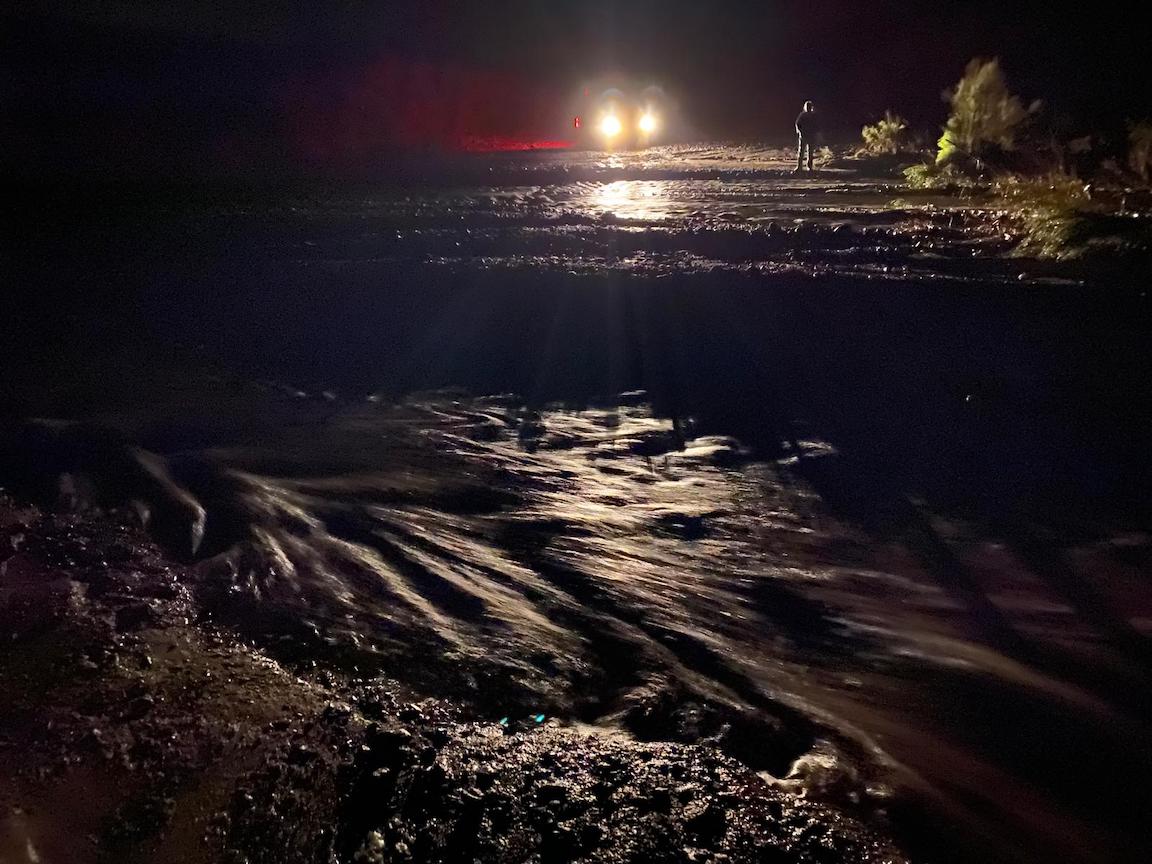
Flash flood in Cascabel, September 27, 2025. Photo by Colleen Cooley.

Last night Colleen and I returned from a week in Colorado. We heard reports of massive storms and could see the downpours, dark columns of massive amounts of water over isolated regions of the desert before us, as we drove from Bluff to Mexican Water, Many Farms, Chinle, then I-40 to Holbrook and back south again to Globe. We knew we wouldn’t make it from Oracle to Cascabel on the back road as it washes out easily. And with 30+ miles of gravel, even one downpour could make it impassible. Instead we went around, through Tucson to Benson, getting groceries and heading home on Cascabel Road as we have so many times before. Twenty miles of pavement followed by seven miles of gravel.

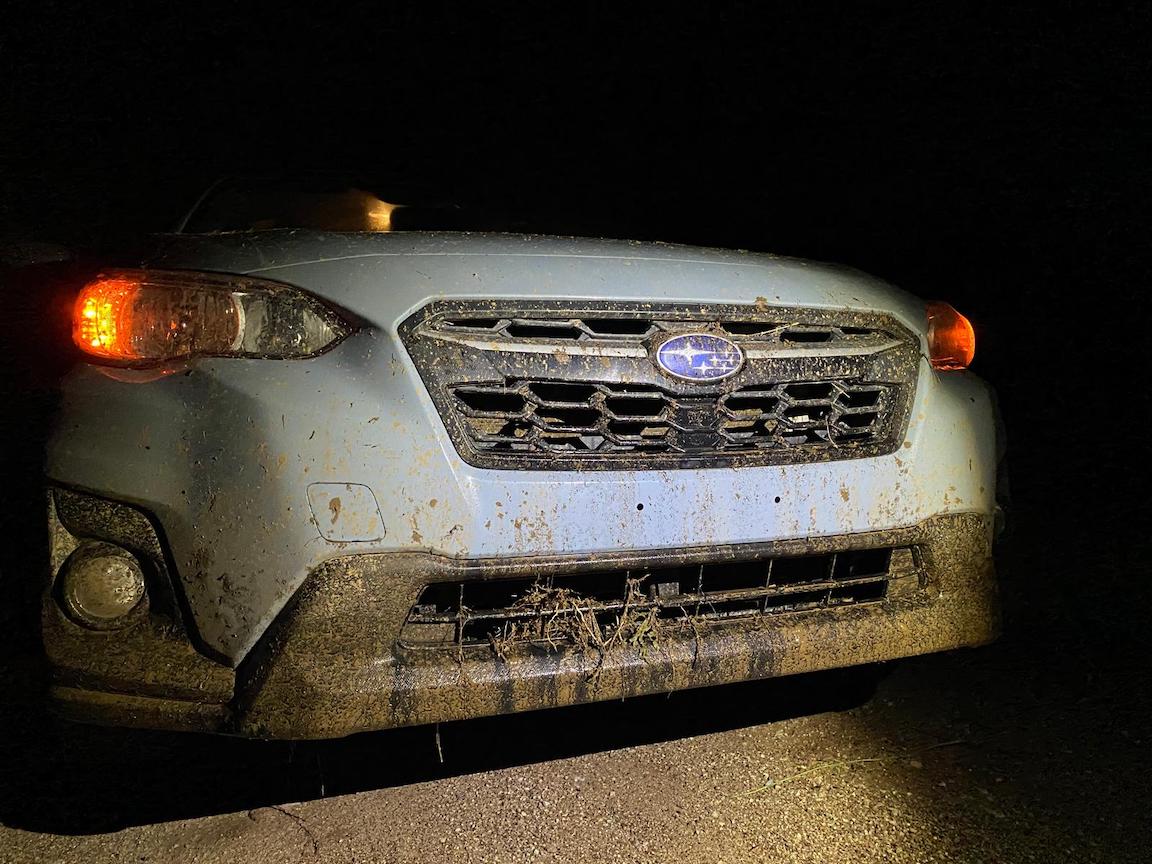
What we saw was incredible. The amount of sand and mud and debris over the pavement was incredible. We took it slow, picking our way across massive outpourings of earthen material carried onto the road from banks and streams. But what caught us off-guard, just a quarter mile before the start of the gravel was a standing pool of water two to three feet deep and over one hundred feet long. It was covered with a layer of mud such that it appeared, by the headlamp of the car, to be a continuation of the road. But once we were in the depth of it, it was too late to stop, turn around, or even switch to reverse for fear of flooding the air intake or tail pipe.

The water was up to the hood of our Subaru Crosstrek, blocking out the headlamps a few times. I kept it going slow and steady in first gear, talking to myself, Colleen, and the car, “Come on. Just keep going. Come on. A little more gas. Not too fast. Keep going.” The road no where to be seen. I just kept the car centered between the trees on either side, and looking ahead I saw reflections from two T posts, one on other side of what I assumed was the road. The interior of the car was warm with moisture brought in through the vents. The windows fogged over completely. The wiper blades flipped left and right at top speed to remove the mud being thrown over the hood and onto the glass, even at our very slow speed, just two or three miles per hour. I rotated the dash control to defrost and it cleared, a bit.

The road rose back up and the water diminished to two feet then one foot deep, and eventually just pavement again. I stopped and rev’d the engine to make certain it continued to run clean and smooth, rolled down the side windows and brought the defrost to maximum. I looked to Colleen whose eyes were as big as my own. I said, “I can’t believe we made it. The car should have stalled. I don’t know how it made it with that much water washing over the hood.” I explained to her that if the engine had stalled the exhaust pipe would have filled with water and getting the car started again would have been very difficult if it remained underwater. The forward motion likely kept the water from filling the engine compartment completely. Later I inspected the Crosstrek air intake more closely and discovered that, by design, the manifold is a horizontal snorkel that brings air in from the highest possible level, through an inverted scoop. It appears to be designed to shed water. Well done!
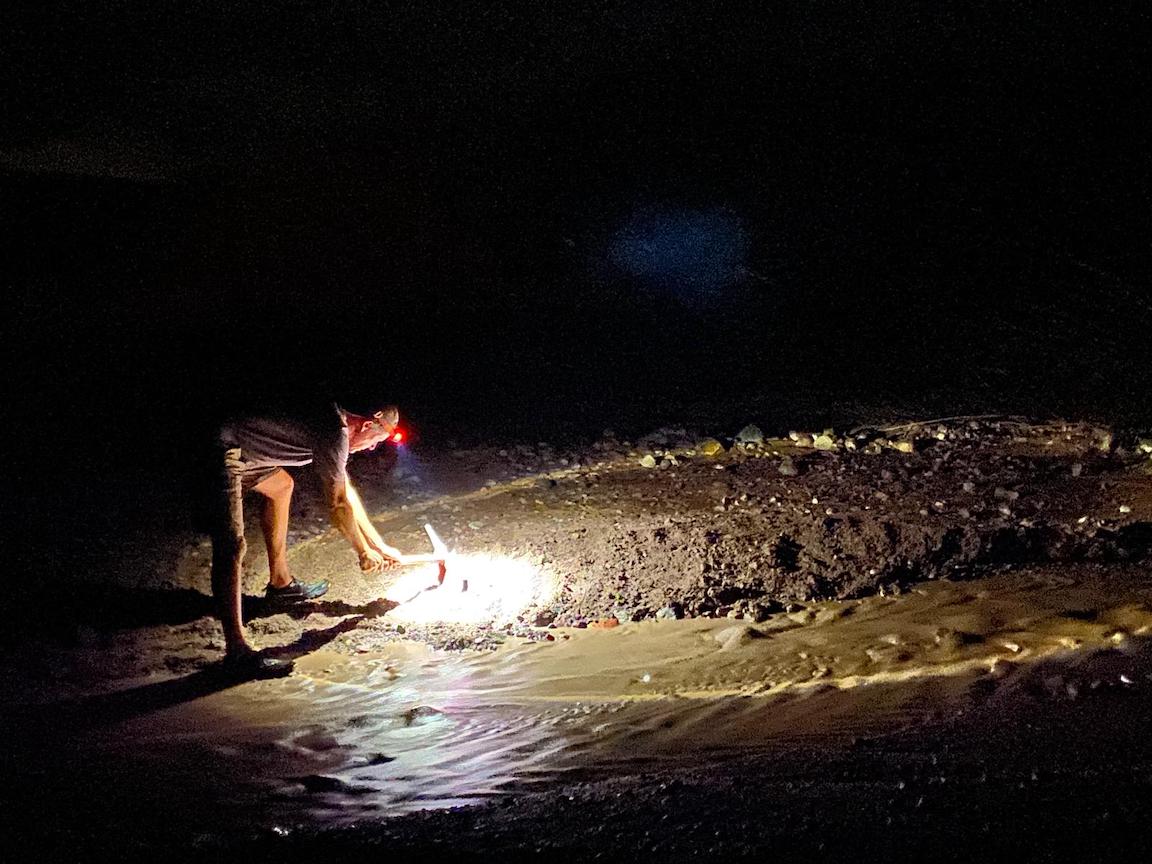
A few miles down a far less scary drive on gravel, we stopped a few times to test the density of the gravel beneath shallow streams. Then we came to a massive river crossing just past Heaven Sent farm at Kelsey Wash. After some shouting over the roar of the water to two silhouetted individuals on the other side, roughly one hundred feet away, we recognized our neighbors Deb and Bob. We shouted to each other for the better part of twenty minutes, deciding what to do. They wanted to continue south to their home, having come from the Cascabel Conservation Association meeting, and we wanted to continue north, to our home. I walked back up to our car which we parked far from the wash on much higher ground. I changed shoes, donned a PFD (just in case), grabbed a bottle of wine and jar of chocolate before returning to the wash. I carefully entered the water. It was shin deep, and no longer moving large debris.
I met Deb and Bob on the other side, “Kai’s Emergency Response, with complimentary wine and chocolate, at your service!” Deb gave me a big hug and Bob shook my hand. We talked a while about what to do. I returned to Colleen who waited on shore, grabbed my army shovel (the same that my father gave to me when I was five or six years old) and switched it to the axe configuration. Back to the middle of the stream I worked quickly to knock down a one foot hight bank into a ramp, then cleared barbed wire, logs, and large rocks.

Deb and Bob made it across, driving their 4×4 pickup toward my headlamp as a beacon. Once they were clear and over the dark horizon, I spent another half hour clearing more barbed wire and debris on the far side, and plotting the best course for our car. I moved our Crosstrek down the road to the stream’s edge and eased it over the berm and into the flow. I then gave it gas and crossed the now three separate streams by way of rocks, branches, and mud. The final bit of mud, no more than a few inches deep, was incredibly soft, sucking at the tires such that we lost forward velocity even as I increased the engine’s speed and released the clutch fully in first gear. Fortunately, we reached clear gravel in time, and pulled up, and out of the far bank.

We later learned that four people lost their lives in Globe, Arizona, where we had driven through just a few hours earlier. Desert storms are unique in that the heavily laden clouds can remain relatively motionless over a small mountain range or a single watershed and drop the massive amounts of water in a very short time. Globe received more than two inches of rain in just 25 minutes. While Cascabel itself did not see rain that evening, the flash flood that tore through Kelsey wash and Hot Springs was generated only a few miles away.

Flash flood in Cascabel, September 27, 2025. Photo by Colleen Cooley. Flash flood in Cascabel, September 27, 2025. Photo by Colleen Cooley.

By |2025-09-30T17:03:40-04:00September 28th, 2025|At Home in the Southwest|Comments Off on When it rains, it pours

When the power is down

The buildings I walk past are silent now. No condensers moving pressurized fluid. No high speed fans removing heat from copper fins. No motors turning on with the tell-tale click, laborious, deep first cycle, and transition to the hum of high pitched motion. No refrigerator motor in the kitchen. No air conditioning blowing cold air across my bed and face.

It feels as though the electrons in the recess of the walls, floor, and ceiling are lying still, no longer changing directions sixty times a second, racing that way and then back again in a perpetual frenzy of subatomic locomotion.

The screen across the front of the window has not set properly for years and rattles with the slightest breeze. Now, its irregular clatter is correlated with the breeze moving through the open window. I hear the rumble of distant thunder, my room is lit up, for just an instant, with each flash of electric light. The light rustle of the leaves, the air moving between the Casitas, and the clicking of the deer feet on the concrete.

This is what I hear when the power is down. It’s a good time to just be.

By |2025-08-22T14:08:09-04:00August 21st, 2025|At Home in the Southwest|Comments Off on When the power is down

The ever confident cat

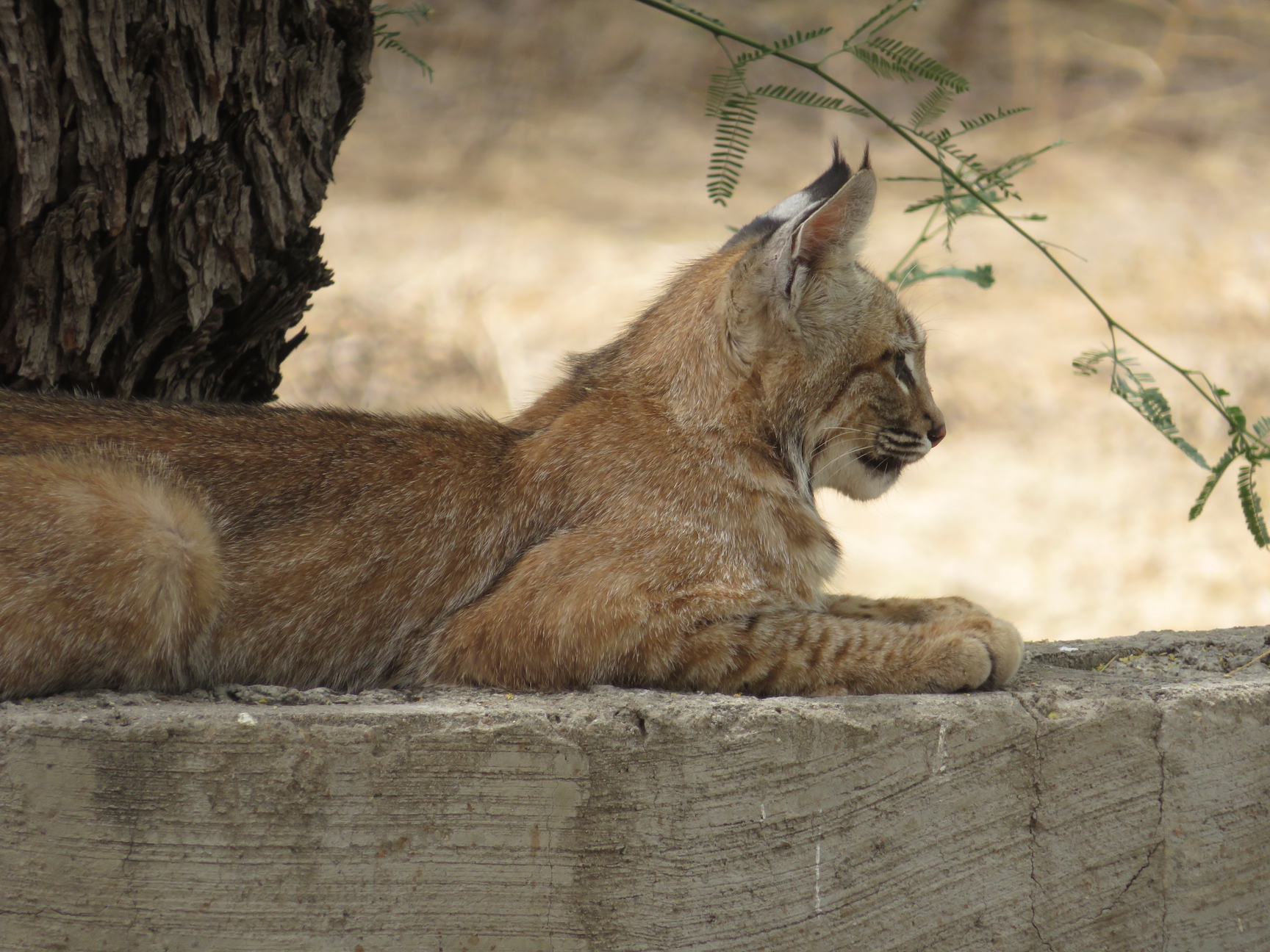
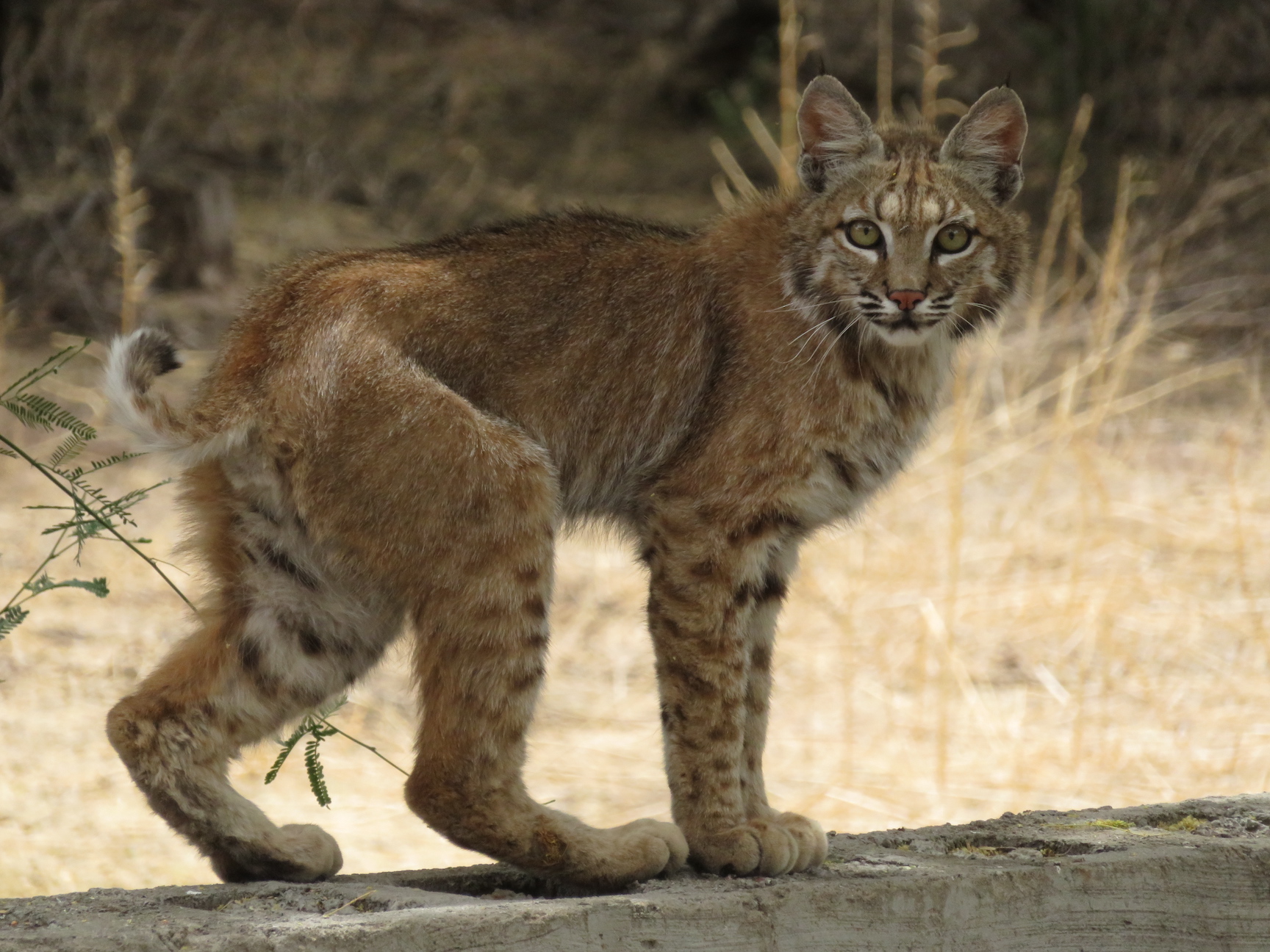
Bobcat in Cascabel

We have captured this bobcat on camera, always at night, but never seen it by day. I was at my desk on a call with my team when I looked out the window and could not believe what I saw–in broad daylight!

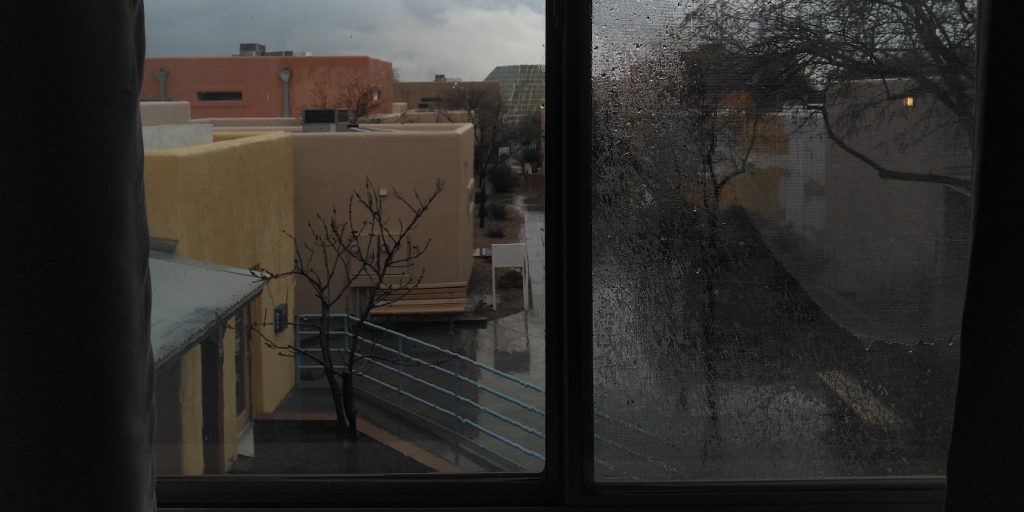
Like something out of a Saturday morning cartoon he was sitting at the base of the bird feeder, just waiting. I carefully opened the door (our windows are too dirty for good photos) and he didn’t notice me at first, or at least didn’t care. Then he stood, moved his head side to side and up and down to get a good judge of distance and risk, then casually stood, walked off, wagging the white tip of his tail the entire time.

At Biosphere 2 we have enjoyed as many as six kittens (two litters merged) watching us work, and they have come to trust my colleague Luna, sitting just an arm’s reach away while she has lunch. But this is new for our experience of Cascabel.

Bobcat in Cascabel Bobcat in Cascabel

By |2025-08-12T23:58:29-04:00May 30th, 2025|At Home in the Southwest|Comments Off on The ever confident cat

Keeping Cool – window films

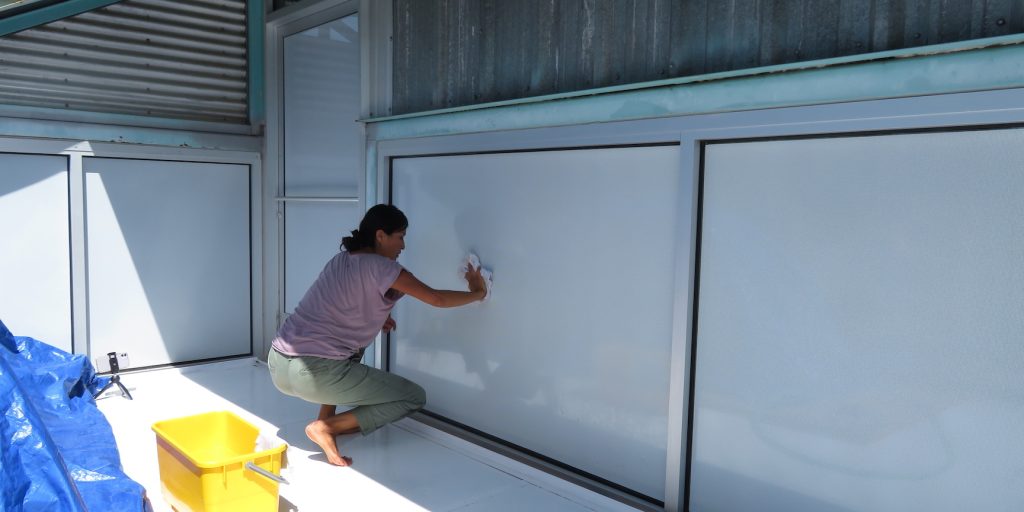
Colleen applies vinyl film to the exterior of a window.

Interior and Exterior Films
We are all familiar with window films (sometimes referred to as tint with automobiles). Modern films are designed to block UV light that damages plastic, cloth, and furniture; optical light (what we can see) to reduce glare; and infrared (what we can feel) to reduce total thermal transmission from the sun into our homes or cars. It’s all light, just shorter and longer wavelengths (yes, you learned this in high school, but probably forgot :).

Most films are applied to the interior of glass windows, or at the factory to the interior of the first pane of glass in a double-pane insulated window. The films are rated for transmission as a percentage, i.e. “75% optical transmission” means the film blocks 25% of the in-bound light we can see, and allows 75% to pass through. Most block 99% of UV and upwards of 90% IR.

In a casual study I conducted at my place of work, I noticed that non-treated glass remains relatively cool to the touch (ambient room temperature) as full spectrum sunlight enters the room and heat the objects it strikes. When an interior window film is applied, yes, the objects in the room remain cooler, but the glass itself heats up. If the glass is heating, that means it is generating heat energy, or infrared light, and is in fact heating the room, even if to a lesser degree (50% in / 50% out). This deserves further study, to learn how much the glass is heated through the process of reflecting IR with an interior film, and how much heat energy ends up in the room anyway.

That said, if you apply a film on the outside of the glass window the heat energy is reflected without heating the glass, and as such is more effectively keeping the interior space cool. But most translucent films are not intended to be applied on the exterior as they will dry-out, get scratched, and fall off prematurely.

There is an alternative …

Temperature differences by Kai Staats and Colleen Cooley

Save a bird. Reduce your electric bill too.
We live in the San Pedro River valley where more than 300 species of migratory birds travel twice each year. And year-round we enjoy a local population of doves, finches, woodpeckers, humming birds, ravens, hawks, and many more. Sadly, they too often see the reflection of the blue sky in the early or evening hours and fly into our windows, either stunned for a few minutes or breaking their necks.

We tried curtains on the inside, and hand-cut paper snowflakes taped to the windows too. We successfully hung shade cloth in front of two windows, but this solution is not feasible all around for a variety of reasons, including the amount of structural modification and resulting loss of visibility.

Then we discovered the not-for-profit company CollideEscape whose various exterior window films provide up to 100% guaranteed elimination of bird collisions. This vinyl film is the same as that applied to city buses, painted-on advertisements making the windows appear opaque on the outside when in fact the passengers can see just fine.

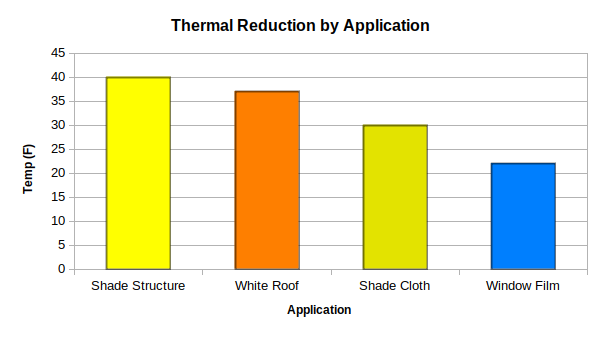
We applied these to all upper windows. It worked perfectly. Not a single bird collision on those windows with the film. In the process we also discovered that the film drastically reduces the interior temperature where sunlight falls, by as much as 30F. This was initially noticed by sitting in our loft to determine how our view was changed, inside-to-out.

With two windows side by side, in the same morning light, one had the vinyl film, the other did not. The temperature difference was immediately noticeable on our faces and forearms, and confirmed with a mercury thermometer placed in the light of each window. We have since covered all our basement windows too and noticed a significant change in the temperature of the carpet where the sunlight falls. An infrared thermometer noted the temperature of the carpet (yes, carpet does get hot) dropping from 107F in direct sunlight to 85F behind a glass pane covered with the CollidEscape film, the lower temperature just seven degrees over the 78F room temperature (as measured on the carpet beyond the sunlight of any windows) at that time. Our basement is noticeable cooler than the last few years, which aids in cooling the entire house.

This essay is part of a series about Keeping Cool in your Home

By |2024-08-15T13:14:30-04:00August 12th, 2024|At Home in the Southwest, Ramblings of a Researcher|Comments Off on Keeping Cool – window films

Keeping Cool – paint your roof white

Houses of Santorini, Greece by Richard Silver

History
It doesn’t take a physics lab full of PhDs to find simple solutions to complex problems. Sometimes we need only look to other parts of the world and what they’ve been doing for centuries. All along the Mediterranean coast homes are painted white with limewash or whitewash to reflect the intense sunlight, keeping the interior of the homes cool. In Iceland, they do the opposite, building with black roof tiles to absorb solar heat.

The modern (with lab and PhDs) version of whitewash is Purdue University’s world’s whitest paint. Developed by Purdue professor of mechanical engineering Xiulin Ruan, this new paint is fighting global warming by keeping surfaces cool to reduce the need for internal air conditioning. According to Ruan and his team’s models, covering 1% of the Earth’s surface in their technology could mitigate the total effects of global warming, a fact encouraging them to continue pursuing formulas suitable for surfaces like asphalt and roadways.

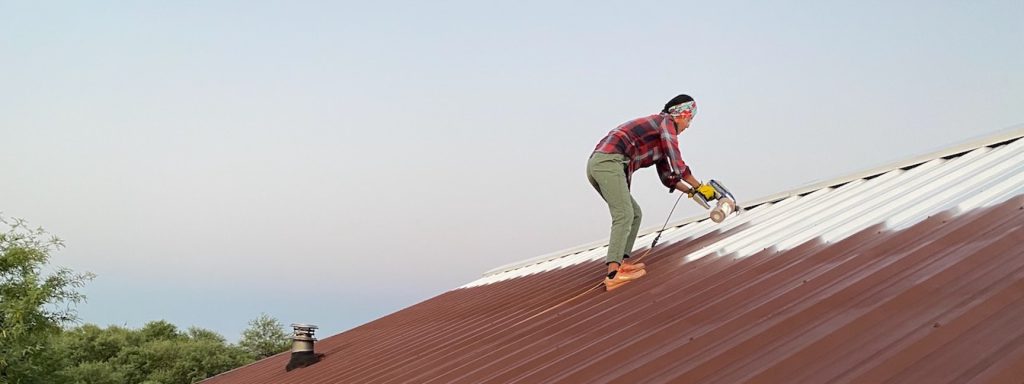
Colleen applies a coat of white paint over primer.

Our Home
Colleen and I have spent the past year mitigating the increasingly warm summers by reducing the amount of thermal energy our house gains during the day, and increasing the amount of thermal energy released at night.

It is important to note that our home is a rather unusual construction, not at all ideal for anywhere but the temperature climate of San Diego or coastal Hawaii. That said, it came with the property, provides exceptional views of the surrounding wildlife year-round, and is enjoying a successful remodel toward thermal mitigation.

It is important to note that we live at 3000 feet elevation with winter, night lows dipping into the mid-20s with days at 50-70F. Summer will see three months in the mid-90s by mid-afternoon with a few weeks over 100F, sometimes pressing 110F. With each summer night, even on the hottest day in the year, the air cools to the low 70s or high 60s. This is the way the desert is suppose to be, and was until the introduction of concrete, asphalt, and air conditioning (which we will address later).

Too hot to touch?
Our first major effort in thermal mitigation was painting the roof white. As with most of the homes in this southeast Arizona region, galvanized sheet metal is a preferred material as it lasts, with minimal care, thirty to fifty years.

However, as anyone who has touched sheet metal in the Arizona sun knows—it gets really hot—dangerously hot. When you touch but cannot hold your hand to the surface for the intensity of the heat, you have reached your ‘threshold of pain‘. This is the minimum temperature at which your body feels pain and you have a natural reaction to remove yourself from that situation. This varies from person to person, and from object to object. 110F air is tolerable while a 110F Jacuzzi will require some getting used to. We can generally hold our hand to or walk barefoot on 110F concrete. But if that temperature climbs to 120F or 130F, it becomes unlikely you will stand there for long. I use 132F as my own threshold of pain for what I can tolerate with bare feet or my hands.

In the course of our work on our home, we have used an infrared thermometer which has been compared to both a mercury and bi-metalic coil thermometer and validated to within 2 degrees Fahrenheit. This gives us a high degree of accuracy up to twenty, even thirty feet away.

Our house is built such that our roof extends over the outer walls by 4 feet. This casts needed shade in the summer, and with the low sun in the winter allows direct sunlight to enter our home and heat the concrete floor through the large, double-pain windows.

With the infrared thermometer we are able to measure the temperature of the metal roof from the underside of the overhang such that as we painted each section, we could readily determine the effect of the new paint application with the same ambient air temperature and immediate solar gain.

Choosing the right paint
There are many brands of paint on the market today. Most of the products are now water-based (acrylic), moving away from oil-based to reduce toxic chemicals consumed (and wasted) in manufacturing. While acrylics have come a long way, and make sense for bedroom walls and refinished desks, nothing beats the durability and weather resistant nature of a good oil-based stain or paint.

At my work at Biosphere 2 I became familiar with the oil-based Rust-Oleum brand Rusty Metal Primer. My team found it to be an incredibly durable product, readily applied with brush, roller, and sprayer. The Gloss White top coat is far more reflective of solar radiation than an elastomeric, and without the need for pressure washing every six months to keep it from collecting dust and losing its reflectivity.

Rust-Oleum will tell you that you need to use a special, water-based primer to adhere to galvanized metal. However, my test proved otherwise—a screwdriver only marginally able to scratch the primer after 24 hours drying. This is likely due to the fact that the metal roof on our house is nearly thirty years of age, with the galvanized metal losing its sheen.

In July 2023 we worked from 4:30 am ’till 7:30 am three mornings in a row to apply the primer. Due to our work schedules we returned to the project a week later and applied Rust-Oleum High Gloss White, again with an airless sprayer. With just one coat we achieved a quality finish (a second coat will even the highs and lows). We painted the two main sections (north and south) that together encompass more than three quarters of the total surface area. This [2024] summer we completed the east section of the roof with one day of prep and two days painting (primer and white respectively). The west end remains.

When complete, the total number of gallons of paint for our 1500 sq-ft roof will be 7 gallons primer and 7 gallons white. At $37 per gallon that is roughly $500 in paint. A new roof of the same size would be between $10-30,000 for materials and at least double for labor, if contracted.

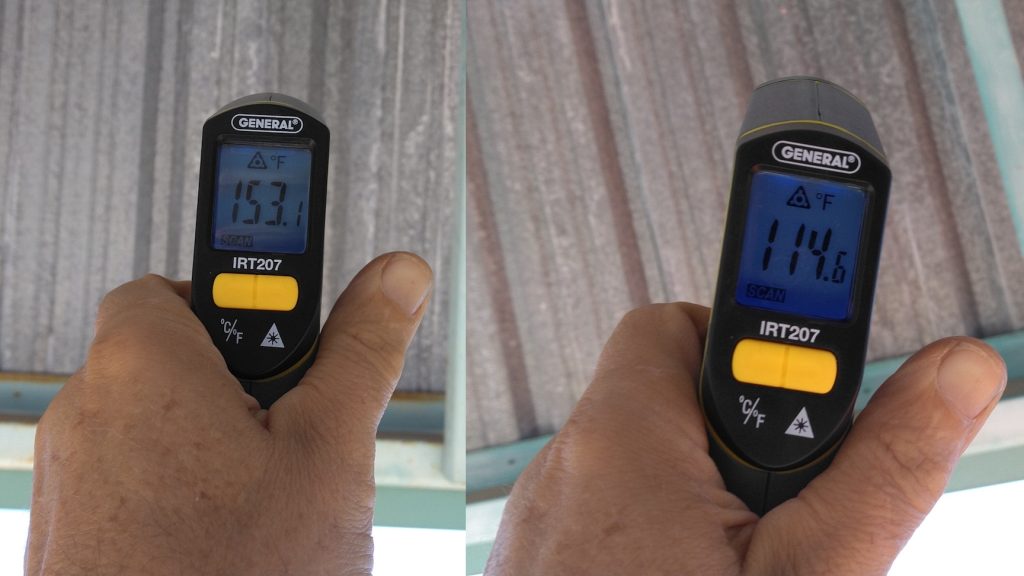
Before and after a coat of white paint, by Kai Staats

From 153F to 115F
Using or infrared thermometer we were thrilled to discover that we reduced the surface temperature of the galvanized steel from ~150F to ~110F (actual high temperature ranges between 135F and 153F; with the underside low ranging from ambient air to 115F for the painted surface, corresponding to humidity, cloud cover, smoke particles, and time of day).

While we have 4″ foam insulation beneath the corrugated steel over 2″ tongue-n-groove pine ceiling, over the course of a day the heat eventually gets through. We used to feel the radiation (infrared) on the backs of our necks and bare arms despite the air temperature maintained at 80F with mini-splits, much in the way that a desert canyon wall will radiate heat after sunset.

Temperature differences by Kai Staats and Colleen Cooley

Now, that radiant heat penetrating our home is reduced, the thermal gradient from ground level to the loft (20 feet) has been reduced to just ~5-8F degrees, which is 10F less than before the paint. Furthermore, in a comparison of May 2023 to May 2024, despite the 3F increase in average temperature, our electric bill went down $22. There are other factors, perhaps, but the point is—we are both feeling and seeing a difference.

What we experienced first hand is confirmed in this and many other similar articles:
The surprisingly simple way cities could save people from extreme heat.

“New research suggests cities are ignoring the power of cool roofs at their own peril. A study in the journal Geophysical Research Letters earlier this month modeled how much cooler London would have been on the two hottest days in the extra-hot summer of 2018 if the city widely adopted cool roofs compared to other interventions, like green roofs, rooftop solar panels, and groundlevel vegetation. Though simple from an engineering standpoint, cool roofs turned out to be the most effective at bringing down temperatures.”

By |2024-08-15T13:33:33-04:00August 12th, 2024|At Home in the Southwest, Ramblings of a Researcher|Comments Off on Keeping Cool – paint your roof white

Keeping Cool – an applied investigation in thermal mitigation

So much of what we hear in the news and read on-line about climate change is the rising cost of electricity to cool our homes, and the increasing burden on already oversubscribed electric power grids. Emphasis is placed on the consumption of electricity, not the reduction of electric consumption. In a warming climate, reduction of thermal gain equates to a lower electric bill.

Yes, local solar photovoltaic systems augment (grid-tied) or remove (off-grid) reliance on the electric grid, but not everyone can afford PV arrays, or do not have permission from the apartment manager or rented home owner to modify the roof or electric panel.

No matter if you are moving toward renewable energy or simply wanting to reduce your electric consumption and associated electric bill, and improve the quality of your interior comfort in the midst of increasingly uncomfortable summers, there are a number of things you can do to reduce thermal gain—the amount of heat trapped inside your home during the day, and then remove that heat by night.

Temperature recordings by Kai Staats and Colleen Cooley

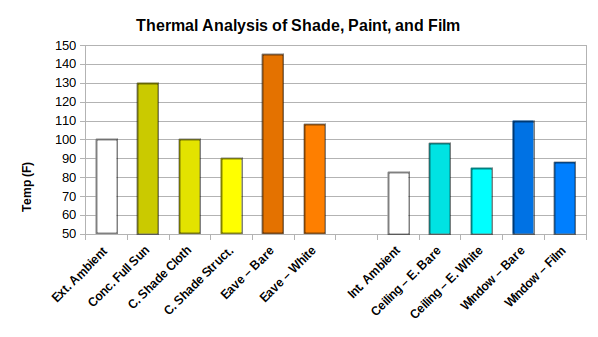
Above graph: “Ext. Ambient” is the air temperature at the time of recording. “Conc. Full Sun” is concrete in full sun. “C. Shade Cloth” is an adjacent slab of concrete positioned below a shade cloth. “C. Shade Struct.” is a slab of concrete that remains in shadow all day, each day, i.e. beneath a porch roof. “Eave – Bare” is the temperature of the underside of the steel roof overhang, original galvanized coating. “Eave – White” is the temperature of the underside of the steel roof overhang, the top side painted gloss white. “Int. Ambient” is the interior air temperature. “Ceiling – E. Bare” is the temperature of the interior wood ceiling below original galvanized steel roofing, with 4″ foam insulation between. “Ceiling – E. White” is the temperature of the interior wood ceiling below the painted gloss white steel roofing, with 4″ foam insulation between. “Window – Bare” is the temperature of the glass itself without any film. “Window – White” is the temperature of the glass with an exterior application of the while vinyl film.

In this series of essays we will introduce, explain, and demonstrate various means to reduce the interior temperature of your home. Many of the concepts are explored are the direct result of work we have done to our own home, here in Cascabel, Arizona. The results are immediate and noticeable.

The concepts explored will include:

  • Reflecting sunlight via white paint and white vinyl film; and
  • Reducing sunlight transmission via window films
  • Reducing sunlight transmission via shade structures
  • Thermal mass
  • Passive versus active cooling
  • Swamp cooler versus air conditioning; and
  • Types of air conditioning (cooling)
  • Cooling by plants, and green roofs

This landing page will be updated, with links to each new essay as added.

The first two essays are posted:

Stay tuned!

By |2024-08-13T18:06:58-04:00August 12th, 2024|At Home in the Southwest, Ramblings of a Researcher|Comments Off on Keeping Cool – an applied investigation in thermal mitigation

Counting raindrops at Biosphere 2

Counting raindrops at Biosphere 2

My days are full, from sunrise to well after sunset. My creation of the world’s highest fidelity Mars habitat analog compels me likely nothing else since the days of Yellow Dog Linux. I am driven 80+ hours each week, save a beer, pizza, and movie each Friday night with my partner Colleen.

Today, at Biosphere 2, the rain began at noon, a light sprinkle, nothing more. Now, five hours later it beats against the window as though it could break in if it truly desired. At my computer I am catching up on email, financials, and on-online orders while two of my team members install electrical circuits in the greenhouse of SAM, our Mars habitat analog here at Biosphere 2.

I pause every few minutes to look outside and sip my hot ginger tea. While fierce and strong, the sound of rain soothes me as I have not felt for a long time. If the rain would turn to snow, the sound of flakes, while more subtle, would touch me even deeper.

By |2023-03-20T11:39:57-04:00February 21st, 2023|At Home in the Southwest|Comments Off on Counting raindrops at Biosphere 2

A fire for the ancestors

The Sonoran Desert is cooling down now. Latent heat stored in the cliffs and stones no longer replenished as the sun rises later and sets sooner, thermal energy escaping to deep space when one side of our planet hides from the sun in its own shadow. This eternal game of Sun ‘n Moon will continue until our parent star tires of the chase and swells to swallow our planet whole.

The gentle gusts that accompany autumn feel different, smell different. They invigorate the senses in a way that tingles my spine, invoking memories of dry maples leaves crunching under foot in Nebraska and the smell of apple cider, orange, cinnamon and cloves boiling on our wood burning stove. One of my most fond memories as a child is helping my father chop wood for the winter. He wore a gray sweatshirt jacket with a hood, blue jeans, and hiking boots which where rare in Nebraska where cowboy attire was the norm. He was strong and able then in his 40s, and remains so in his 80s, now chopping tree roots after a storm topples a mesquite in the otherwise impenetrable soil of the Valley of the Sun.

Tonight I lit a fire in my wood burning stove for the first time this season. I knew tonight was the night not by a calendar date nor a calculated change in temperature, rather it just felt like the right time. The satisfaction is much deeper than what my senses immediately convey, as though I am comforted at an ancestral level, a hundred generations responding to the pending winter in the very same way.

With bucket in hand I walk beneath a star lit sky to the wood pile, cut and chopped this spring and summer from the fallen, dead, and dying of seventeen acres of mesquite forest, inside of thousands more. This is a truly renewable resource and with a high efficiency stove, low in particulates too. I’ll chop more mid winter, sharing the task with my partner Colleen and visitors who may have chopped wood as a child but their city dwellings depriving them of the satisfaction of their own labor providing heat for an entire season.

I recognize that there are now too many people for all of us to heat our homes in this manner, but I made the choice to live in the wilderness, an hour from the nearest town in order to go to sleep with a fire for the ancestors, the comfort of a millennium, and a warmth that continues to glow ’till dawn.

By |2022-10-30T11:52:03-04:00October 30th, 2022|At Home in the Southwest|Comments Off on A fire for the ancestors

The River Flows

The maiden voyage of Kai’s Advanced Elements Expedition inflatable kayak on the San Pedro, with the final days of the monsoon season. The paddle was on August 28, 2022, confluence of the San Pedro and Paige Canyon; Cascabel, Arizona. The video was reposted to YouTube a year later.

By |2024-06-27T17:03:43-04:00August 28th, 2022|At Home in the Southwest|Comments Off on The River Flows
Go to Top