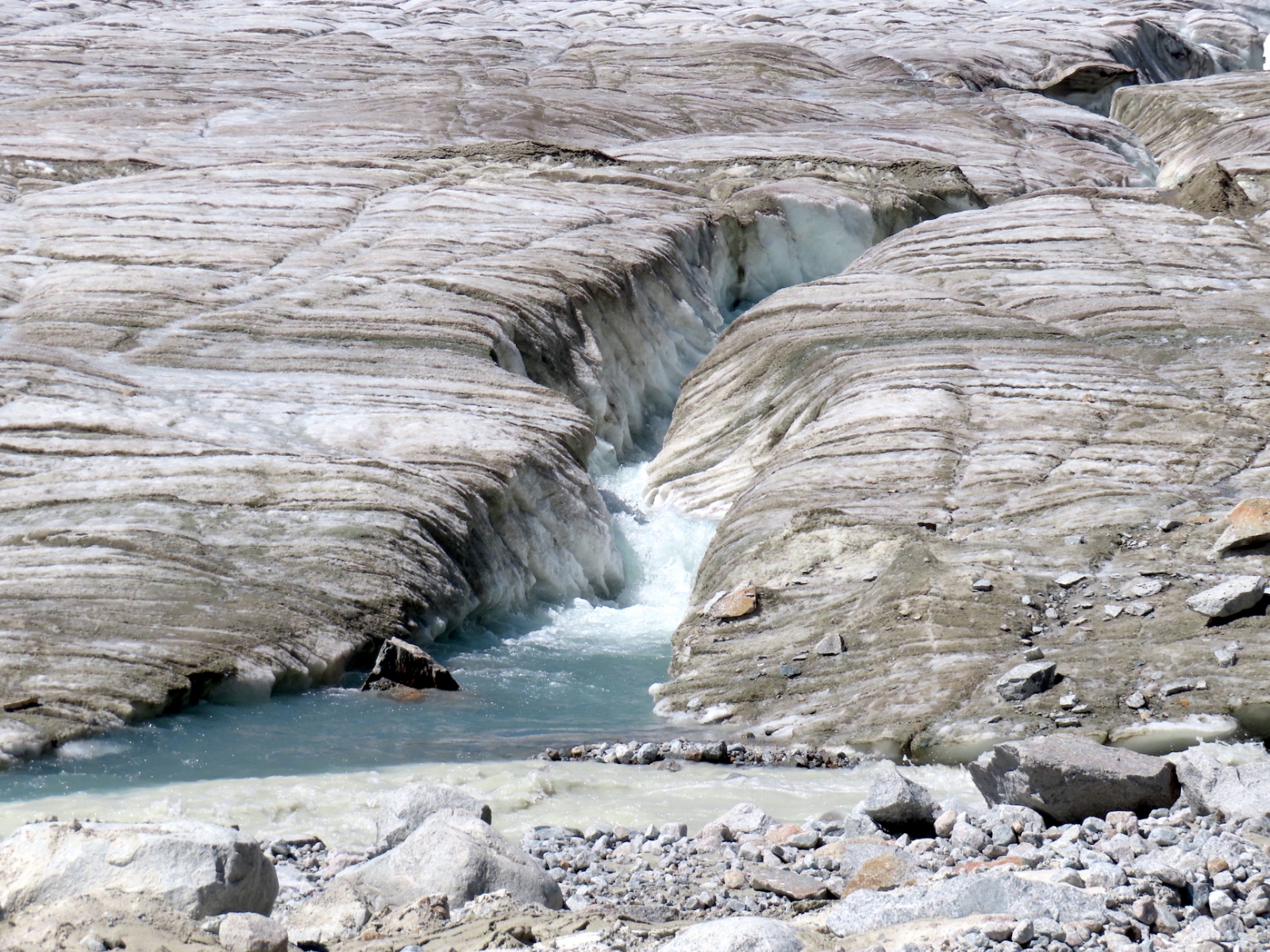
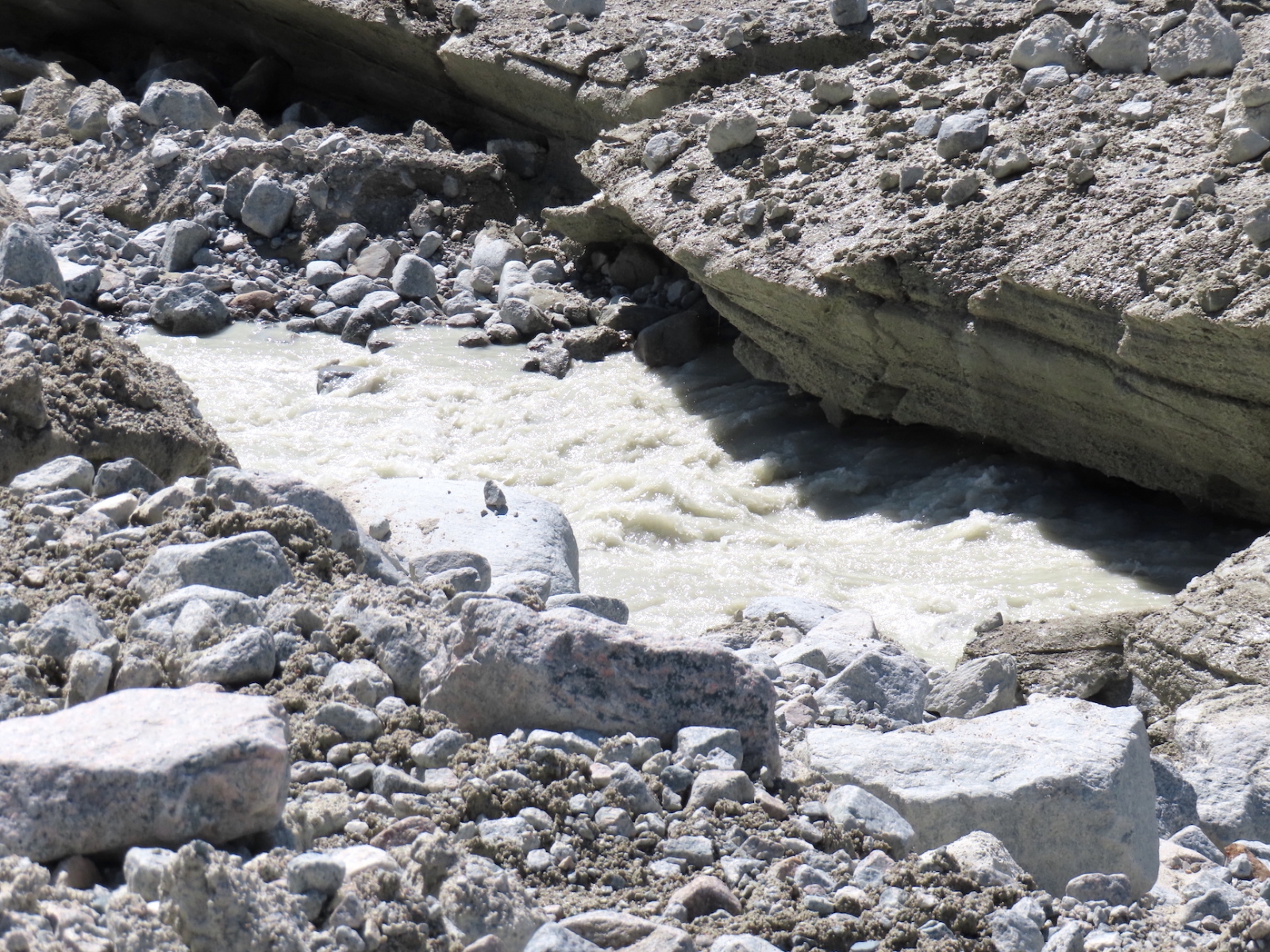
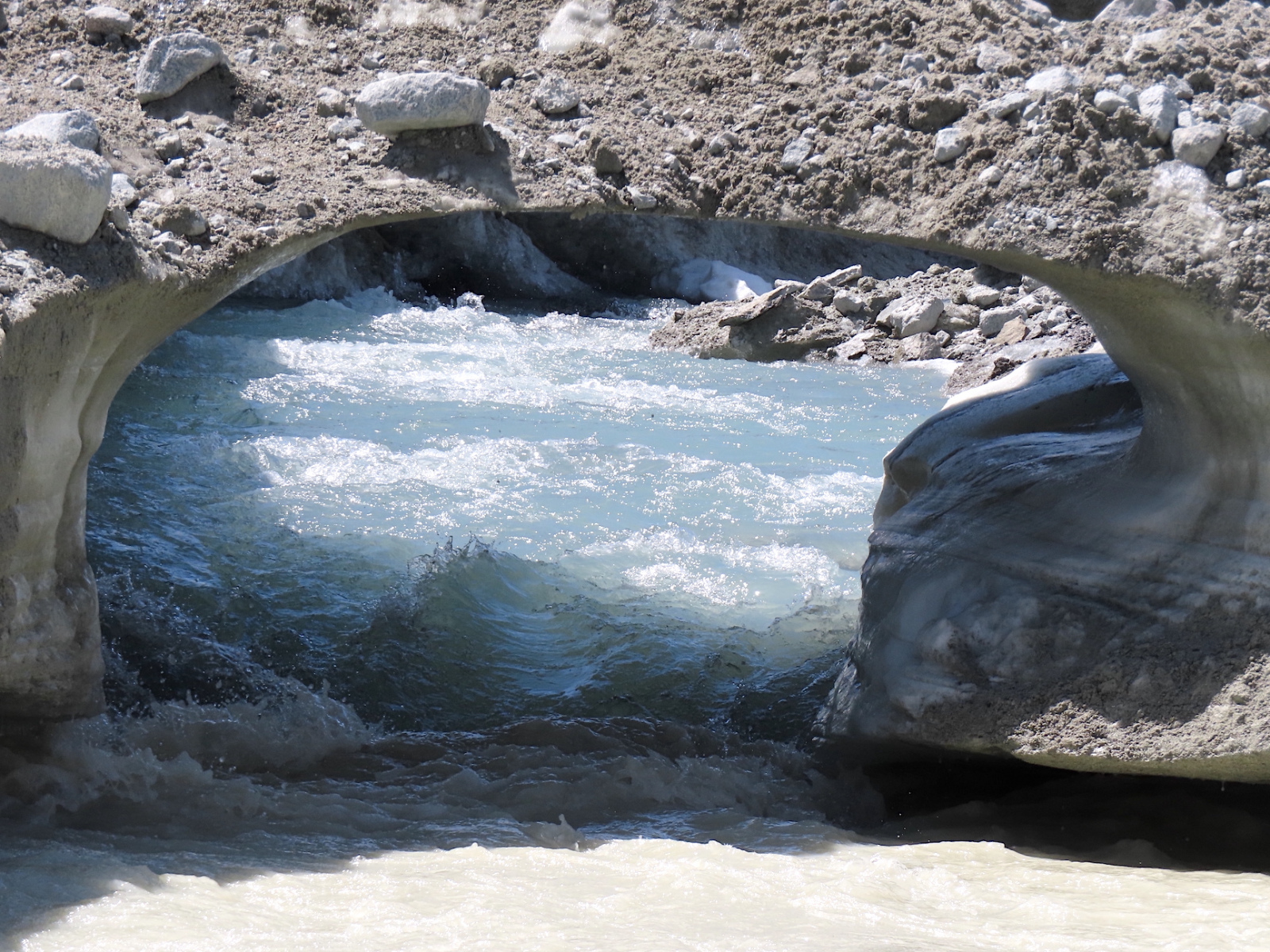
About Kai Staats

This author has not yet filled in any details.
So far Kai Staats has created 574 blog entries.

Packrafting the Sagsai and Turgen rivers, Mongolia

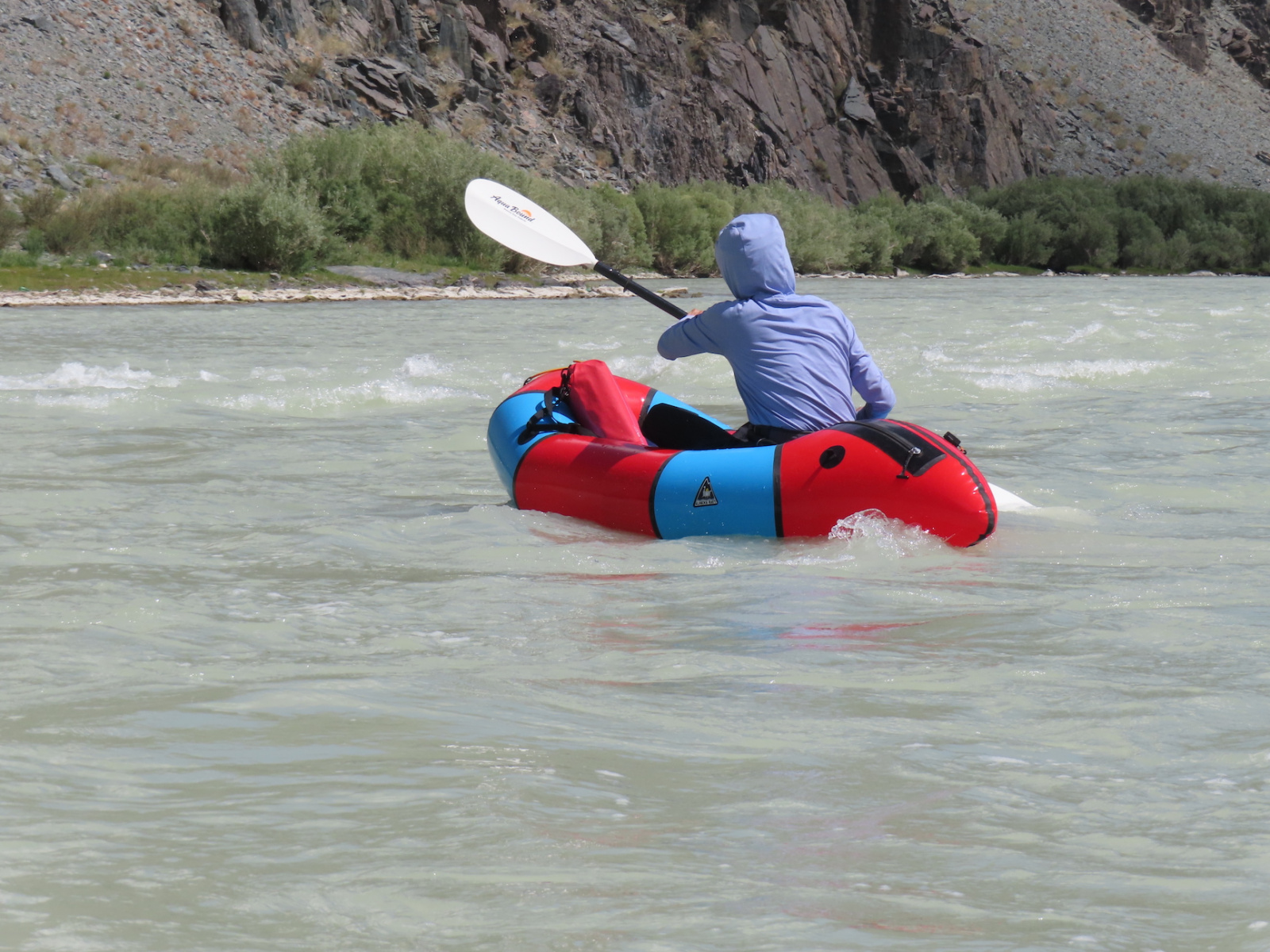
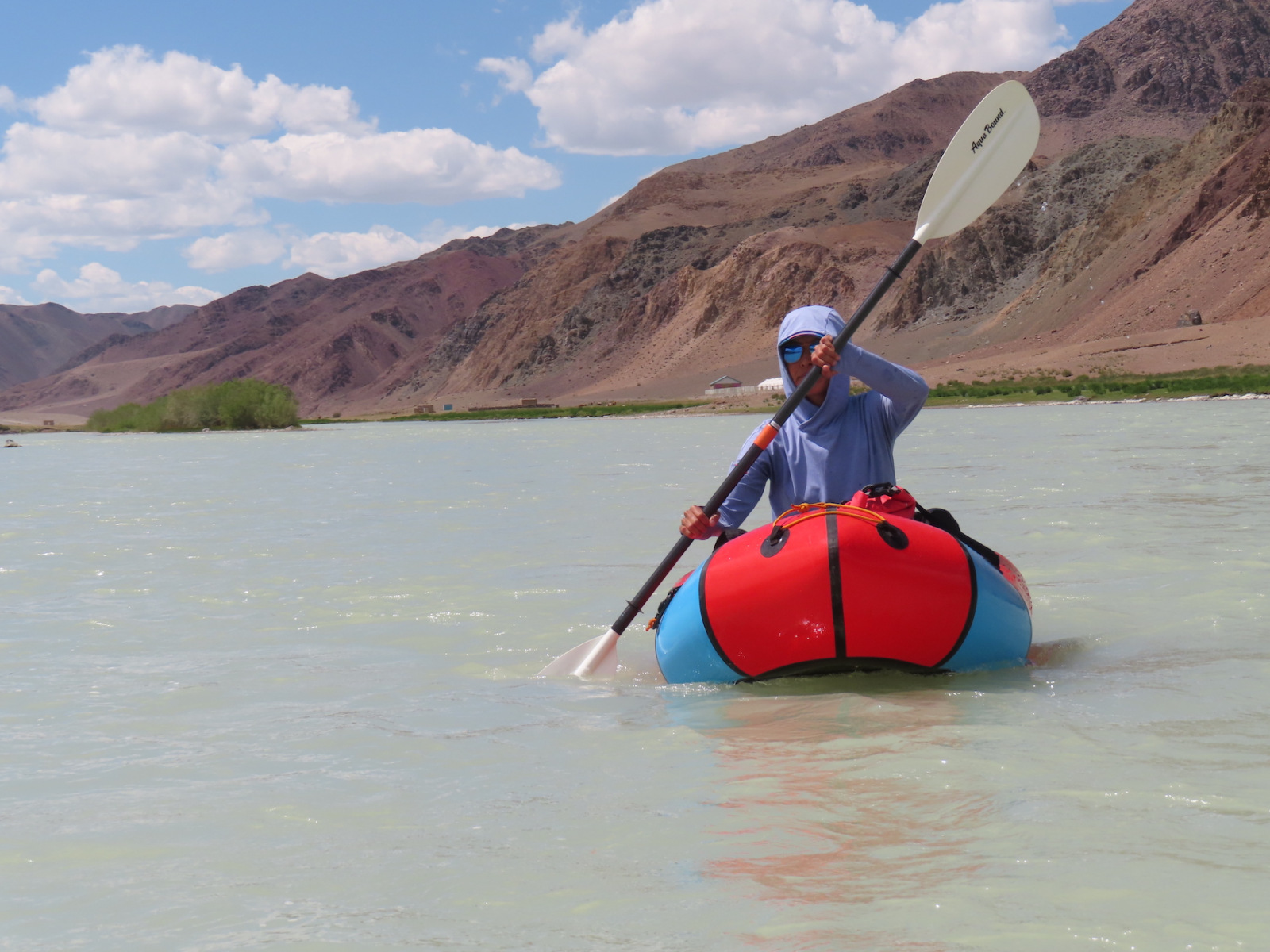
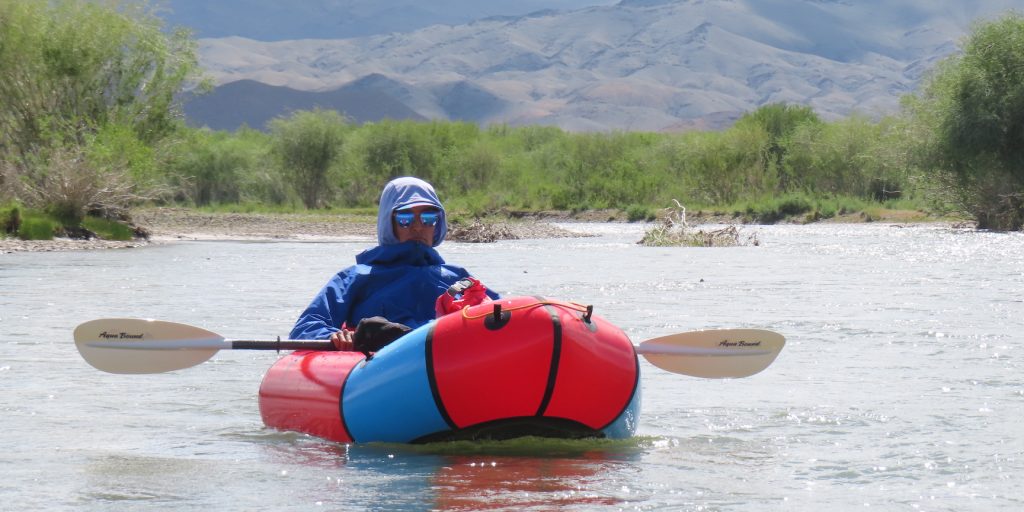
Colleen Cooley in an Alpacka Raft, Sagsai River, Mongolia

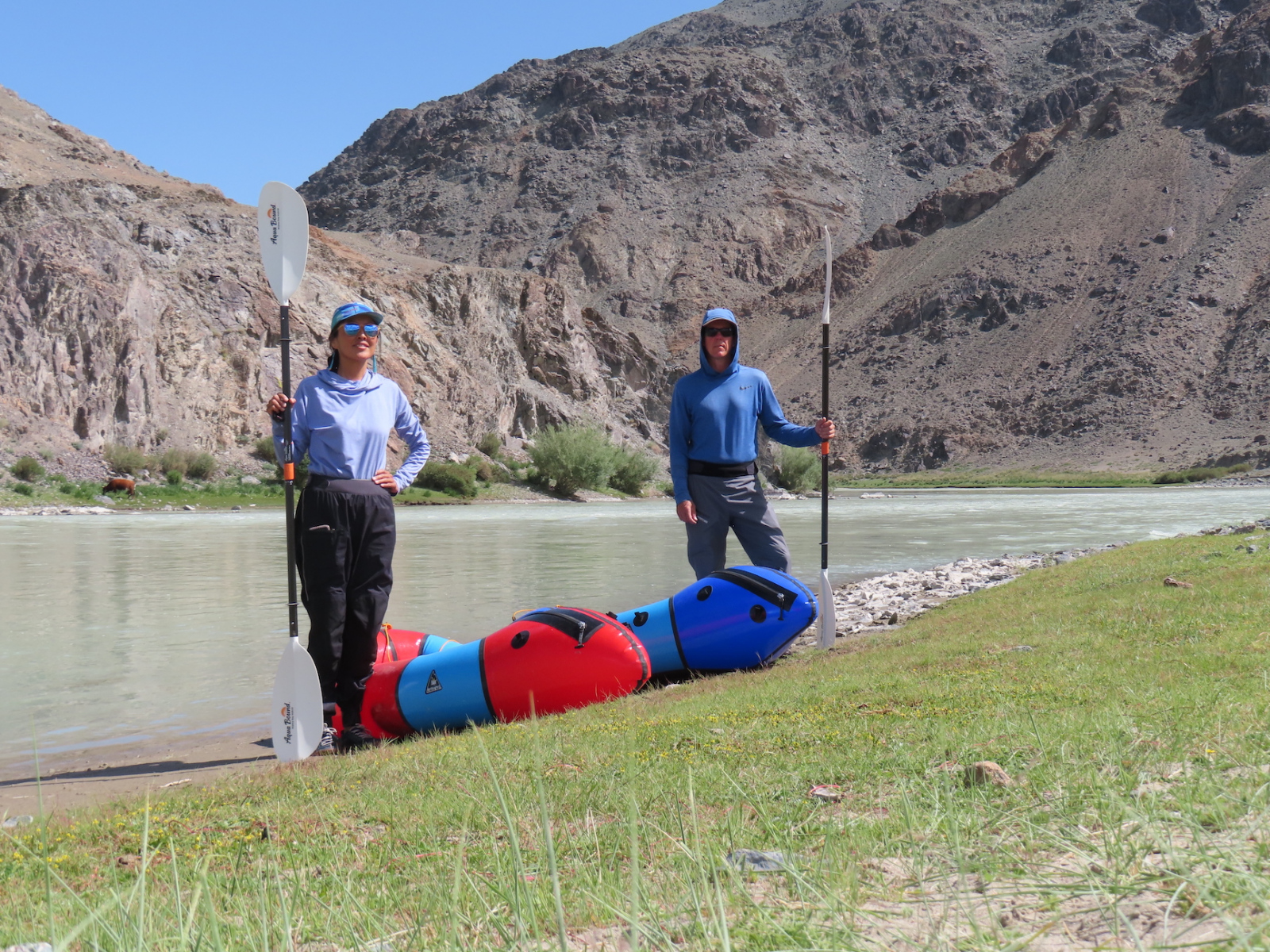
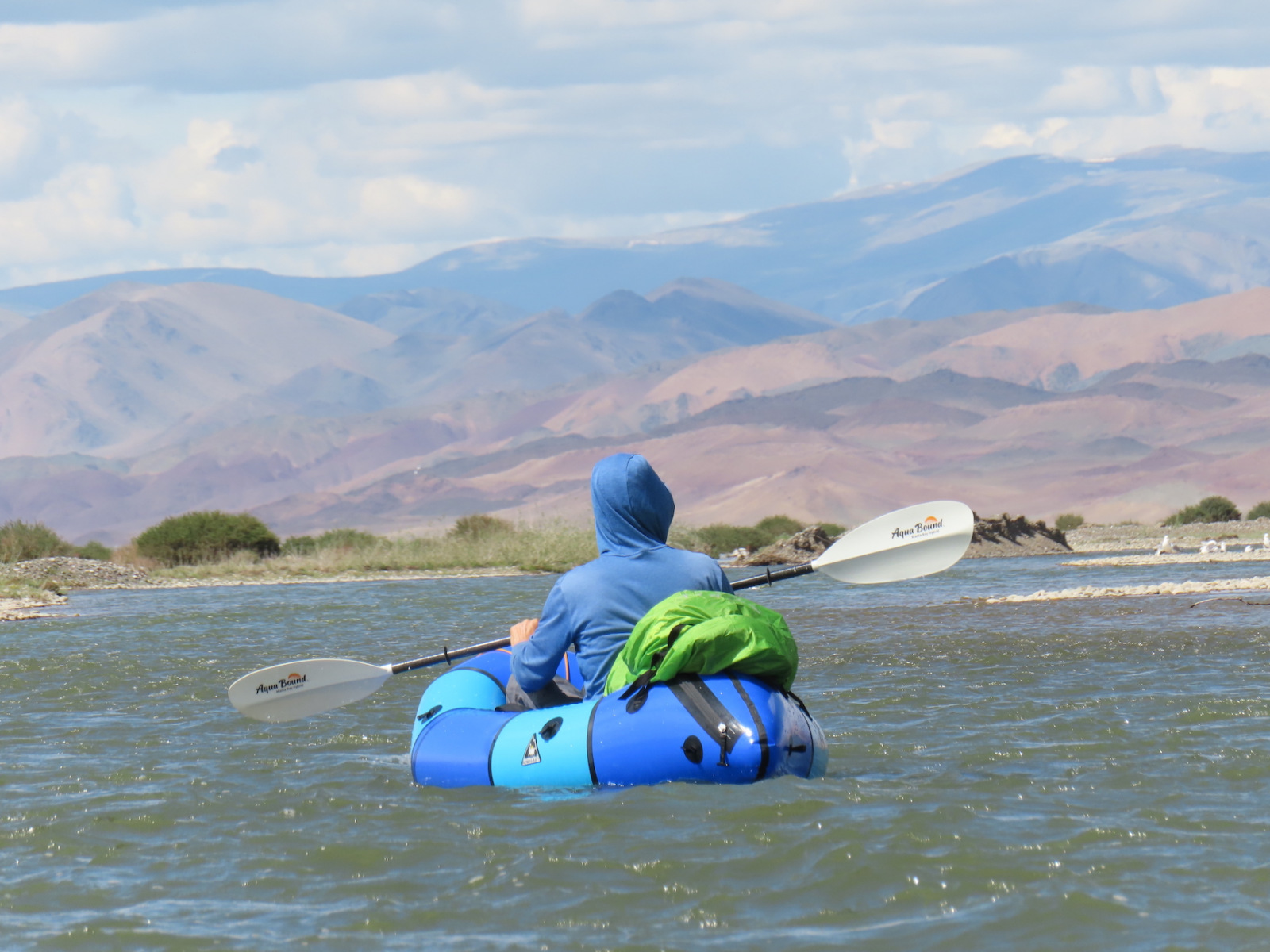
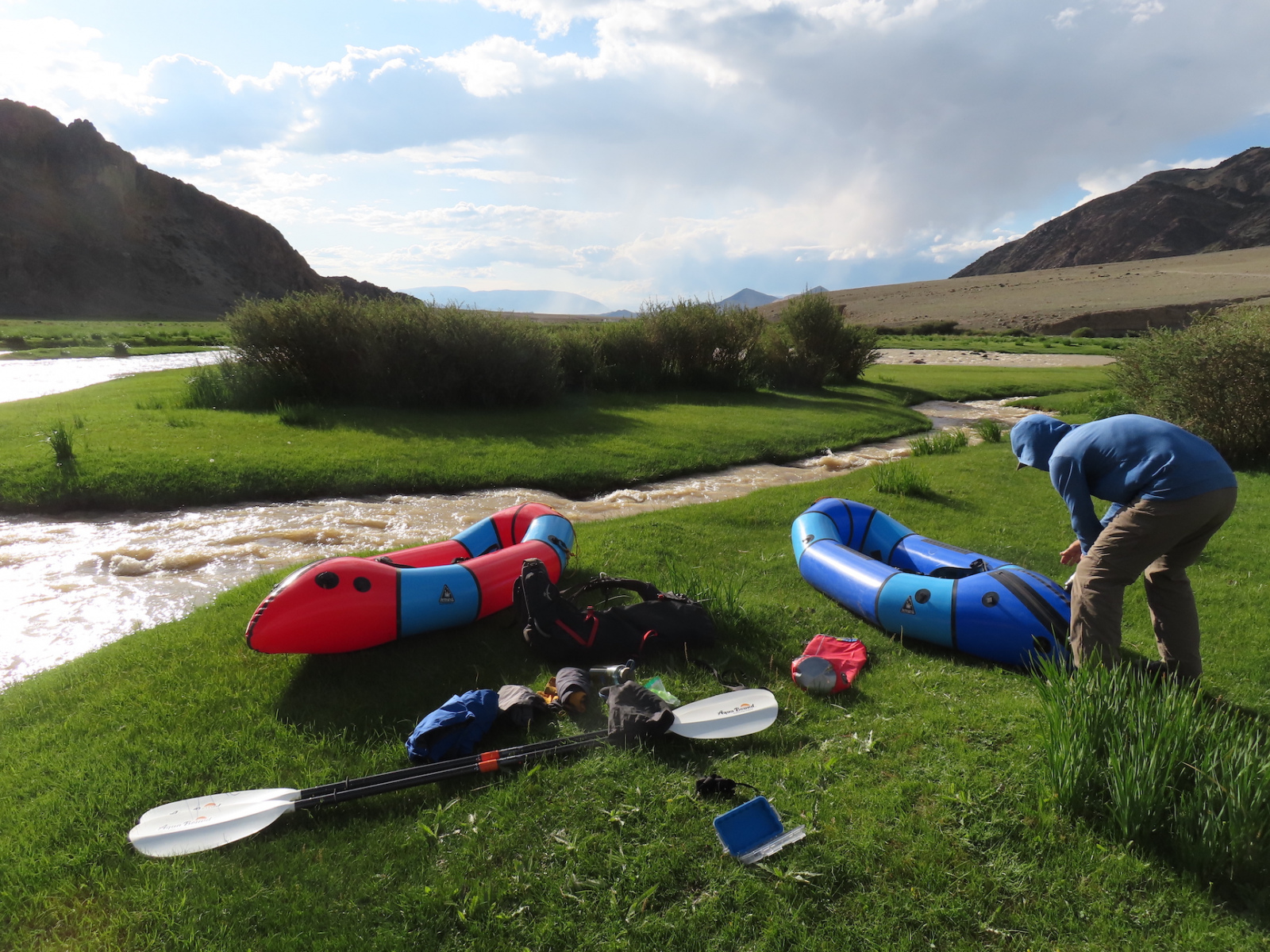
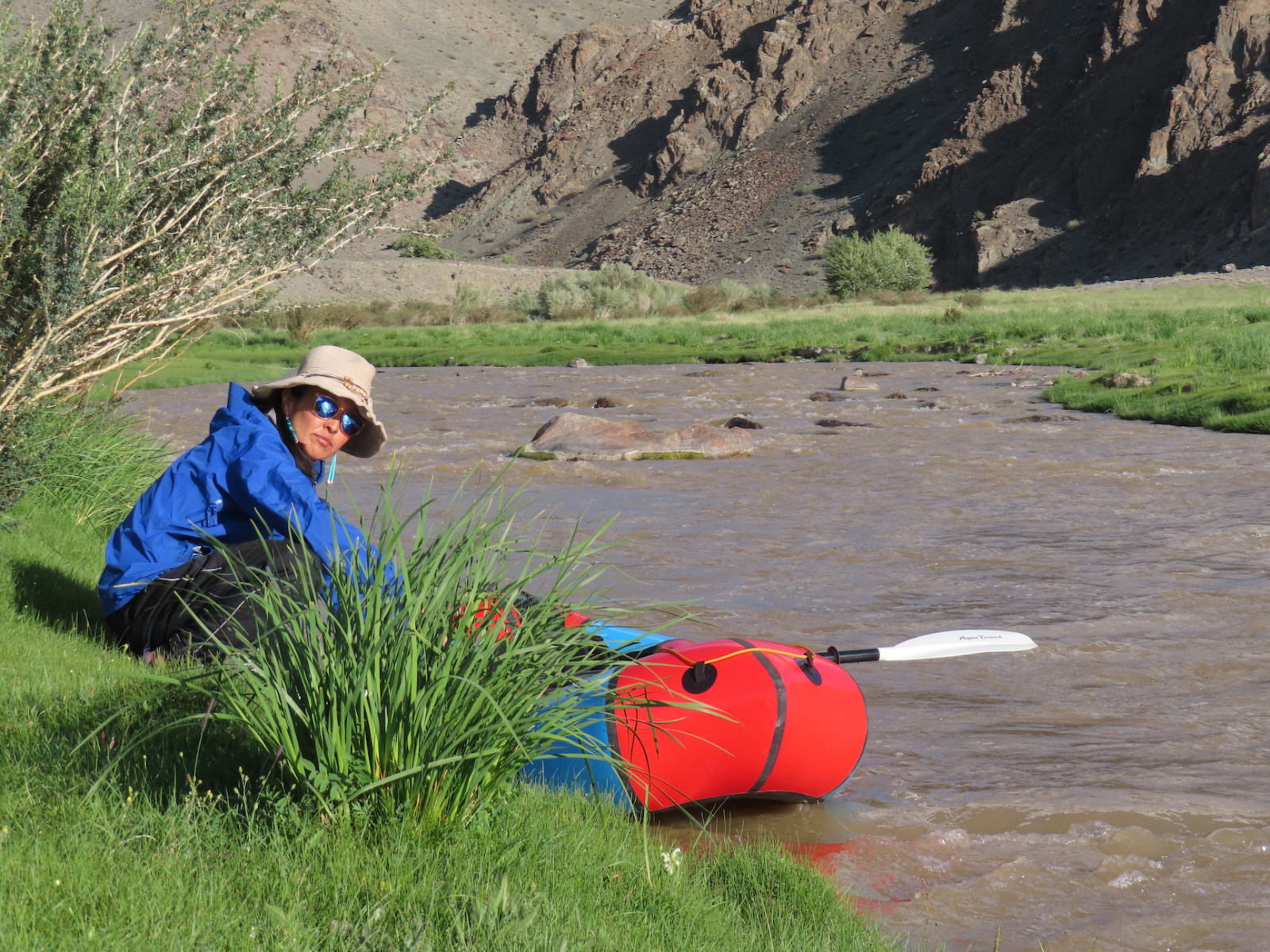
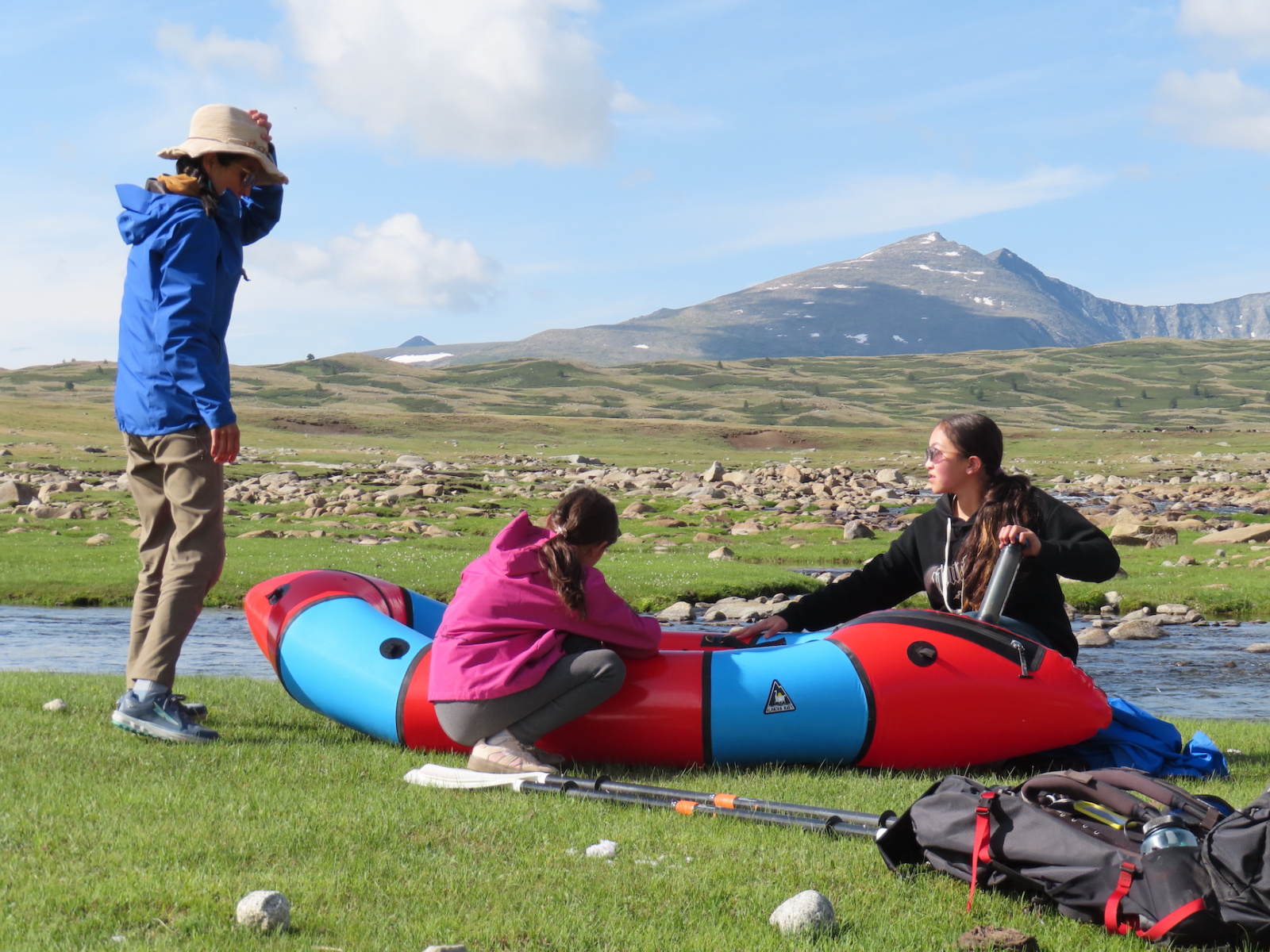
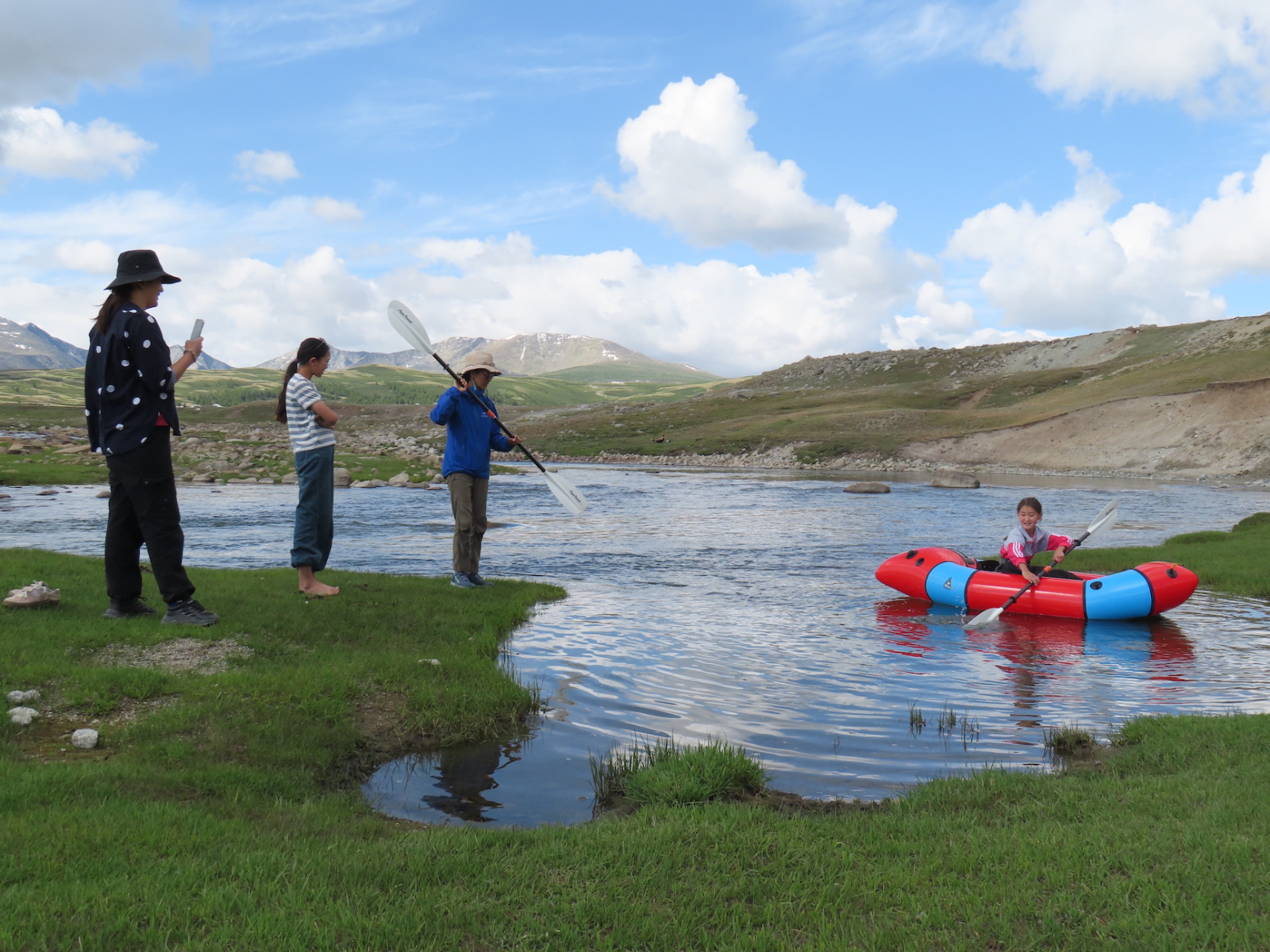
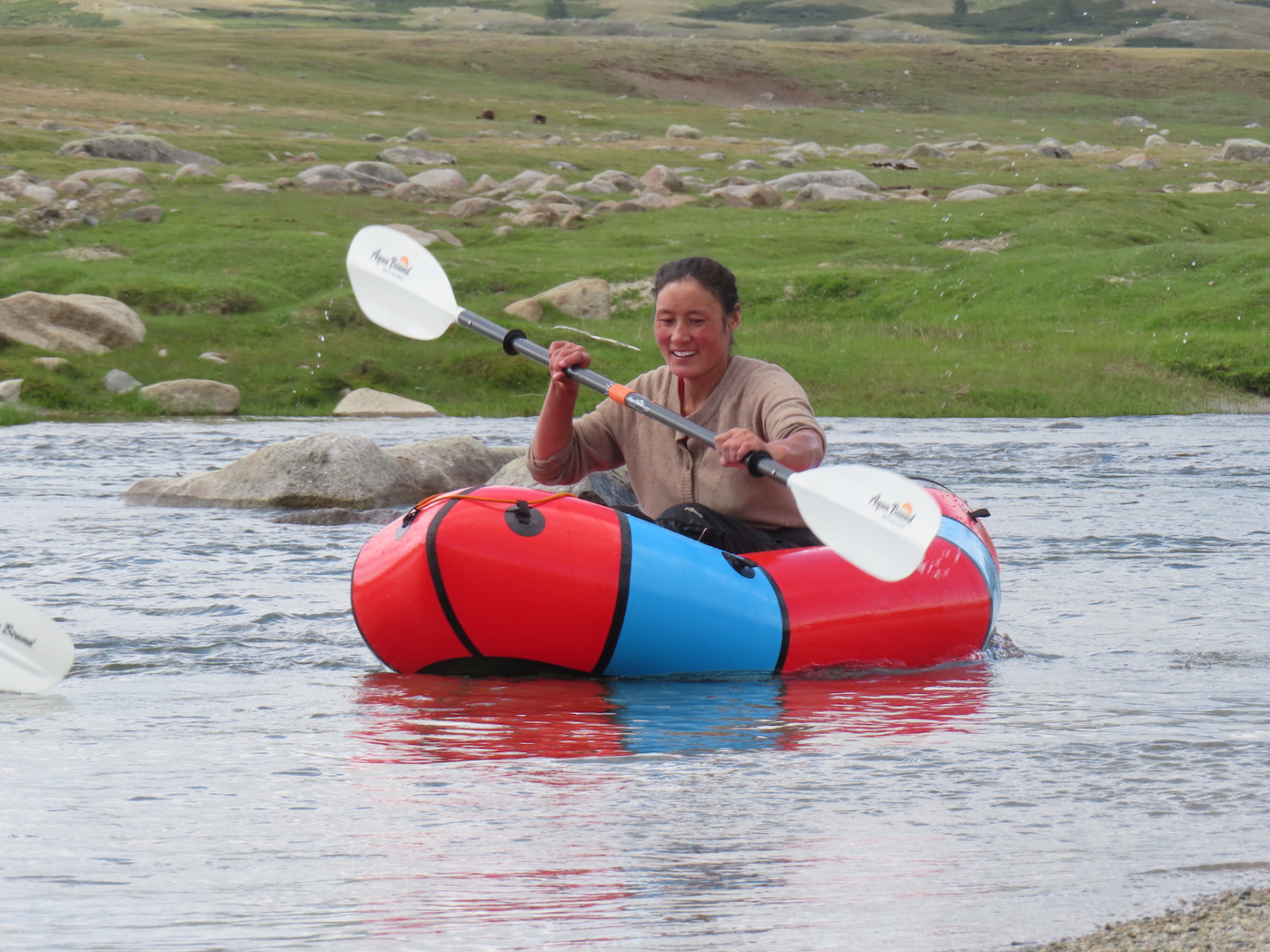
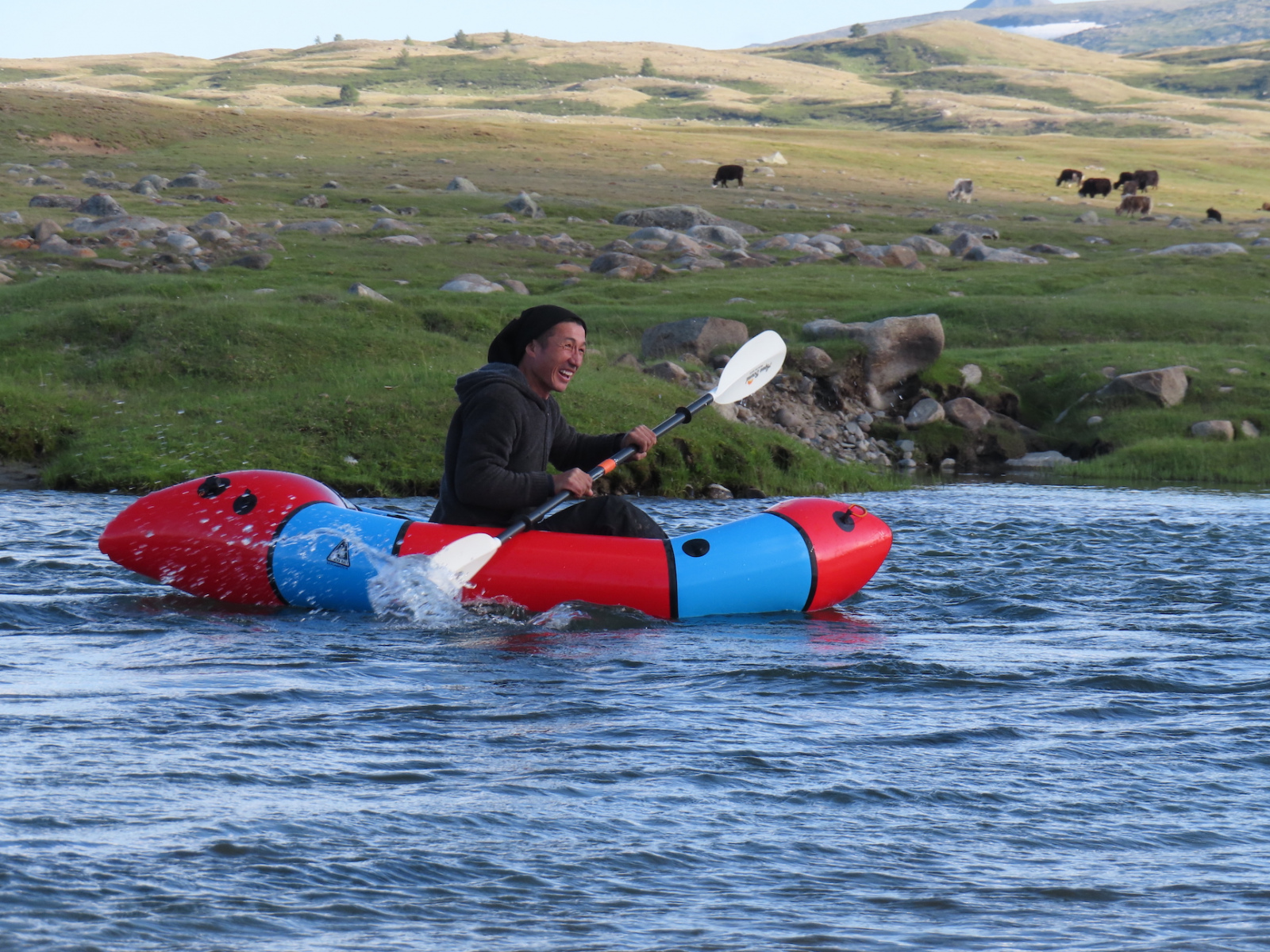
Colleen and I brought our Alpacka brand packrafts to Mongolia with intent to explore the rivers that surround the village of Sagsai, and beyond. And were not disappointed!

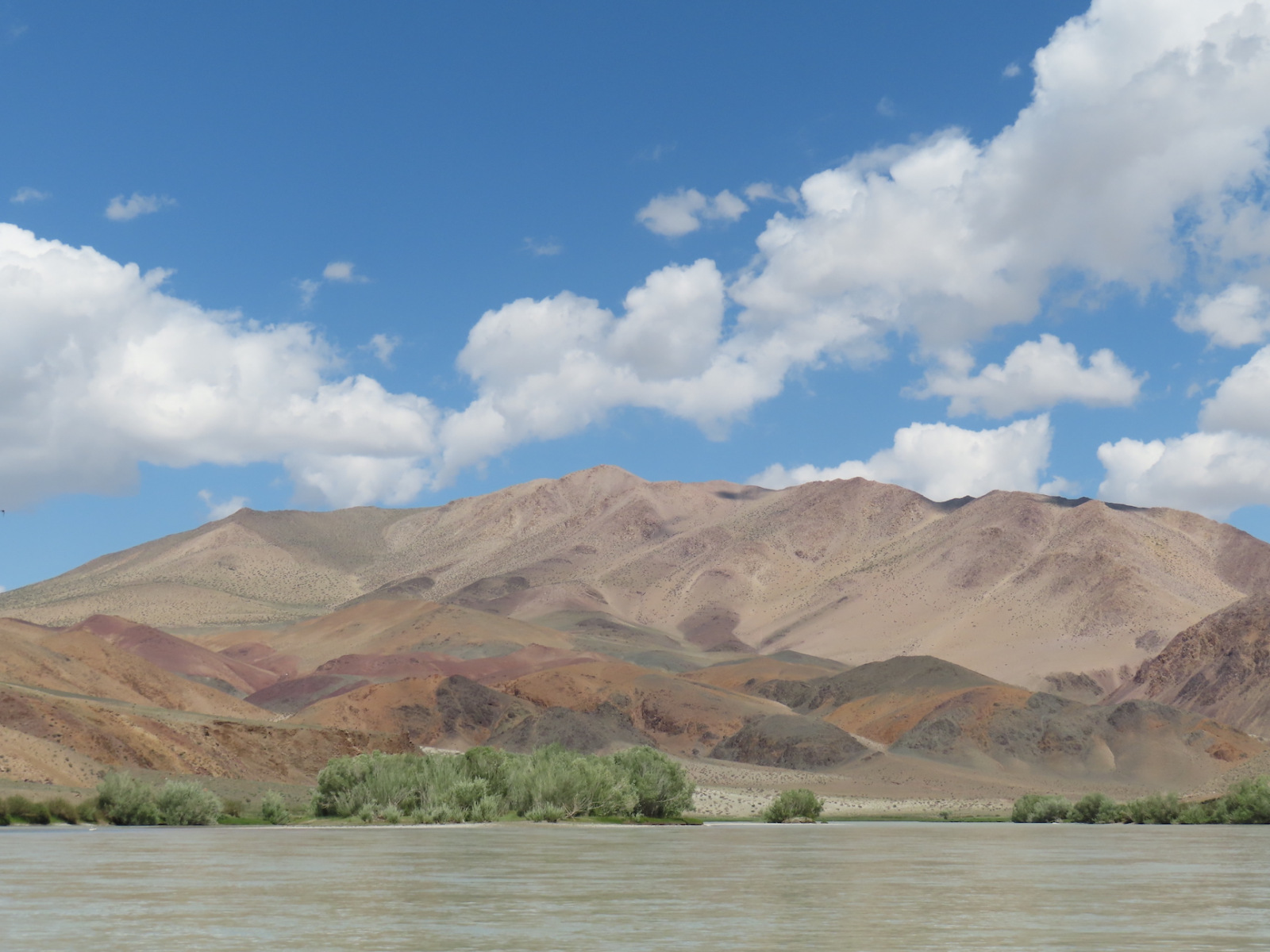
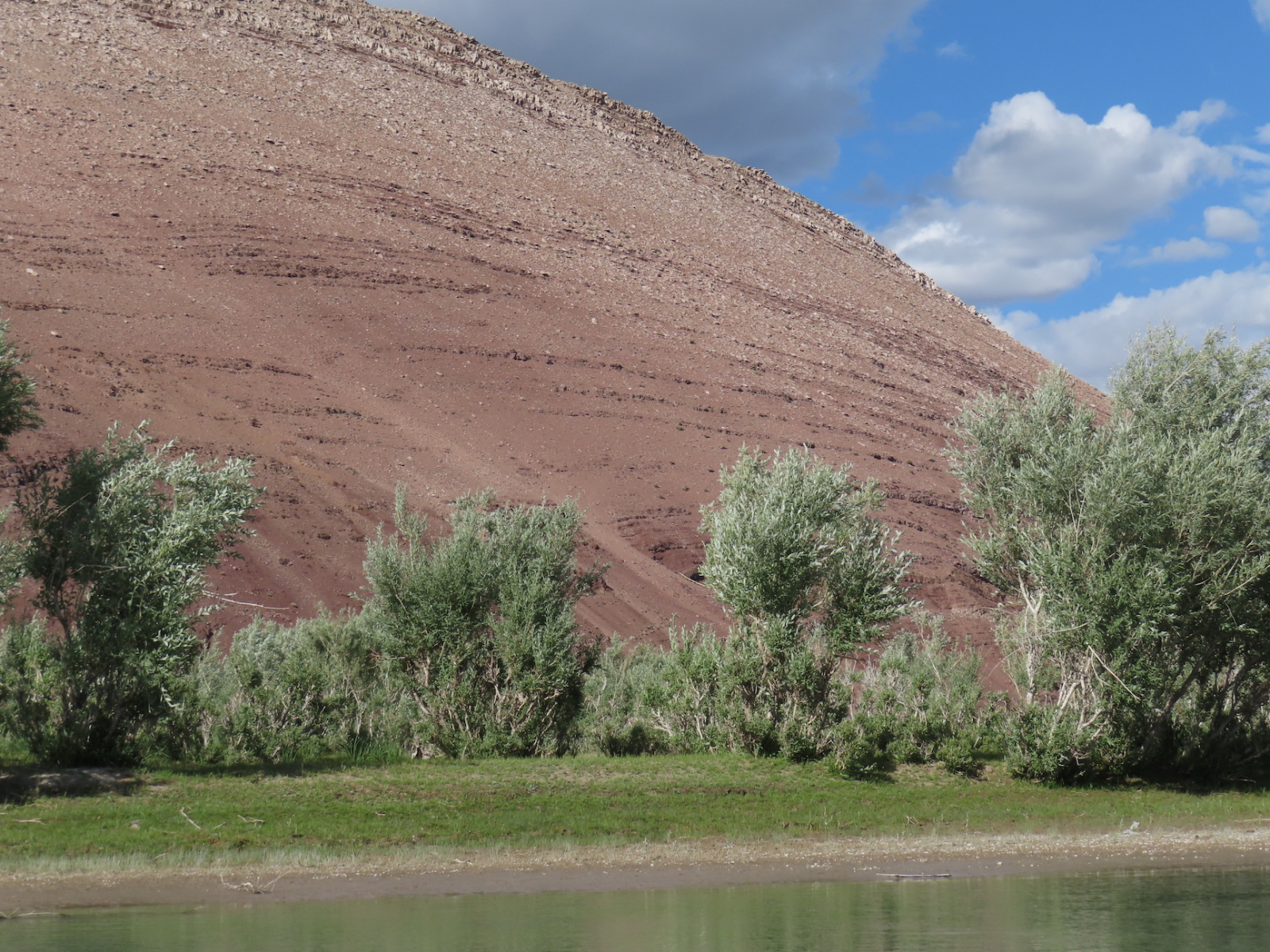
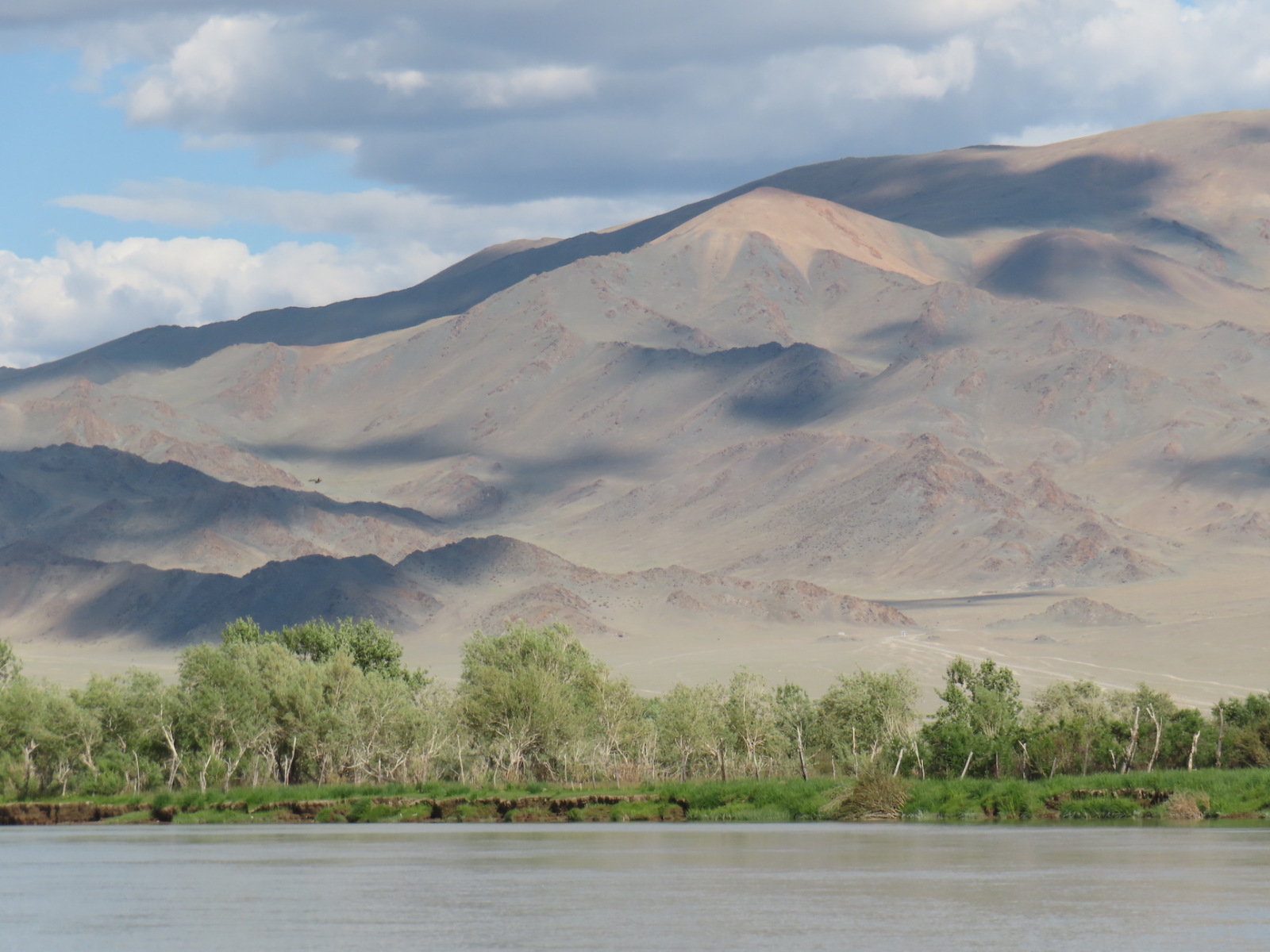
Sagsai, Mongolia is uniquely located at the confluence of three rivers: the Turgen, Sagsai, and much larger Hofd. From what we gathered through a Google Earth review, the Turgen starts in the mountains roughly 40 km southeast of town. The Sagsai is a much more formidable river starting at the base of the Altai mountains to the southwest. The Hofd (one of the longest rivers in Mongolia) is fed by the snow fields and glaciers of the Altai mountains to the west, with waters moving through Dayan Lake and the Khurgan and Khoton Lakes, with the White River as a major tributary feeding directly from the base of Potanin Glacier, the longest in Mongolia.

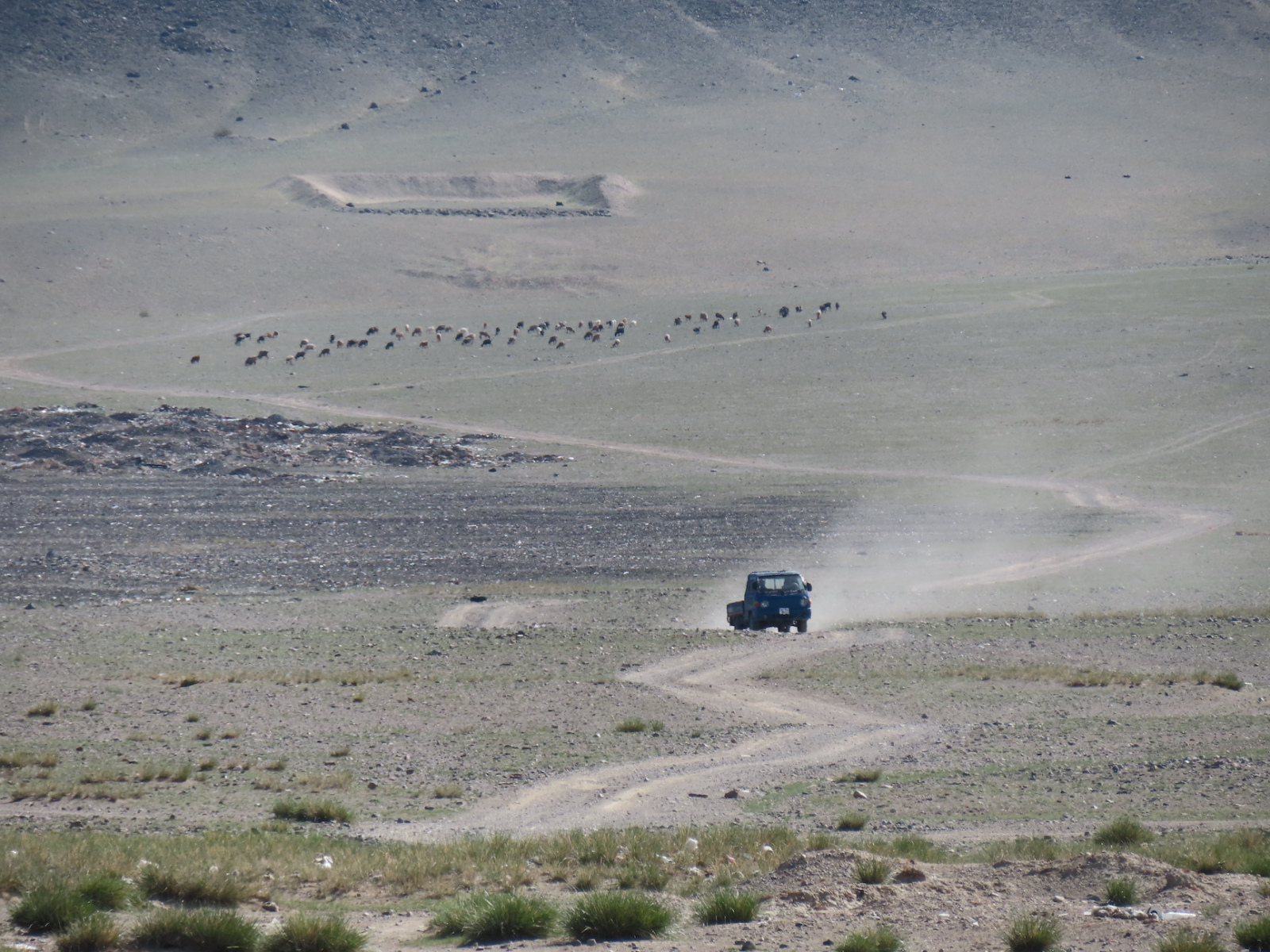
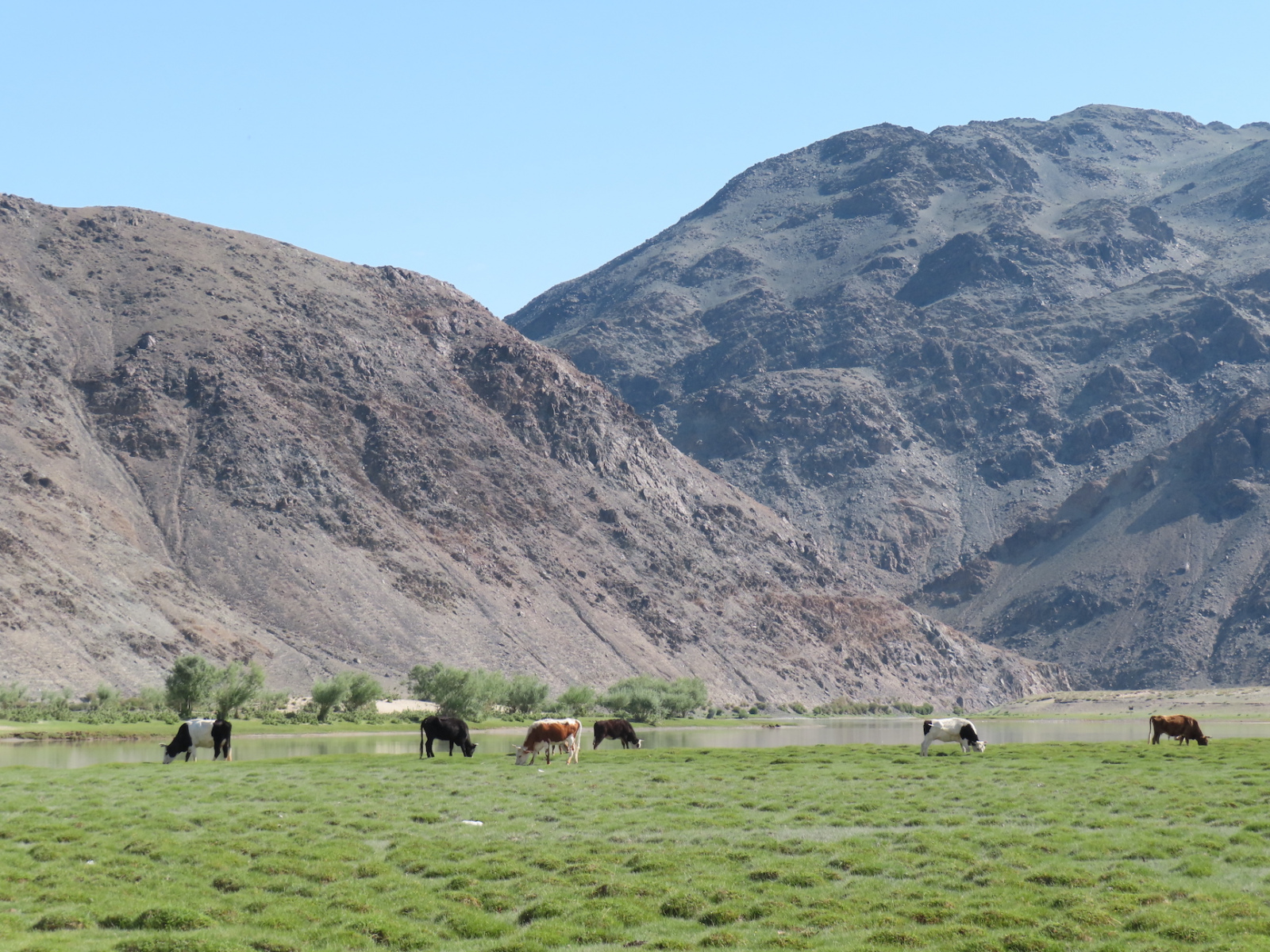
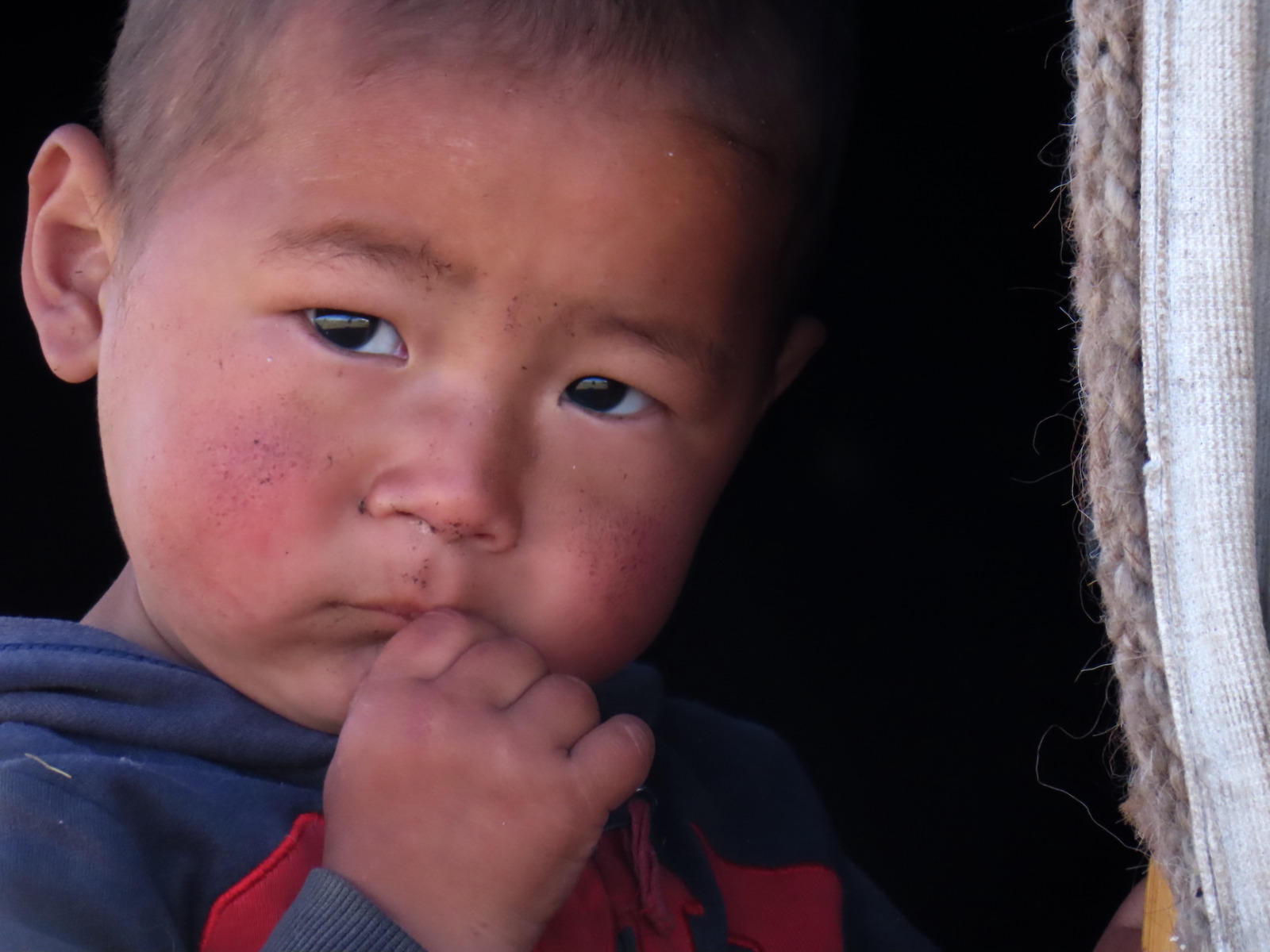
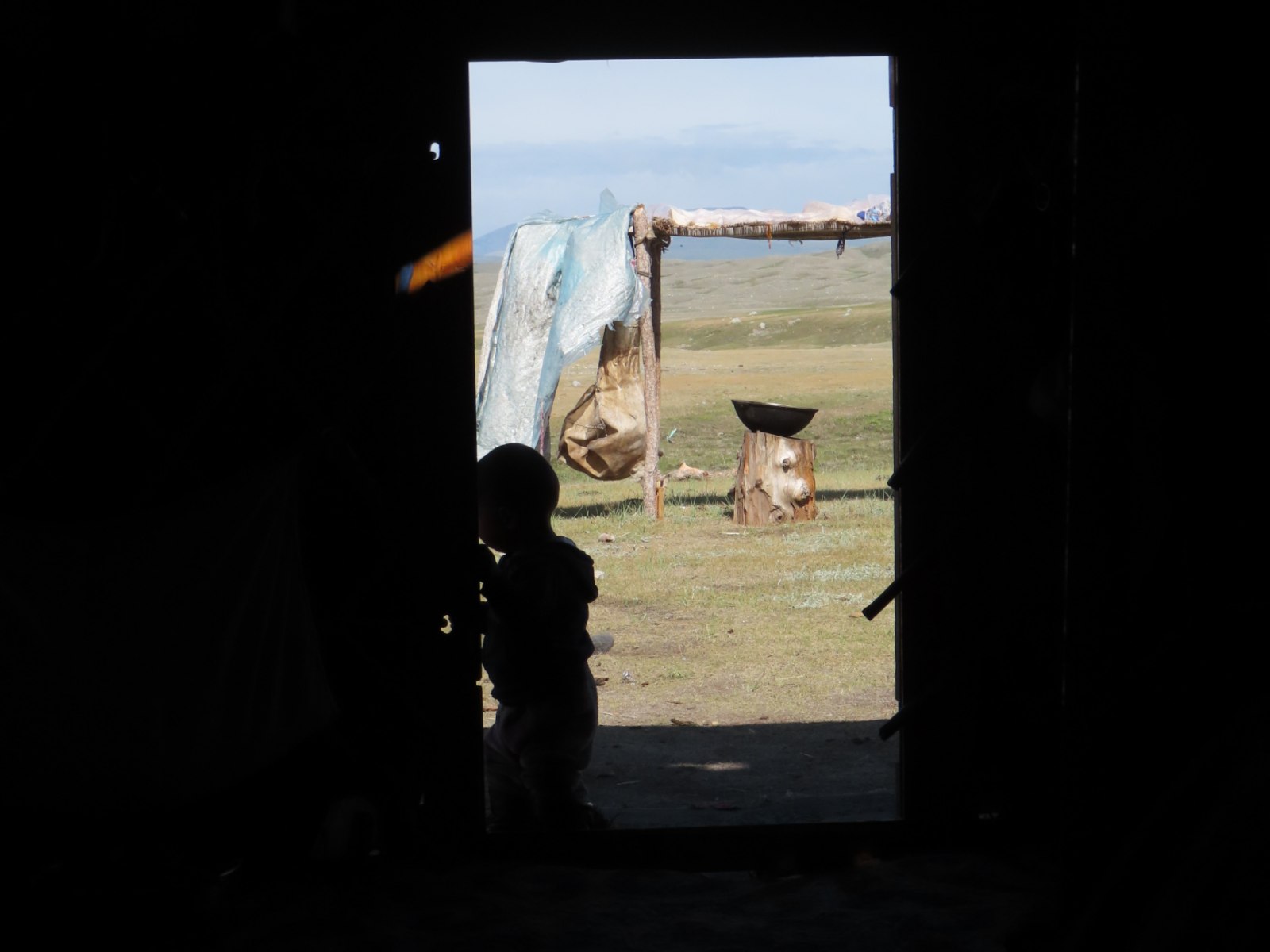
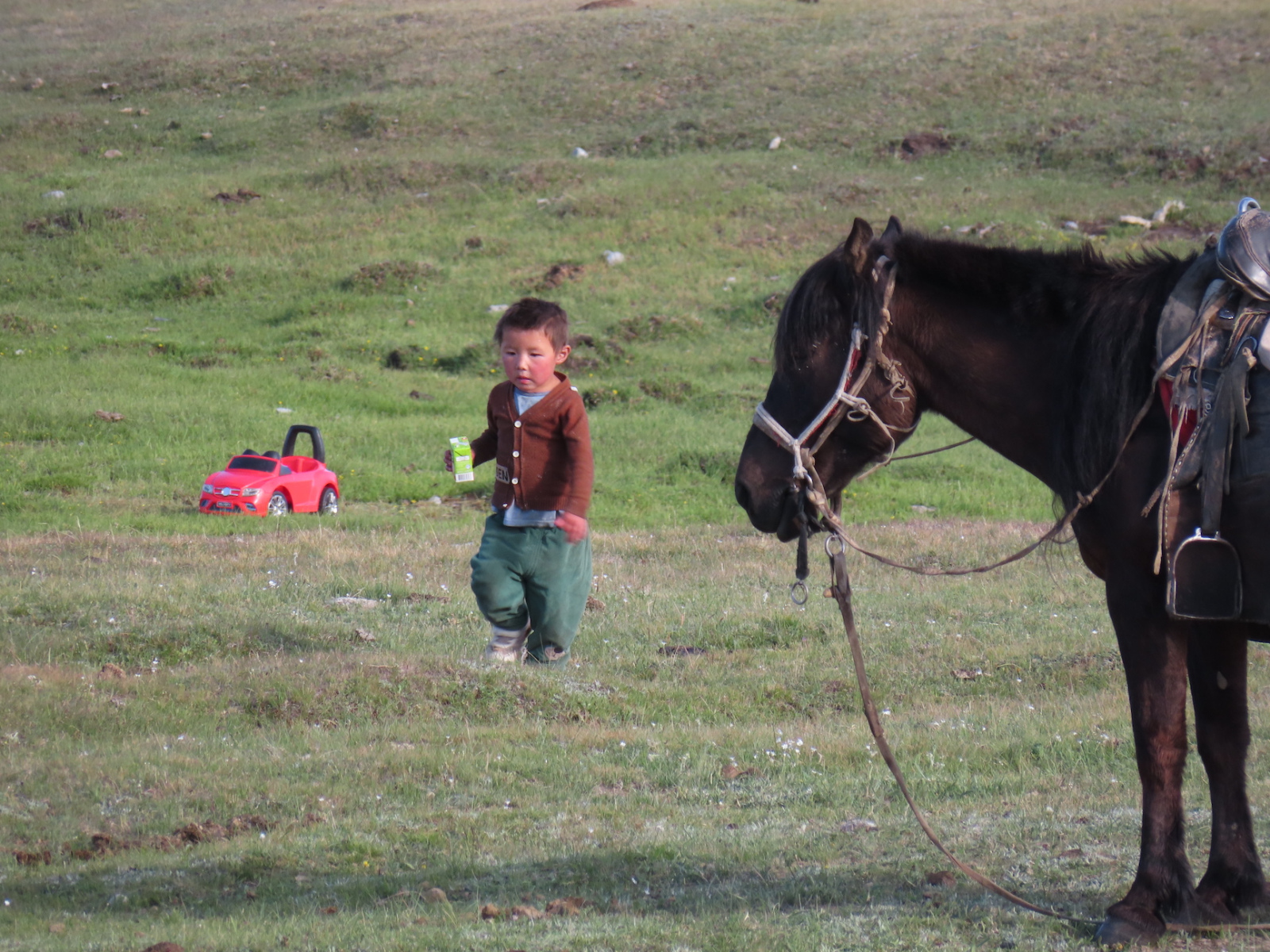
Most everyone in the town enjoys afternoons and weekends relaxing in the shallow meander of the Turgen, from a splash in ankle deep ripples to leaping from grassy banks to land near a friend who splashes back in return. It is, in many ways, a paradise for kids, playing mostly without supervision, only the goats and sheep watching from shore.
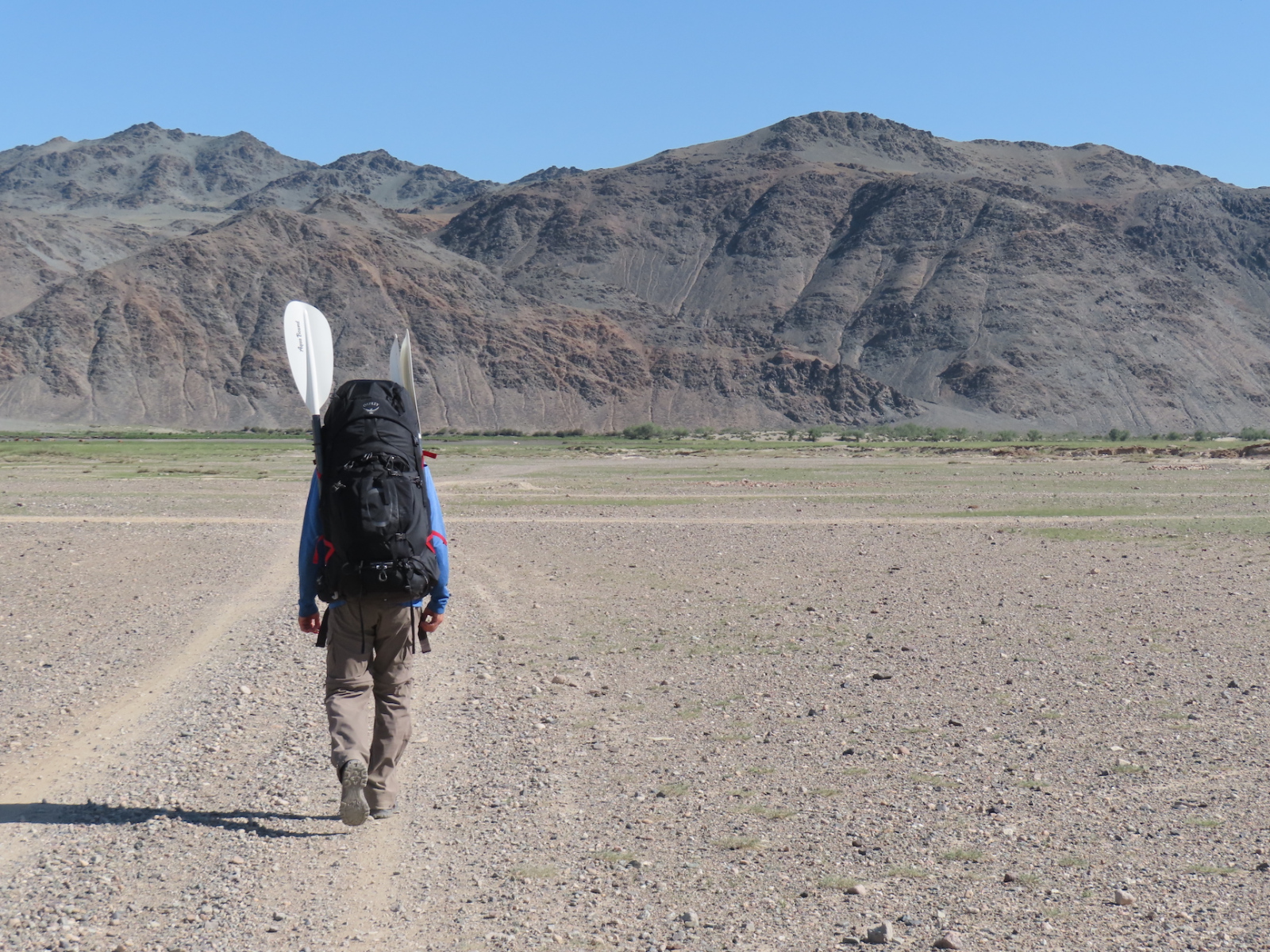
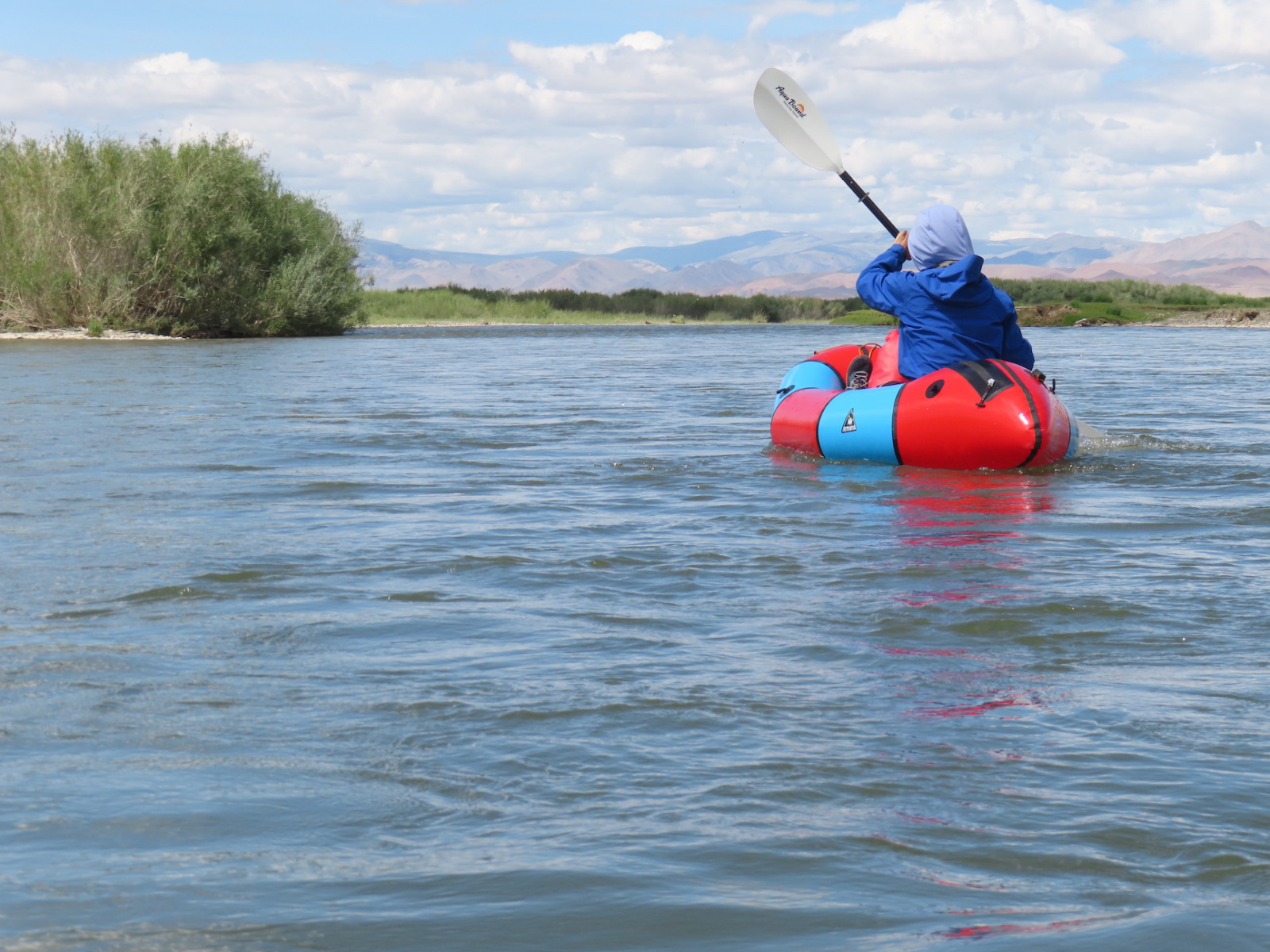
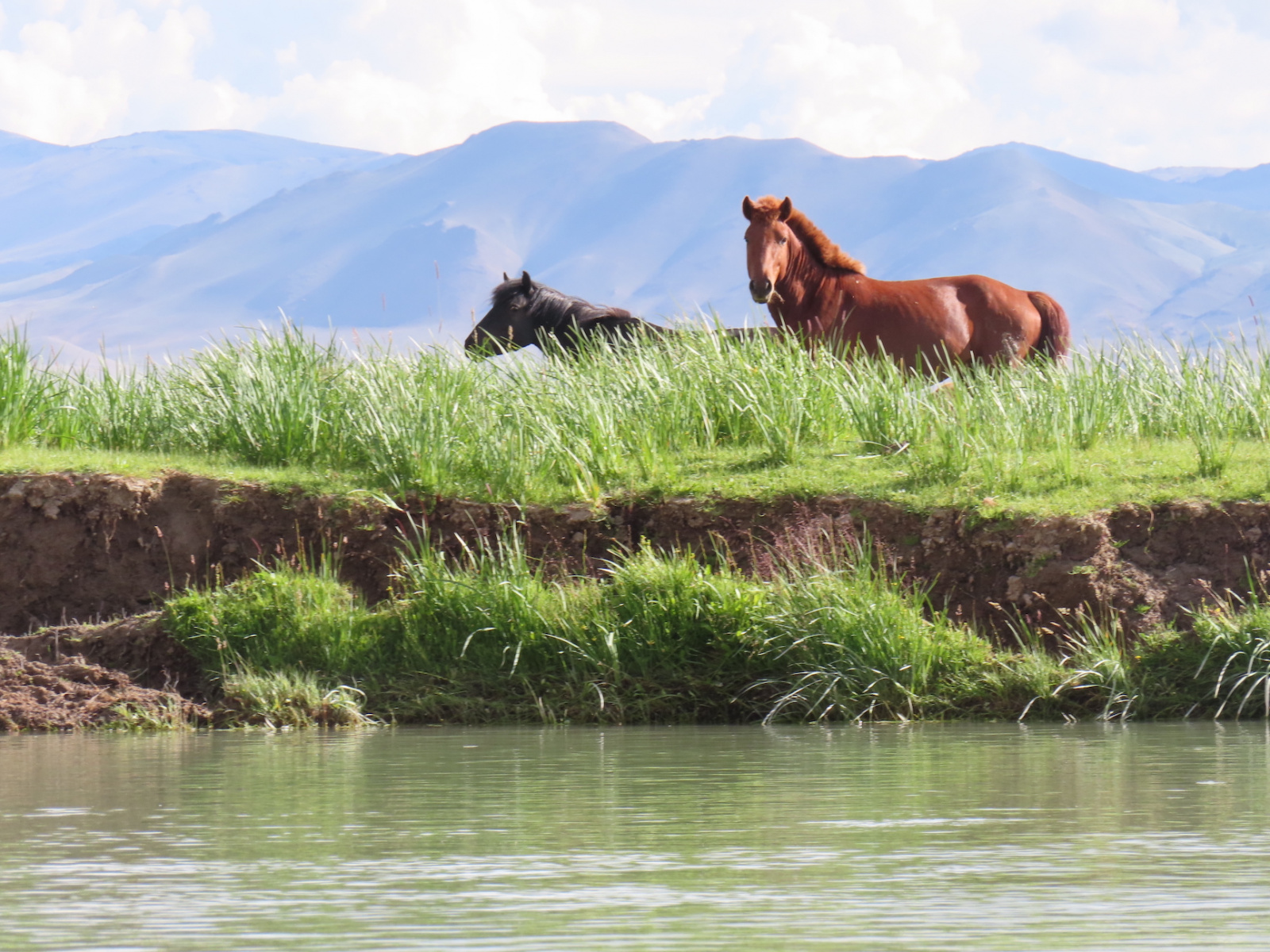
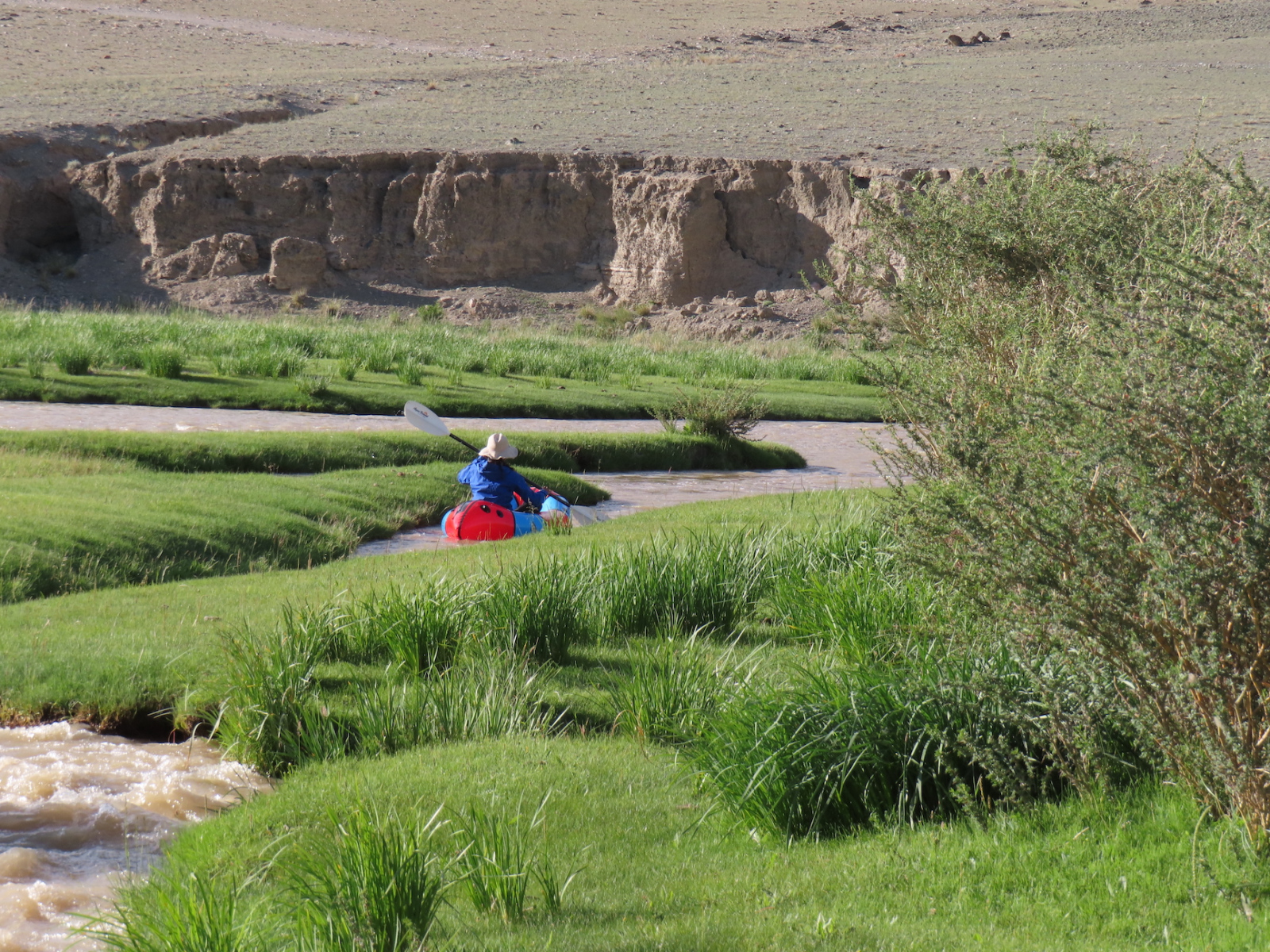
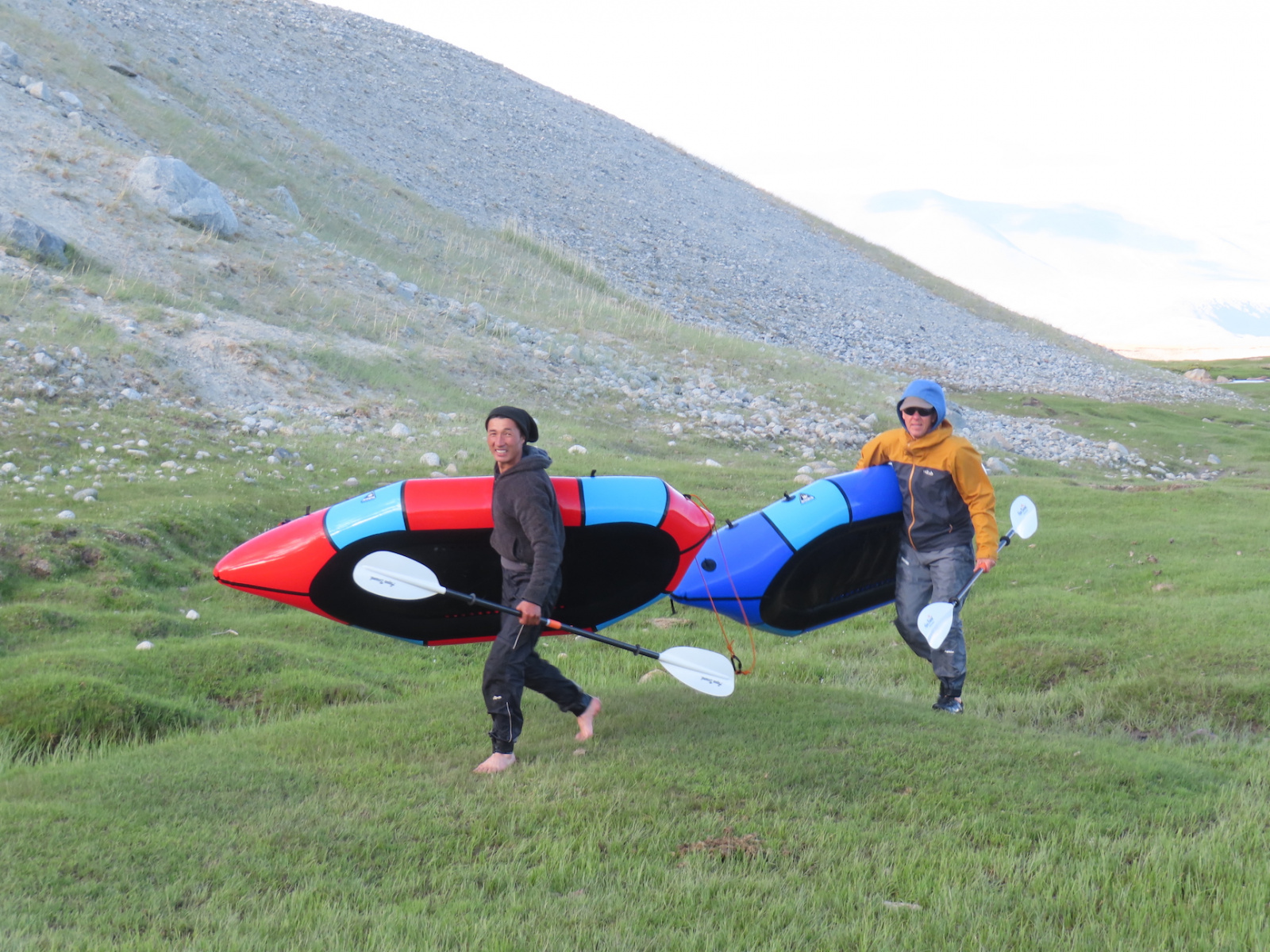
Colleen and I took an afternoon to run the Turgen (last four photos, below) from where it exists the canyon with intent to come back town, but after a half dozen butt-scoots and near miss with a rusty steel bridge just six inches off the water, we packed it up and walked back to our home.
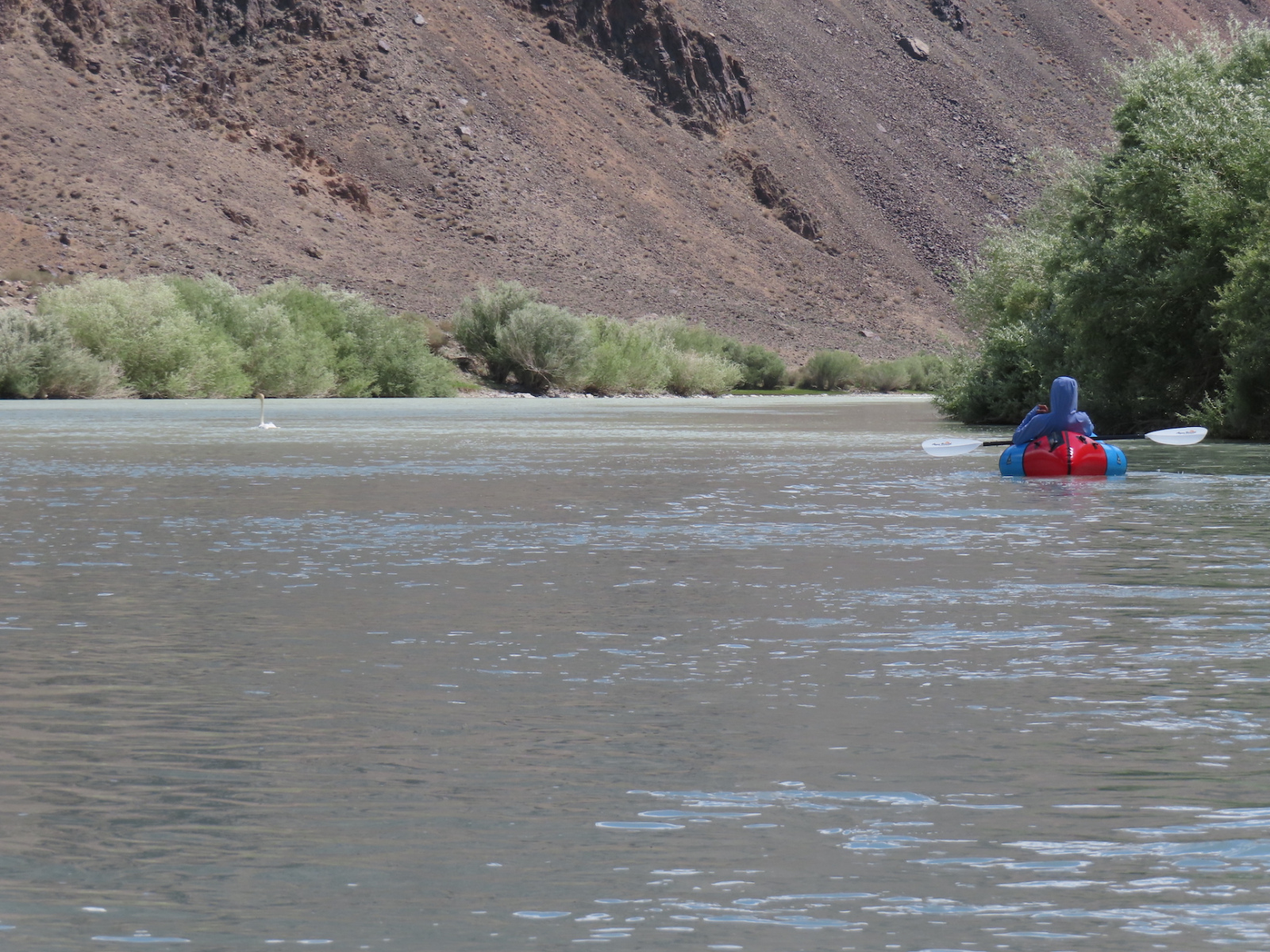
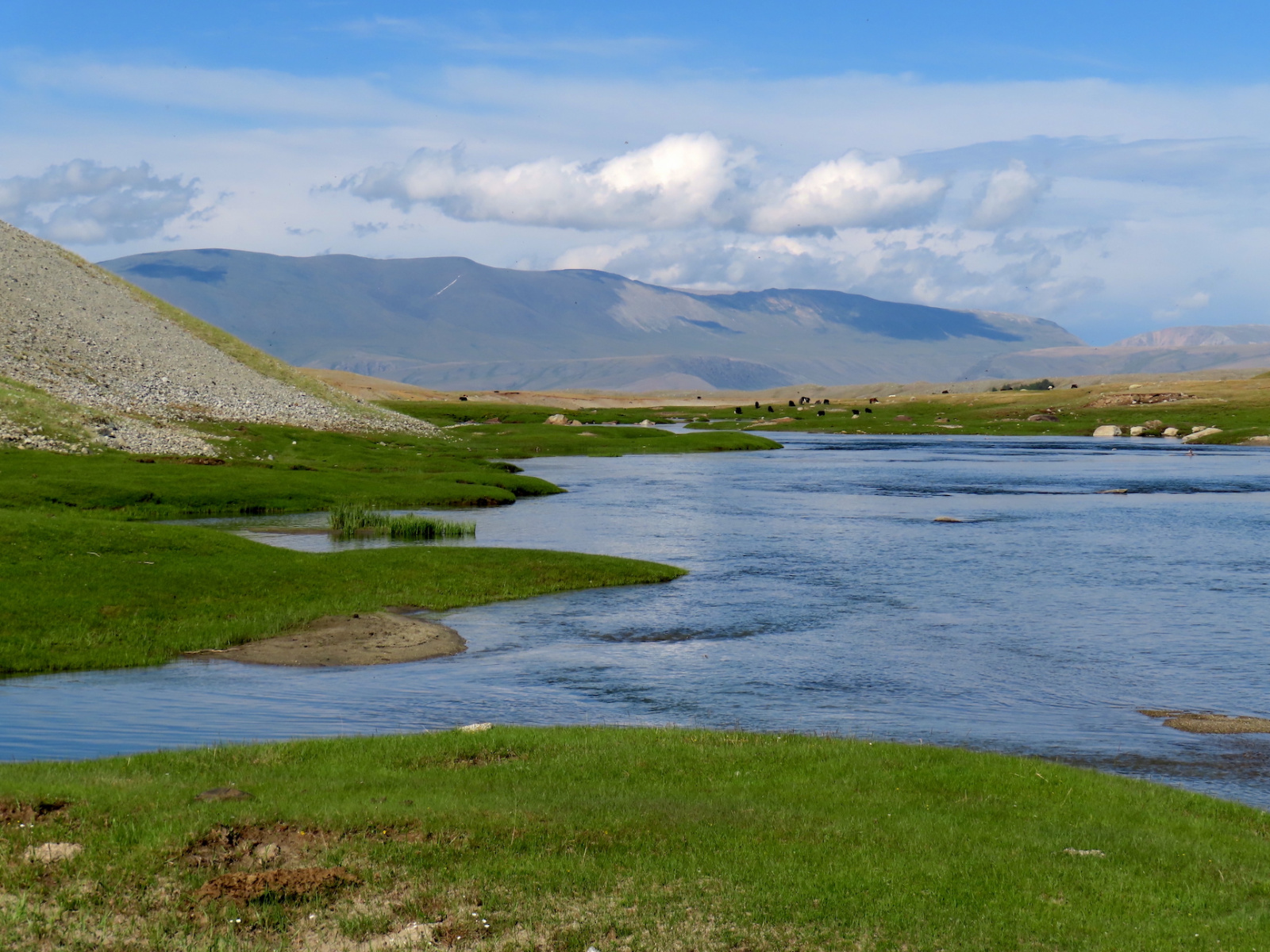
The Sagsai, however, presented a much more impressive run, from the bridge a dozen kilometers southwest of town, crossed by every vehicle headed to the high, summer pastures and the Altai National Park. One of the parents gave us a ride, and then watched curiously as we inflated our boats and prepared for our maiden voyage in Mongolia. While the river presented little more than Class 1 or light Class 2 rapids, the joy was in the complete unknown as we spent more than two hours paddling down the Sagsai until we merged with the much larger Hofd, and then another two hours to the north side of town.

Without a map, beta, or any awareness of what we would experience, we honestly didn’t know what to expect. A review of the horizon across a very flat landscape gave us confidence there wouldn’t be any waterfalls or massive drops. But of equal concern was wire fencing, or braids that would force us to get out and walk. Aside from one brief butt-scoot when the river had split twice, we found our way from bridge to the familiar pastures where the women brought their grazing animals each morning in roughly four hours.

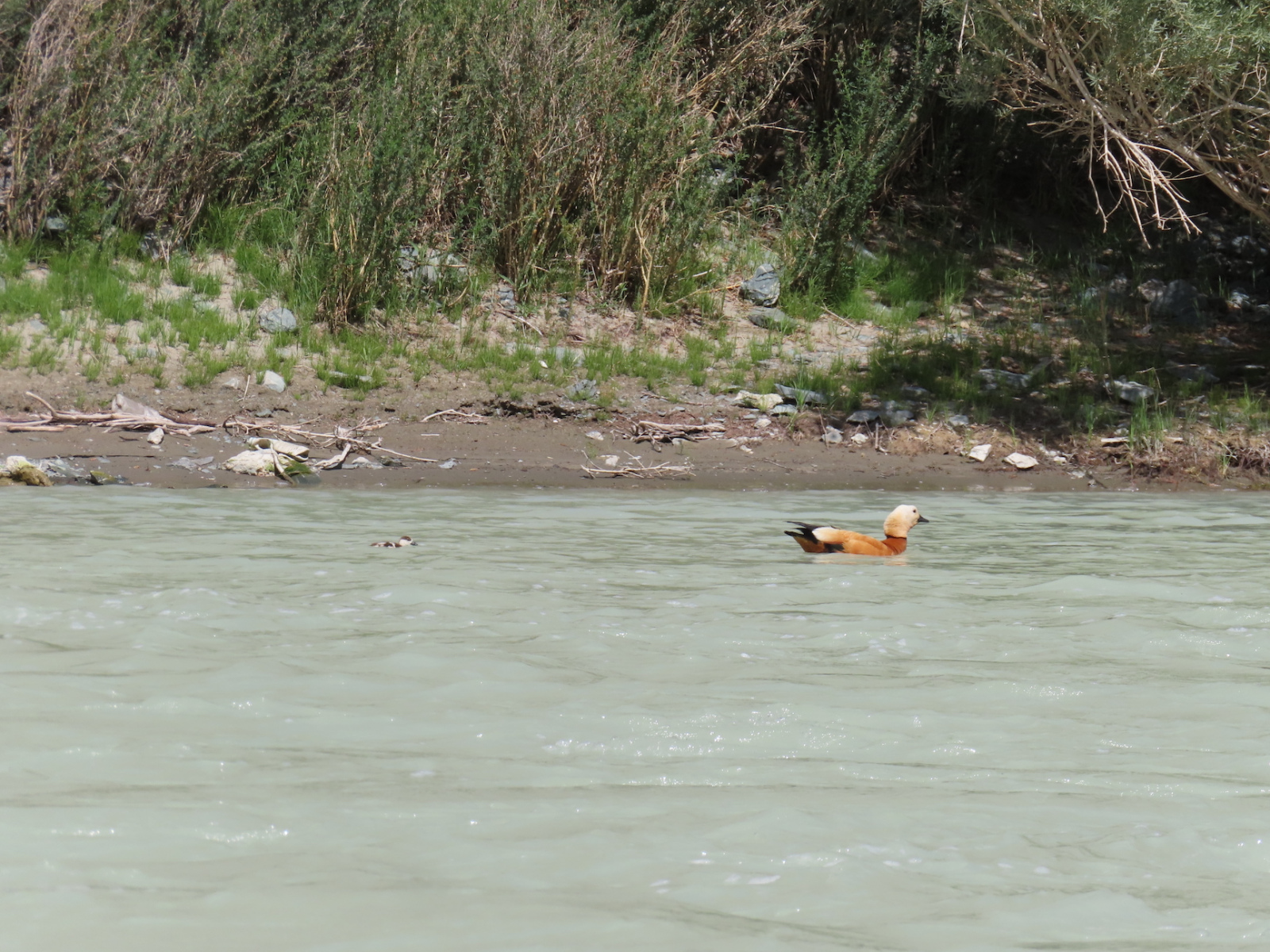
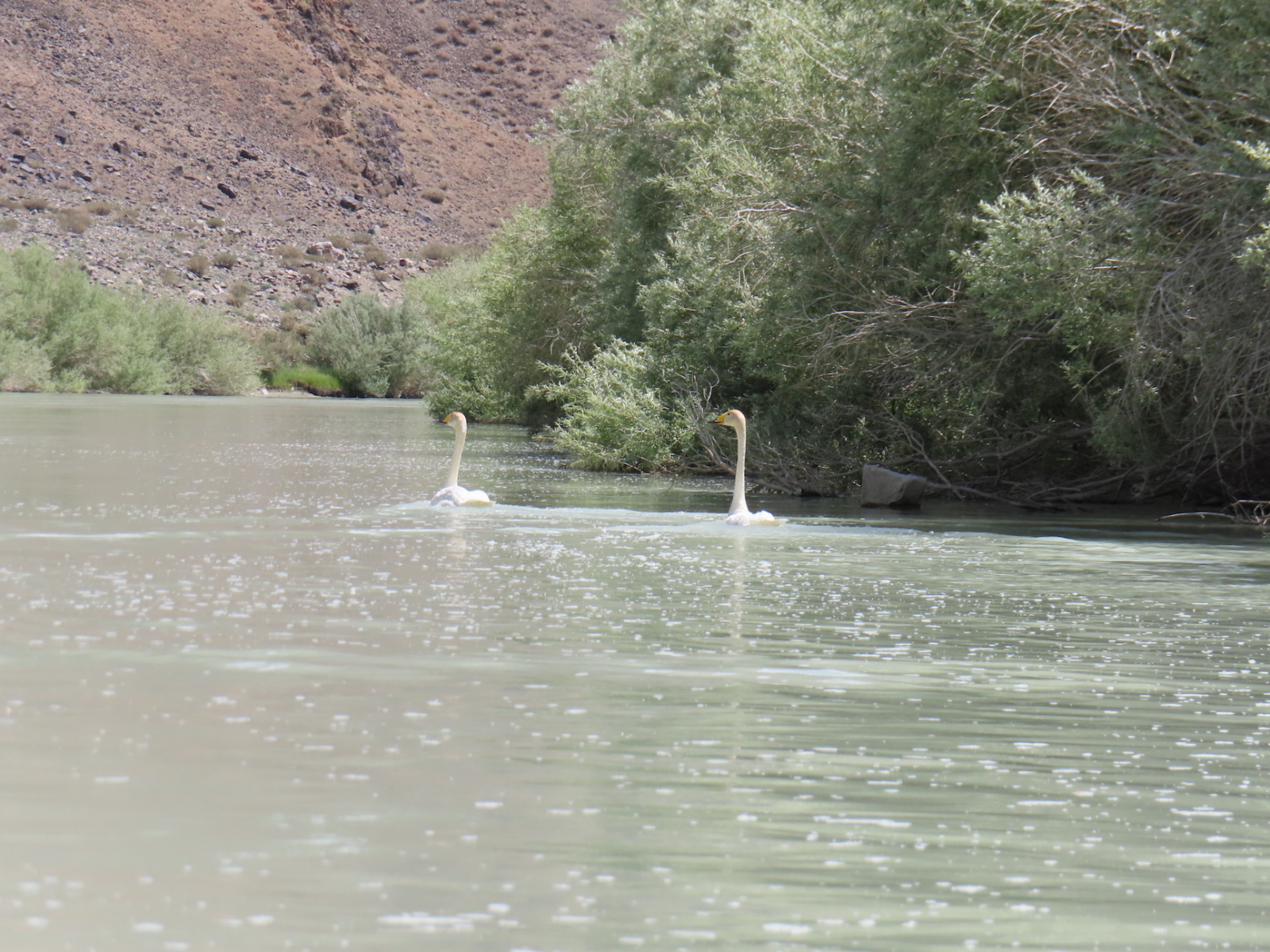
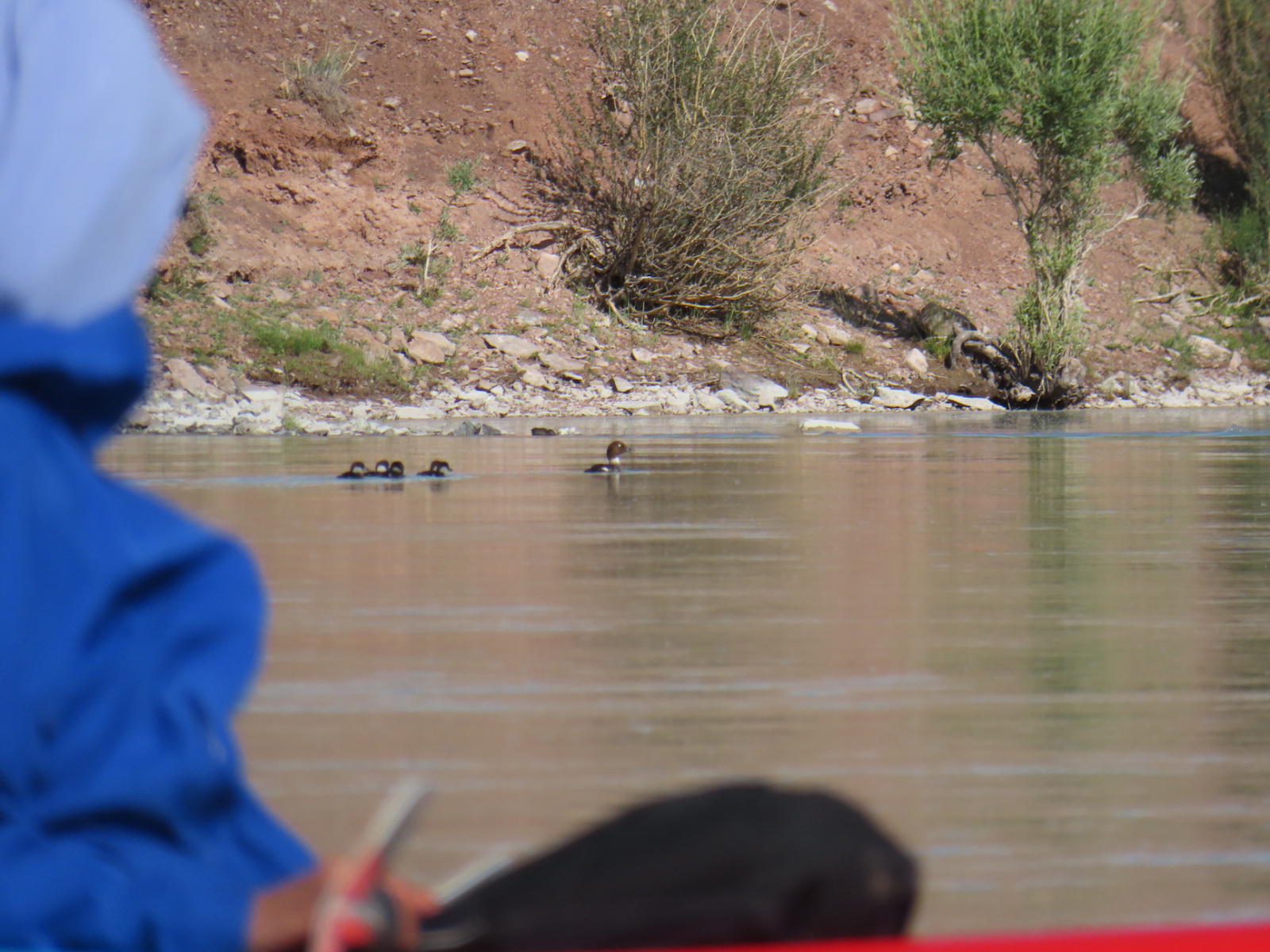
We were pleased to see hawks, geese, and cranes with massive white wings. The banks were a saturated green unlike anything we had seen, to date. Our next paddle would be the Hofd from Sagsai to Ulgii, a commute the locals do in the winter, on the frozen river, in a Toyota Prius.
By |2025-08-14T12:35:34-04:00July 10th, 2025|From the Road|Comments Off on Packrafting the Sagsai and Turgen rivers, Mongolia

Naadam Festival, Sagsai, Mongolia

Nadaam Festival 2025, Sagsai, Mongolia

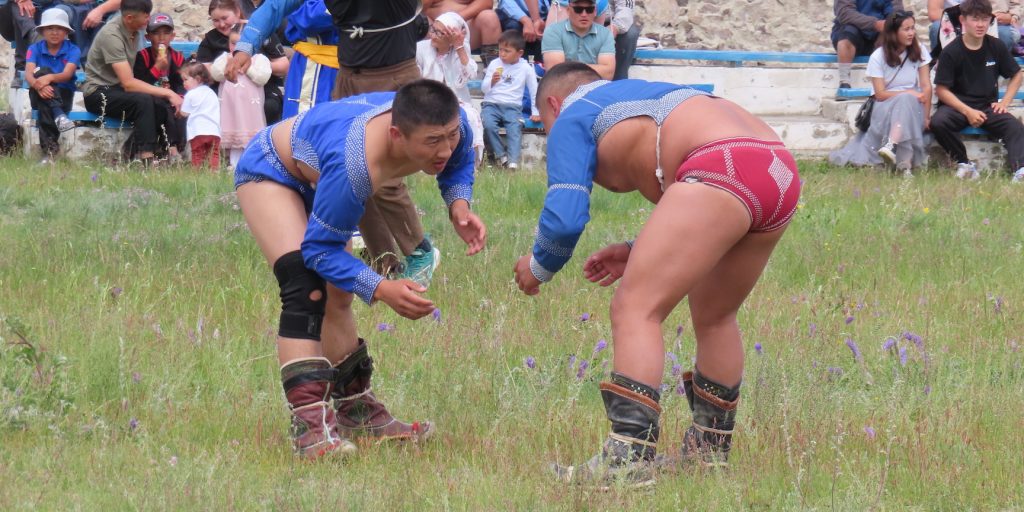
The Naadam Festival is a truly nation-wide event. It has origins that call upon centuries of tradition, with archery, wrestling, and horse riding as the primary events. It brings a majority of the population of the capitol city Ulaanbaatar into the country for a week of festivities, competitions, car camping, and more.

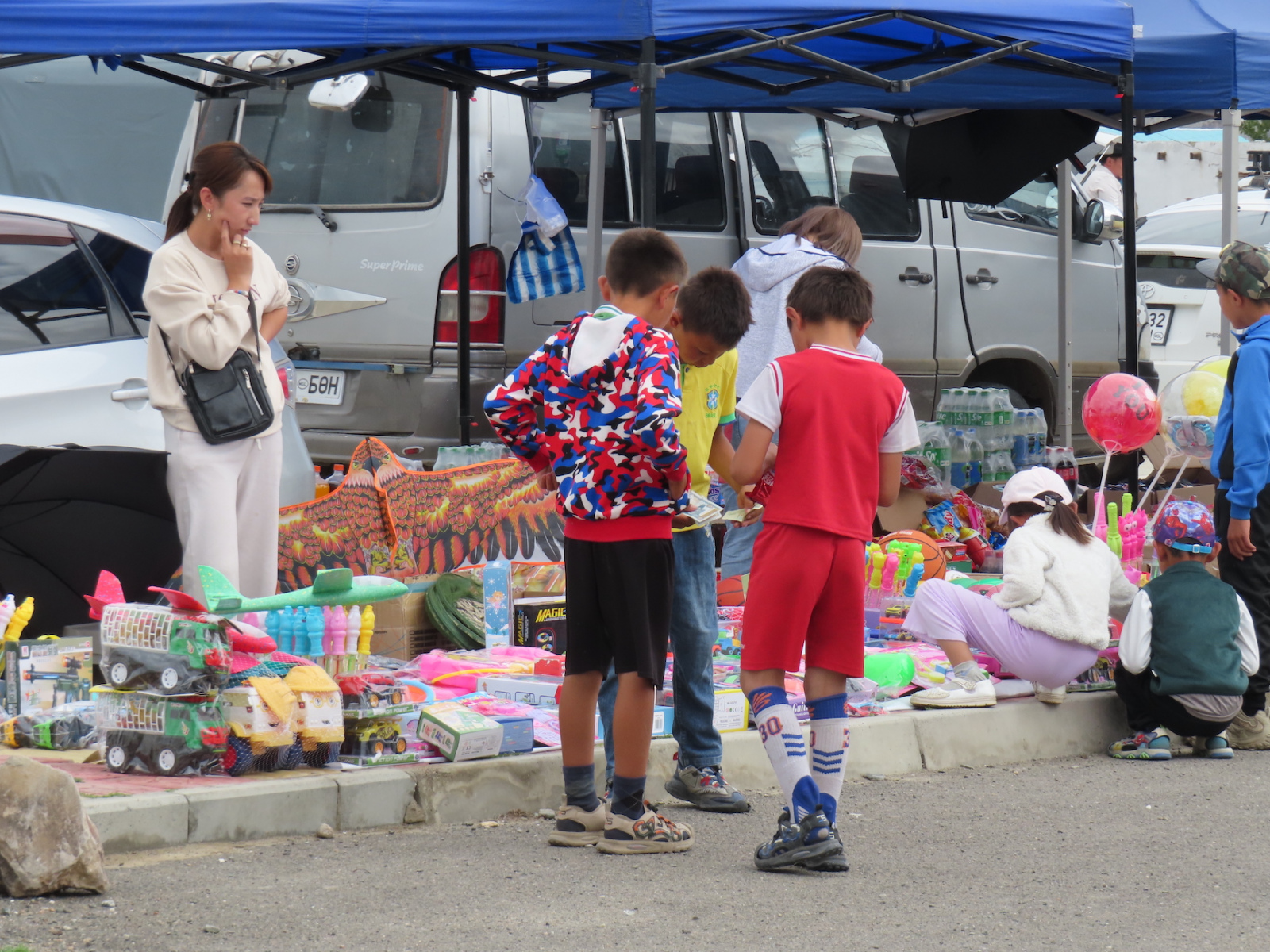
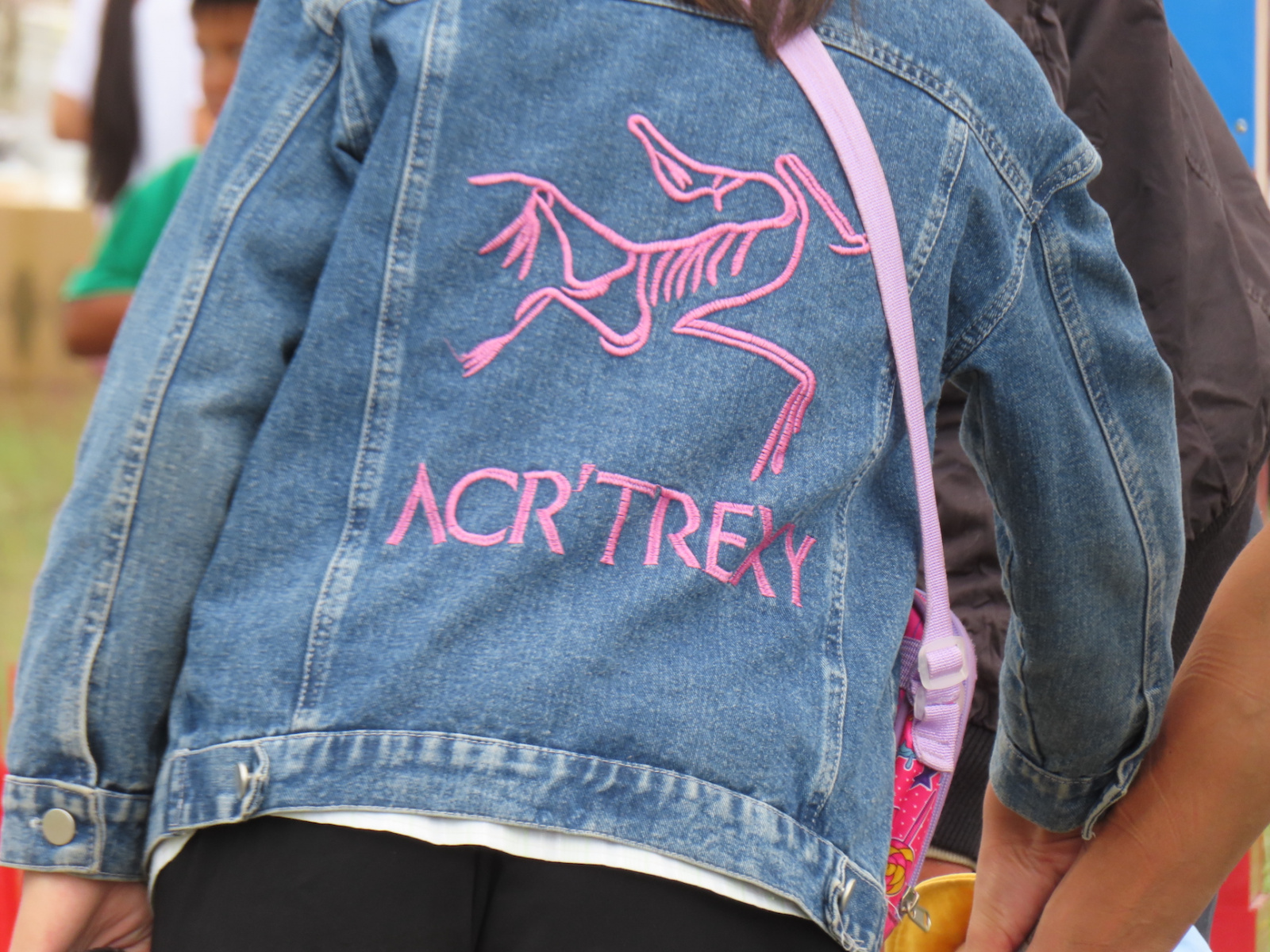
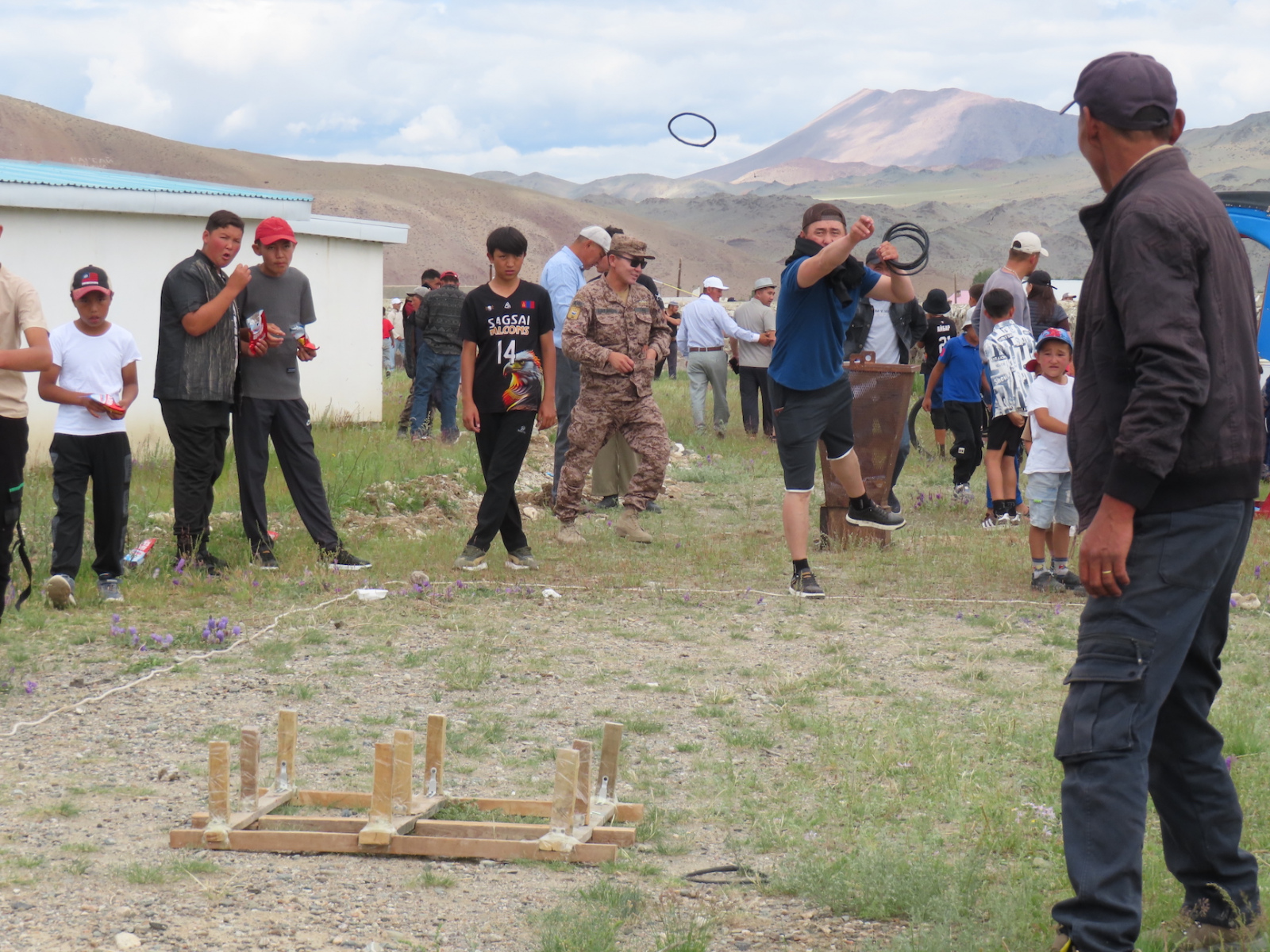
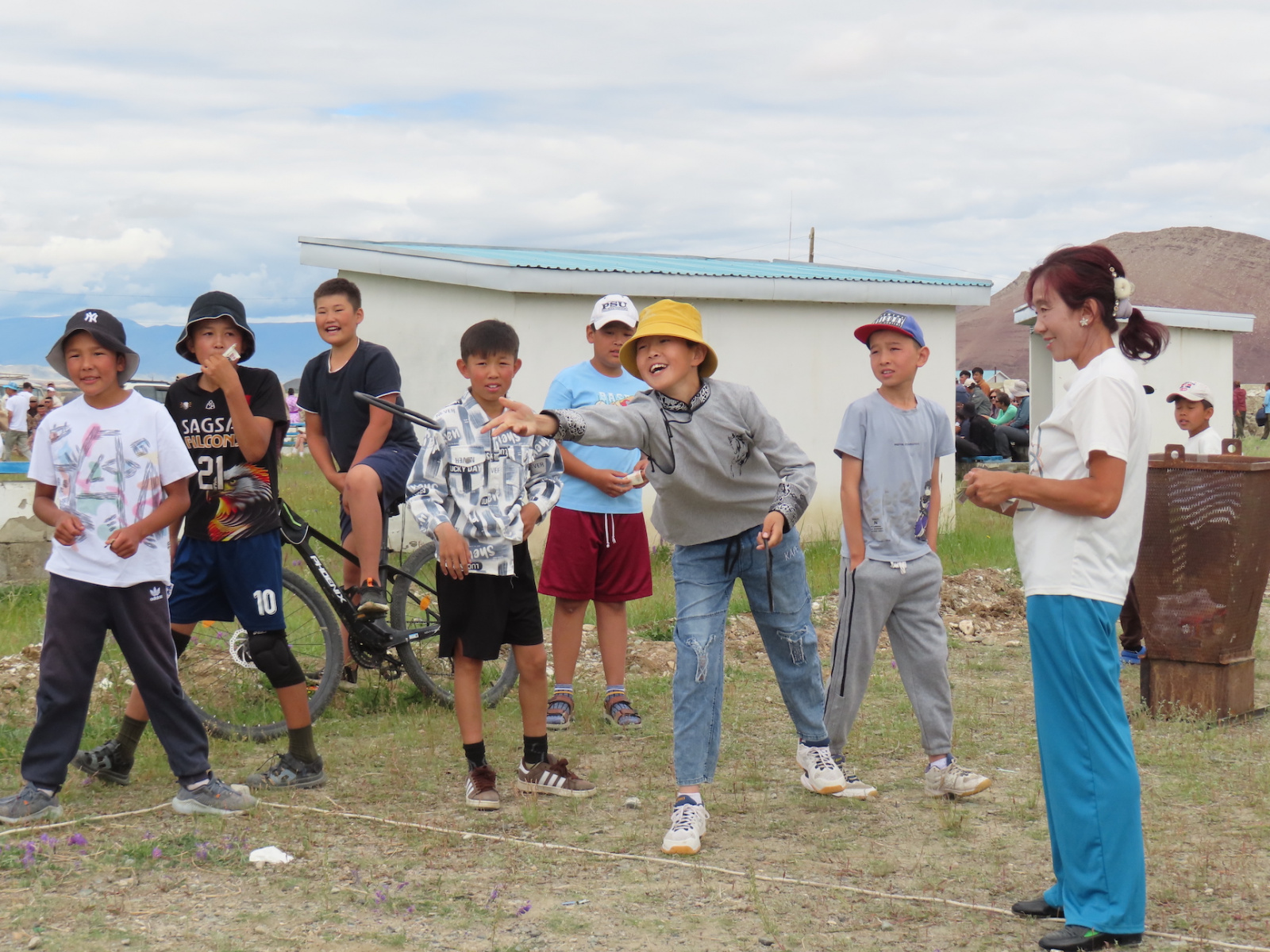
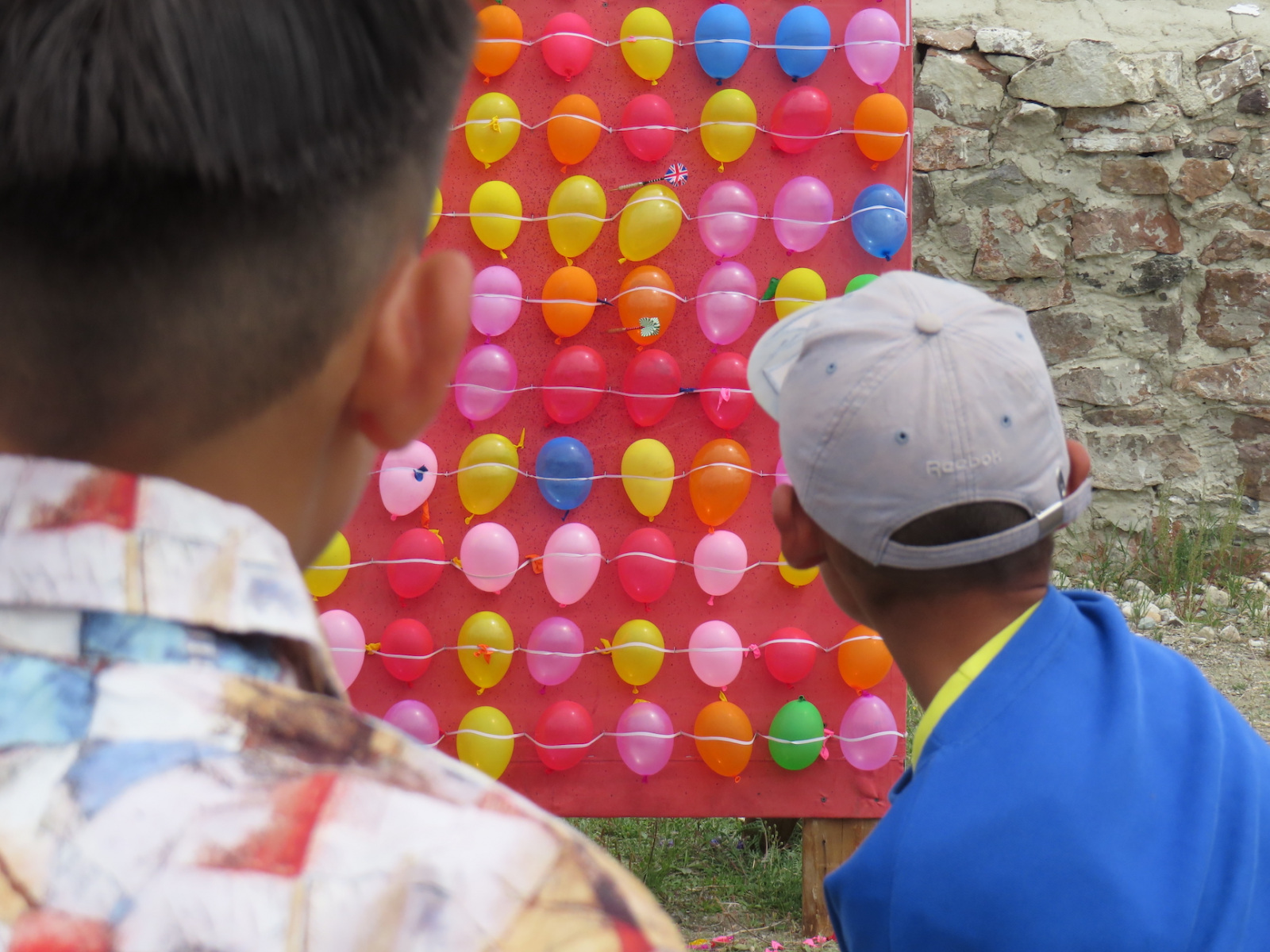
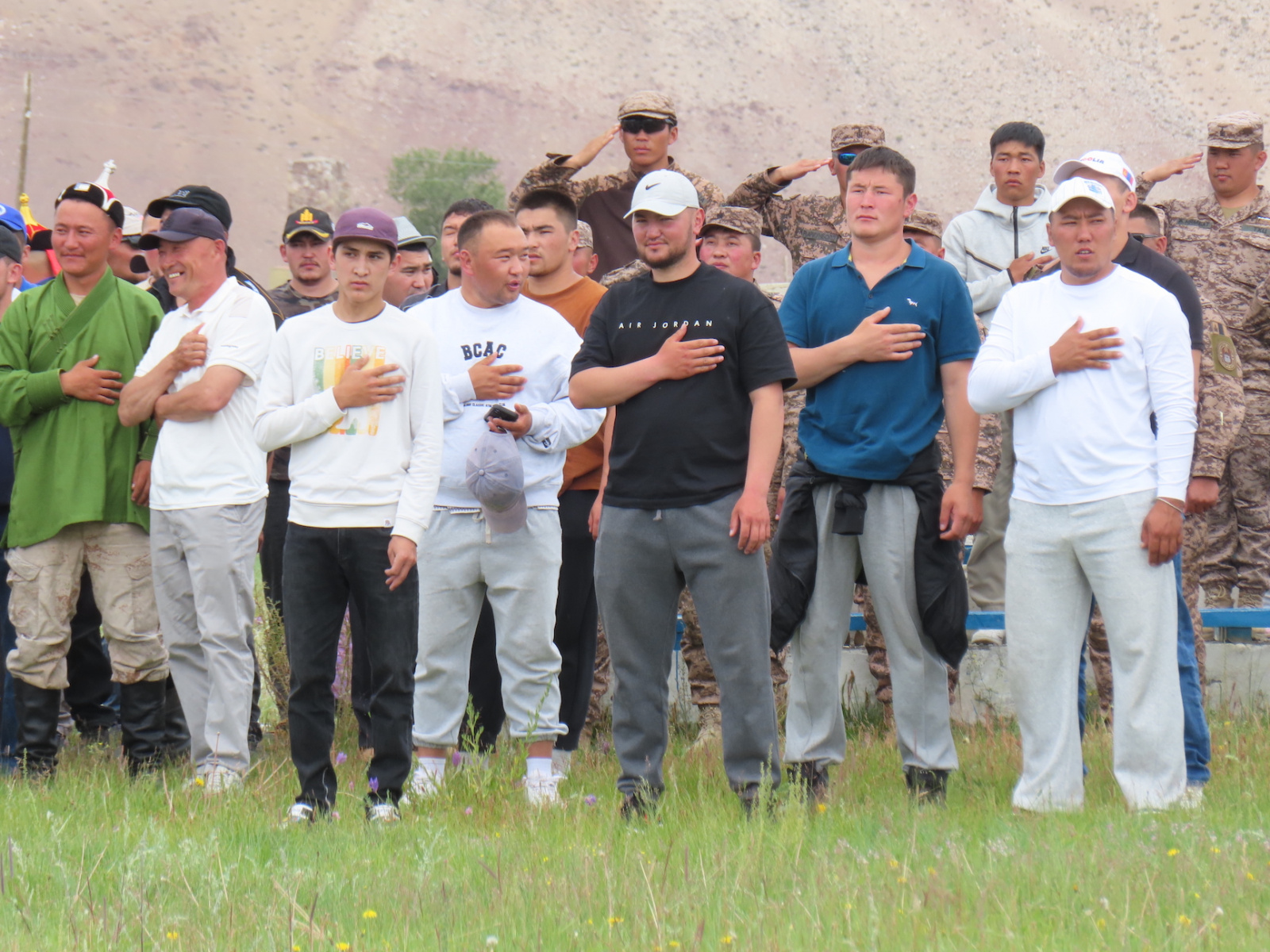
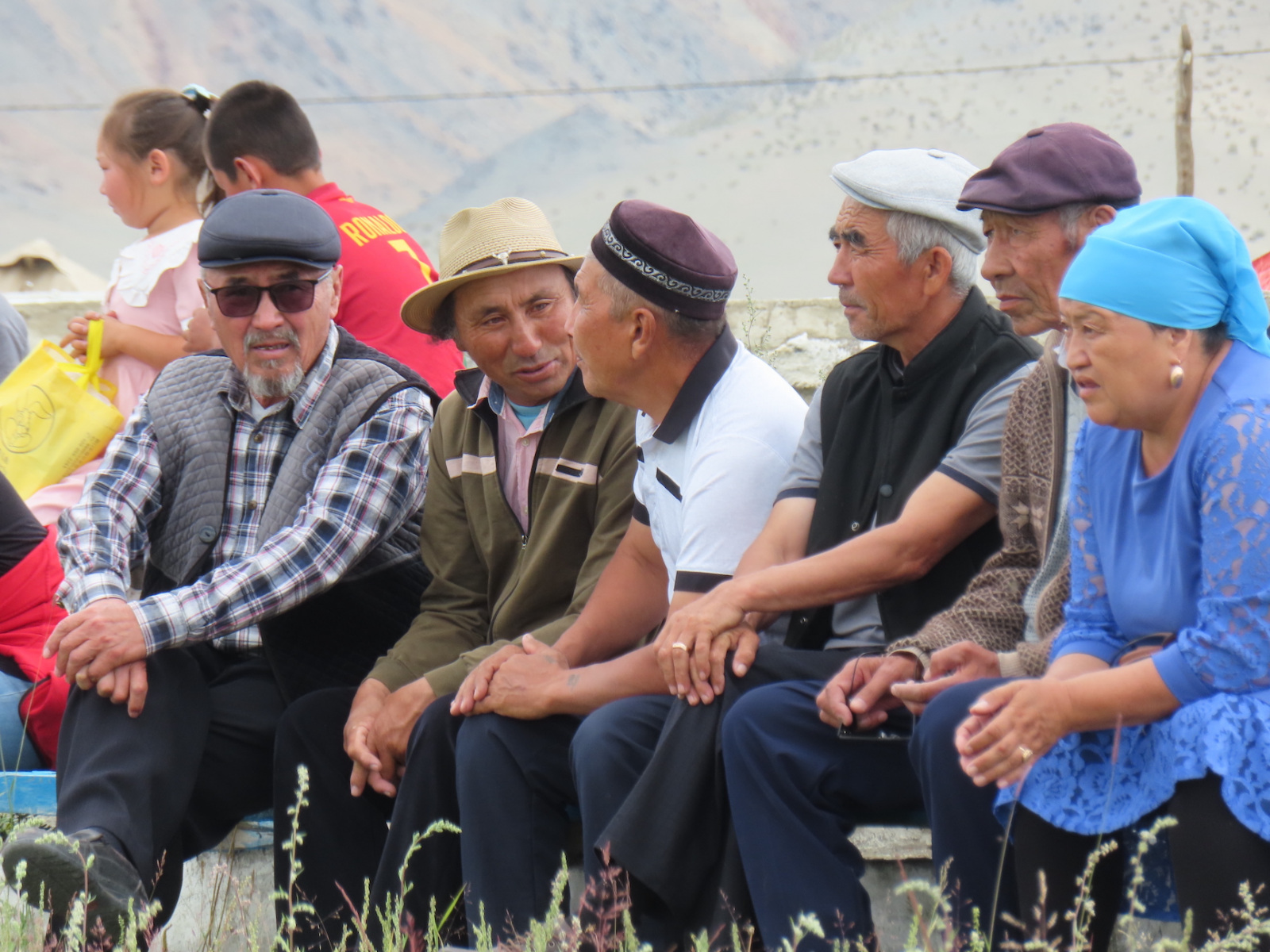
Our experience of Naadam was entirely in Sagsai, where we lived for one month. Our host family’s daughter Nezerke walked with us from our home to the southwest corner of town where the one-day festival was held at the town stadium. Vendors were setup to sell similar products available in the many local shops, with the addition of soft serve ice cream and familiar carnival games. Slowly the stadium filled with members of the local military base, tourists, and locals. There appeared to be far more tourists at the festival than we believe were staying in town, perhaps coming up from Ulgii for the day.

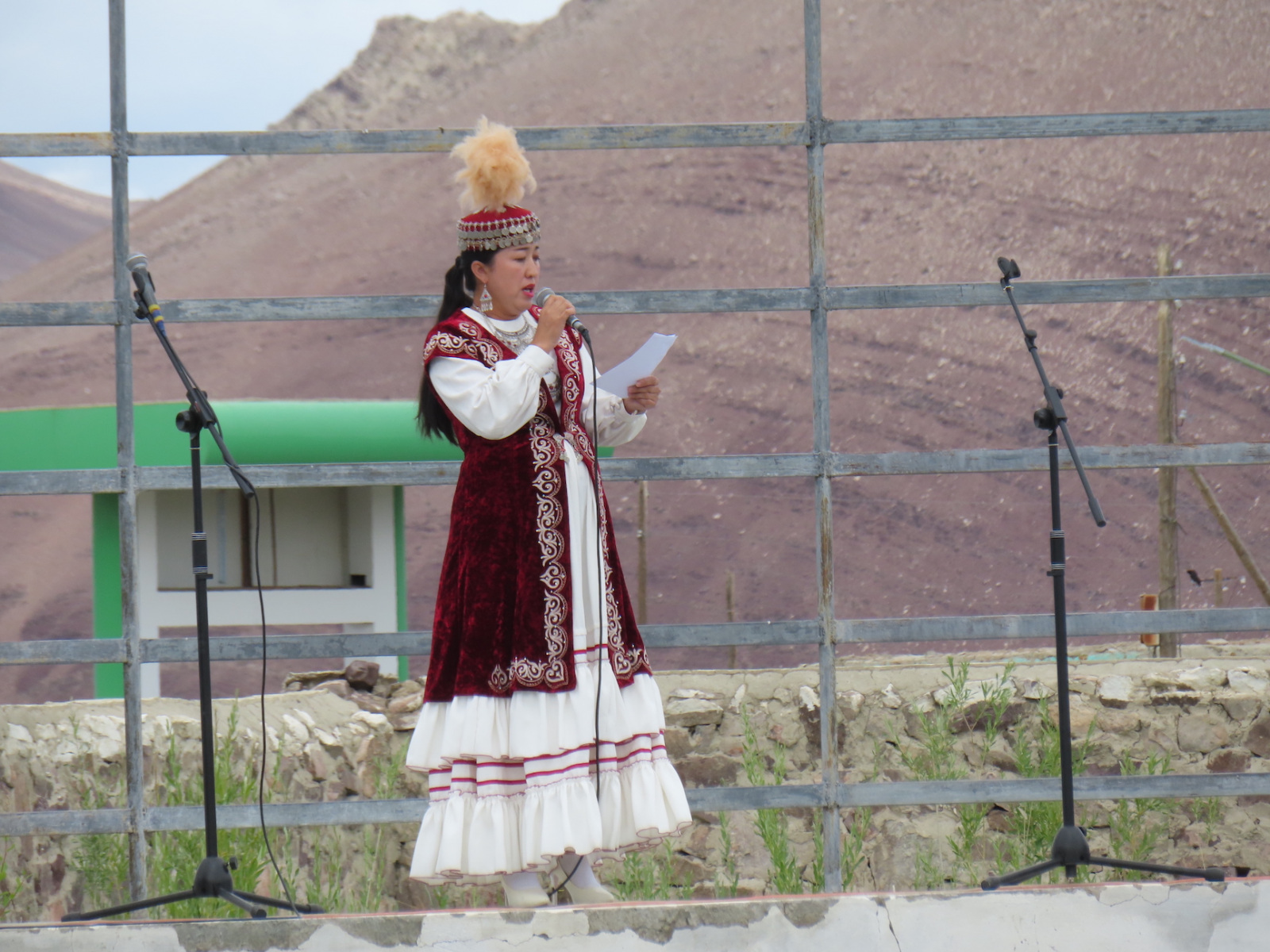
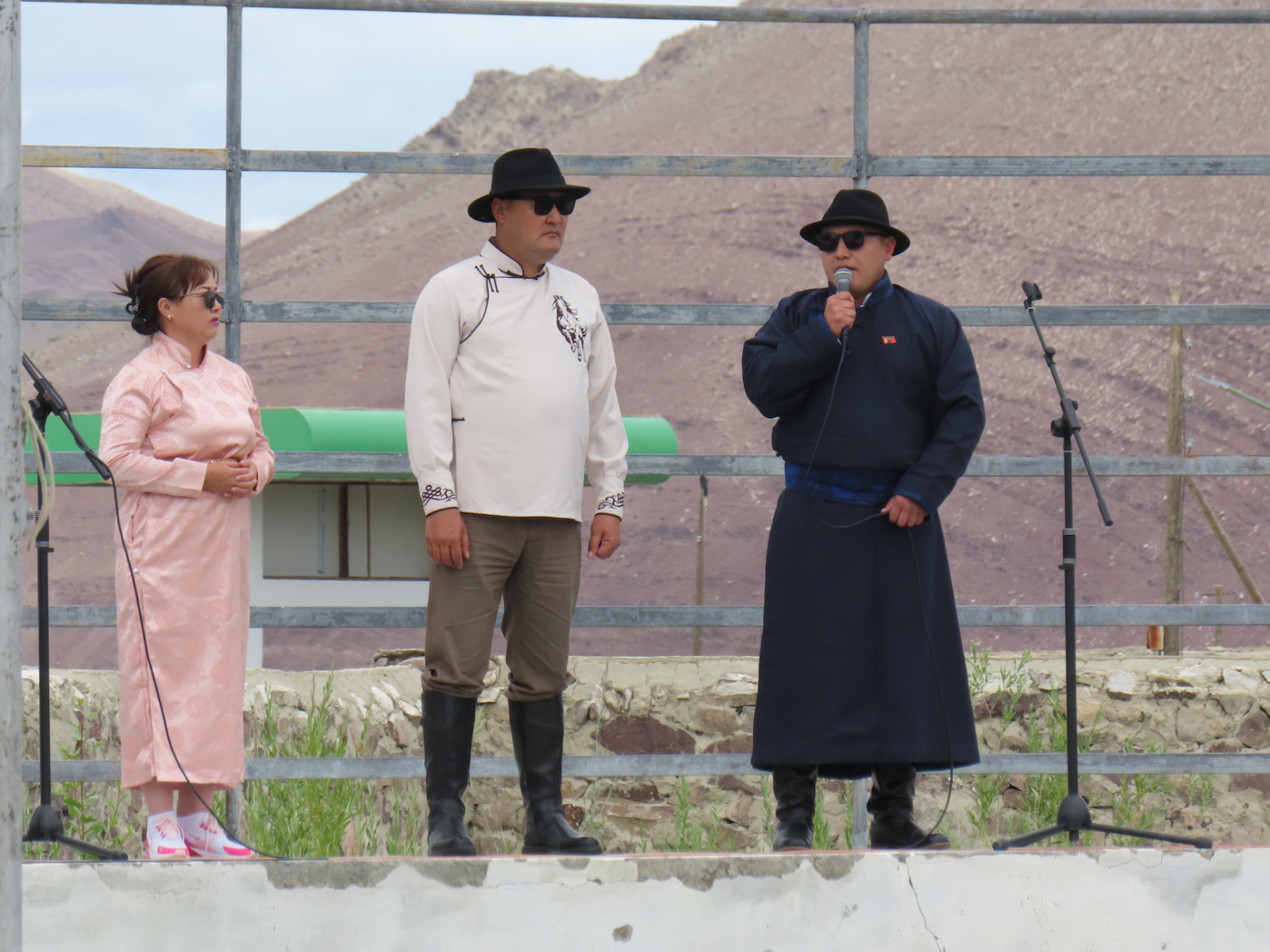
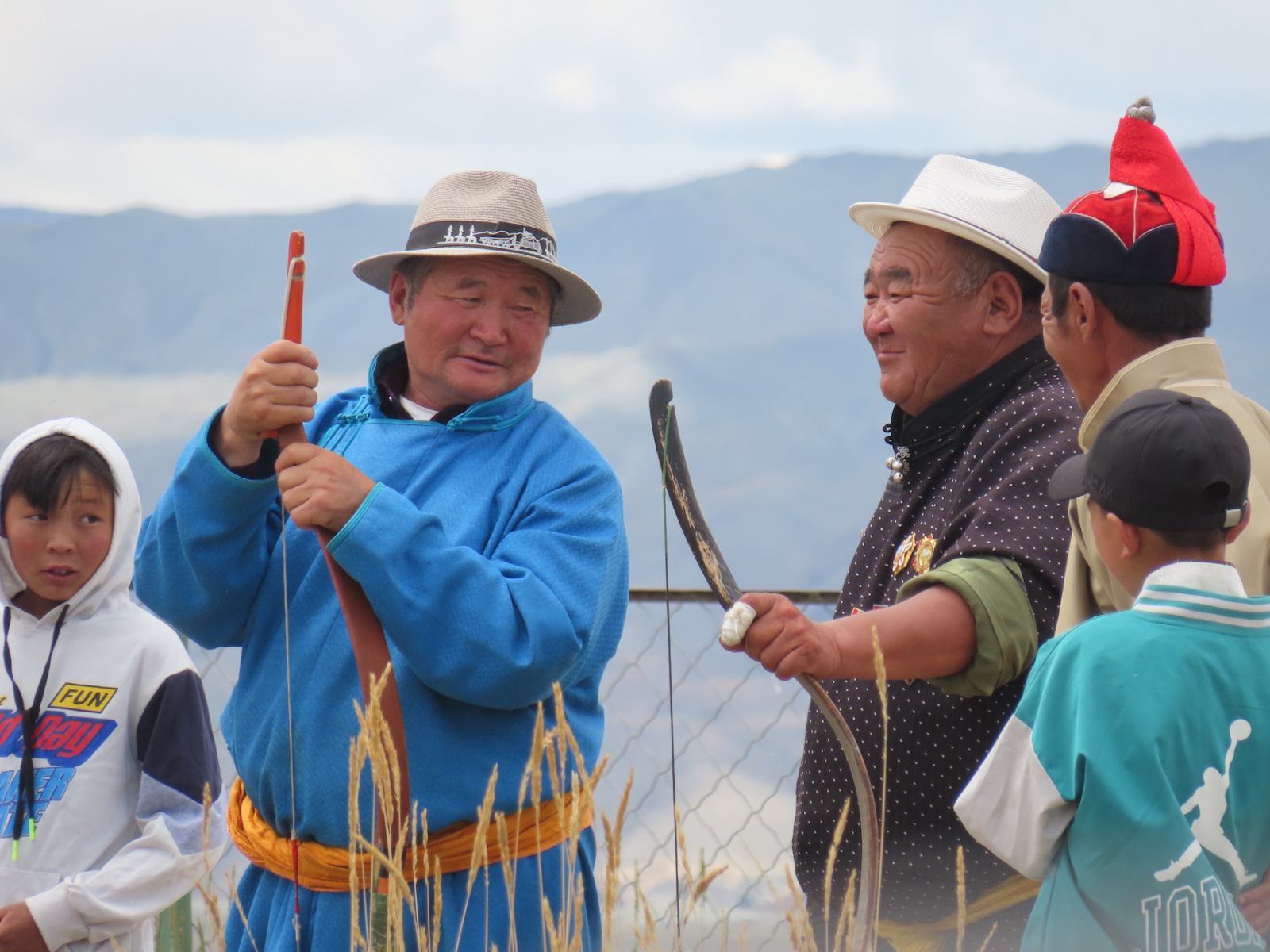
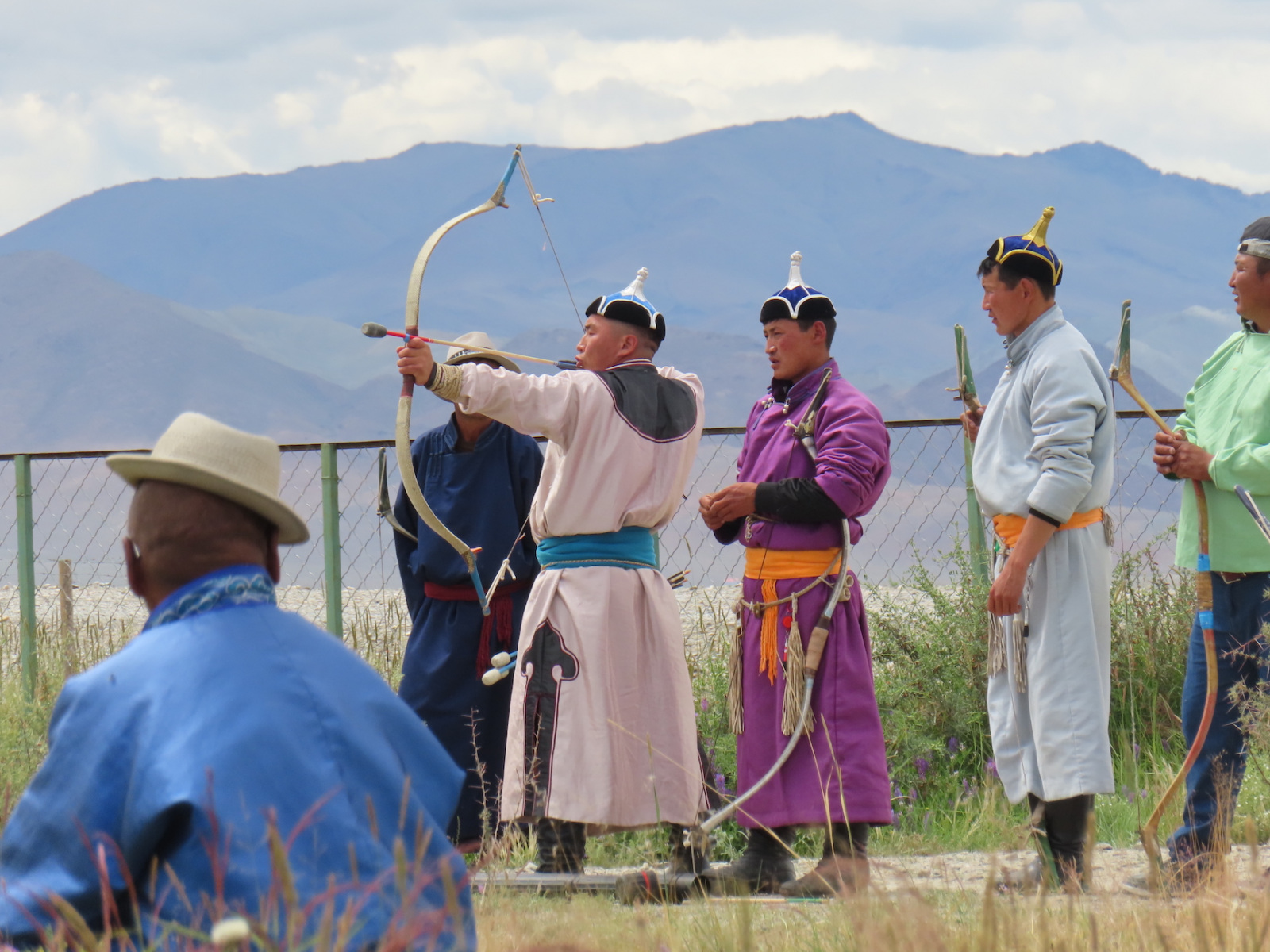
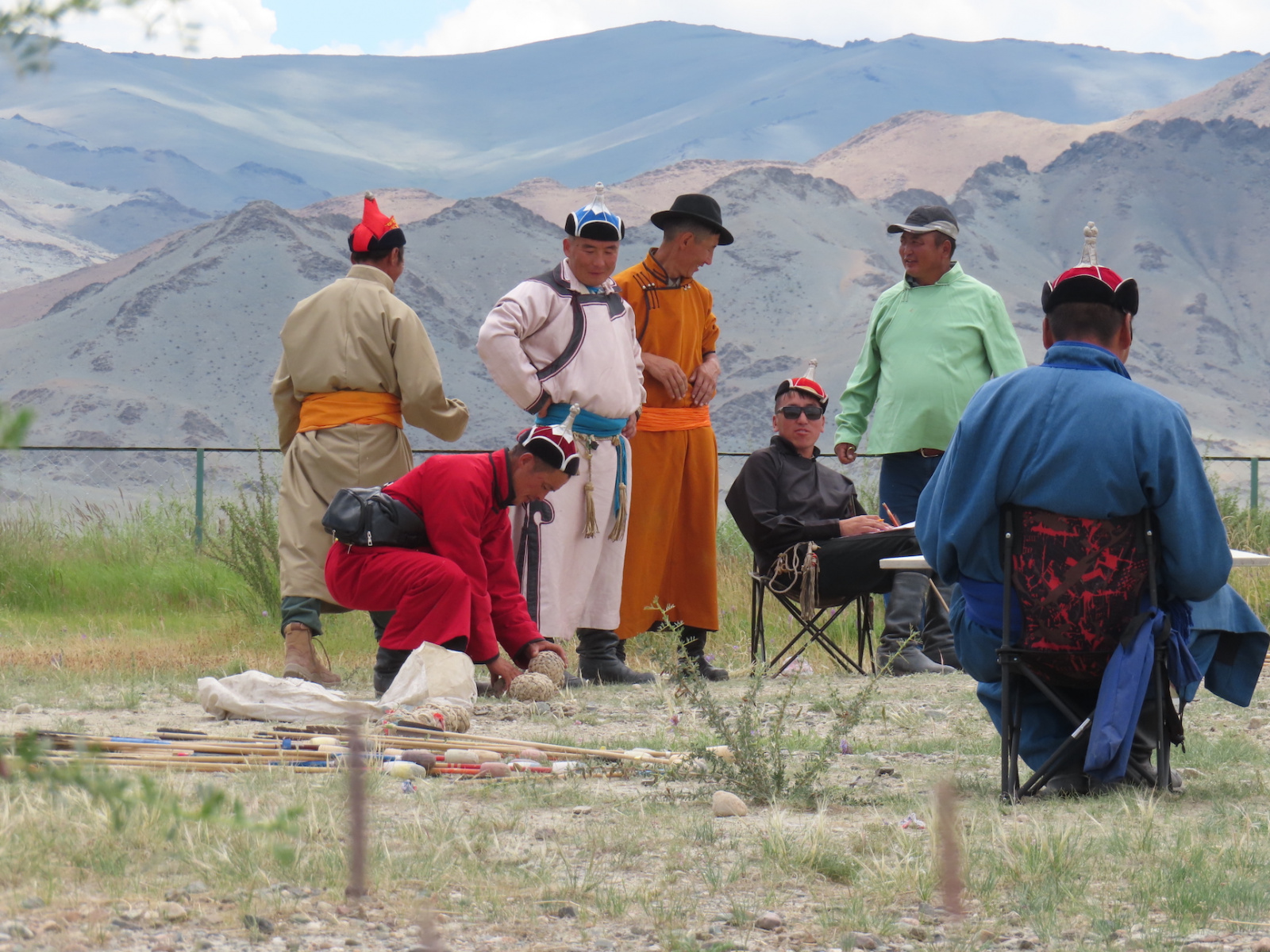
Many of our students greeted us but were keen to find their friends. The mayor spoke, and then a few others. Archery was the first competition, held in a field further down the road. The bows were a relatively soft pull, with arrows whose points were covered in a leather or cloth ball. The goal was to lob the arrow such that it would strike just to the front of a large ball of what appeared to be twine, on the ground, causing it in turn to roll backward past a certainly line, but not too far, if I understood the objective clearly. [I recognize that what I observed contradicts the explanation I have read on-line where mention of stacked cylinders must be knocked down. I will review my video to confirm, then reach out to our host family for their explanation.]

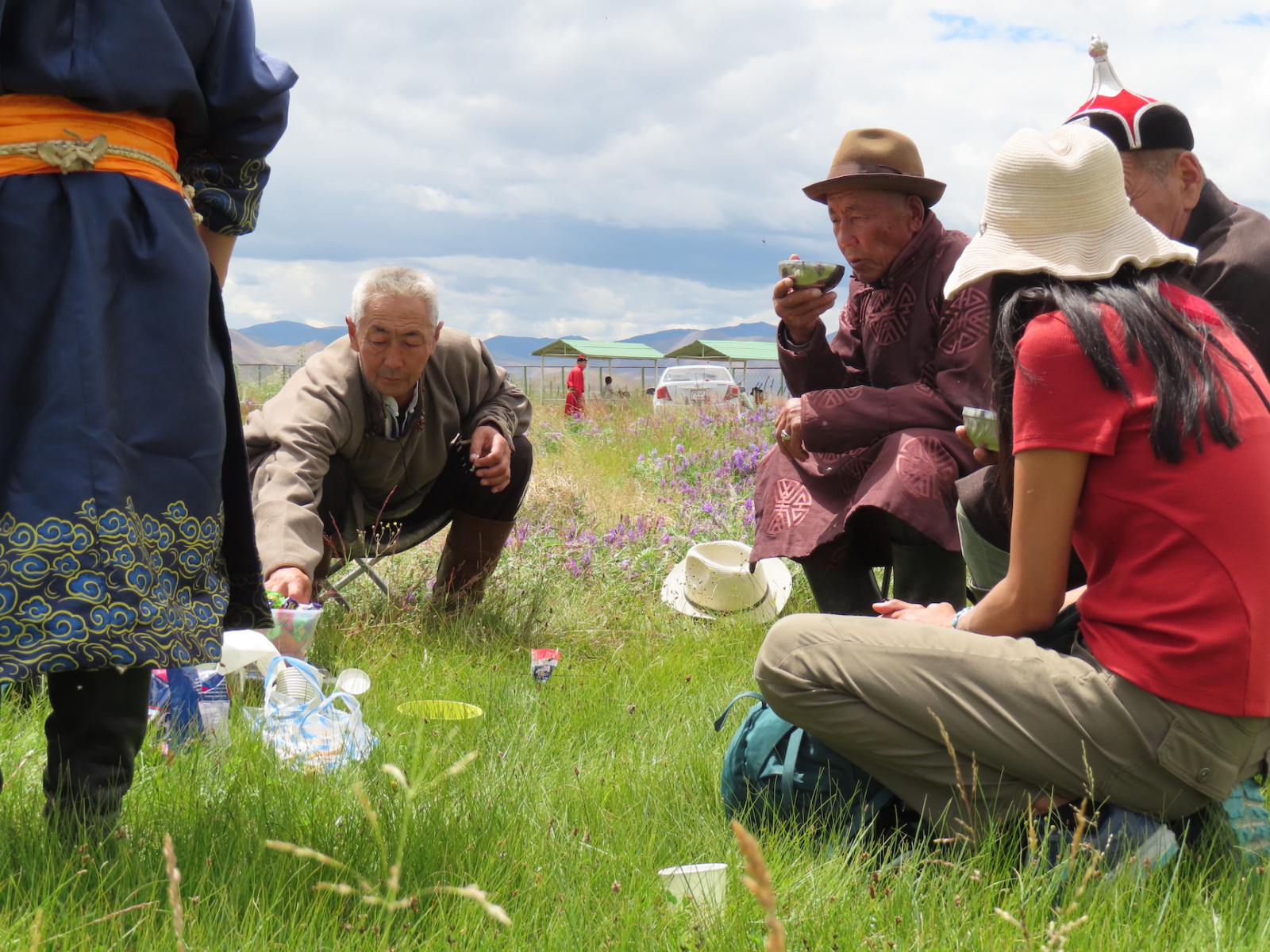
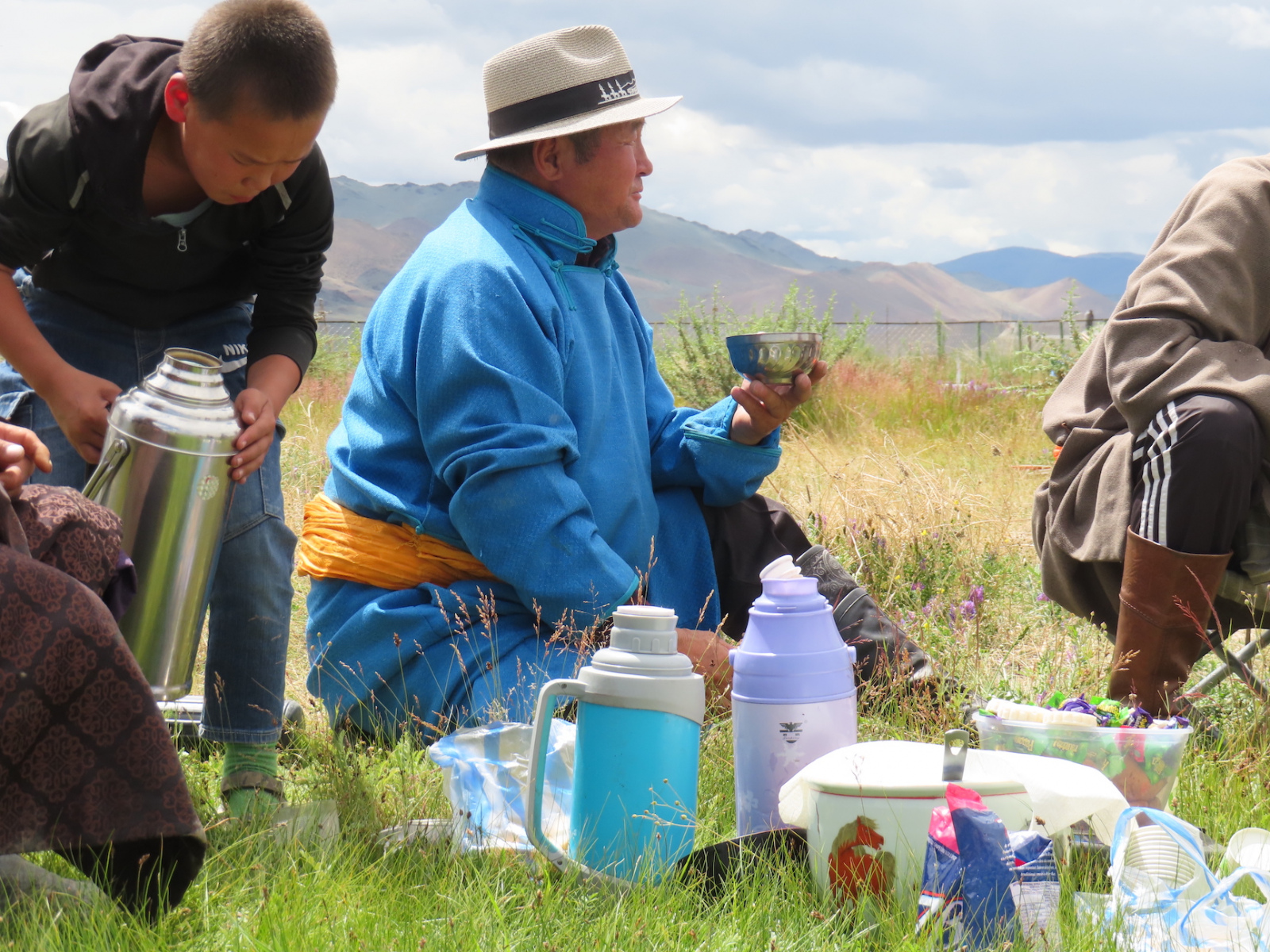
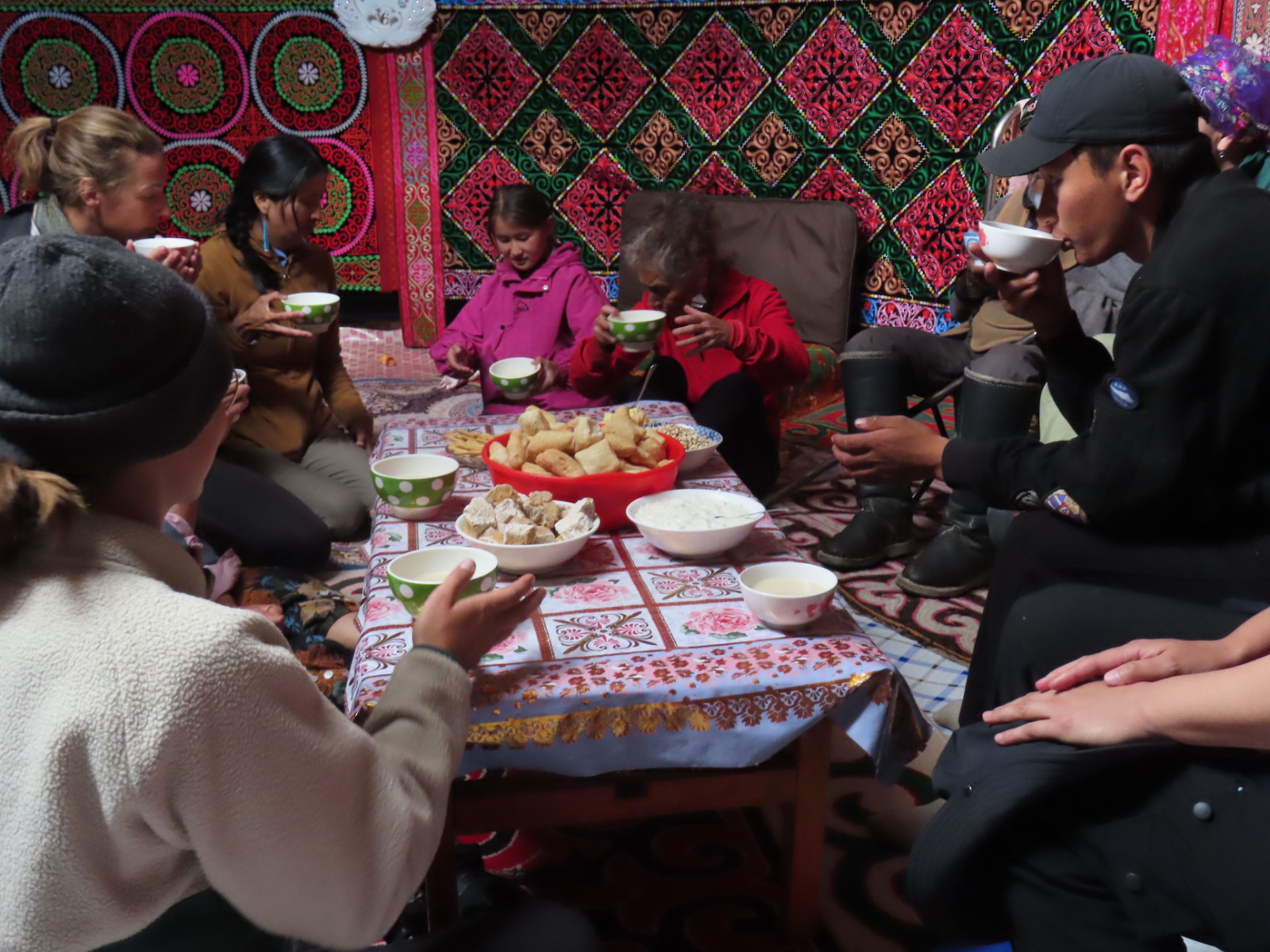
Colleen and I were invited into the fenced area, joining our host who we later learned is an air traffic controller in Ulaanbaatar. With his brother and friends he had been competing for many years, traveling to several Naadam festivals in one week. We were given hot milk-tea, sweet-cheese snacks, and fermented mare’s milk.

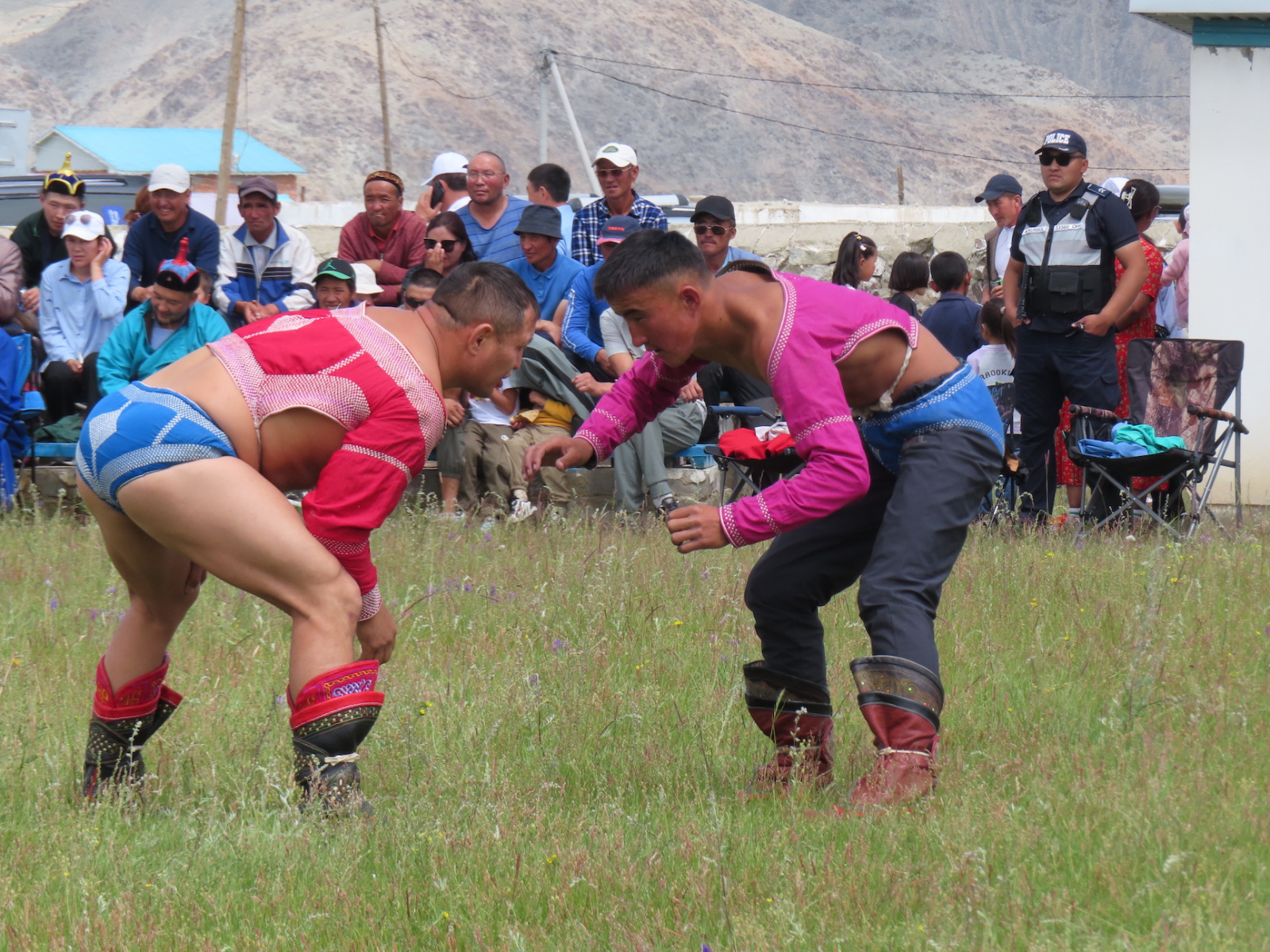
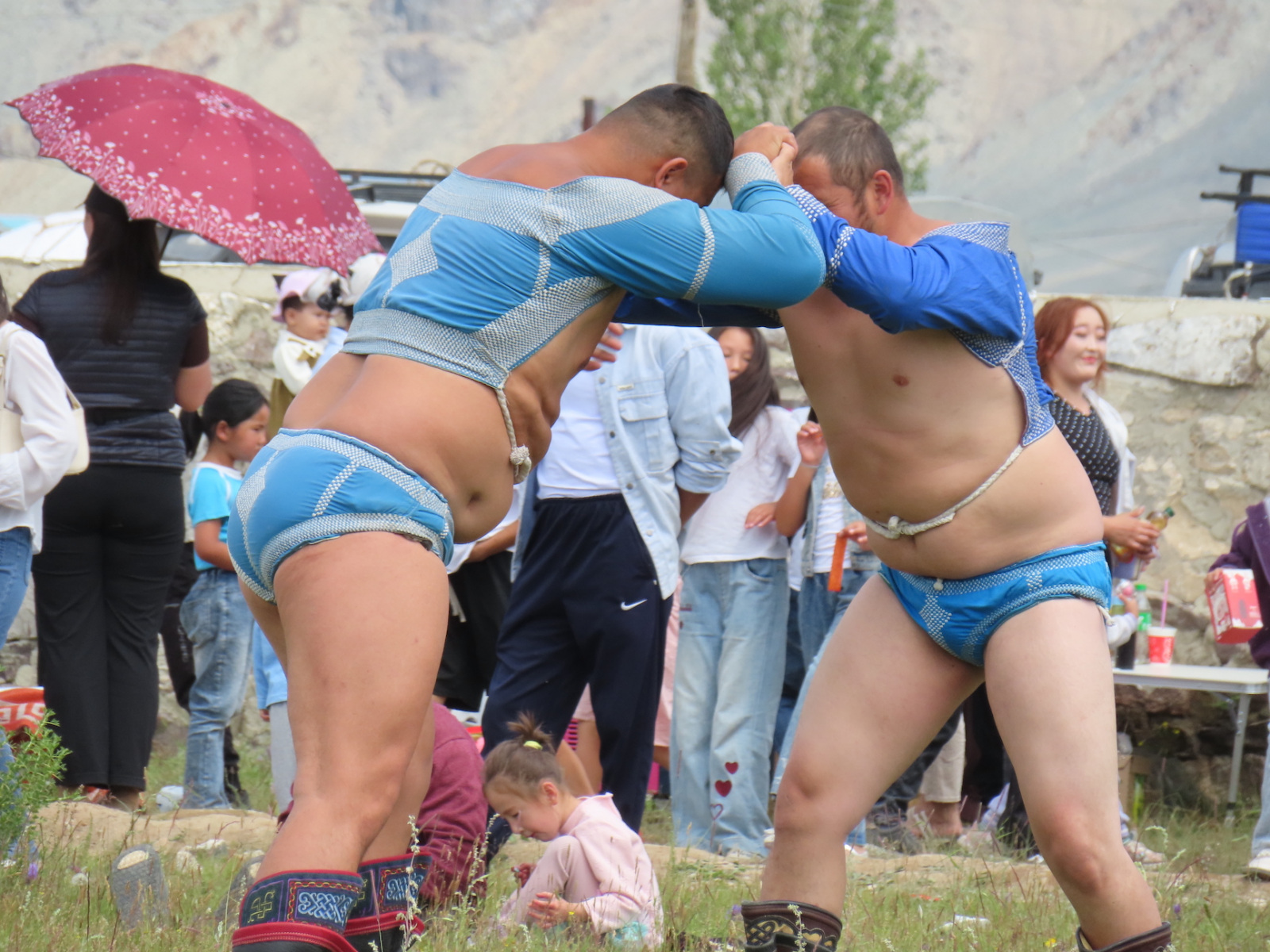
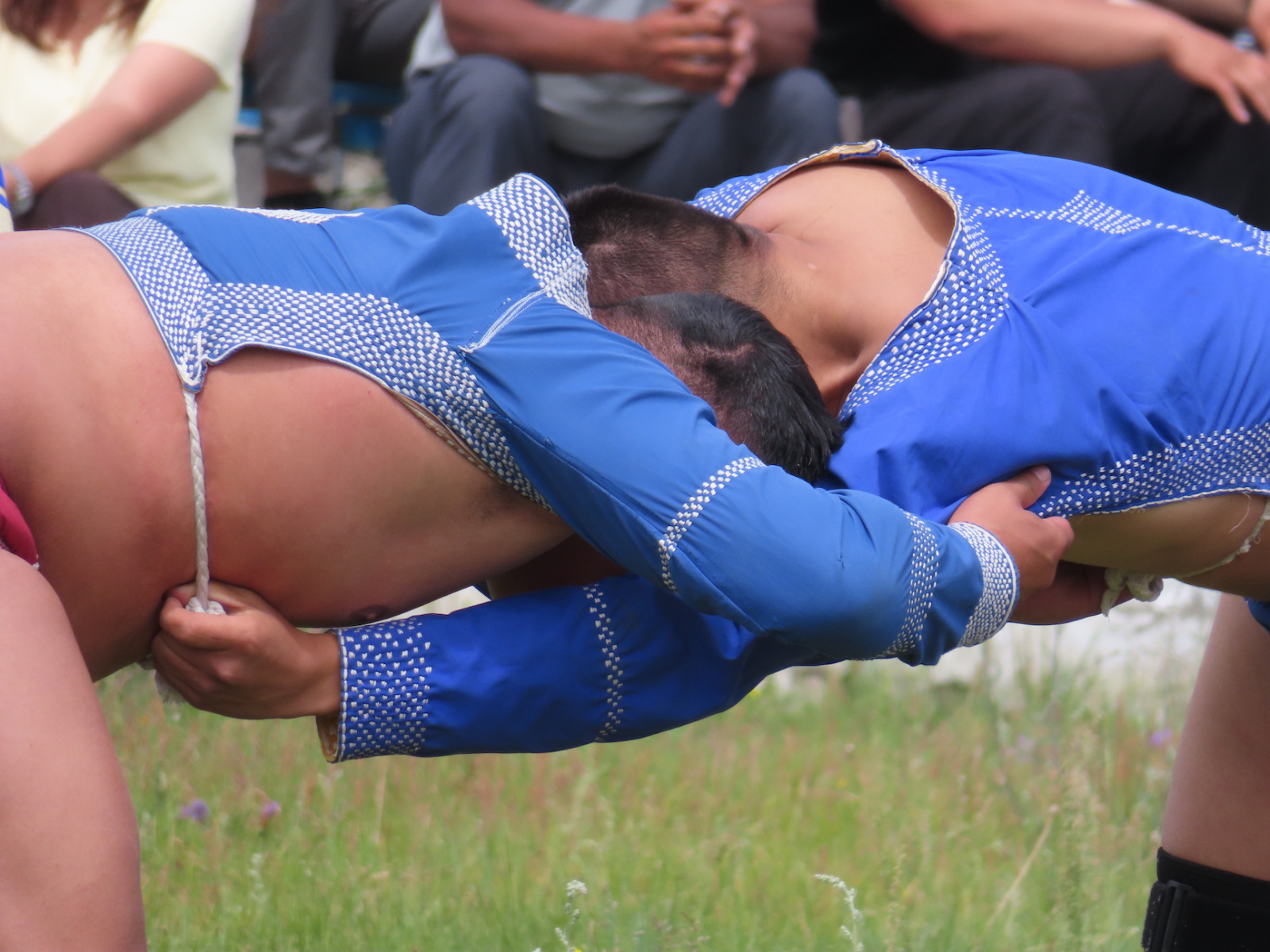
We returned to the main festival to watch the wrestling. In its formality, grace, and obvious application of balance and strength it reminded me of Japanese sumo wrestling. Some of the battles were quick to be over, while others found the two men in a single, share posture long enough to have been mistaken for a statue, only to be broken again by one quick, ultimate move. The take-downs were far from brutal. Rather, as English teacher Esther noted, they were gentle. And when the the round was won, there was a demonstration of flight with the motion of arms outstretched and legs prancing. It didn’t feel like the goal-post antics of the NFL players, but a demonstration of respect for the opponent and the sport.

The horse racing was perhaps the most engaging, but Colleen and I needed time to ourselves after an intense three weeks. We opted to just sit on our fold-out bed and drink tea, eat biscuits, and write emails. It was a wonderful way to close a day of observing and learning in Mongolia.

By |2025-08-17T00:57:13-04:00July 9th, 2025|From the Road|Comments Off on Naadam Festival, Sagsai, Mongolia

Altai National Park, south, Mongolia

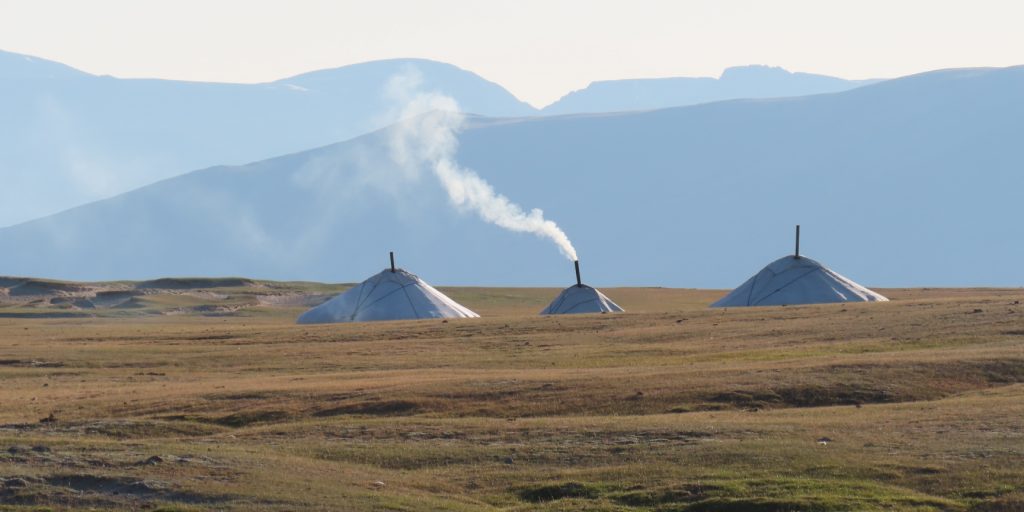
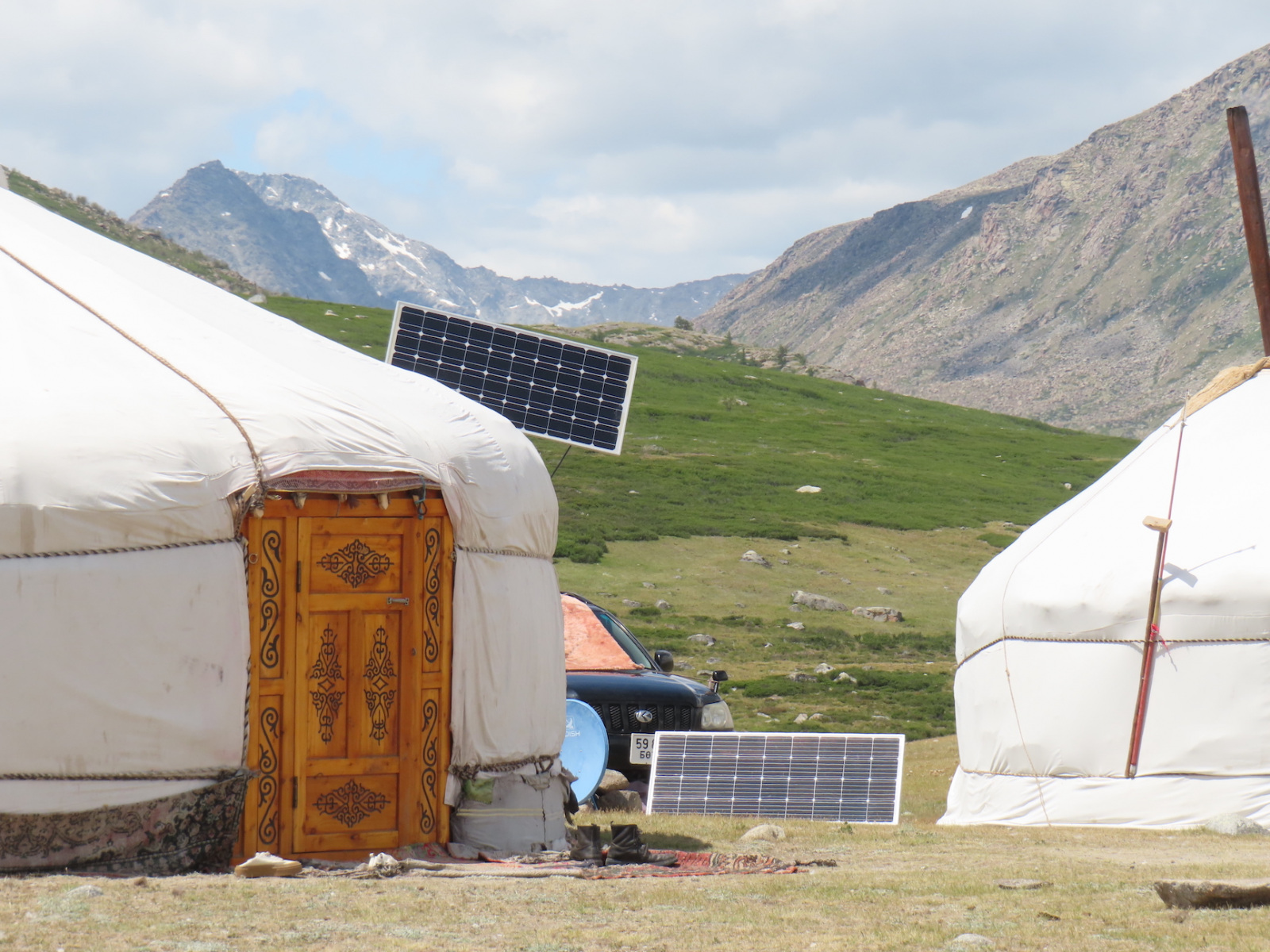
Three gers, Altai National Park, Mongolia

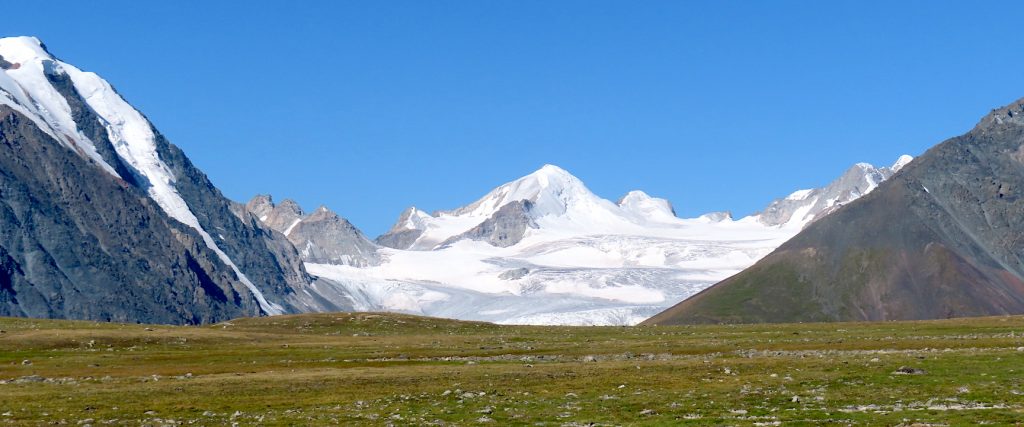
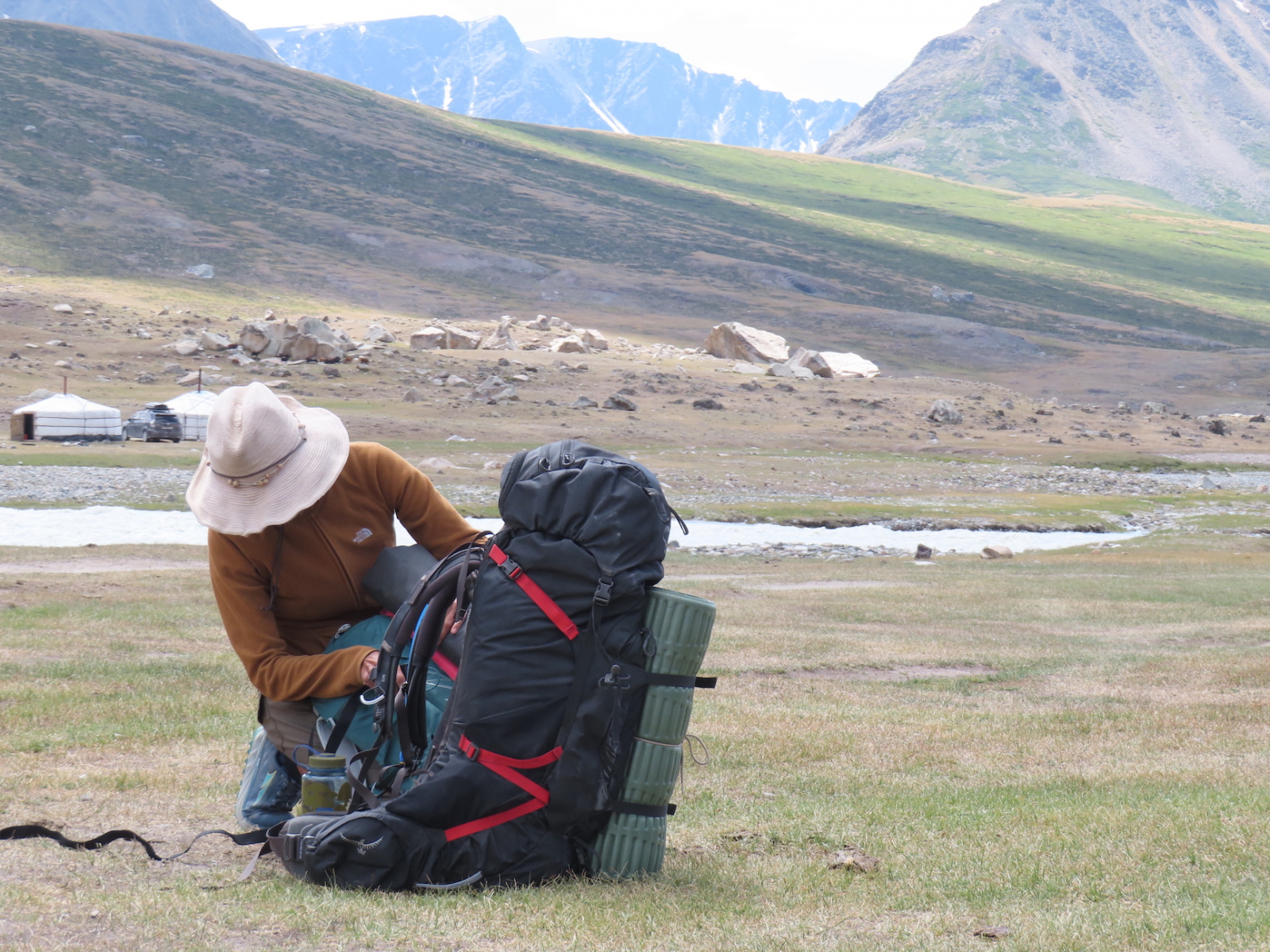
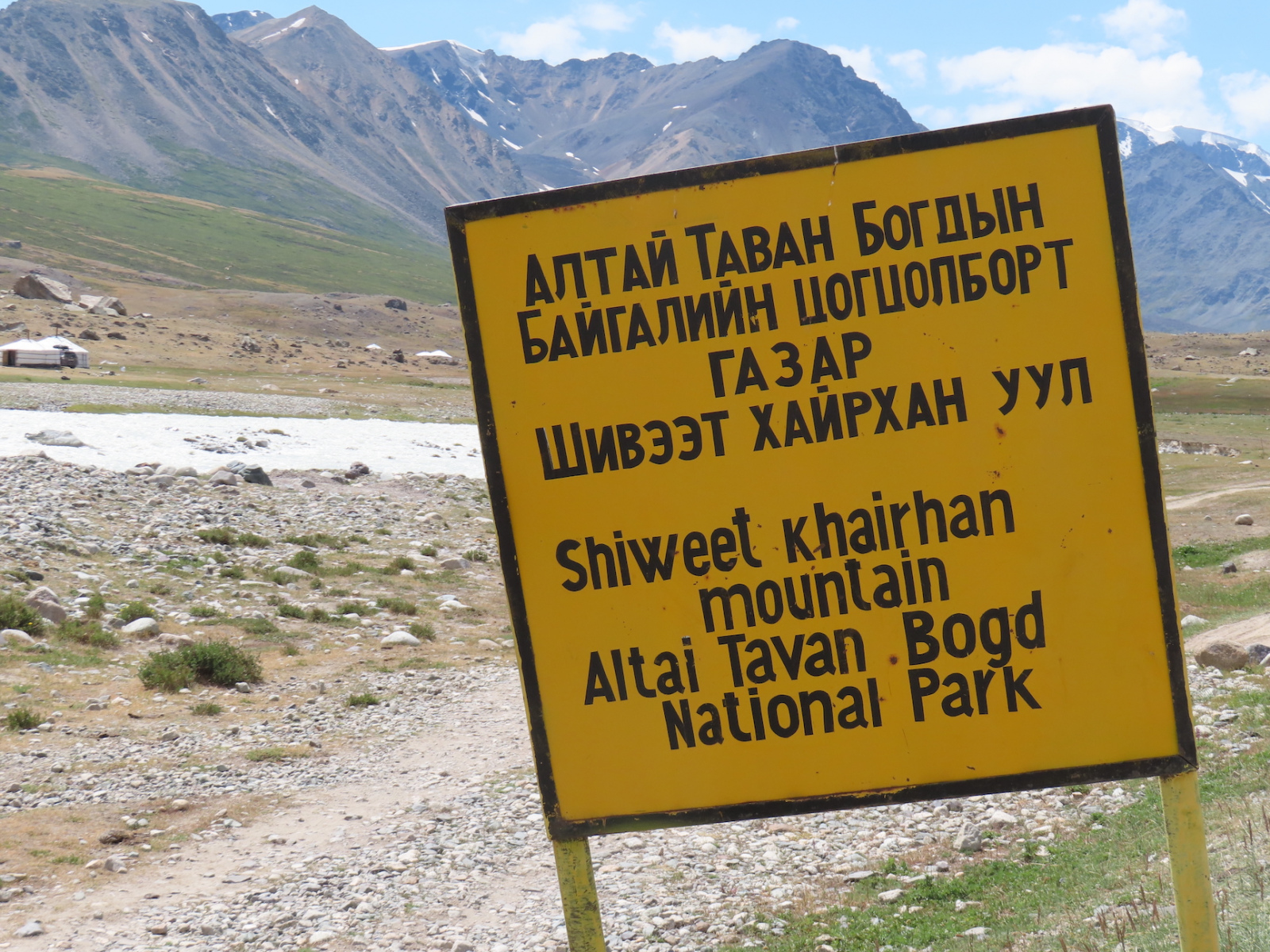
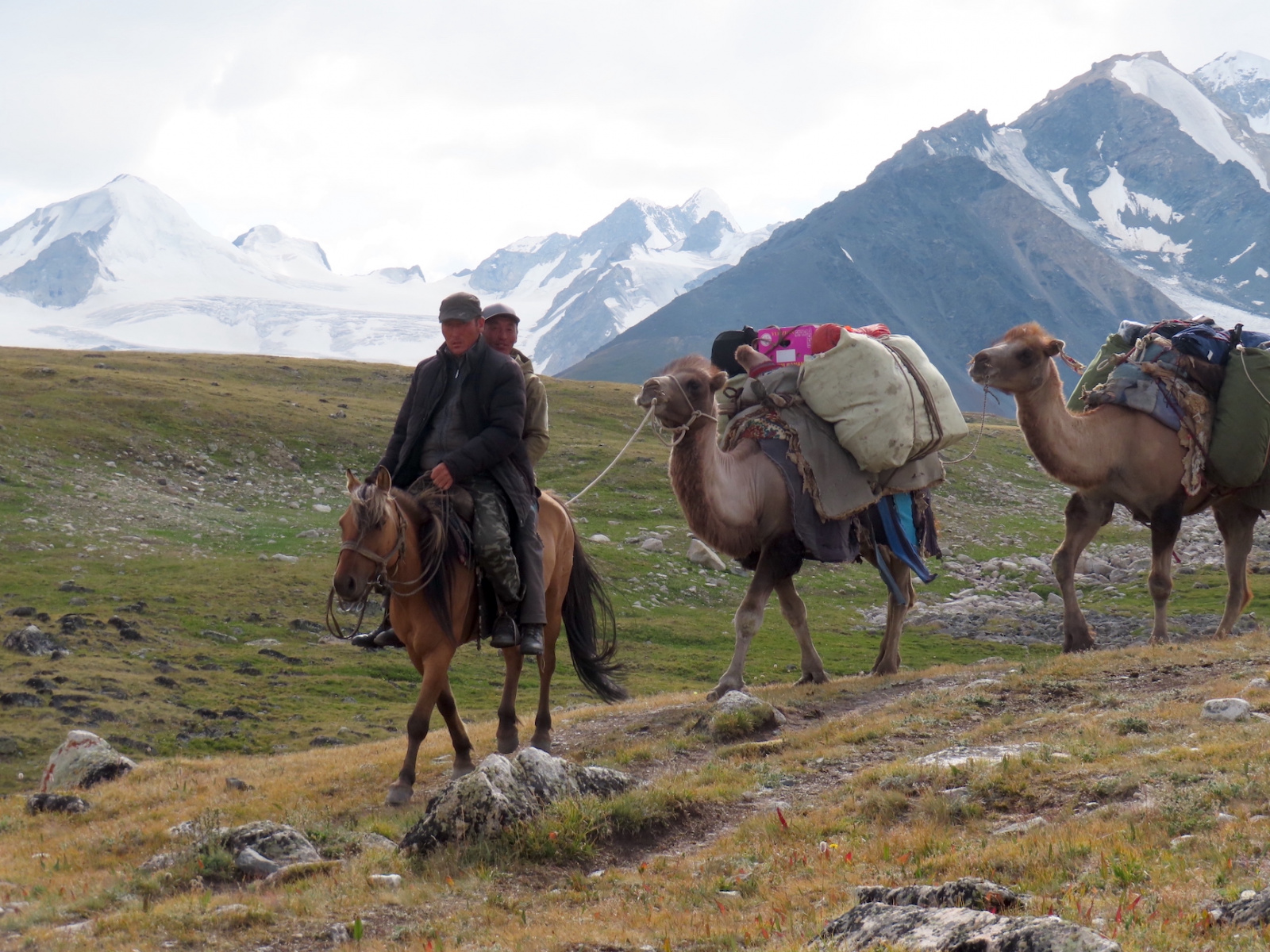
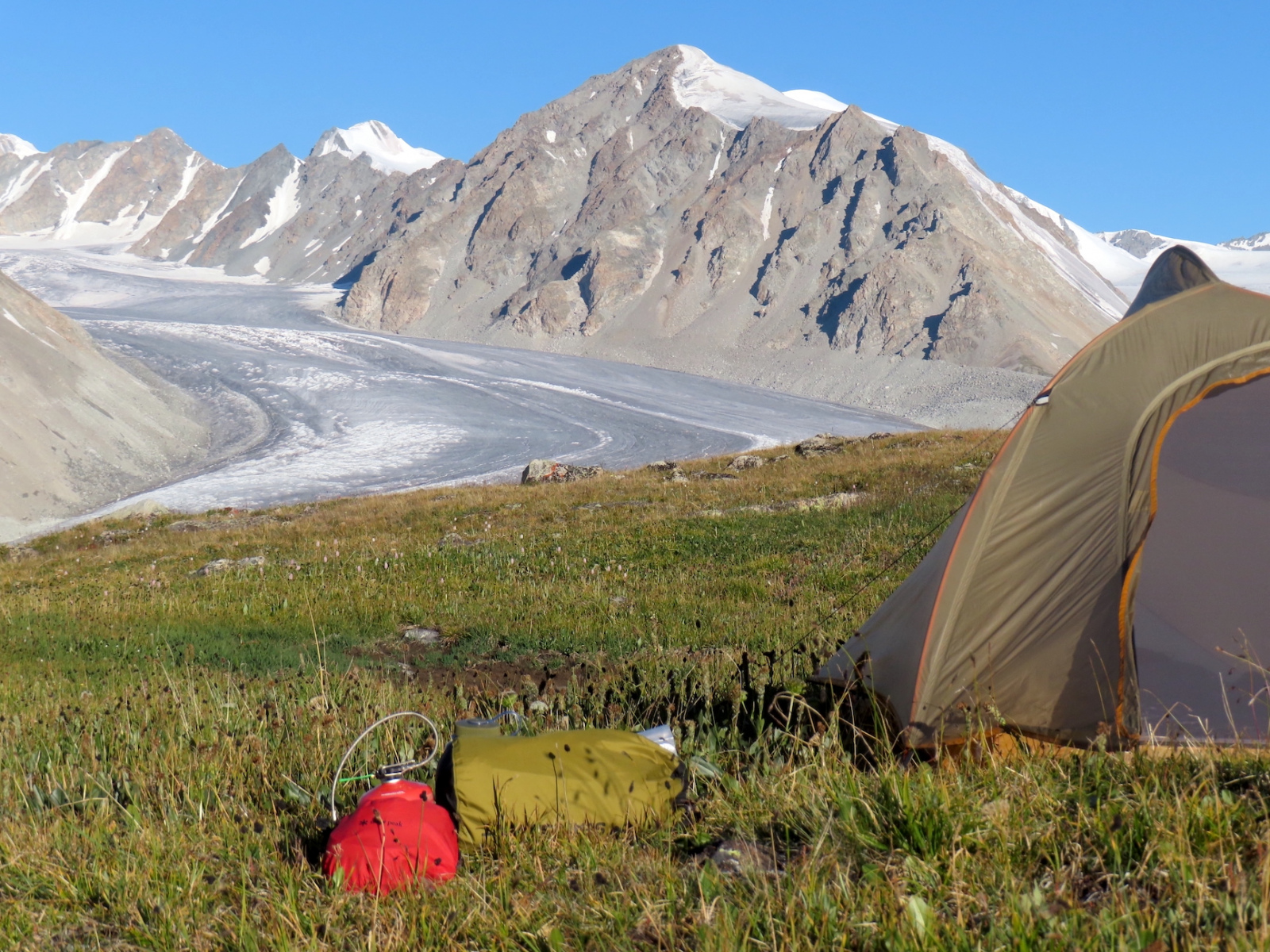
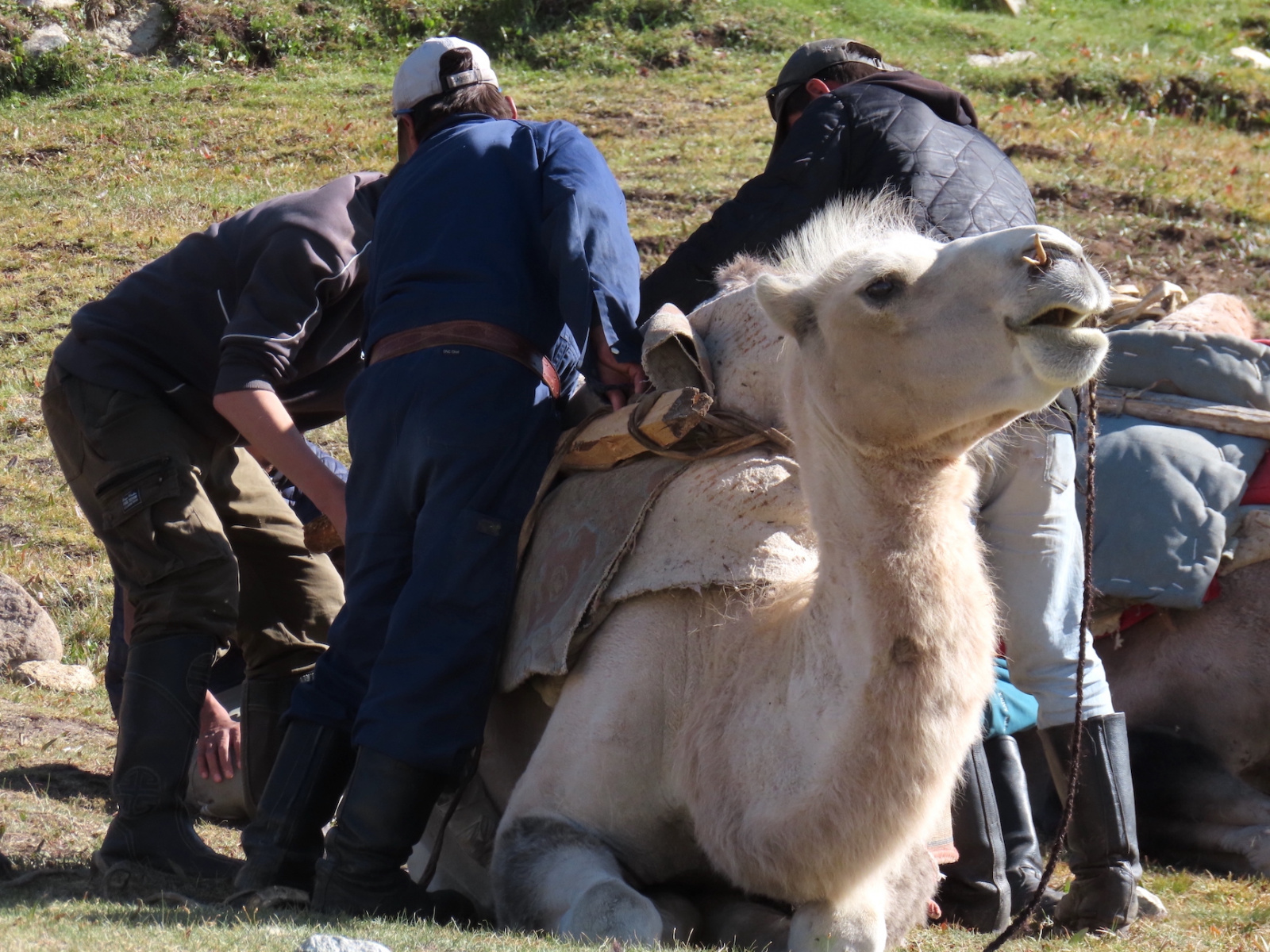
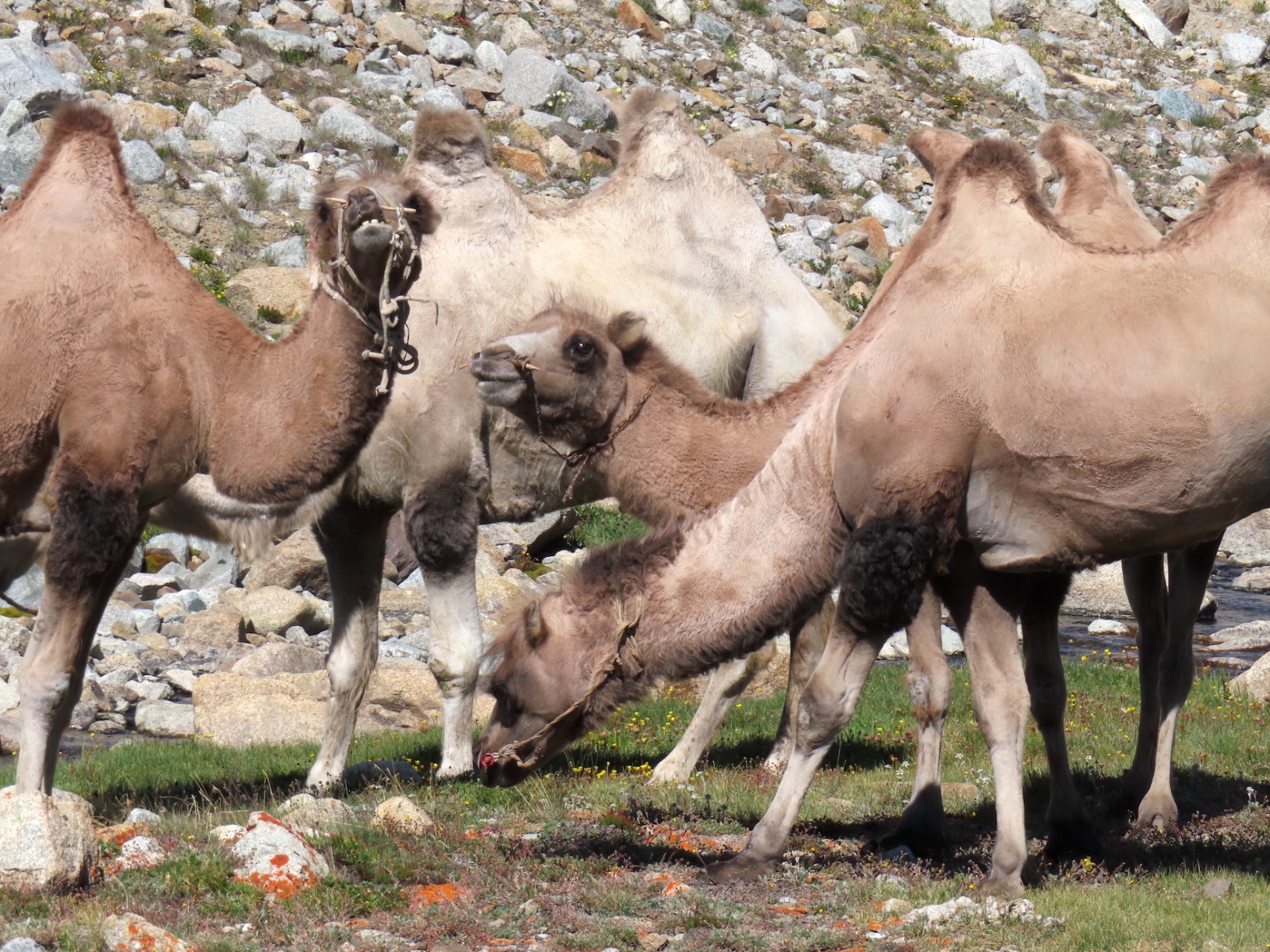
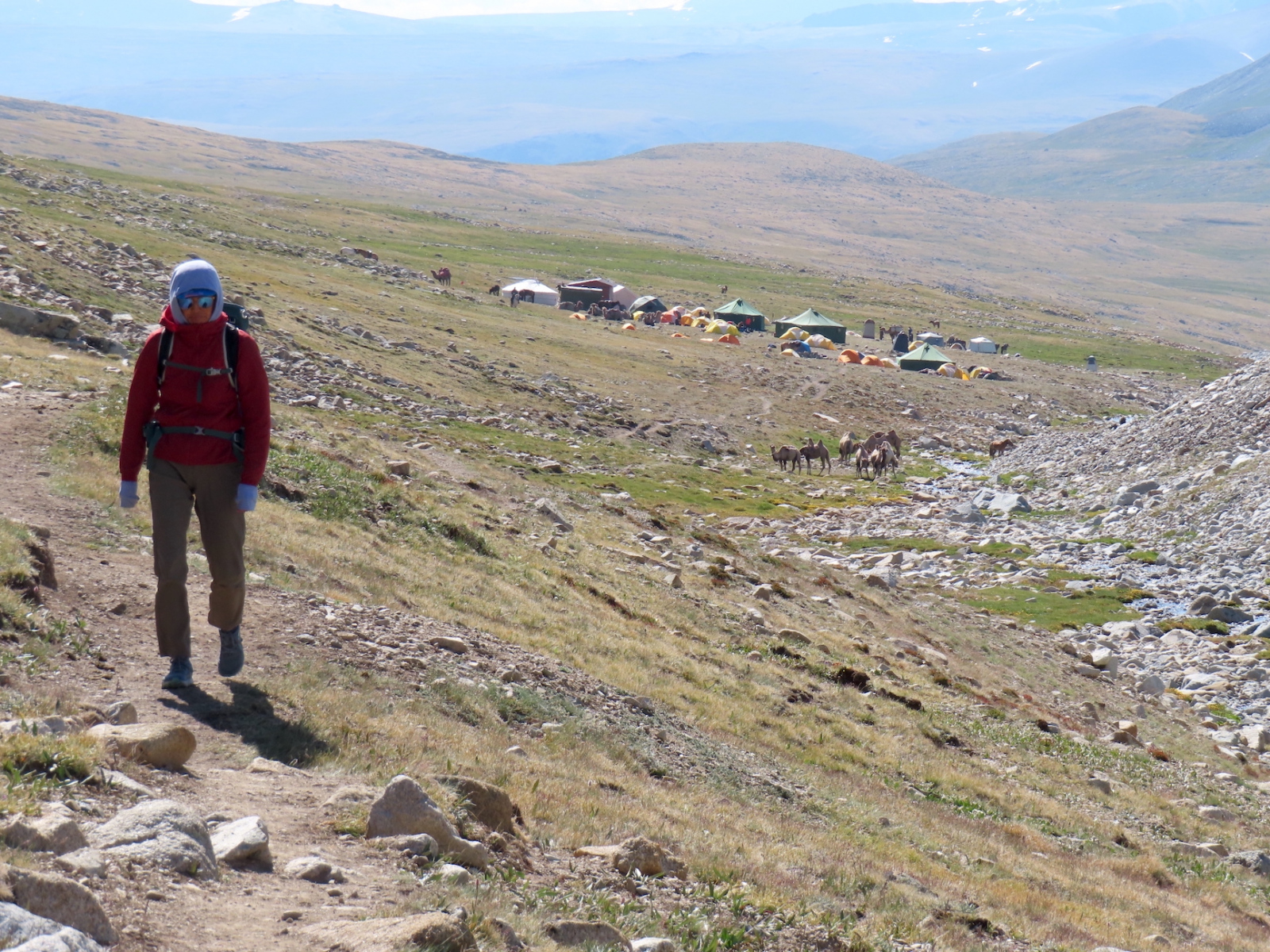
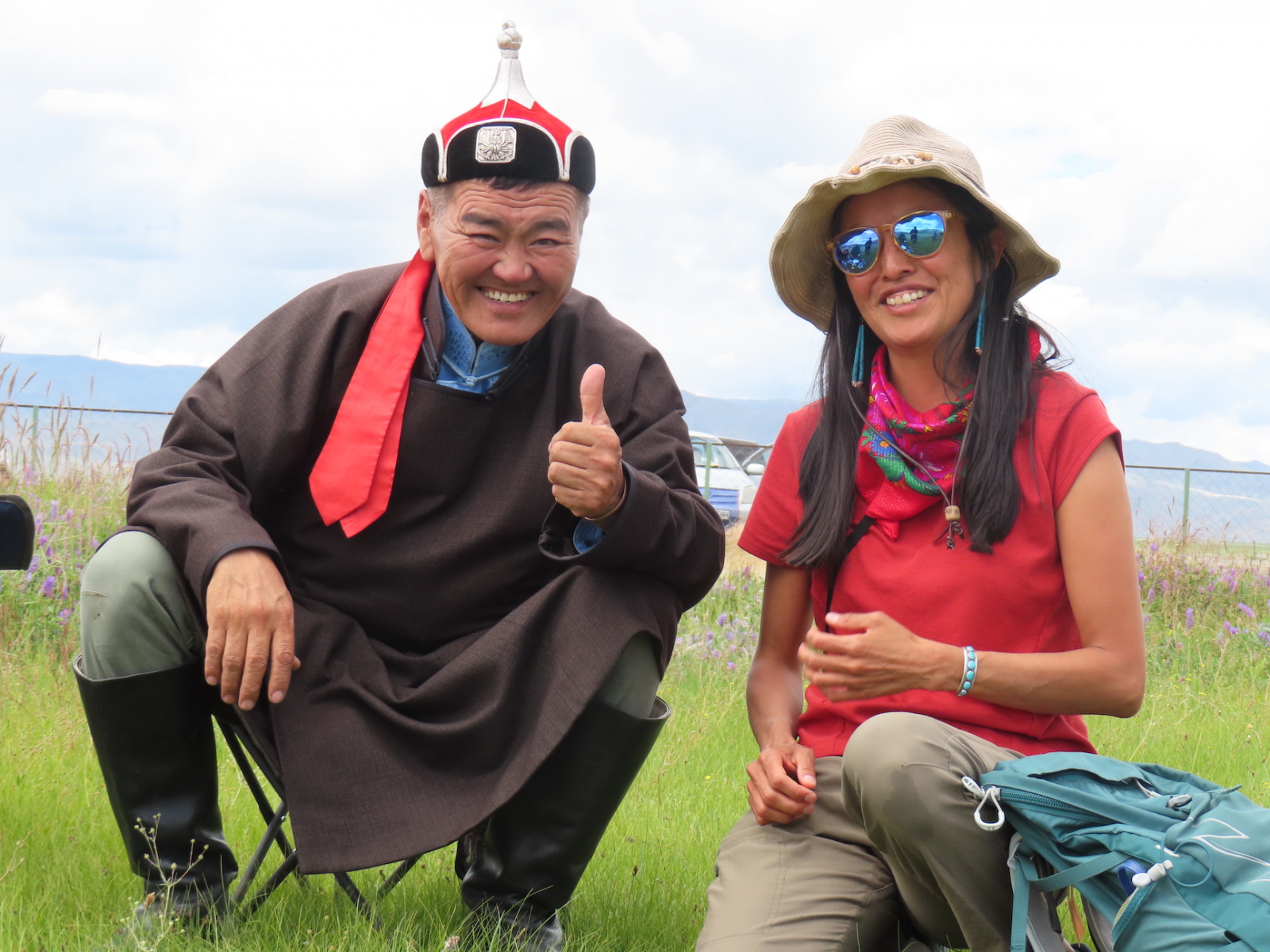
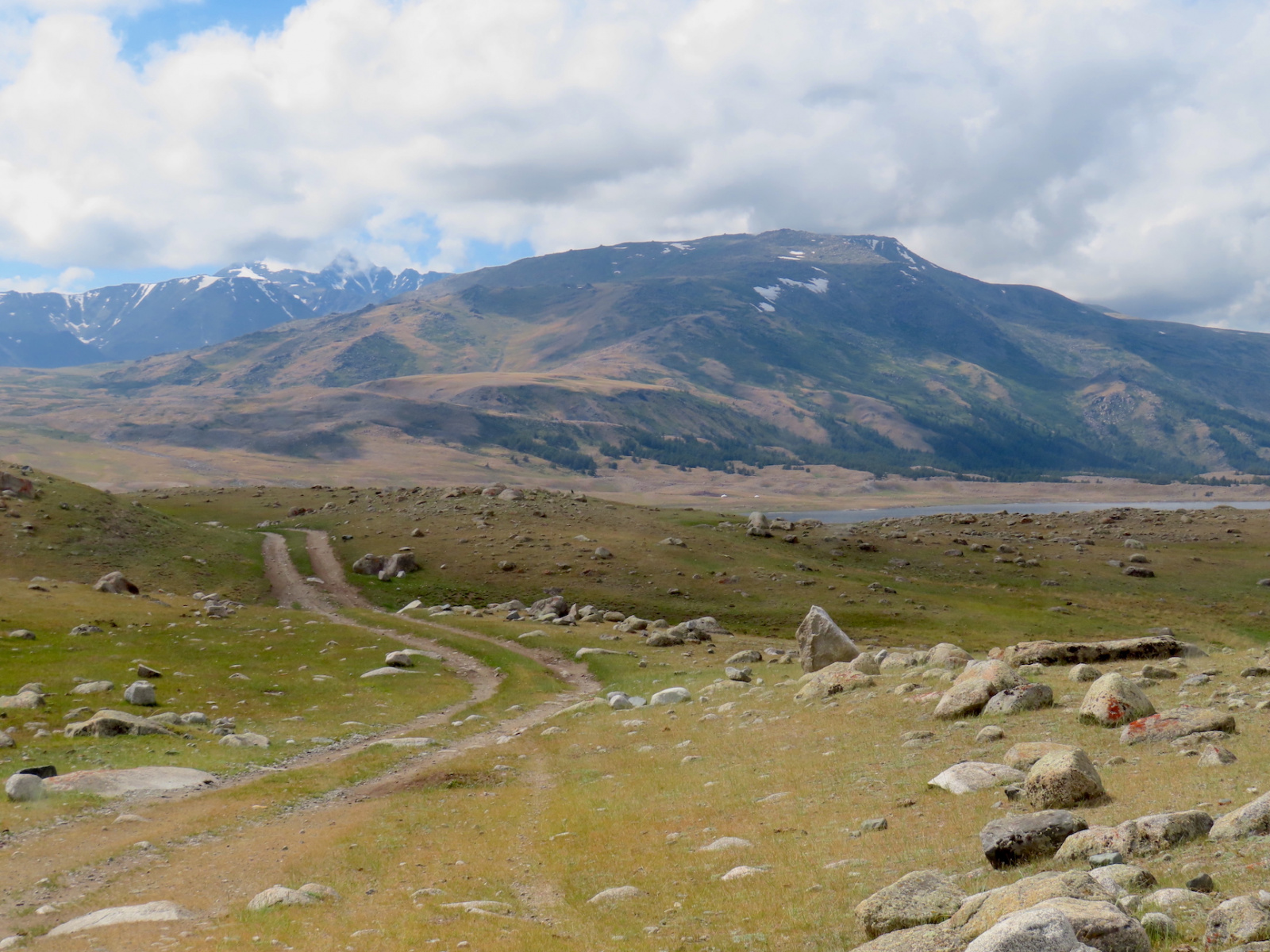
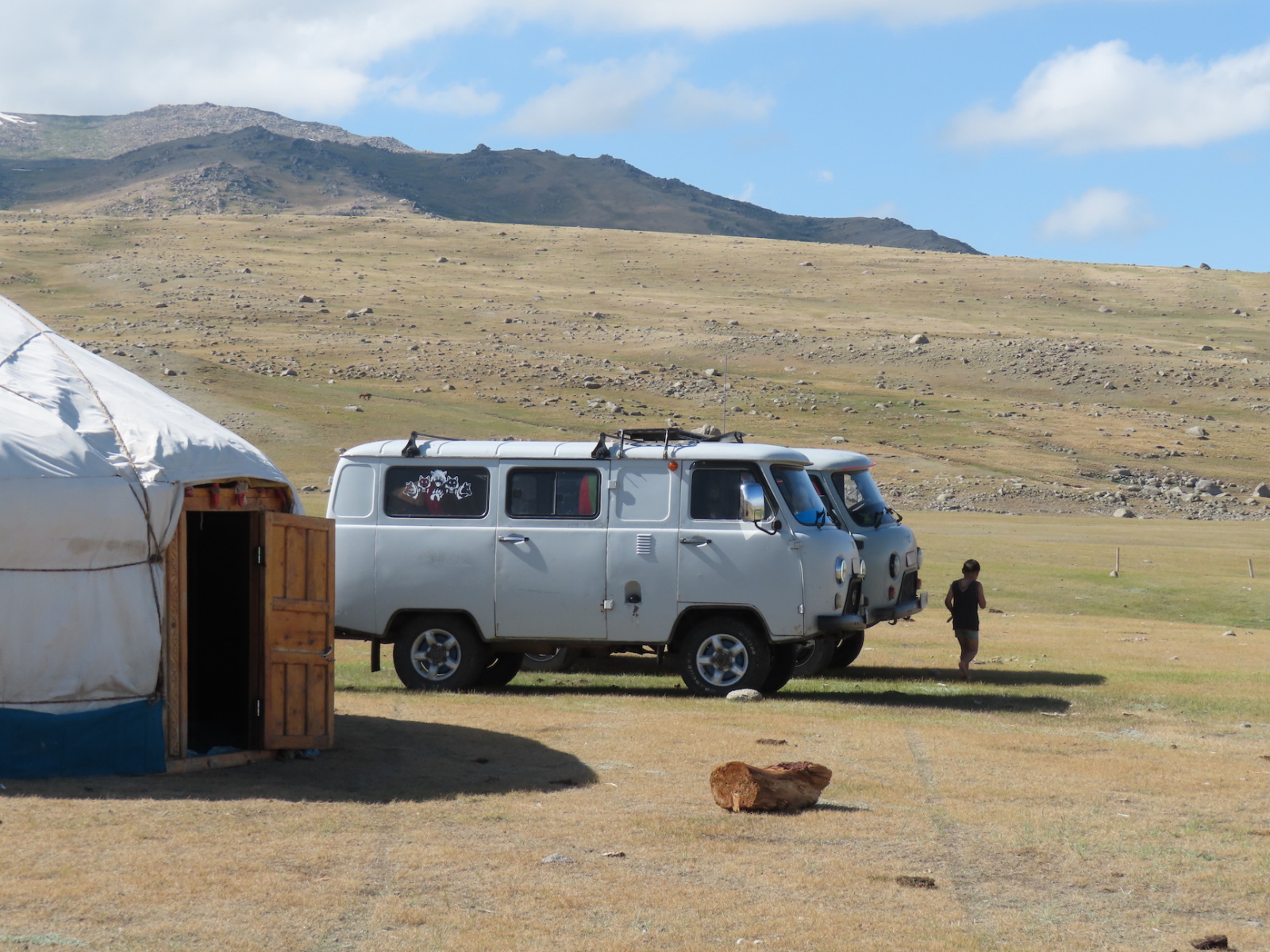
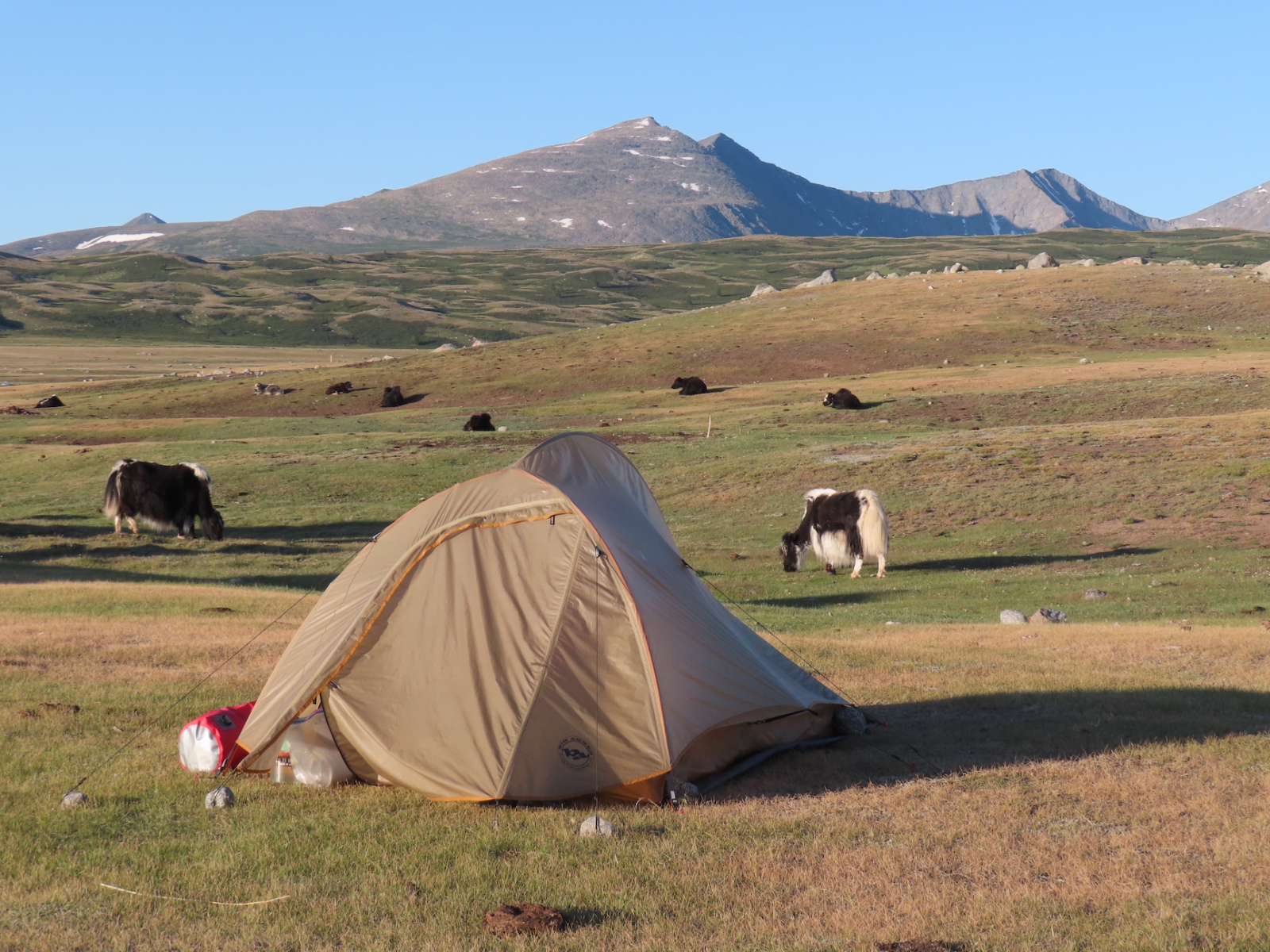
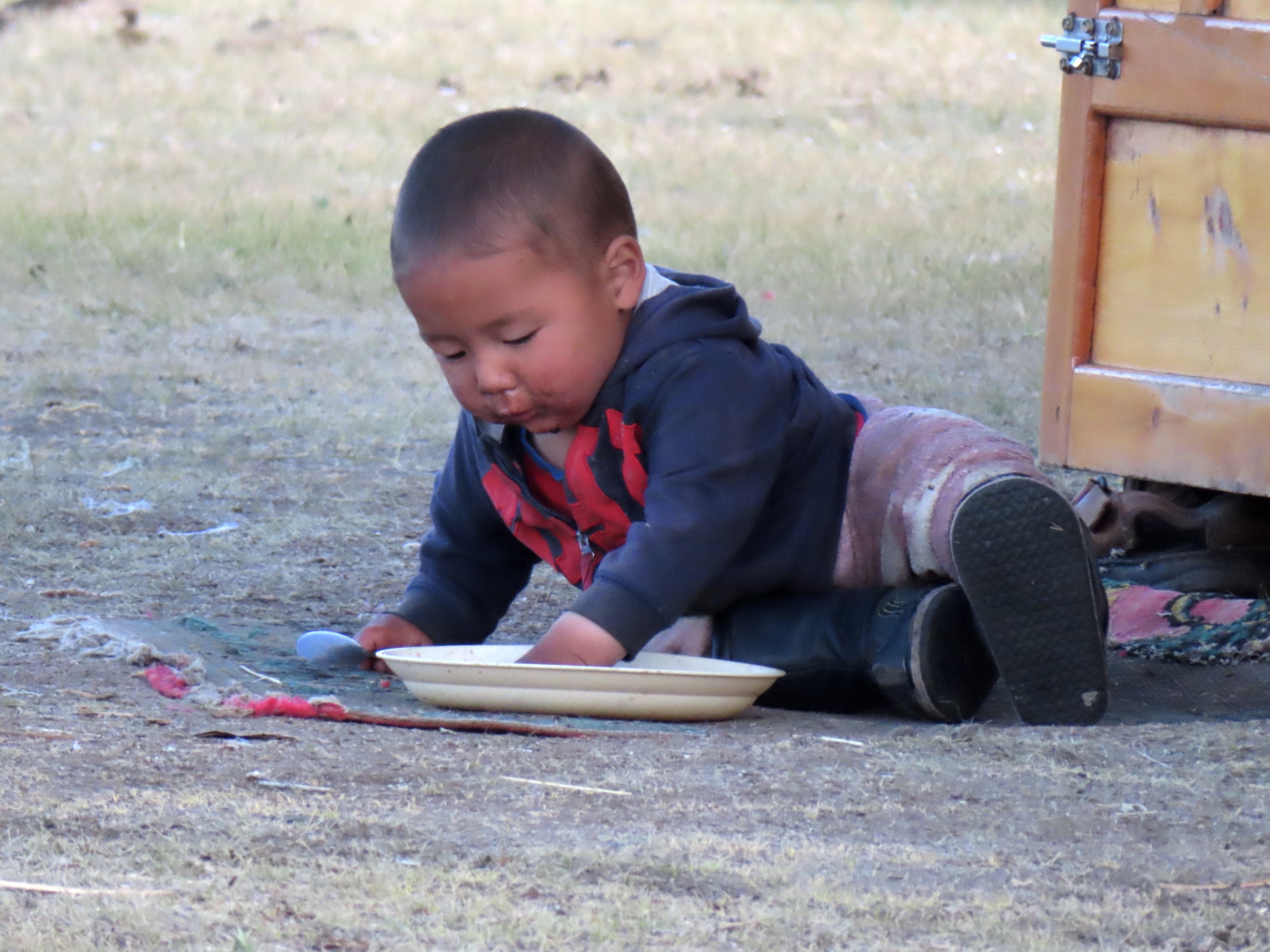
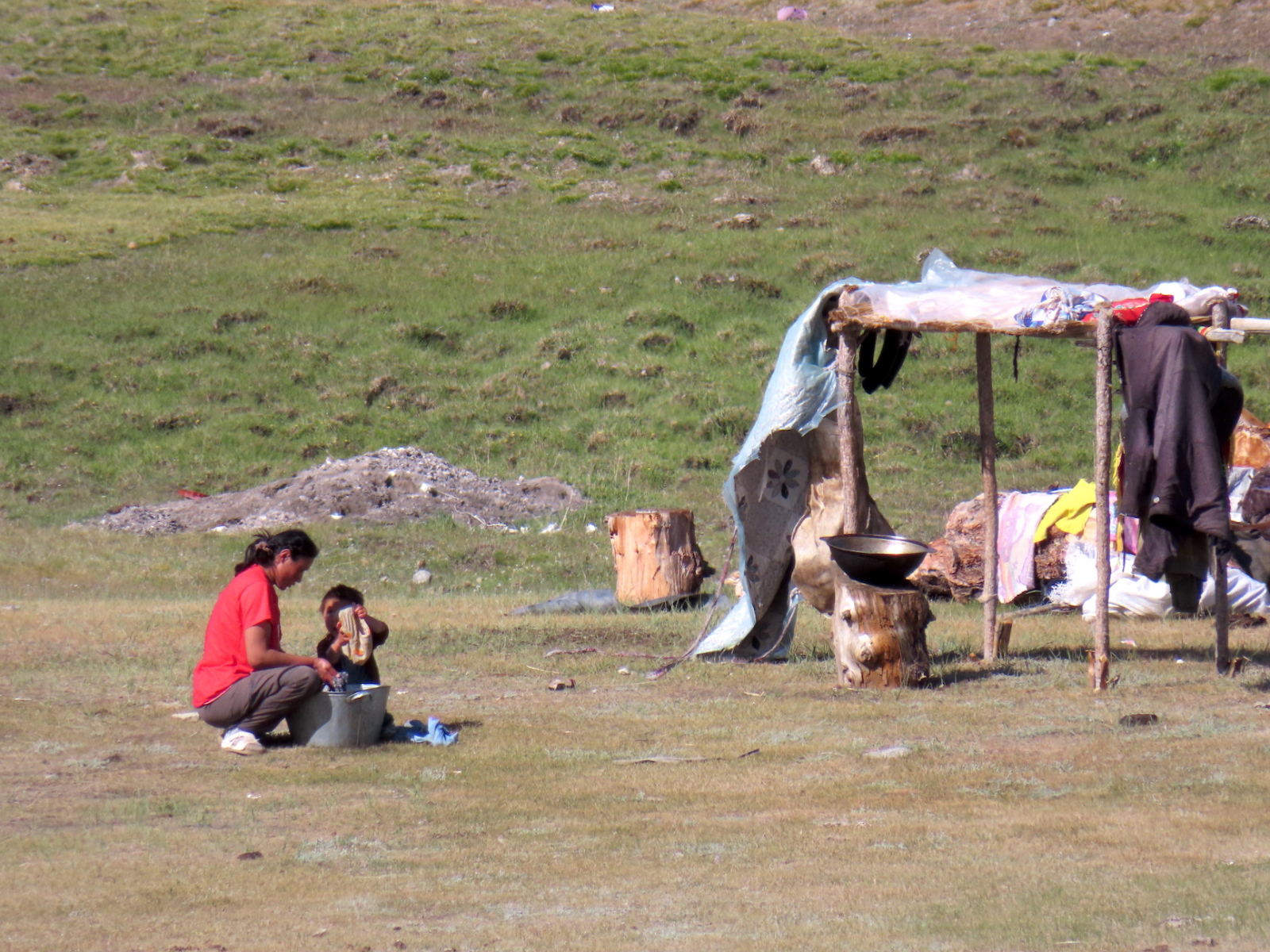
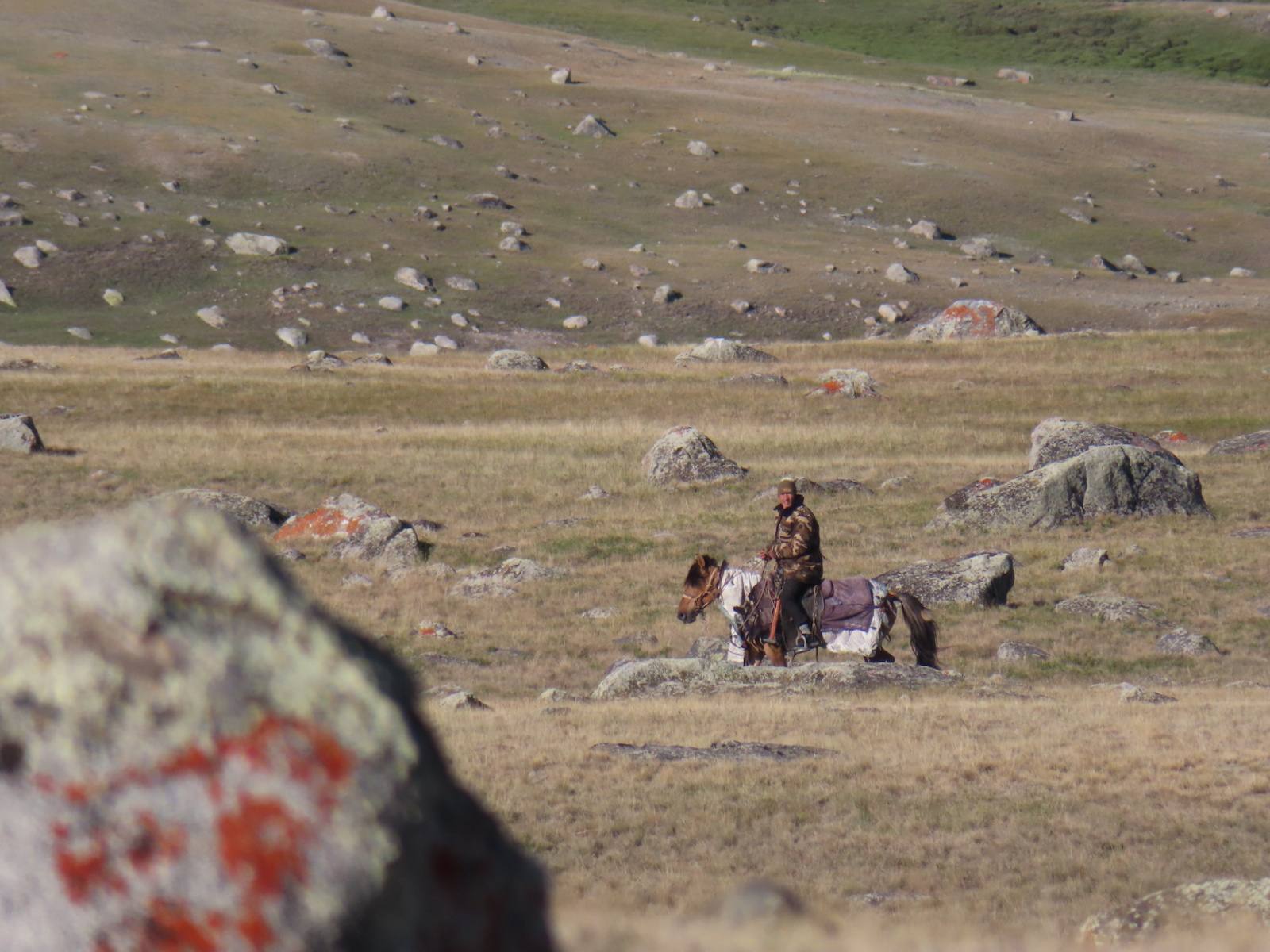
With the close of our second week in Mongolia, mid way through teaching at the Khusvegi English & Nomadic Culture Camp, American teachers Esther and Atina, students Inju and Sunkar, and visitors from Germany Maria and Anna joined teacher, tour guide, and camp co-founder Bakhitgul Altaya (“Bakha”) and Sagsai teacher Naska on a trip to the southern end of the Altai Tavan Bogd National Park. We ventured to the summer home of the nomadic herders, a valley principally occupied by families from Sagsai. We were guests of Bakha’s brother Erkin and his wife Kunai, a second ger (yurt) setup to house us, and to provide a place to cook.

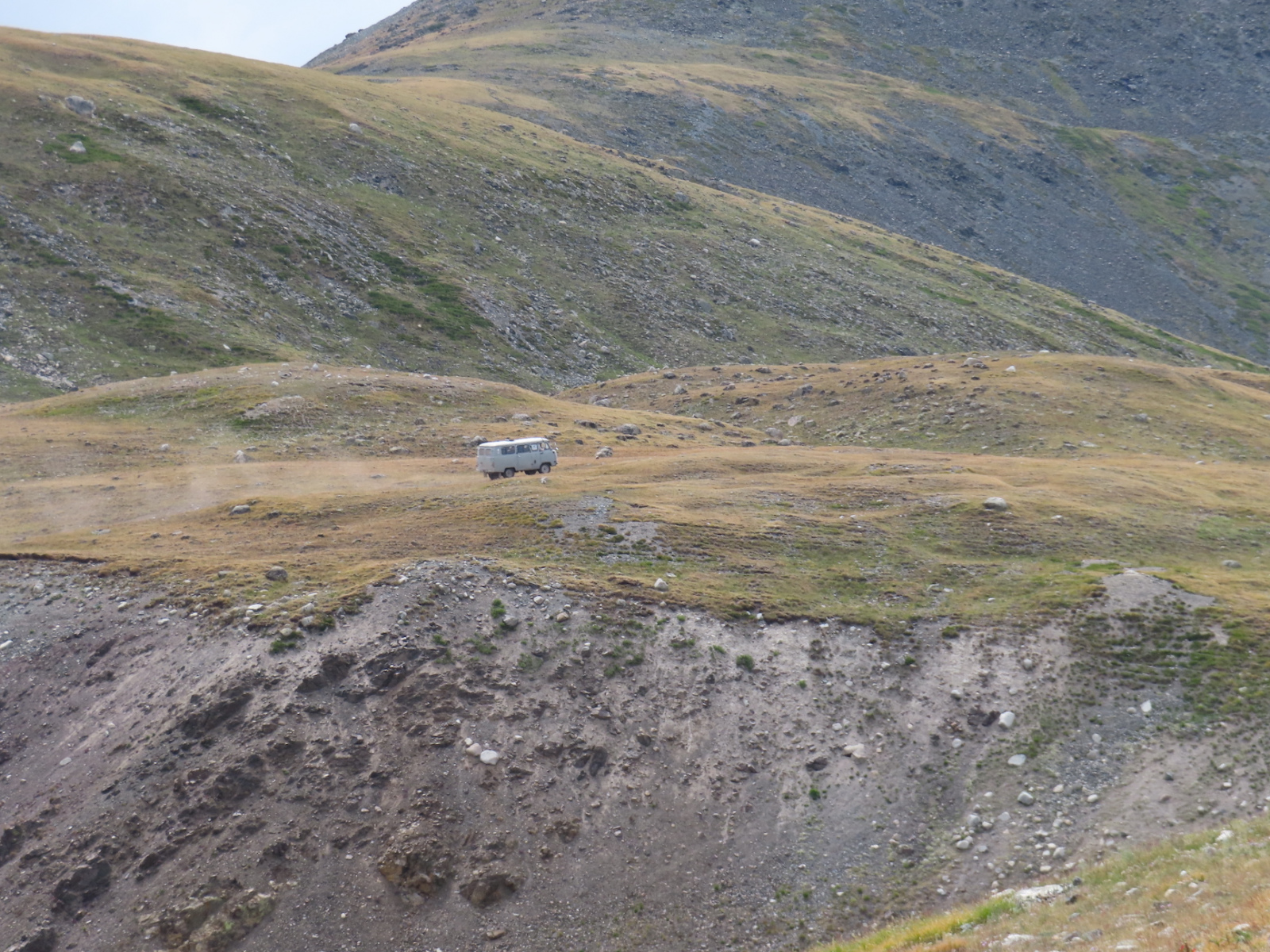
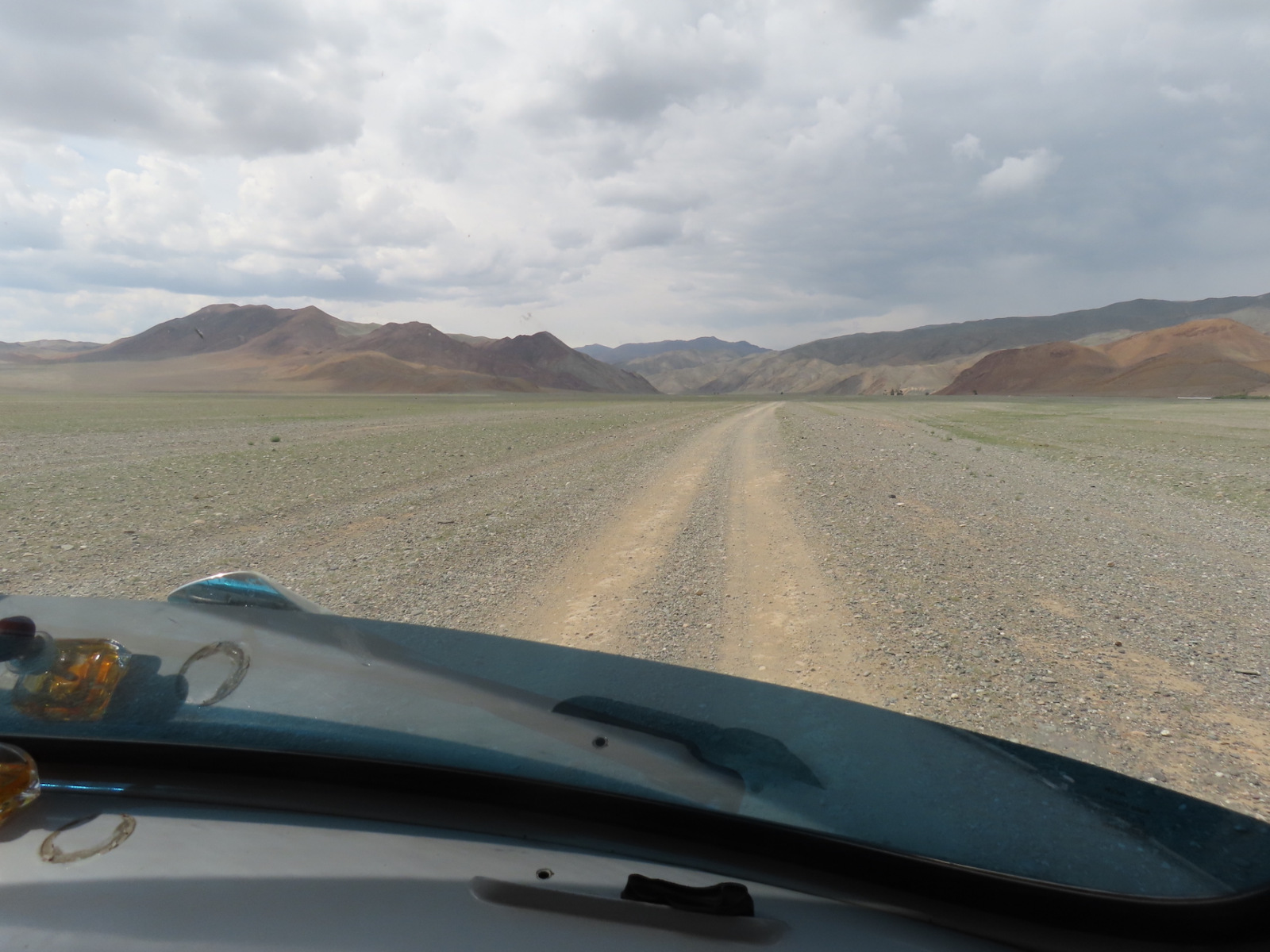
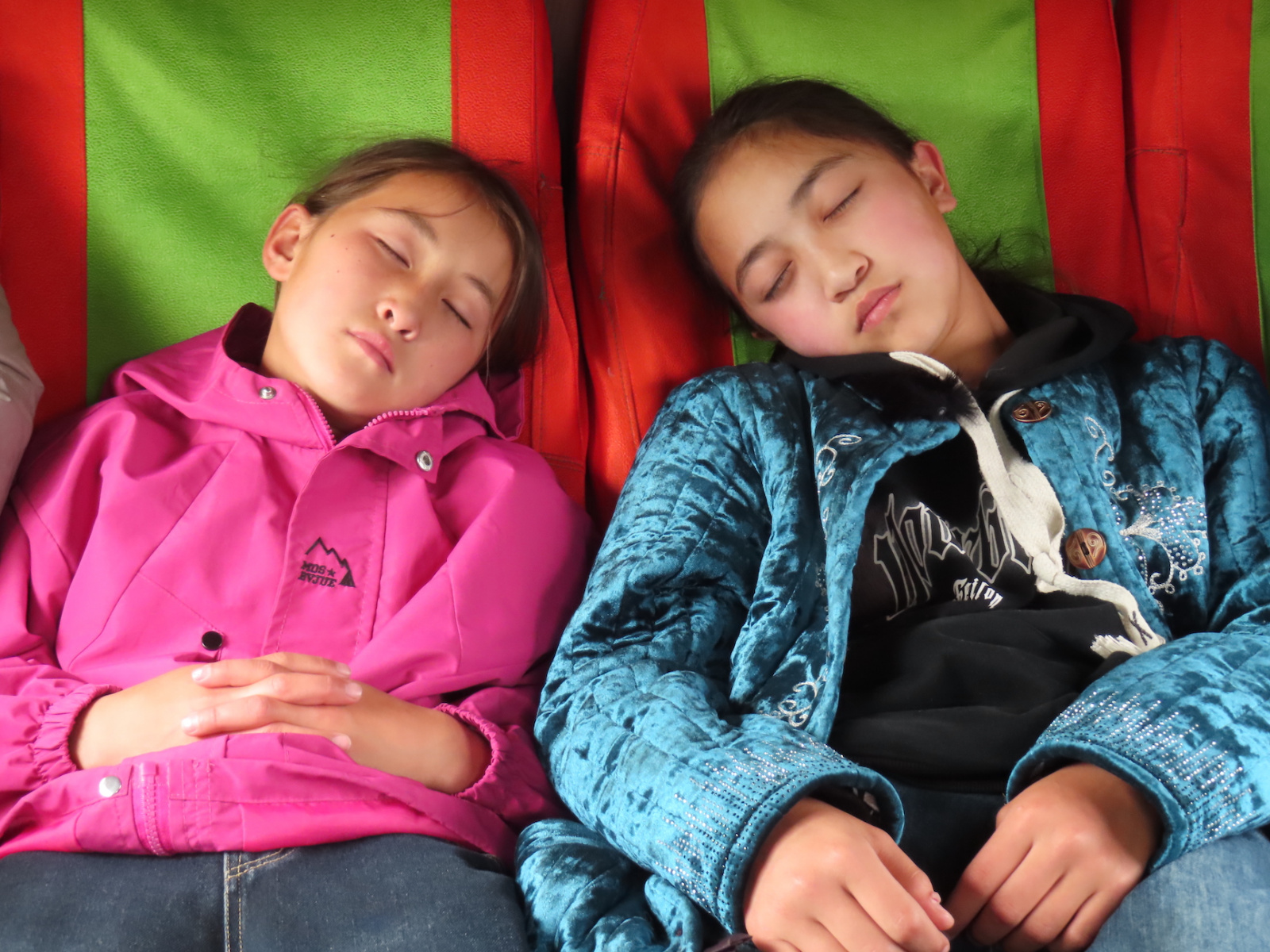
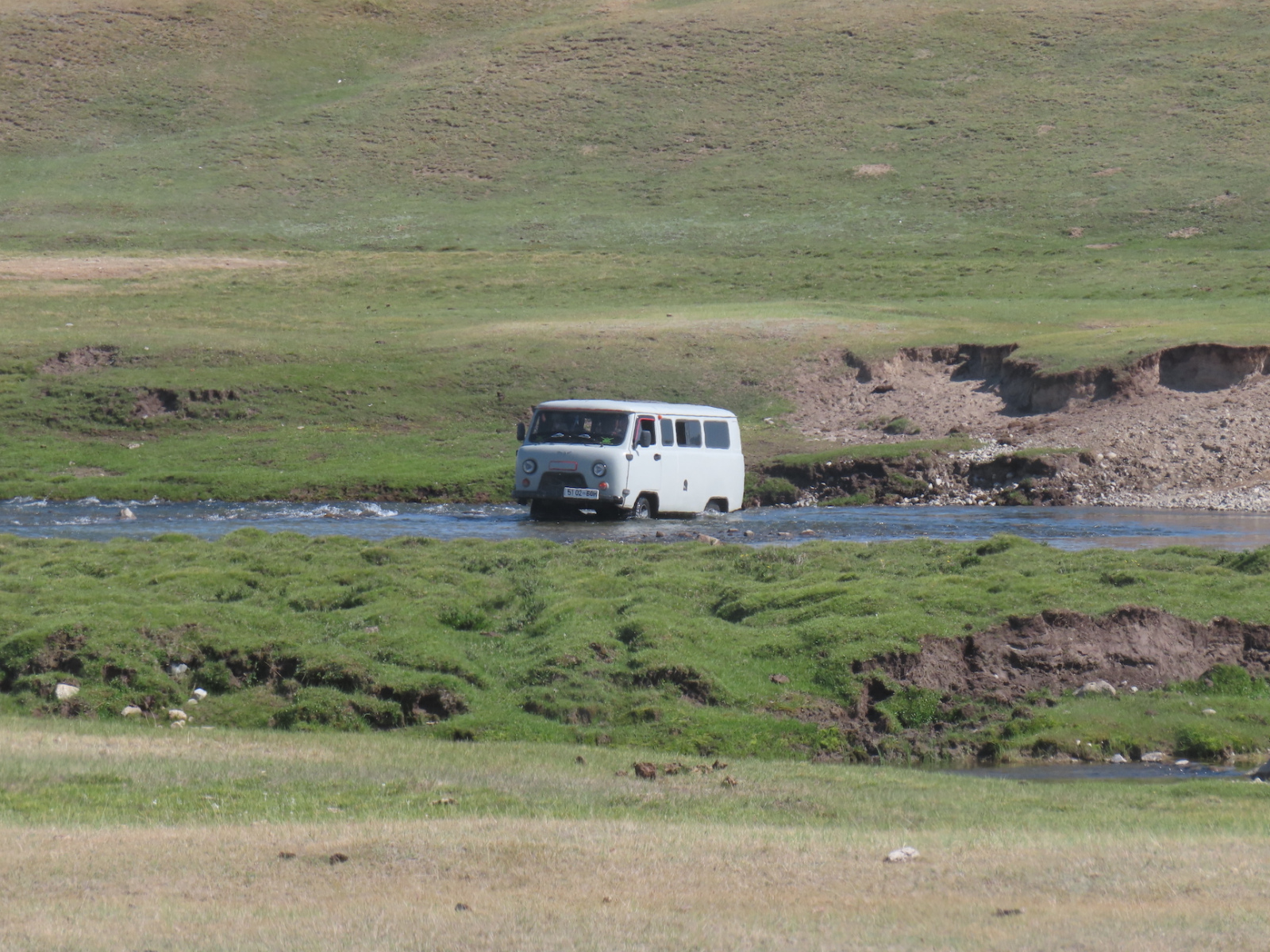
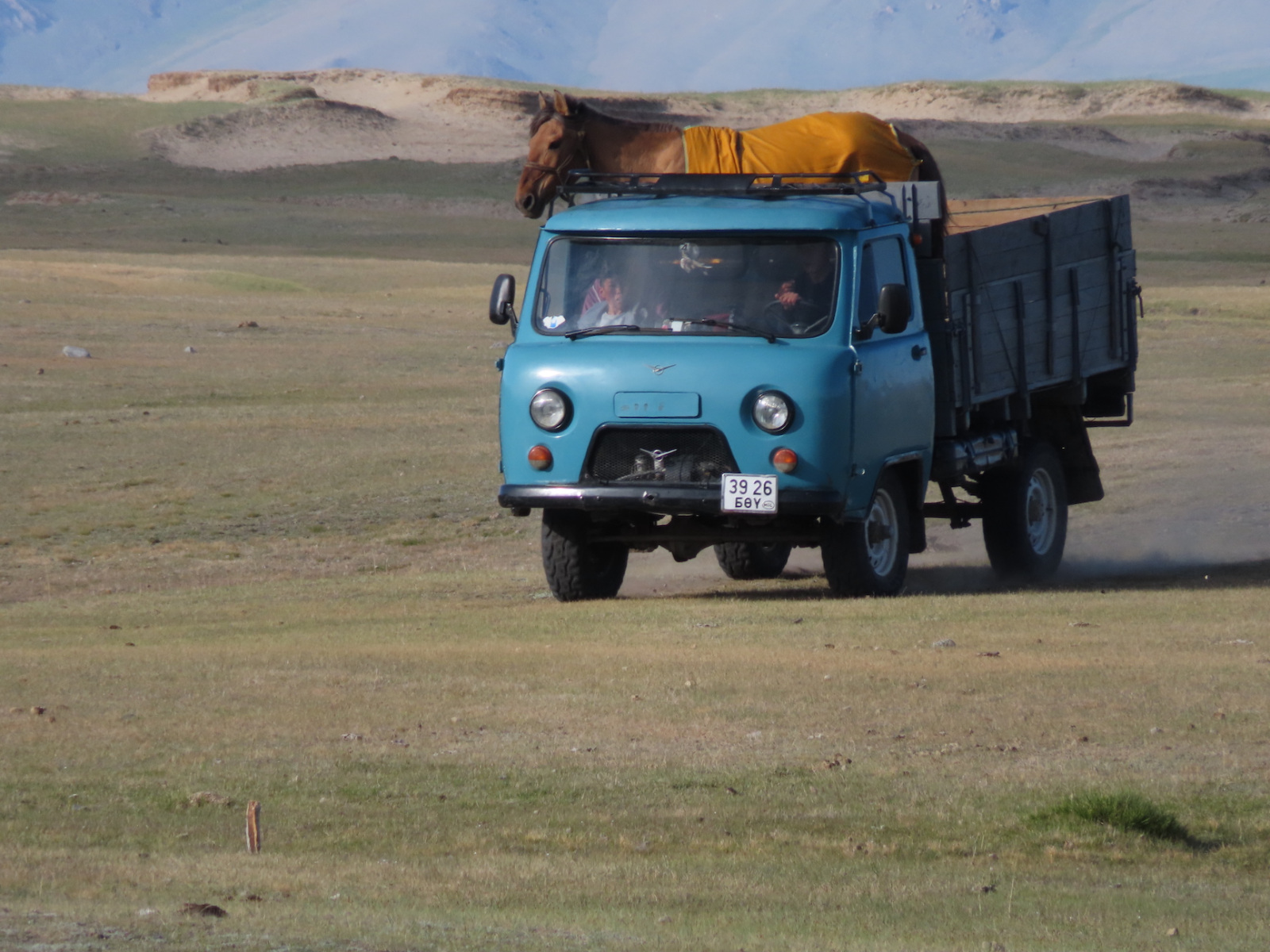
As with any overland adventure in Mongolia, the drive is the most challenging part for those not accustomed to bone jarring 100 kilometer per hour races across high, open volcanic valleys interrupted by the occasional launch of the entire vehicle when a dip or hole is hit. The slower, more technical portions of the drive are certainly worthy of kudos to the Russian-made UAZ-452 4×4 vans (that put even the most formidable Toyota Land Cruiser to shame) and their drivers, but the Mongolian tendency toward competitive racing (sans functional seat belts, if presented at all) when arriving sooner offers no benefit to anyone, results only in bruised, exhausted passengers. As the locals are able to sleep through the entire experience, I recognize that one could argue that I am simply not accustomed to their norm.

We learned that these remote places are within the national park, yet continue to be the summer home to long-standing traditions of nomads who make the four or five days walk in September (return to the lower villages) and February (return to the high, cold mountains before the ice and snow turns to slush and mud). Unwritten social norms dictate which villages and which families claim certain spots to erect their gers (yurts) and graze their animals.

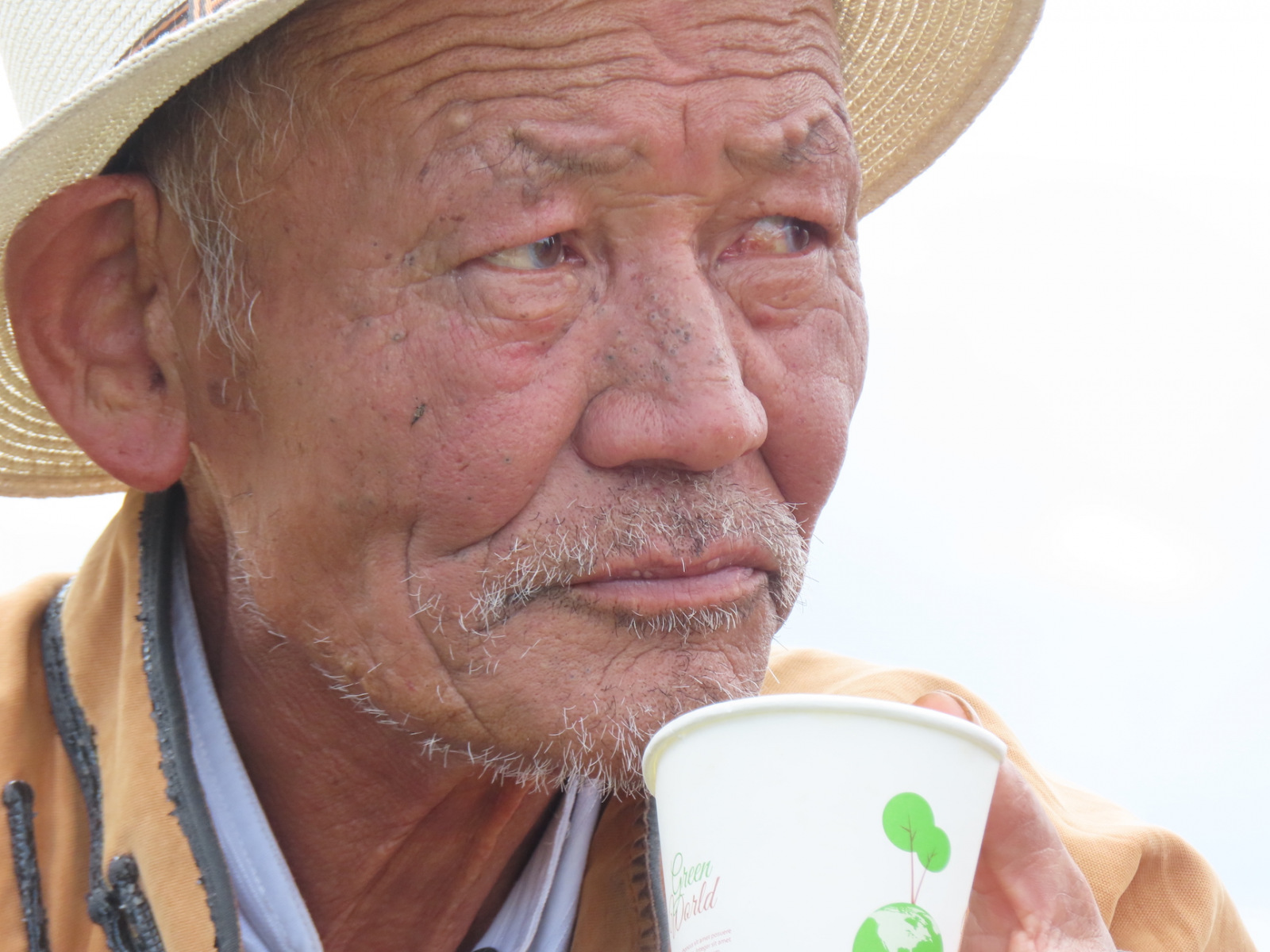
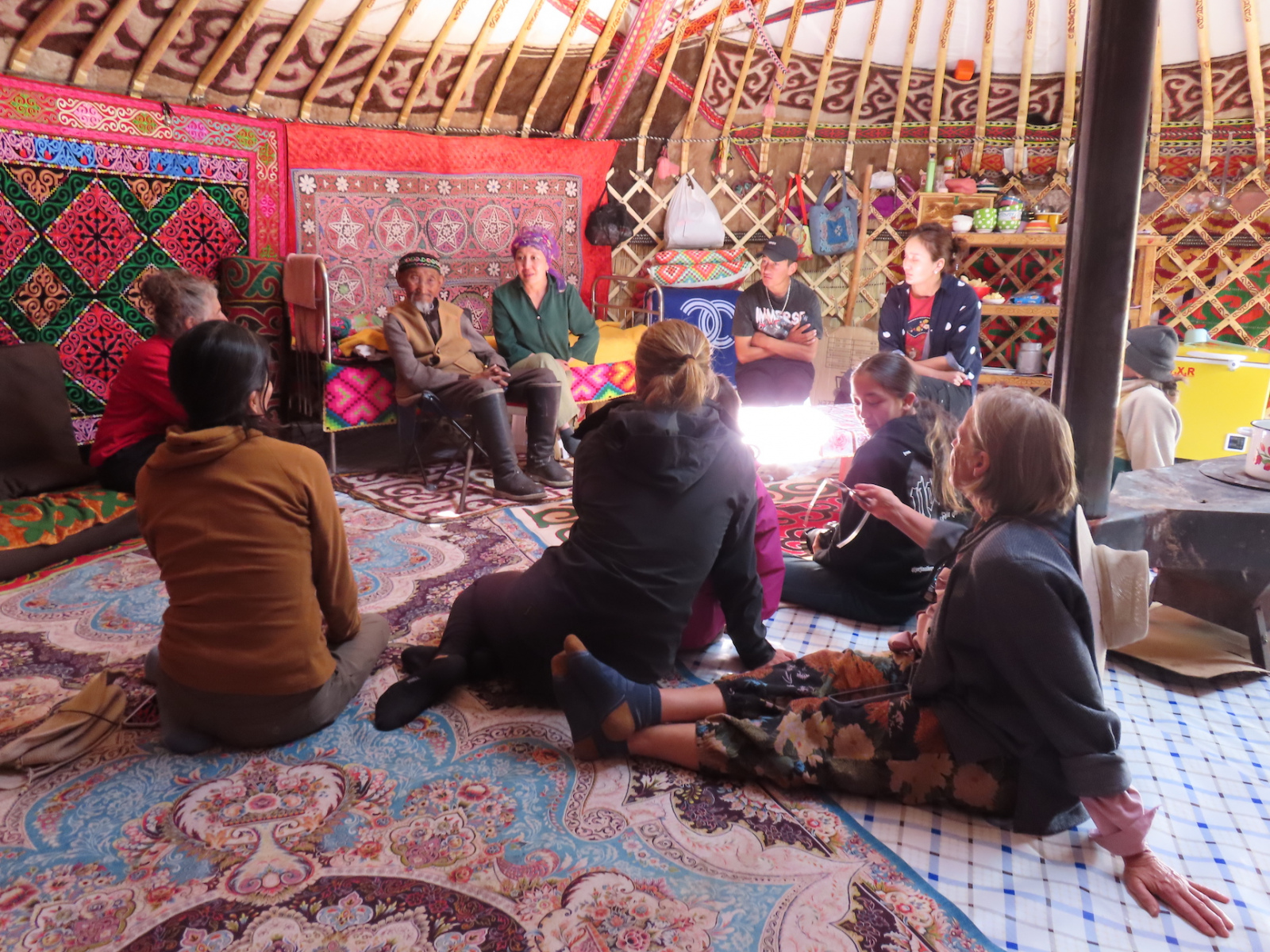
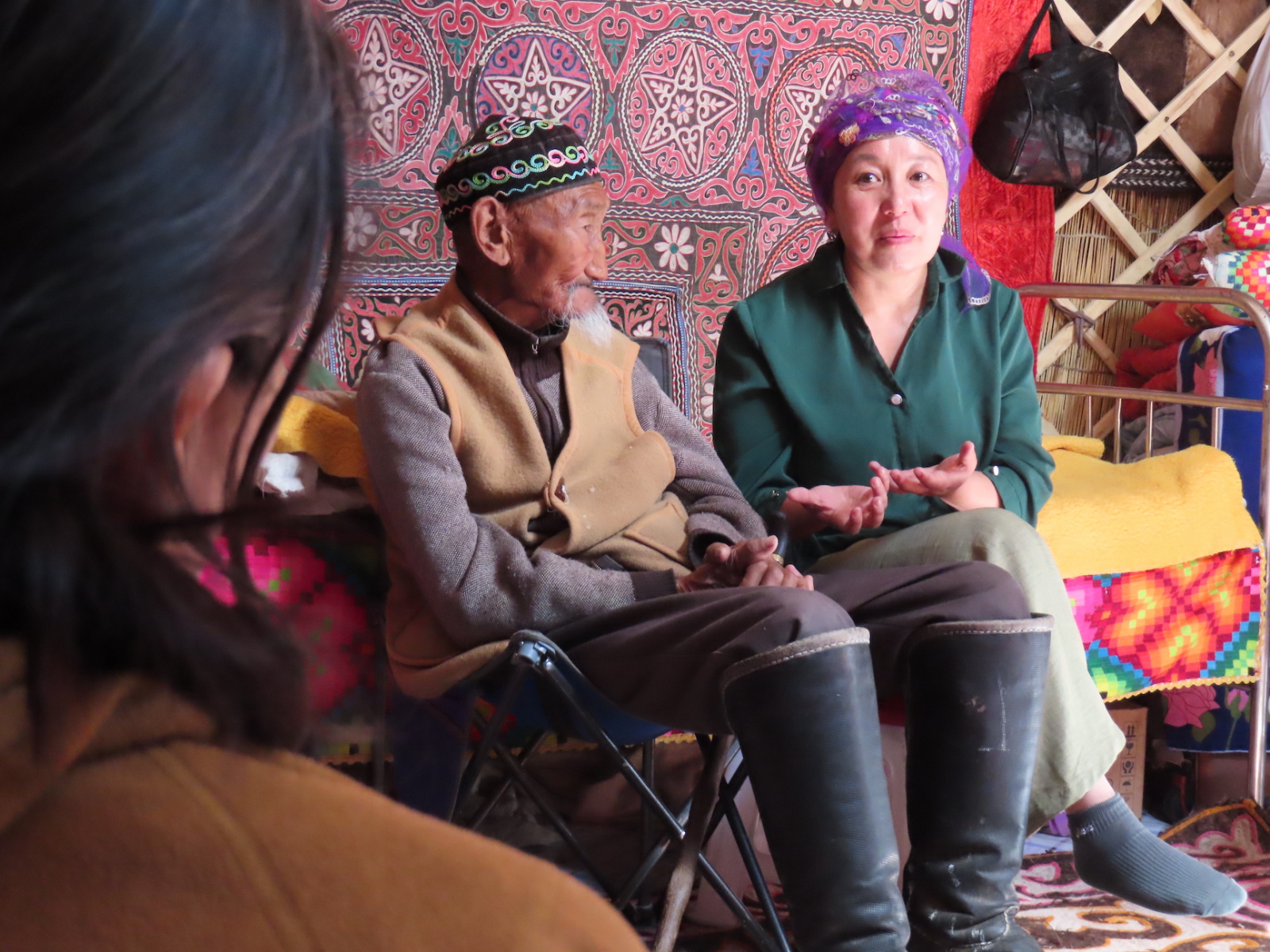
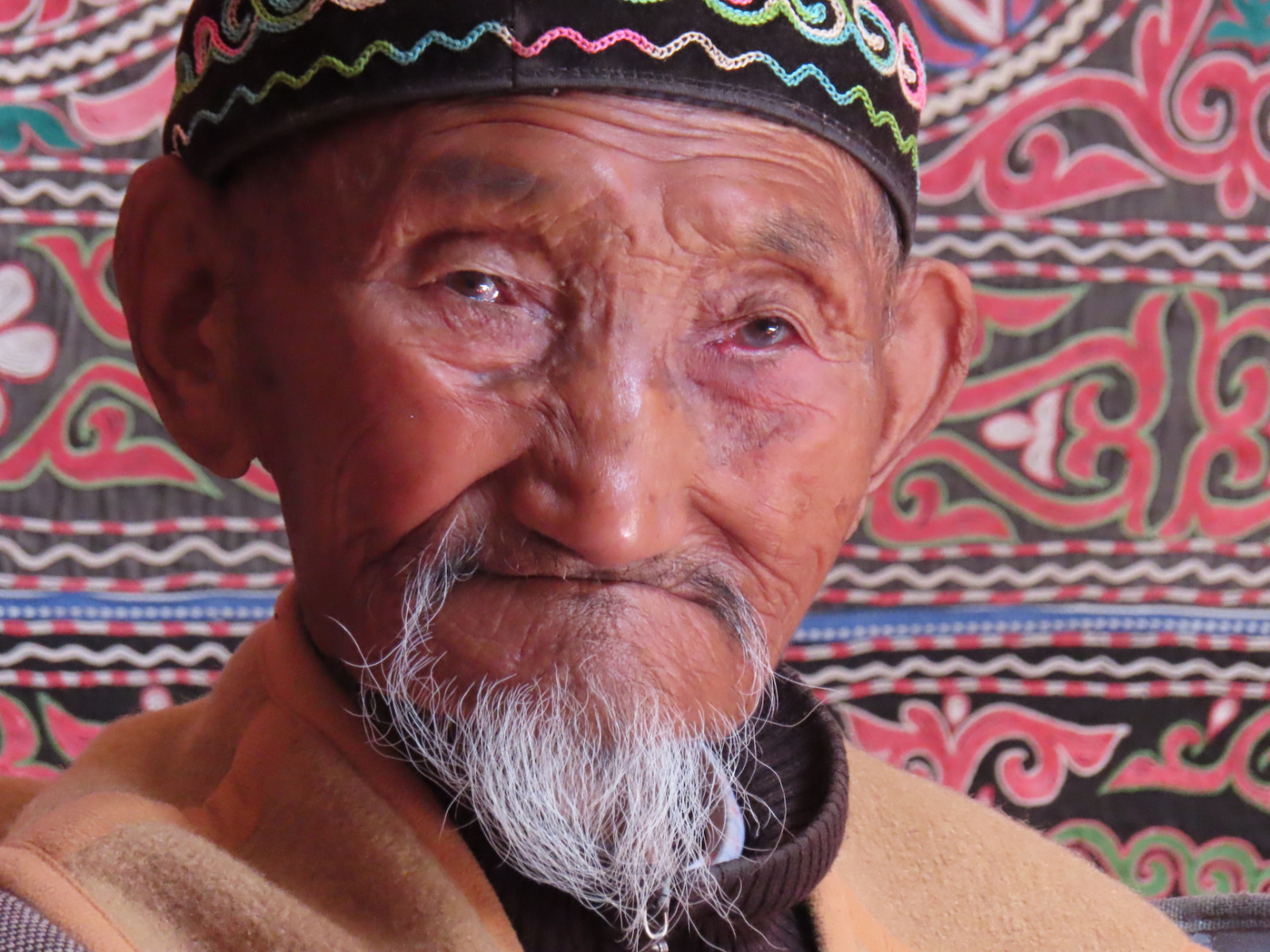
We had the great fortune of spending time time with Bakha’s grandfather, Uabi Akhsakhal, the oldest living Kazakh nomad in Mongolia. At 95 he is yet alert, keen, and wanting to meet everyone who ventures into his domain. He sat with us for more than an hour, Bakha translating (often with tears moistening her eyes and cheeks) as he shared with us several stories of his youth, life as a nomad, and the beautiful way in which his people have lived from the land for centuries.

Uabi was born in China, where some of his relatives yet live. He has been coming to this valley, just below treeline, a few kilometers from the international border, for his entire life. More than a decade ago the Mongolian military abandoned a guard station not far from where we sat, asking him to monitor the border and report any sightings or trouble with those who come through the pass. Bakha told us of times when “people in plastic clothing” (synthetic jackets) would sneak into camp and steal food or animals before retreating back to China.

Uabi shared many more stories each capturing our attention as though we were visited by the ghosts of generations past, sitting with us to share the bread, sweets, and milk-tea. None of us held back tears when Bakha translated his closing remarks, asking that the next generation continue to appreciate and protect the land, that they too come to this place that he has called home for so many years. It is our intent to return next summer to capture Uabi’s stories on film.

This rang true for us as motorcycles are replacing horses, and off-road vans replacing caravans of animals in the migrations. It makes sense. And there is inherently nothing wrong with upgrades and hybrid solutions. But when the human animal becomes complacent, comfortable in temperature controlled homes and vehicles, food derived from single-use plastic packaging instead of from the hand-carved bones of the herd, it becomes less and less likely that each subsequent generation will find reward in that level of labor, seeing these mountains as a retreat, a vacation, and place to visit with family and friends rather that integrate into a nomadic life of direct engagement of the resources that abound.

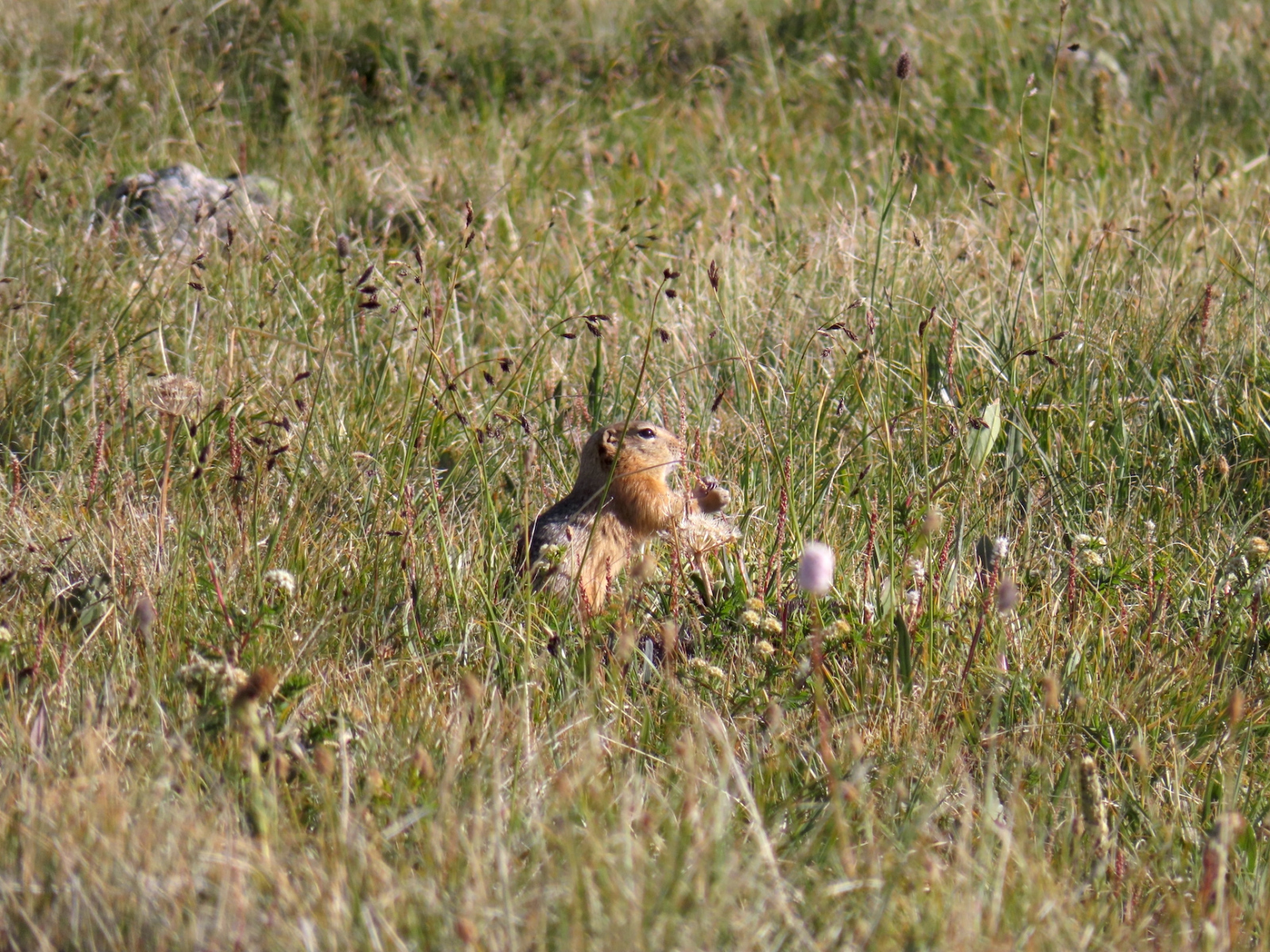
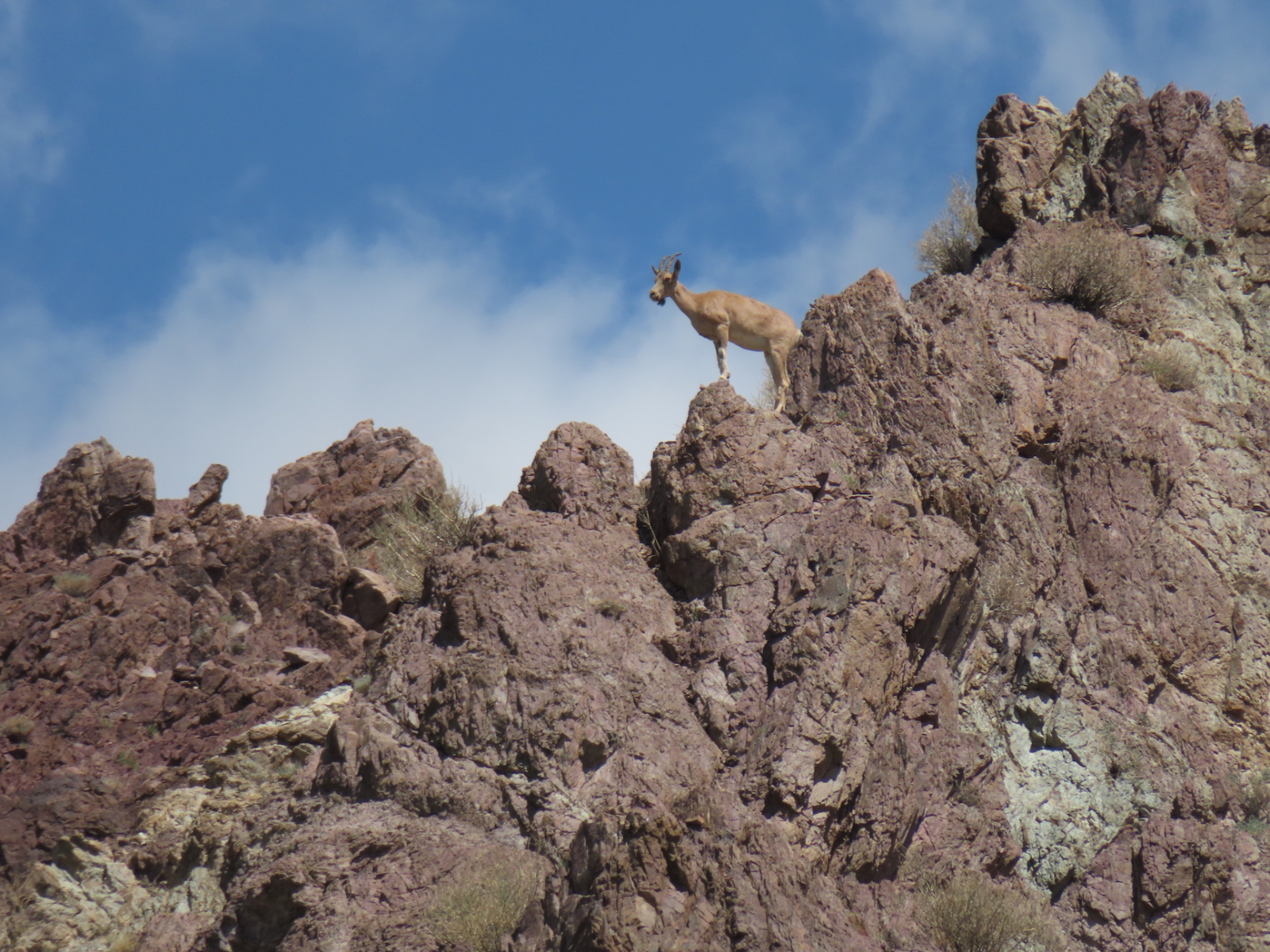
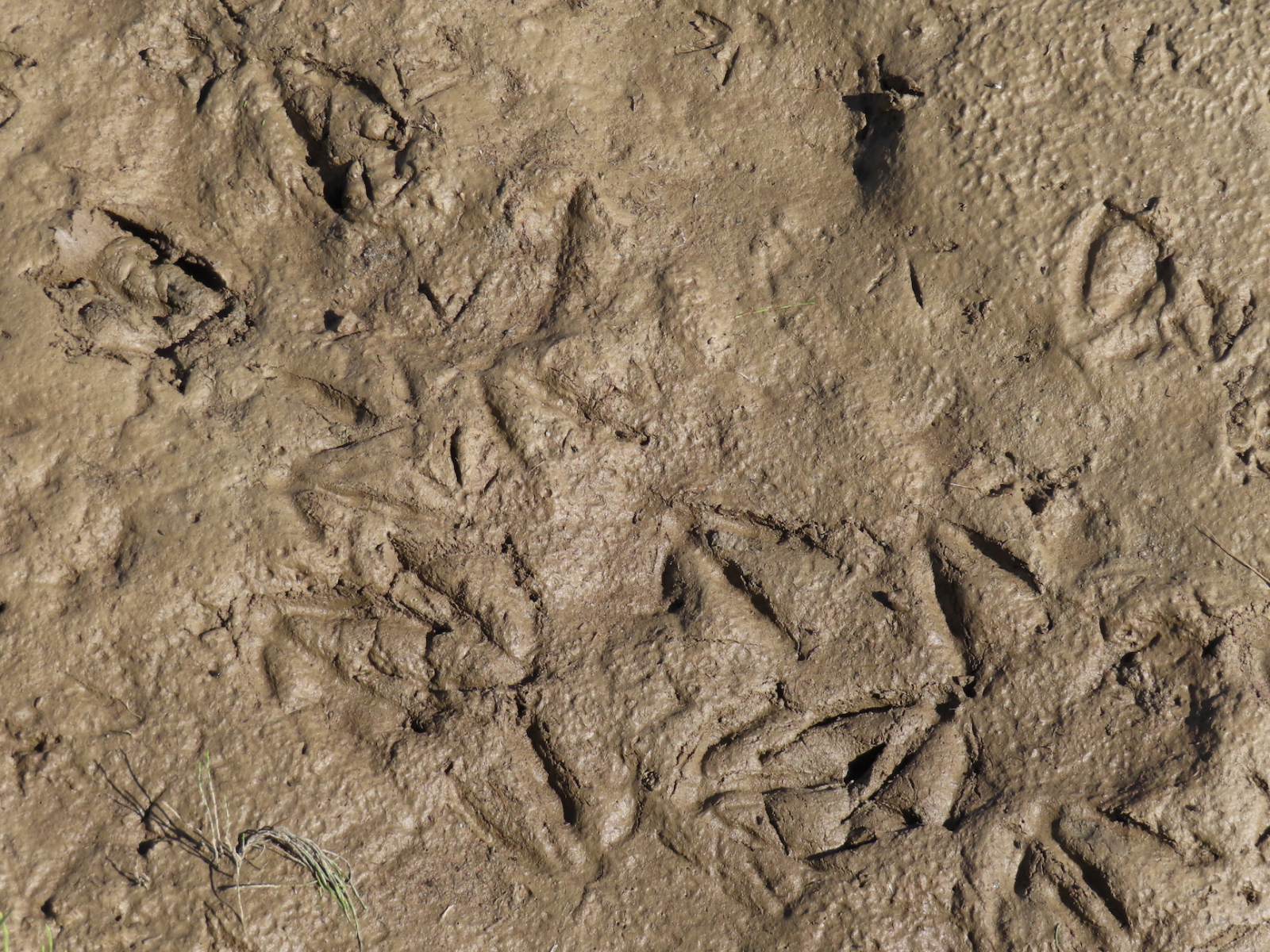
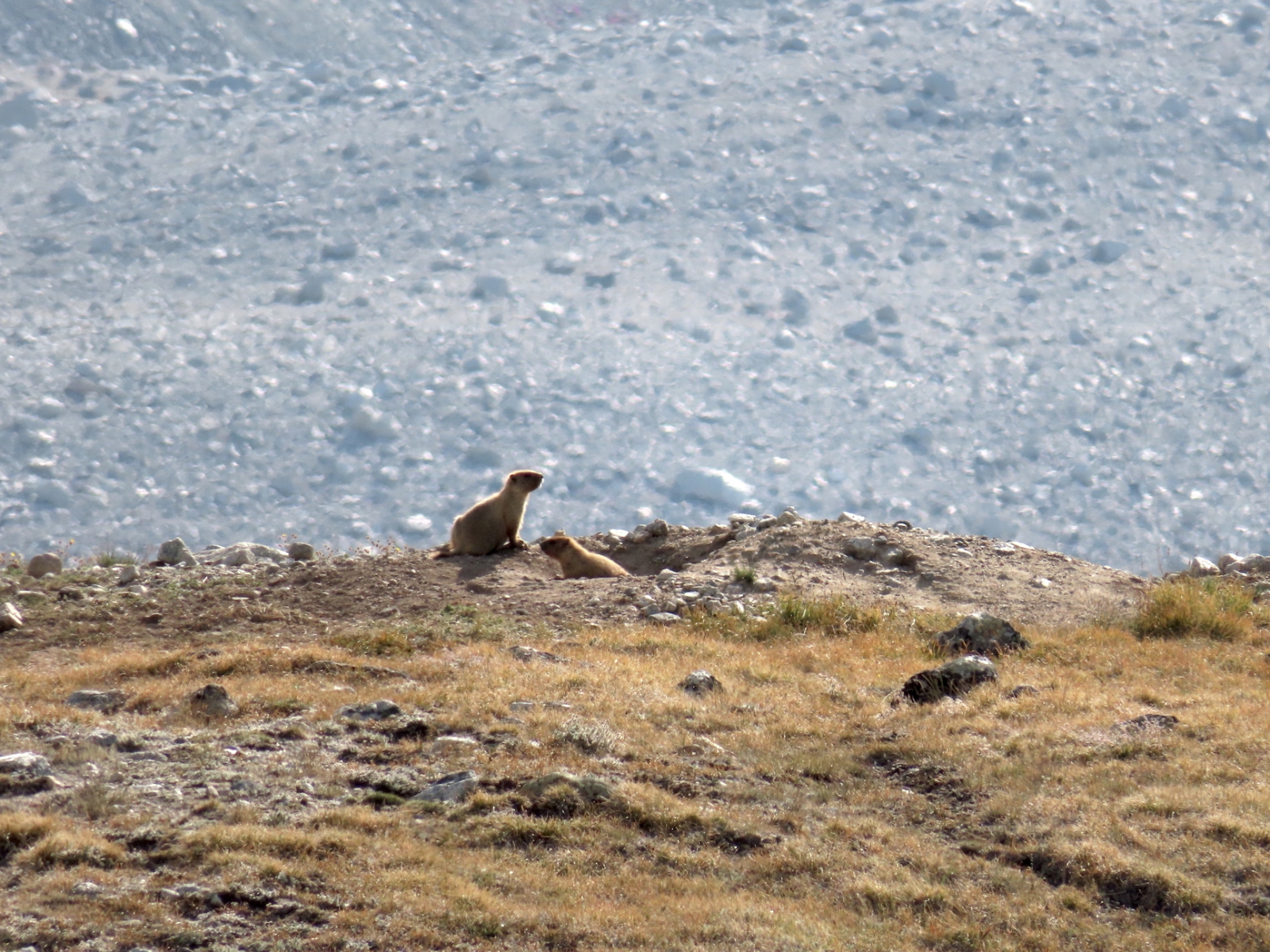
In our entire time in Mongolia we didn’t see any wildlife beyond a single fox, a few big horn sheep, squirrels, and marmots. No deer, bears, or wolves (which we are told do roam across this part of the country). No signs or tracks. Yet we were never more than a meter from domestic animal footprints and dung, the sweet smell of manure hung in the air day and night (save the few days we were in the capital city of Ulaambaatar). A herd of animals was sometimes counted in the hundreds, just one or two herders keeping them gathered and moving.

We asked about the wild animals, and the answer, while anecdotal, was telling when Bakha said, “We used to see deer and bear, but no, no, we don’t see them anymore. I don’t know where they have gone.” I say (without having conducted research) that perhaps a reduction in the number of animals that feed upon this land (now more than 70,000,000 domestic grazers in Mongolia) could make room for a return of the natural ungulates and their predators. But as with any natural resource controlled by humans, How does one justify a reduction in domestic animals (and associated resources and income) to increase wild game? An new economic ecosystem must be built, perhaps one that shifts toward tourism.

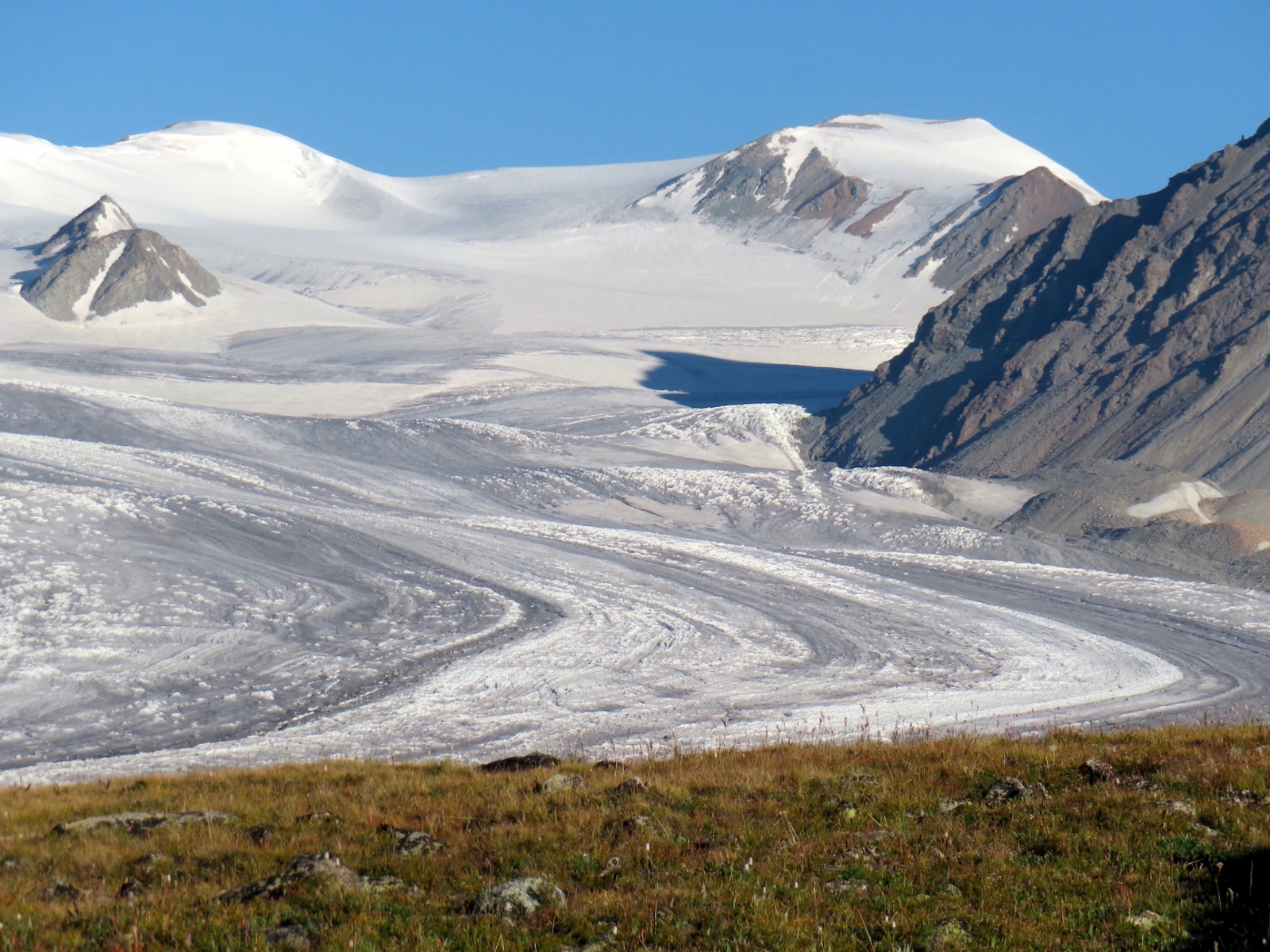
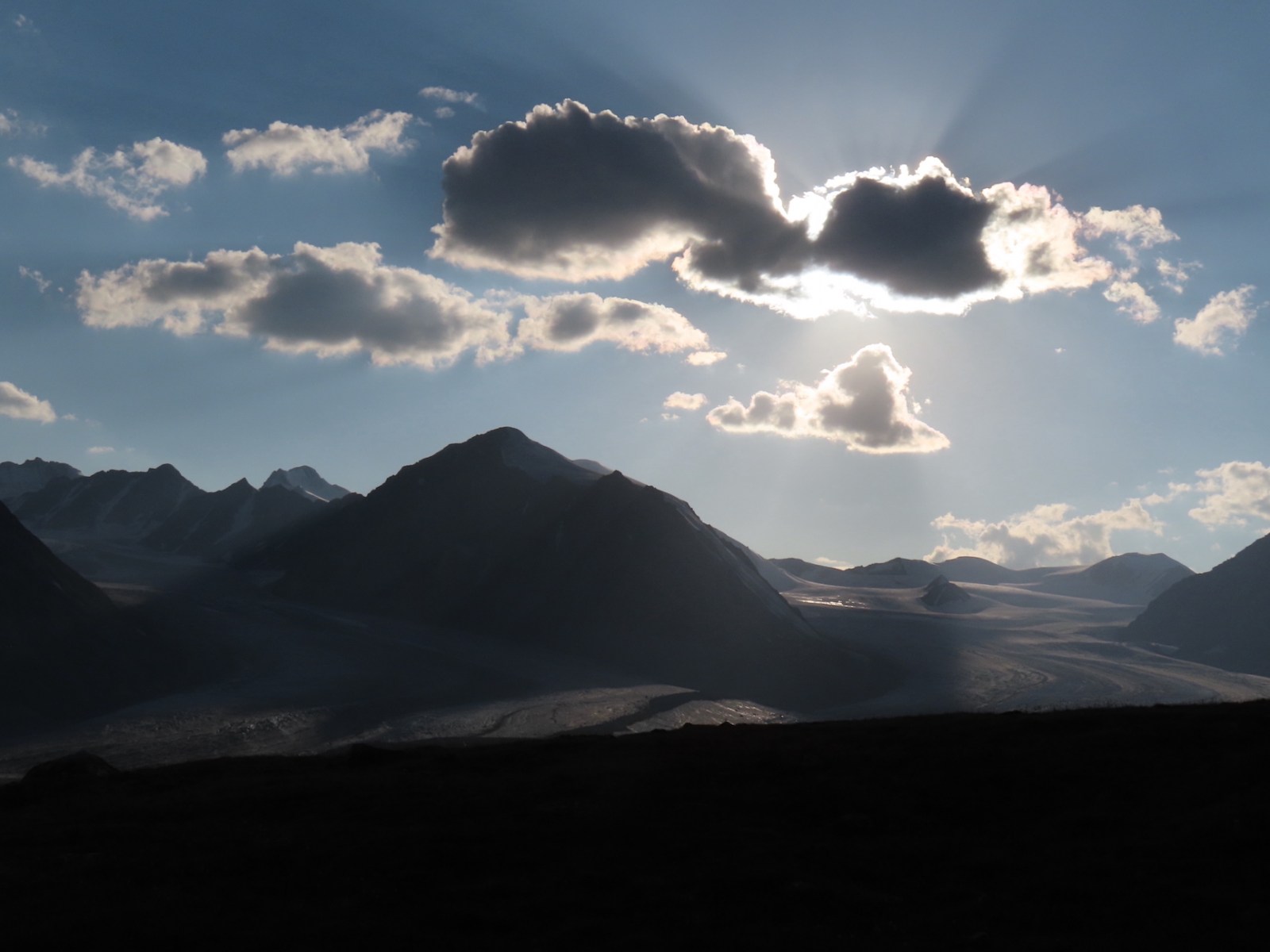
On the second day in the Altai Colleen and I opted to not join the others for a hike above treeline and to the base of a snow field. Instead, we inflated our Alpacka Rafts and ventured down the river that ran adjacent to our host’s home. While we are experienced paddlers, there is always a sense of excitement for venturing down a body of water for which there is no map, no written guidebook, and no one to tell us, in advance, what lies around each bend. We could see the general flow from a high point, a relatively narrow, shallow stream that terminated in an ancient glacial kettle pond that itself fed into Lake Dayan (Даян Нуур), the lower of three lakes fed by a south running river from glaciers in the northwest corner of the Altai National Park.

The run was just one and a half hours, and without incident. We were met by the gaze of a few dozen yaks who stopped grazing when we passed, their heads and eyes following us closely, for surely they had not seen something quite like this before. We could not help but utter a silly yet later repeated anthropomorphism, “What the yak is going on here?!” Just before the kettle pond the water ceased to flow and paddling against the wind was less than fun. We made our way to the grassy shore, packed up and walked back to our home site, just in time to make dinner.

A hi-light of the trip was teaching Bakha’s brother, his wife, and two of the Khusvegi students Inju and Sunkar how to kayak. We found a small riverside pond where we could safely place each into one of our boats where they practiced forward, backward, and spin-left and spin-right. Colleen then helped each into her boat, placed a bit downstream and below the rapids as I paddled out from the pong to meet them for their first-ever movement on the surface of water. Their joy was contagious. What struck us most was the fearless charge into this endeavor by Bakha’s brother and his wife. They took to the water as though they had been doing this for a lifetime.

It reminded me of something Bakha said in the context of the Mongolian horse riding tradition that dates back to even before Chinggis Khan, “The horses, we know them, and they are a part of us. When Mongolians ride, it is like flying—with our horses, we can really fly.”

On the water too, they were flying.

By |2025-08-21T01:55:38-04:00June 29th, 2025|From the Road|Comments Off on Altai National Park, south, Mongolia

Learning Cyrillic, Kazakh

Colleen and I realized early in our stay in western Mongolia that learning the Cyrillic character set was necessary in order to communicate in Kazakh with any degree of functionality. It felt daunting to rewire our brains to accept new sounds associated with several otherwise familiar characters, and to learn new characters too. But there was a turning point when I realized that Cyrillic is based on the Greek character set, with some modifications. This at least laid a foundation of familiarity, and when compared from Greek to Cyrillic, made sense for both shape and sound.

What’s more, if you were to take each sound in the English language and assign a unique letter such that each letter has (with a few exceptions) one sound and each sound has only one letter—you have, essentially, Cyrillic. This is why there are 42 characters, many more than the 26 characters in the Latin character set for English. This actually reduces confusion once you get the hang of it. The Wikipedia articles for Cyrillic and Kazakh share a great deal more.

In relatively short order, truly just a half dozen hours of study over the first two weeks, we were able to read (even if sounding out new words one letter at a time) and with some challenge write the Kazakh language. It was, for me, thrilling to know that my passion for learning languages was in no obvious degree hindered by my age. In fact, learning to read and write a new character set seems to have built a stronger foundation for the vocabulary. That said, Colleen gained a larger vocabulary than I did, and very quickly too, which was simply enjoyable to behold. I was more fascinated by and engaged in the written characters and history, while Colleen could hear a new word just once or twice and integrate it into her vocabulary. After a few weeks we were able to say and receive the common greetings, ask basic questions, count change, and pick out key words in informal conversation.

The use of Google Translate was valuable in that it allowed us to convey complex concepts (English to Kazakh). Most of our host family members, co-instructors, and community organizers were also using Google Translate (Kazakh to English). However, the number of times it was wrong, and I mean hilariously, completely wrong was fascinating. I found that writing with pen and paper in a notebook was far more effective for two reasons: it forced me to conduct a more thorough translation with both Google Translate and one of the two printed dictionaries we brought with us; and by writing the Kazakh words in Cyrillic I was actually learning the language, not just pressing a button on my cell phone and forgetting what had been transcribed a few seconds earlier.

There is no short cut, no easy way around it—if you want to learn to read, write, and speak a new language, you have to just do it!

Greek letters

Cyrllic letters

By |2025-08-10T01:44:46-04:00June 28th, 2025|From the Road|Comments Off on Learning Cyrillic, Kazakh

Remembering who we are, and what makes us strong

To my team

In my position as a Director Research at the University of Arizona, my official job description (if one was ever written) includes design, development, construction, and maintenance of our research facility. In order to accomplish this, a diverse and talented team is essential. Each of you brings to this growing project a unique and valuable set of skills, experience, and gifts.

I don’t always speak like this, describing each of you in this way. Rather, you most likely see me as the one who pushes hard to meet deadlines, the one who drives to Home Depot three times in one day to keep you engaged laying the foundation for world-class research; the one who insists that our measurements are accurate and our level-er is level to within 1/16 of an inch when in fact no one will ever notice–except us.

What motivates me to keep going, despite the challenges of the incredibly complex University bureaucracy and my long weeks is three-fold: a) to create novel, word-class research that helps our species become interplanetary; b) to bring attention to the ways in which we can be better custodians of our home planet; and c) to see each of us grow, to gain skills and knowledge, to accomplish things together we could not do as individuals.

Our current team of 18 includes five people of color and multiple gender identities. We have first and second generation family roots in six countries (Canada, India, Italy, Kenya, Peru, and the US). We are a living, breathing celebration of what it means to be international in a country that, while not the perfect “melting pot” symbol advertised in my childhood, does continue to support the creativity that can only come through the mixing of unique experiences and points of view.

As researchers we apply curiosity, observation, and reason in equal proportions. As custodians we apply self-awareness and good habits, recognizing that in fact everything we do shapes the world around us. And as members of this team, we embrace our quirks, uphold our skills, and celebrate our diversity through collaboration at work and friendship beyond.

With the abrupt change in the administration of the United States, I cannot sit idle and say nothing. I cannot just pretend that everything is going to be okay. While it is not my place to, in any shape or form, dictate your political views, what you believe, or who you engage—it is my duty to uphold and protect each member of my team and to continue to promote logic, reason, science education, and care for the very planet on which we live.

My world view has been shaped by more than thirty years in education and humanitarian work around the world: working at an orphanage in Baja Mexico with my parents when I was just five years old, building a half acre playground in rural Poland in my twenties; running water lines, installing electricity, and helping build a food storage system at an orphanage in Kenya; designing and building the first research-grade astronomical observatory in Tanzania; bandaging the feet of migrants on the US-Mexico border; and producing documentary films about the Israeli occupation of Palestine. I’ve dedicated my life to helping others through work, care, and education. Some of the most valuable things I’ve contributed are simply a new way of seeing the world, getting people to ask hard questions and then seeking the answers.

At the base of Mount Meru, Tanzania, students copy word-for-word every page of a single text book that the teacher reads aloud and writes on the chalkboard. That was in 2019. Rote memorization remains today the principal form of education. So when a student asks questions that the teacher cannot answer, they are often scolded, or in the case of the orphanage in Kenya (where I met my my adopted children) they were beaten with a cane. [My job, then, as a board member of a non-for-profit was to document the bloodied backs of the students, then work with the teachers to implement new teaching methods that did not involve corporal punishment.]

Why is it like this? Because in that culture the teacher is the keeper of the knowledge, and the students are to learn from the teacher. If a student asks a question the teacher cannot answer, it is seen as a weakness in the teacher’s position and title, the student is at fault. The concept of the teacher and student learning together, side-by-side remains, for the most part, elusive. In this paradigm, curiosity and asking questions are met with fear, anger, and pain. If you live your entire childhood in such a place, you grow up without what I believe is one of the most important aspects of being human–asking these basic questions: How? Where? When? and Why?

The ability to ask these questions is what makes our species unique. This is what enables us to look beyond our current situation and envision a future that is better. These simple, single syllable words are the most powerful words we can utter for they are at the foundation of every scientific discovery, every invention, and every aspect of our very being that has a chance to improve.

If curiosity is beaten out of us, if we are afraid to ask questions, if we shutter in the shadow of those who are in control for fear of retribution for the very questions we ask, then we are no longer free to be human, and we will have lost the core of our humanity.

In just the first three days of the return of the administration of Donald Trump, the United States was removed the US from the Paris Climate Accords; any and all efforts to provide a fair and equitable environment for those who for too long were afraid to express their sexual identity were removed from every single federal office; and people who have lived in this country for decades, and their children who are born on this soil are forcibly removed at the hands of armed and masked officers.

The subsequent three months has seen an unprecedented overturn of every social and legal norm for the office of the president, such that history books will see this as a turning point for whatever will next unfold.

Persons of color now live with a heightened sense of fear. Every member of the Navajo Nation has been advised to travel with their Tribal ID, a card that is not issued at birth for it is not required under any law but is now employed to reduce the chance of harassment or exportation as ICE raids expand and gain power.

Schools, places of work, and churches are bracing for armed raiders who forcible remove people, separated from their parents or children, held in detention centers, and then exiled to a country in which they might not have lived for decades, or never at all. This spring Arizona State University lost 80 students to Homeland Security. These are students, not spies, not conspirators—mere children who came to this country to learn. In May the University of Arizona was given warning of the same and we wait to learn of the outcome. For fear or retribution, no one, not even ASU’s powerful president Michael Crow has risen to take a stand.

Many of us have experienced violence in our lives with our parents or siblings, in the military, or in challenged neighborhoods. But this level of internal violence inflicts a wound not only on those who are directly affected, but across the entire nation. It will ripple through generations as a new norm, making it “okay” to take violent action built on false narratives, lies, and deception.

How democracy falls and dictatorships rise

  1. Create an enemy within your own borders by ethnicity, religion, or color of skin;
  2. Convince the public that the “enemy” is not deserving of due process, not treated as human;li>
  3. Engage a police or military force that executes your policies when votes fail, then remove the non-human “enemy” by force;
  4. Establish a framework for retribution such that even those who are strongly opposed to your motives will stand at your side, afraid to go against you, hoping instead to gain your favor;
  5. Impose your will through fear of retaliation such that association, even conversation are controlled.
  6. Erode the framework of democracy in the name of “safety” from the very horror you have created.

The vast majority of Germans were not against the Jews, but those same people were afraid to stand up to Hitler as he gained control. The CEO of Apple Computer, the president of the Navajo Nation, and Jeff Bezos were all at the presidential inauguration. I cannot claim to know their belief systems, but I do know that Apple Computer has long stood as a company that embraces diversity, long before DEI was a policy and norm. While the more than 500 recognized Native American Nations in this country stand to gain nothing but ridicule and pain under the Trump administration, gaining favor of the new leadership is safe, even if it echoes the very history that decimated Native American populations and moved who remained to designated reservations.

Facts matter
Do your best to not repeat what you hear unless you have substantiated the facts and figures from reputable sources. There is truth. Not alternative facts but real, solid truth, some of which I would like to share with you here to get our brains engaged and intelligence churning.

“All who cross our southern border are rapists and murderers and drug dealers.”

Before 9/11 the US had for more than 100 years welcomed more than 250,000 undocumented workers to cross the border, work in our fields to harvest crops such that our fruits and vegetables could come to our kitchens at an incredibly low cost. For the first time in US history, the border was shut down for “fear of terrorists” entering through Mexico, when in fact the pilots who flew the planes into the twin towers and Pentagon came into the US through Canada several years earlier.

There are approximately 11,000,000 undocumented workers in the US today [Pew Research]. in 2024 9,949 arrests were made by the US Border Patrol (not including 10,000 re-entry arrests), of which only 221 were for a sexual offense [CBP]. I heard that 47,000 total arrests of undocumented residents [NPR] were made in the US last year which equates to 0.4% (0.004) of the population.

According to the FBI 73.5 million out of 249.4 million Americans have a criminal record [Politifact], as many as have a diploma [Brennan Center]. That is roughly one-third or ~30%. This means that the undocumented population has a 75x lower criminal record than documented America. Even if this number is off by a factor of 10x, the original statement is completely false.

“Build the wall!”

Q: How do you go over a 20′ border wall?

A: With a 21′ ladder.

During the first Trump administration the head of the US Border Patrol took a reporter to the back lot of a border station and showed her hundreds of ladders, confiscated at the foot of the wall. It takes less than $30 (or something home made) to beat a billion dollar fence.

“The cost of power is too high in the US.”

The United States has a lower cost of power, across the board, than just about every country in the world. Why “Drill, baby, drill!” when the US produces more oil than any other country in the world? We are already paying far less than more than 2/3 of the countries on this planet [globalpetrolprices.com].

Deep sea oil is too expensive. The only way new oil discovery will happen is if the US government subsidizes the process, which it has been doing for decades. Remember, oil companies don’t want the cost to be low, as they make less money. The only way to bring the cost of power down is to invoke renewable energy which beat the cost of coal-fired power over a decade ago.

“We’re going to reduce the cost of living.”

No president, not a single one in history has control over the price of fuel at the pump, or eggs, or bread anymore than he does the cost of a computer or cell phone or any other item produced by publicly traded companies built on publicly traded commodities. It’s impossible.

The reason the Chairman of the Federal Reserve and his (or her) body of advisors is intentionally isolated from the President, Congress, and the Supreme Court is so that no body of power can control the financial reserves or interest rates. These are experts who manage this important function of our country’s financial foundation, and who have in the past five years demonstrated an exemplary recovery from a very, very difficult financial situation. Despite the COVID recession, American spending is at an all-time high with salary increases surpassing inflation by an average of 2% in 2024.

“The illegals are taking our jobs! Ruining our economy!”

In Arizona alone, the undocumented residents contribute a net gain of more than $1B per year through purchase of fuel, food, disposable goods, rent, and paying taxes. As they are undocumented, they do not gain Social Security when they retire or receive any health benefits at their places of work. They are, from this point of view, the most advantageous contributors to our economy who demand the least, who use the least (not the most) resources. Anyone can do the math. It’s simple.

When I was a kid many of my classmate in Columbus Nebraska walked beans and detasseled corn every summer. Now, most white kids do not walk beans or work in the fields. Most of that labor is done by our neighbors to the south. If the US sends them home, then we need to prepare for union labor and the cost of corn, oranges, apples, spinach, potatoes—all of it go up by 2x, 5x, or 10x at the store.

In our hotels and at our construction sites, it is people of color that continue to do most the work. Undocumented workers are not competing for positions in schools or hospitals or law offices or most any occupation, rather, they fill a growing niche as the social-economic foundation as this economy continues to evolve.


In closing, again, it is not my place to motivate how you vote or who you support. But as we build a platform for research and science education we embrace and uphold who we are as individuals, and who we represent in the greater world. Your knowledge represents the knowledge of my team. Your ability to engage in critical thinking is a reflection of the very reason we have labored for five years to build this platform for research and education.

I ask that you move through these next four years with diligence, with commitment to challenging false narratives and spreading fact-based truth. I invite you to do your own research, to build a vocabulary of justice that celebrates all humans independent of the color of their skin, sexual orientation, or place of birth.

We can each fight back against a regime of fear by asking questions, challenging false narratives, and being prepared to provide research-based facts.

Ask yourself, “How have your own life experiences shaped your world view, and what do you bring to this team?”

Thank you.

Kai Staats, MSc
Director of Research for SAM at Biosphere 2
University of Arizona

By |2026-02-08T11:39:22-04:00June 14th, 2025|Ramblings of a Researcher|Comments Off on Remembering who we are, and what makes us strong

The ever confident cat

Bobcat in Cascabel

We have captured this bobcat on camera, always at night, but never seen it by day. I was at my desk on a call with my team when I looked out the window and could not believe what I saw–in broad daylight!

Like something out of a Saturday morning cartoon he was sitting at the base of the bird feeder, just waiting. I carefully opened the door (our windows are too dirty for good photos) and he didn’t notice me at first, or at least didn’t care. Then he stood, moved his head side to side and up and down to get a good judge of distance and risk, then casually stood, walked off, wagging the white tip of his tail the entire time.

At Biosphere 2 we have enjoyed as many as six kittens (two litters merged) watching us work, and they have come to trust my colleague Luna, sitting just an arm’s reach away while she has lunch. But this is new for our experience of Cascabel.

Bobcat in Cascabel Bobcat in Cascabel

By |2025-08-12T23:58:29-04:00May 30th, 2025|At Home in the Southwest|Comments Off on The ever confident cat

Keep it Human

We live in a world that has undergone rapid sociological transformation with the advent of mobile communications, social media, and working from home. With generative AI, automated call centers, and algorithms writing, reading, and acting on our behalf, we are rapidly being removed from the functional part of human interactions.

As a collective, we spend less time face-to-face with our family, our friends, our colleagues than ever before. The outcome can be debated: a more broad, active network and/or depression; increased productivity and/or loss of human connection. But that is not my goal.

I have this past few years paid close attention to when I am at my best, and when I am not. When I feel elation at my worksite, and when am I drowning in the anaerobic slurry of anxiety. When do I feel alive, capable, and my vision clear in all directions, and when do I find it difficult to look to tomorrow, let alone next week.

The answer is often about how I feel connected to or isolated from my colleagues, family and friends. Do I have proactive or only reactive support? How many of my daily interactions are with people I have never met, and yet they have control over me as governed by fear-based regulations put in place by zealous lawyers to protect an entity far too large to care about individual well being.

On the closing night of the Analog Astronaut Conference at Biosphere 2, a half dozen of us talked for an hour, maybe two. At one point our conversation moved to anxiety, and how we carry it in our bodies. I asked each person in the group to point to the part of their body where they could feel the burden of anxiety. Everyone did, without hesitation: stomach, chest, neck, and temples.

That opened a discussion about why we pull our hands back from the heat of a flame but continue day to day burning ourselves on the inside, knowing the source of the pain.

I don’t have the solution. I don’t know where this goes, exactly. But I do know that for me, now in my mid-fifties, joy comes to me when my team members succeed, doing things beyond what they have done before. It has been a very difficult four years as I once again reinvented myself at the University. What I have learned, what I can share at this moment is that no algorithm, no automation, no technology will ever satisfy that place inside that craves human connection.

Each day, I encourage you, at the start of each phone call, each Zoom session, each in-person meeting make time to tell stories. Just talk, for a few minutes. Make eye contact and laugh. Tell HR to go to hell and make human contact: shake hands, clasp shoulders, and hug.

Keep it human, because that is the only way we will make things better.

By |2025-05-28T17:00:39-04:00May 27th, 2025|The Written|Comments Off on Keep it Human

We hold each other

In an email to a colleague in the West Bank of Palestine who was involved in my film I am Palestine, I wrote, “I fear that when last we communicated in 2021 things were bad. Now, they are only worse … far worse. The madness never ends, it seems, for Palestine and the world. I do what I can to tell the story of the real Palestine and its beautiful, resilient people. Please let me know how you are doing, your family, and your friends.”

“Your message means a great deal, thank you for remembering, and for still standing with us through the darkness. You’re right… things were bad then, and somehow they’ve grown even worse, in ways I struggle to put into words. The weight of it all is heavy loss, fear, injustice but so too is the strength and love that still live in the hearts of our people.

My family and I are hanging on, day by day. Some nights are more difficult than others, especially when there are raids nearby or when news from Gaza leaves us speechless. But even now, in all this heartbreak, we hold each other close and try to keep living with dignity.

Thank you for continuing to tell our story. That matters. That truly matters. If people like you stop speaking, the silence becomes complicity. Please keep writing, sharing, remembering. I’ll keep doing the same from here.”

I responded, in part, “It seems our species needs a reset, a complete meltdown before we remember that we are all the same—all human, all parents to beloved children, all wanting a better life than was possible for the prior generation.”

“Your words echo deeply. Sometimes it feels like the only way forward is through collapse, that only in the ashes can we remember what truly matters: our shared humanity, our children’s futures, the quiet, universal longing for peace and dignity.

In Palestine, we are living that meltdown in real time. And still, we hold on not because we are fearless, but because we know the value of every breath, every moment with loved ones, every act of resistance that reaffirms life.
 

Thank you for remembering us, for continuing to tell the story of Palestine with clarity and compassion. That is a form of resistance too.”

By |2025-08-06T14:59:16-04:00February 2nd, 2025|Out of Palestine|Comments Off on We hold each other
Go to Top