Kai Staats: writing

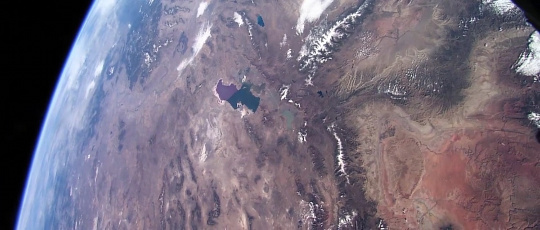
From 34,000 Feet

Two years of transition.

Twenty four months of broken inhibition.

Ninety six weeks of exploration.

Seven hundred days of challenged motivation.

Seventeen thousand hours of relentless contemplation.

Just one hour more and I will again be making home in a new location.

For how long will you keep me this time?

Colorado.

By |2013-06-17T18:23:21-04:00June 7th, 2013|At Home in the Rockies|0 Comments

Homeless in Cape Town, part I

I was sitting at the V&A waterfront of Cape Town, one evening last week, enjoying Thai take-away while trying to stay warm against the growing winter cape wind. I had again forgotten my wind breaker as it was stowed in the easy-to-forget top pocket of my backpack. The fog rolled in, broken by the strong lamps of a Coast Guard bay patrol ship, red and blue to either side, white on a spindle for search and rescue.

I was just cleaning the last of the noodles from the inside of the waxed cardboard box with my split wood chopsticks when a young man, likely in his early twenties, walked up to the end of the bench adjacent to the one I occupied.

He spoke quietly, as though an apology were in order, hesitant with his words “Excuse me. Sir. Would you happen to have–”

While I could not hear the individual words against the blasts of wind, I knew the intent. He would be asking for money. I didn’t mind, as I wanted to hear his story, “I am sorry, but I can’t hear you.” I finished another bite of the last remnants of my food.

He started again, “Excuse me sir. I have a baby girl. She needs food. Could you spare some change for milk and cereal?”

There was something about him that felt quite genuine. He was well dressed for a homeless guy, relatively new shoes, each of which had laces. They were apparently the correct size too. Jeans with a belt, clean, and his inner shirt tucked in. He wore a baseball cap with the brim set high, his entire forehead visible from where I was sitting.

He was black African, speaking English with the subtle accent of Afrikaans, double beats given to otherwise forgotten vowels, melodic in their intonation.

I motioned for him to sit next to me, and asked if he wanted some food, “I will be pleased to buy food for you, if you are hungry.”

“Thank you sir. But it is my girl, she needs food, not me.” He remained standing, now by my side.

“Sit with me. It’s ok.” He looked quite uncomfortable at my request and declined. Not for disdain but for simple lack of having someone ask this of him. His body moved in the direction of sitting but his brain held him back, uncertain what would come next.

“Where do you live?”

“At the shelter,” he motioned behind me to what I assumed as beyond the water front shopping center, “we stay there.”

“Is it safe? For you and your girl?”

“Yes sir, it is safe.”

“Where is your daughter now?”

“She is there.”

“At the shelter? Alone? Who is caring for her?”

“At the shelter sir, she is there.”

“Yes, I understand. But who is watching her?”

“They are … the …” he struggled with the words and so I filled in a few for him, “Child care?”

“Yes. Child care. They take care of her while I am away.”

It seemed unlikely that a single man would be raising a young girl at a shelter or that a shelter would offer child care, but I do not know the South African system. I liked him. He was not too bold, in fact he was humble in his approach. Given my extensive interaction with the homeless population, he seemed authentic to me.

Inside, however, I found that familiar pressure against the inside of my ribcage, the one that says, “This guy is just taking me for a ride. He’s making a quick buck. I don’t need to support his bad habits. Why can’t he just get a job!?” It is natural for this to rise in us. We are open to a certain degree, yes, but also protective of our resources and ourselves. If experience has provided a correlation between one who asks for something of us only to find that the person asking was not authentic, it is a kind of stove-top burn not to be repeated.

What’s more, we can use a certain self-righteous mode of communication which appears to be supportive when in fact it is little more than a wall around ourselves, justification for why we could not provide what is requested by a total stranger. We keep ourselves safely hid from authentic engagement for a lifetime, believing we are not responsible in any way for their situation. These people, the ones at the bottom, should simply try harder.

“Where is there a grocery?” I asked.

“A what sir?”

“Sorry. A supermarket. Where is there a supermarket?”

He pointed over my shoulder to the Pick-n-Save I had not noticed, less than one hundred meters distance.

“Ok. Let’s go shopping and get what you need.”

“Oh!? Thank you sir. Thank you. Just milk and cereal is all.”

“What is your name?”

“William. My name is William.” Again, his Afrikaans foundation came through, the ‘w’ in William given a breathy ‘v’ and ‘h’ at the same time.

I extended my hand and shook his as I introduced myself, “I am Kai.”

“Where are you from?”

“From the United States. Colorado.”

“I hear it is beautiful there.”

“Indeed. It is. Stunning.”

We arrived to the front of the store. He hesitated as though he was to wait outside. I placed my hand on his shoulder as a subtle insistence that he continue inside with me. I got the impression he had not been in a supermarket often, or perhaps the last time he exited he had not paid for all that he carried. He was uncomfortable.

“Tell me again what you need?”

“Just milk and cereal, sir.”

My decision to spend this time with William was reinforced as he had ample opportunity to take advantage of my generosity but each time refused. If this was a scam, at any level, he was not much of a scam artist.

“You need food too. Bread? Cheese? Meat?”

“You don’t have to do that,” he responded.

“I don’t have to purchase milk and cereal for your daughter either, but I have already chosen to do this for you. So what will it be?”

As we walked through the store, grabbing various items which eventually, with some prodding, included fresh fruit and a bar of dark chocolate (which he had never enjoyed before), I made a point of making physical contact as often as possible, the way I would with an old friend or family member. I would hold the upper portion of his arm as we spoke or make certain that when we chose food I gave it to him to add to the basket in order that it was his act of shopping, not my own.

I wanted to know more about William, to receive his story.

“How many years of school did you attend?”

“I completed the sixth grade.”

“Ah. Good. What were your favorite subjects?”

“Mmmm, the one with numbers, what is it called?”

“Mathematics?”

“Yes, mathematics.”

“Are you good with numbers?”

“Yes, I like numbers.”

We walked down a few more isles, eventually finding the original two items he had requested.

“Do you know how to write?”

“Yes. I can write.”

“Do you enjoy writing?”

“Yes, very much.” He lit up a bit, making eye contact with me again.

An idea jumped into my head in full form. I moved on it immediately.

“Do you write poems?”

“No, but I write songs.”

“Songs?”

“Yes sir.”

“Are they original?”

“Yes, original songs.”

We had just walked past the office products isle. I stopped abruptly, grabbing William by the arm. “I have an idea. I am going to help you start a business.”

He was intrigued, but didn’t respond.

I grabbed two bound notebooks, the kind whose pages can be removed; two ball point pens (blue at William’s request) and two packs of twenty envelopes.

I handed the collection to William and then explained my concept. “When you approach someone asking for money, you are a beggar. No matter how well you dress, no matter how good you smell, even if your story is completely legitimate, you are still asking for something without giving anything in return. As you likely well know, this usually doesn’t go over so well.”

He agreed, knowing all too well the challenges of this affair, “Yes, that is right.”

I continued, “If you sell something, magazines or books or fruit, people assume you stole it.”

He nodded his head again. His eyes widened as he caught on.

“But if you can sell something that could not possibly be stolen, an authentic, originally part of you, well, then you are no longer begging. You are a proper business man.”

I waited. He looked at me, his hands, and back to me again, smiling. “You mean I sell songs?”

“Yes. Exactly.”

He appeared perplexed, “I never thought of that.”

“You said you like math, so let’s run the numbers, ok?”

We quickly added the total cost of the books, pens, and envelopes which offered more than enough pages for him to scribble, write draft songs, and practice his penmanship and signature. In summary I concluded, “You sell each song, handwritten, signed with a title and date, placed neatly inside an envelope. Don’t seal the envelope as your potential customers may desire to inspect the goods, or even pick their favorite song from your portfolio.”

He nodded, listening with intent.

“We have a total cost of forty rand for the whole package. If you sell each song for just ten rand, and there are forty envelopes, that is four hundred rand. Forty from four hundred leaves you with a profit of thee hundred and sixty.”

William looked at the goods in his hands again, and then back to me. These basic things were no longer just paper and pen, but a source of income for him. He had a huge smile on his face and that look of having discovered something totally new.

He shook his head and said, “I never thought of that. I just never thought about this before.”

“If you sell just one or two a day, at least it is some cash flow. As you get better at writing and presenting yourself, your sales will grow.”

We turned toward the cashier and he asked, “How did you think of this?”

“It’s what I do. I help people build their business.”

“Then I am so lucky to have met you.”

We added diapers to the shopping list, which was a bit of a chore as he did not know which size was the correct one for his daughter. Again, doubt returned to my mind as I wondered if he really did have a daughter back at the shelter. But if it was his goal to sell or trade the diapers, even some of the food, then at least he would be building upon his entrepreneurial experience and learning how to barter. I encouraged him to keep the receipt in case he had to return anything. Clearly, he was not aware of this process, and so I explained it to him.

We sat outside the supermarket for another ten minutes. On the inside cover of one of the two notebooks we built a simple amortization schedule to determine the real cost of each song sold. The profit per song was of course far better than my rough estimate which assumed the total volume of both notebooks and the ballpoint pens would be consumed with the sale of just forty songs. William’s math was rusty. I encouraged him to practice his basic tables using one of the notebooks in order that he could easily present change to his customers. He seemed eager to do this, soon.

We parted ways, shaking hands. He offered a Christian blessing and I reciprocated in good form, having learned that even if this is not something I usually do, it means a lot to those who offer.

I walked only a block from the water front when my emotions caught up with me, rising in my chest like expanding air. I sobbed.

Having been in this situation many times before, I knew what had happened. I had disabled that the part of me that would otherwise keep William on the outside, a safe box for me and another in which I define this homeless man. Instead, I chose to recognize him as an old friend with whom I was simply catching up, and in so doing, I automatically recognized how similar he is to me. All barriers were down. I saw him as a complete human being, no different than me or any other. His chemistry, his needs and desires identical to my own.

In that place, he could have easy been me and I could have been him.

Therein lies the true source of fear, the reason we choose to not engage. It is not because homeless people and beggars are poorly dressed or speak with a limited vocabulary. Outside of those who do present a danger, it is not truly for our own safety. No. We maintain our boundaries because to truly engage someone less fortunate than ourselves is to see ourselves in their place.

And that is something we are not readily willing to do.

By |2017-04-10T11:17:37-04:00June 4th, 2013|2013, Out of Africa|0 Comments

When Winter Comes to Cape Town

I am in my room at the Jacaranda Guest House, on the South African Astronomical Observatory campus, at the base of Table Mountain, Cape Town. Outside my bedroom, the storm is intensifying again as it has come and gone all day. The window panes of this more than one hundred year old house rattle with the buffeting of the wind. The winter rains have come to Cape Town and it is time for me to depart.

I have found here an unexpected sense of community, a place where scientists from around the world come together to study the universe, to gain an understanding of where we came from and where we are going to. At the same time, these scientists make time to give back to their local community through an active outreach program, sharing their passion for astronomy with school-age children throughout the country.

Therein lies the magic of astronomy, the oldest of sciences which continues to engage the imagination. When we look to the night sky overhead, we see not just points of light but distant worlds which may be vastly different from our own or similar in their capacity to harbor life on both sea and land.

We see not just a handful, but hundreds of billions of galaxies each of which contains hundreds of millions of stars, the majority of which we believe have planets. Our dreams of what may be are overwhelmed for the numbers are greater than anything we use in our daily life.

If I were to attempt to count the impact of precipitation on the tin roof in the midst of this storm, and then the number of molecules in each drop of rain and the number of atoms, protons, and quarks of which they are composed, I may run the risk of losing enjoyment of the winter storm.

Yet this is what astronomy enables: a study of the inner workings of stars which takes us directly to the fundamental building blocks of matter and the formation of life itself while invoking a view of the immense scale of all that we see, both with the naked eye and through the increasingly capable instruments we employ.

Astronomy invokes astronomical numbers which challenge the best of mathematicians, and yet the theories have a means of reaching non-mathematicians with intrigue for the smallest of scales and majesty of distant, unreachable places.

I prepare myself to leave this place and know it will be missed. No where else do daily conversations range from the recovery of a country mired in a terribly complex socio-economic disparity to the theories which enable life to exist on the vast number of exo-planets, more of which are discovered each year.

No where else is my passion for telling the stories of the human condition interwoven with my craving for knowledge about the underpinnings of the rapidly expanding universe.

By |2017-04-10T11:17:37-04:00June 1st, 2013|From the Road|0 Comments

Chasing Asteroid 1998 QE2

Produced for the South African Astronomical Observatory as an experiment in how a short, documentary style film may be effective in presenting the very real intrigue and enthusiasm for science as enjoyed by scientists themselves. Astronomy in particular is a field of research which engages the public in a direct, life-long interest in what we see in the dark night skies.

By |2017-04-10T11:17:37-04:00May 30th, 2013|Film & Video|Comments Off on Chasing Asteroid 1998 QE2

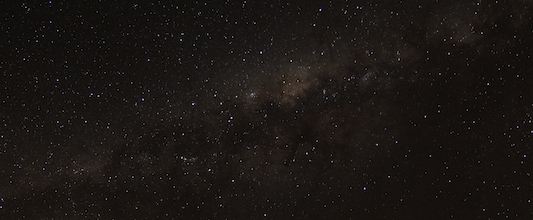
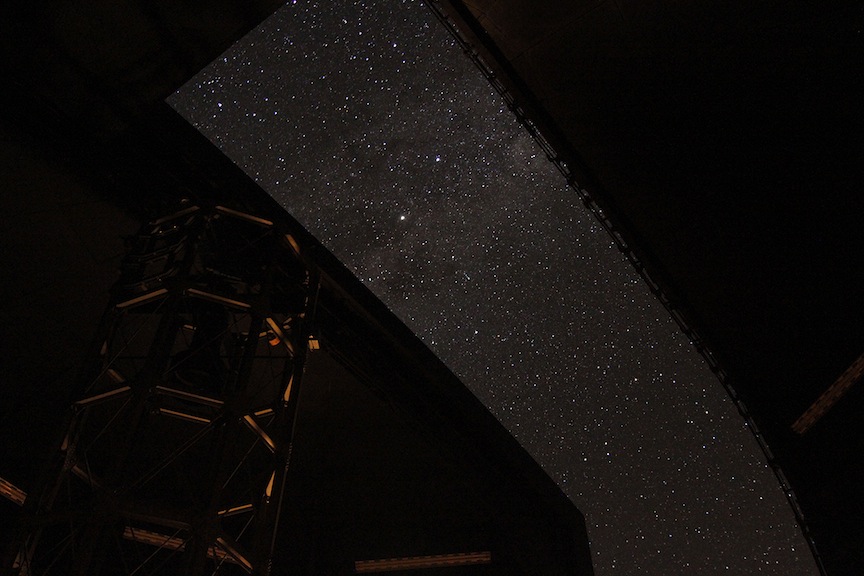
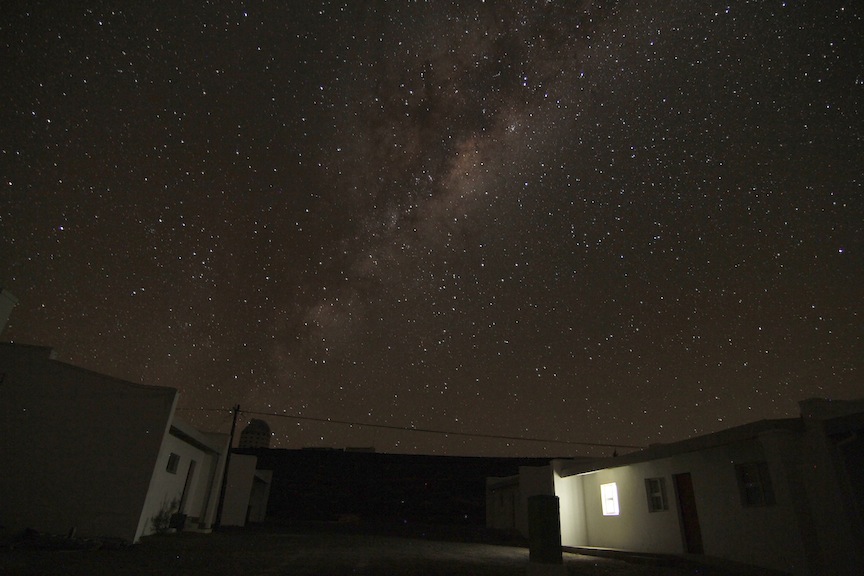
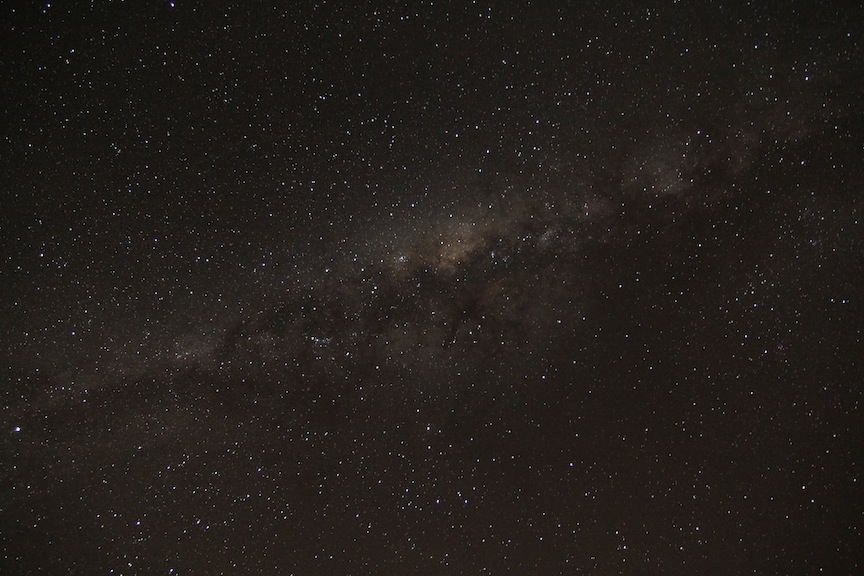
The Southern Sky

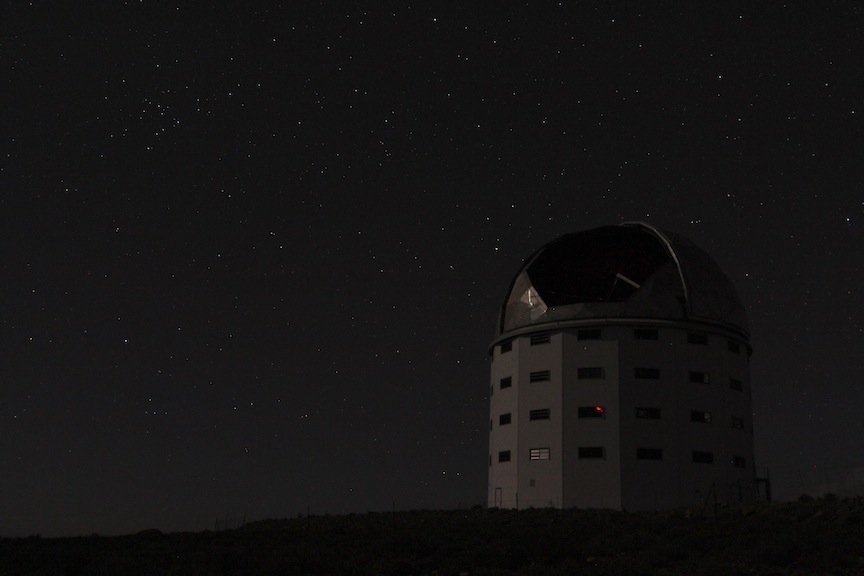
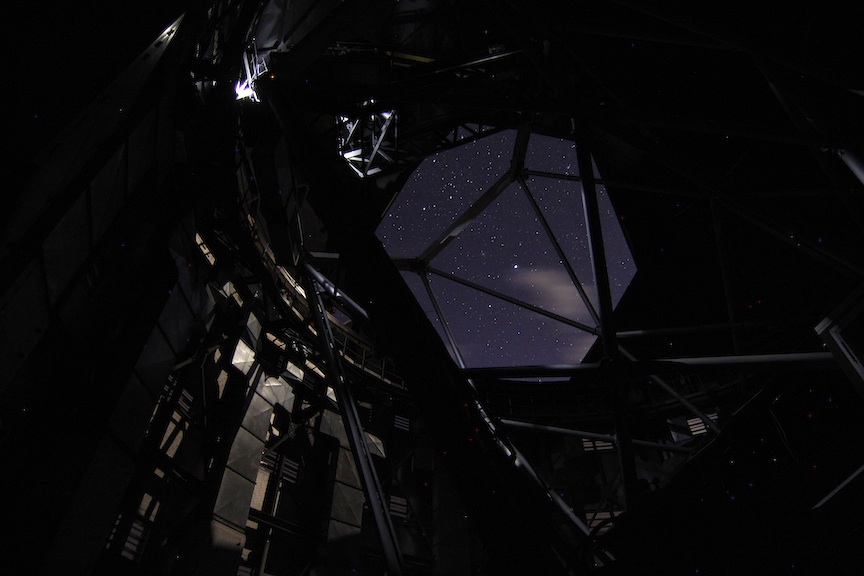
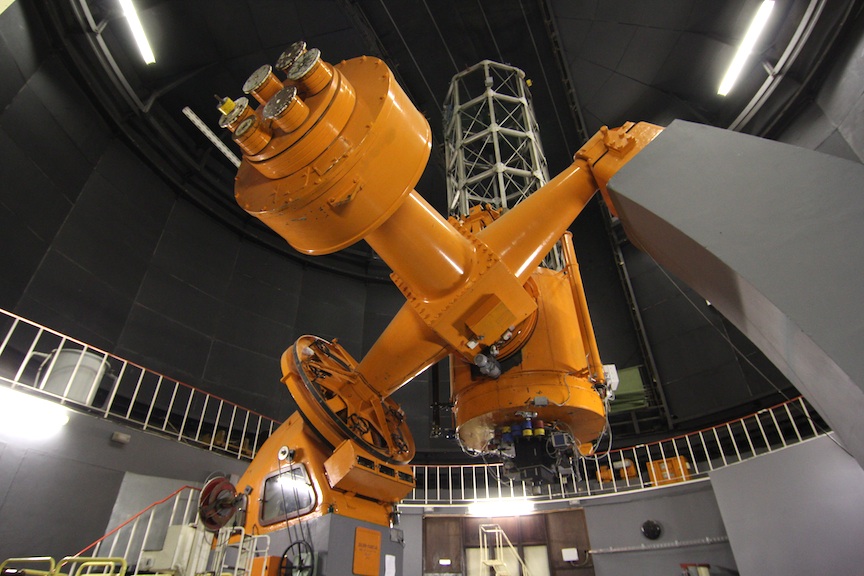
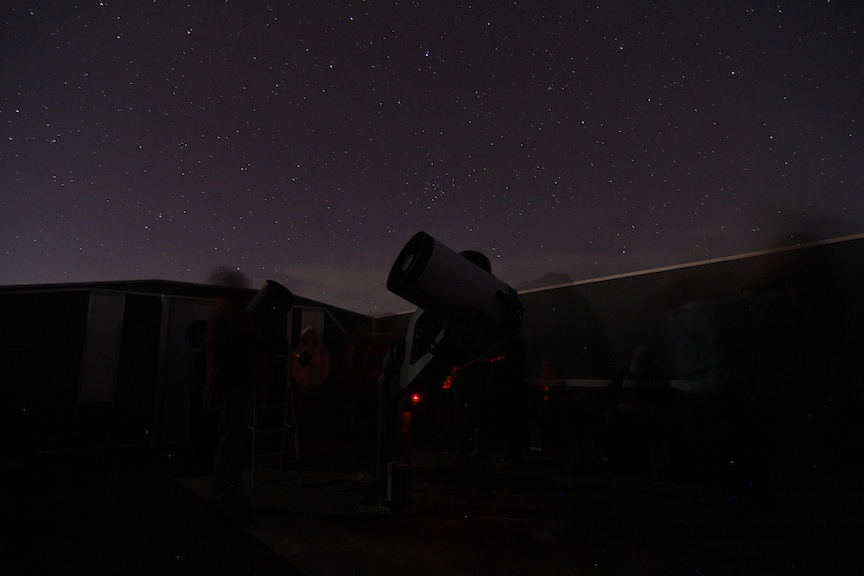
Kai Staats: Milky Way over Sutherland, SA

Kai Staats: Milky Way over Sutherland, SA Kai Staats: Milky Way over Sutherland, SA Kai Staats: Milky Way over Sutherland, SA Kai Staats: SALT, Sutherland, SA

Kai Staats: SALT, Sutherland, SA Kai Staats: 1.9m telescope, Sutherland, SA Kai Staats: Star Party at Sutherland, SA Kai Staats: sunset over Sutherland, SA

When we look to a rich, dark night sky we are moved to wonder. When we peer through the eyepiece of a telescope we are changed in some significant way. When we are granted answers to questions which the night sky raises, we realize how very small we truly are.

I believe the greatest challenge we do engage in our short time in this universe, both as individuals and as a species, is to recognize our humble place while at the same time our potential for great endeavors. Somewhere, between these two ends of the spectrum is the balance we seek.

By |2015-10-02T10:19:26-04:00May 16th, 2013|2013, Looking up!, Out of Africa|0 Comments

Overview

Overview, the film

On the 40th anniversary of the famous ‘Blue Marble’ photograph taken of Earth from space, Planetary Collective presents a short film documenting astronauts’ life-changing stories of seeing the Earth from the outside – a perspective-altering experience often described as the Overview Effect.

The Overview Effect, first described by author Frank White in 1987, is an experience that transforms astronauts’ perspective of the planet and mankind’s place upon it. Common features of the experience are a feeling of awe for the planet, a profound understanding of the interconnection of all life, and a renewed sense of responsibility for taking care of the environment.

Overview’ is a short film that explores this phenomenon through interviews with five astronauts who have experienced the Overview Effect. The film also features insights from commentators and thinkers on the wider implications and importance of this understanding for society, and our relationship to the environment.

By |2017-04-10T11:17:37-04:00May 12th, 2013|Film & Video, Looking up!|0 Comments

Seventy Three

My father requested that I write a poem as his birthday gift this year.

Seventy three is but one more than seventy two.
We count the years as many, but for some they are few.

If you were a Red Wood tree, tall and lean,
you would be but a child, only beginning.

If you were a stone whose edges were made smooth,
your age would not be measured in years, but millennia.

If you were a galaxy, long arms gradually closing in,
the embrace of your center would require eternity.

But as a human, you are my father,
and I care not for these things.

Wisdom cannot be calculated nor can love be attributed to a clock, calendar, or the stars overhead. What I see when you turn from seventy two to three is one year more in which I have been blessed with a caring family.

By |2013-05-11T12:08:06-04:00May 9th, 2013|The Written|0 Comments

Where eBooks Fail

Mponda and I had a late night conversation about eBooks. He is in his late twenties and unusual for a Tanzanian. Having lived in Europe and traveled extensively, he returned to his country to help his people rise out of ignorance and poverty through education, one student at a time.

Before I even raised my concerns for electronic reading, he said clearly, “eBooks are not what Africa needs. It is just one more electronic device which needs charging, one more thing to break and be discarded. When a learner is given a book, he or she will disconnect from the world for a while and dive in. Kids need novels, not just text books. They need to be given joy in reading as well as reading for education if they are to keep reading for a lifetime.”

I added, “Paperbacks have volume, weight, and a sense of three dimensional accomplishment. A chapter read is a chapter closer to the conclusion with each page folded one-by-one.”

“Yes, exactly!” he confirmed. Bernard, my adopted son had inadvertently initiated this conversation when he discovered a massive, more than 5KG book called “The Medicine of Africa,” an alphabetical list of every known disease and ailment on the Continent. It was daunting, but Bernard’s eyes lit up when he realized how valuable this would be for his degree in Community Health. It was the size that struck him in a way an eBook never could. The kinesthetic reviewing of the index or random flipping of pages gave it a sense of depth and power which a single electronic page is missing and will never offer.

Dozens, hundreds, even ten thousand books in a single, hand-held device is not power of education, rather it is a total distraction just as email and Facebook has kept an entire generation of well intended employees from getting much of anything done. Electronic devices keep us engaged in myriad communications while a printed book in and of itself is an excuse, a means to turn off and just read.

By |2013-05-18T19:41:14-04:00May 5th, 2013|2013, Out of Africa|0 Comments

In the Void of Education – Part 2

This topic begins with Part 1.

I have spent ample time in Africa to understand the impact of poor education. It affects people in so many ways. Decisions which concern money, family, religion—even the ability to plan for something more than a few days ahead requires some degree of education. Without it, we are but responding to emotion, our logic limited as leverage for the given situation.

Prior to my interview with a student and teacher I believed an improvement in African education was about computers in the classroom and an Internet connection. Surely, these two combined would bridge the majority of the gaps.

Instead, through my own experience and subsequent conversations with Chuck and Mponda, I realized it is the total teaching system which is at the root of the issue for the teachers themselves are unwilling to teach beyond their own knowledge.

In the West we make the mistake of assuming that because access is granted to a resource, it will automatically be engaged, taken advantage of. My experience in Palestine last year was direct evidence for the contrary. Countless thousands of videos on YouTube and an equal number of publications about both sides of the Israeli-Palestinian conflict are immediately available, yet the vast majority of American’s remain ignorant due to the filtered media they choose to accept as fact.

African college students log on to Facebook each day, yet have never used Google nor heard of Wikipedia. Millions of pages of free information available at the touch of a finger tip, yet donated computers often end up locked away in a storeroom, only brought out into the class when the donor arrives for an annual visit, check in hand. The teacher’s lack of comfort with any given teaching technique and associated technology is the greatest barrier to education, everywhere.

When someone does not understand the very basics of applied science, whether it is biology, chemistry, geology or physics, how can this not affect the decisions he or she makes? How can government policies, both local and national, not be heavily influenced by the education of decision makers?

Last week a South African governor declared a 500,000 Rand fine for any witch caught flying across the border from Swaziland above 150 meters elevation. Is this any more ludicrous than an American congressman who is totally ignorant of the scientific method and associated data collection techniques declaring global warming a conspiracy of scientists the world-over, or demanding that the Christian creation story be taught along side evolution as the means by which life was given form on this planet?

The void of education is not only in Africa. It is everywhere, affecting all of us.

This topic is continued in Part 3.

In the Void of Education – Part 1

To Live on Planet Earth
This week I have been in Tanzania working on a documentary film about Astronomy as a motivator for finding passion in the sciences. I had the great fortune of meeting Chuck Ruehle, founder of Telescopes to Tanzania and member of Astronomers Without Borders, and Tanzanian educator Mponda Maloso who works through EU Universe Awareness.

Together, we ventured to a secondary school outside of Arusha, Tanzania and engaged Term-3 and -4 classes in the basics of using a telescope, the value of astronomy in education, and what kinds of jobs may be open to these students if they pursue the sciences.

Following an interview with a 13 year old girl who had this spring looked through a telescope for the first time in her life, she asked, “Sir. May I ask you a few questions?”

“Yes, of course,” I responded, seating myself in my chair beside the camera again. I settled in for the conversation while Mponda sat on the corner of the nearby desk.

As the only one of three students who chose to conduct her interview in English, she was courageous enough to also engage me in this Q&A session, which I fully appreciated.

She took a deep breath, looked at her feet and hands, and then back to me as she asked, “Is it true, … that we live outside the Earth and not in it?”

I smiled, thinking she meant in a cave or underground. I did not truly understand and looked to Mponda for clarification. He nodded back to the girl again who was quite serious.

“What do you mean? Do you mean underground?” I looked out the window to emphasize the sunlight behind the growing clouds.

She added, “No. Do we live inside the ball,” making the shape of a ball with her hands, “or outside the ball, on top?”

I paused for a moment, considering the time which had come and gone since the awareness of the basic arrangement of the solar system was re-established (the ancient Egyptians had it figured out as well, but that knowledge was lost to history).

I didn’t know if I should laugh or cry. She meant that the sky, the moon, the planets and the stars—that they traversed the inside of a ball in which we lived. This girl sends text messages on her cell phone and has likely used Facebook, but does not understand the very fundamentals of how the Earth exists within our solar system, something established hundreds of years ago (and thousands of years before that, once or twice).

I was dumbfounded. Mponda did not appear to be surprised for he sees this every day through his work in Tanzania. I confirmed that we do in fact live “on the ball” and that the Earth is in orbit around the sun, along with the other bodies in our Solar System. She went on to ask questions about weather prediction, which were well stated. I was impressed by how much she desire to learn.

The telescope had opened her mind, it got her thinking beyond the rote memorization and classroom chanting of facts and figures which is what most of sub-Saharan Africa calls education.

Mponda later confirmed the majority of the children here are not aware of the very basics, most of them believing we live inside a sphere and only having heard rumors we have walked on the Moon. The Space Shuttle, International Space Station, even the concept of a telescope completely devoid from their education.

These are not unintelligent children. Rather, they have very, very limited interface with the greater world. This is true for most of Africa, the legacy of the post WWI British school system which trained everyone to be clerks, very little more. The teaching style, even the curriculum has hardly changed.

I interviewed her teacher an hour later. Without my provocation he sated, “Because of Chuck and Mponda I learned that we live on the outside of the Earth, and that we move around the sun in our Solar System.”

He is twenty eight years of age and a license math and science teacher in the Tanzanian school system. I nodded, affirmed his recent, personal discovery, and asked how this affected him.

He pressed himself back into the chair, folded his arms across his chest, and then leaned forward again taking a deep breath, “You know? I … I see now that we are on the planet Earth which moves around the Sun. The other planets move around our Sun too.” He paused to make eye contact, as though he was seeking affirmation. I nodded, smiling.

“The stars in the sky, they are very, very far away, most of them far bigger than our own Sun. And the galaxies, well,” he laughed the laugh of one who is about to say something profound, “they have so many stars we can’t even count them all.”

I waited.

“It makes me realize how very small we are. We are just so small and the universe, it is so big and beautiful.”

Repeatedly, my interviews have brought the same words to my microphone and digital recorder, “I see now how small we truly are, and how everything is connected.”

Humility. Connection. Humble awareness of our place in the much larger universe. Connecting the dots. Truly thinking for the first time, not just repeating what the teacher shouts at the class. You don’t need a computer to do this. As Chuck makes clear in his classroom interventions—it is about getting out of the desk and learning with hands engaged. Building, Testing. Breaking. Rebuilding and testing again. It’s the scientific method that generates passion for real learning, the kind that keeps us learning for a lifetime.

This topic is continued in Part 2

Go to Top